
Executive Overview
GARNER, N.C. — As the crisp winds of autumn begin to sweep down from the northern hemisphere, signaling a dramatic shift in the seasons, the skies above North Carolina are quietly transforming. Millions of feathered travelers are embarking on an ancient, perilous journey. Every spring and fall, conservationists issue one of their most critical calls to action: turn off unnecessary outdoor lights at night to protect migrating birds. This fall is no different. With avian migrants already on the move, communities across the state are once again urged to take the "Lights Out" pledge.
The phenomenon of fall migration is one of nature’s most awe-inspiring spectacles, yet it is fraught with unprecedented modern dangers. Species such as the White-throated Sparrow, Dark-eyed Junco, Yellow-bellied Sapsucker, and Yellow-rumped Warbler will soon take to the night skies with a southward gaze, returning to their traditional overwintering grounds. For these creatures, the journey can span thousands of miles.
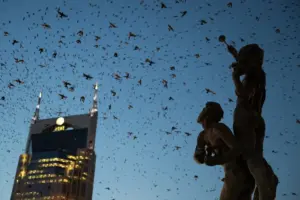
However, the rapid expansion of urban and suburban development has fundamentally altered the nocturnal landscape. Artificial light at night (ALAN) has introduced a lethal hazard that disrupts millions of years of evolutionary navigation. When nocturnal migrants encounter the brilliant glare of residential floodlights, illuminated commercial facades, and glowing office towers, they become disoriented and distressed. Veering off course, these exhausted birds are frequently drawn toward urban centers, where they face a terrifying labyrinth of reflective glass and steel.
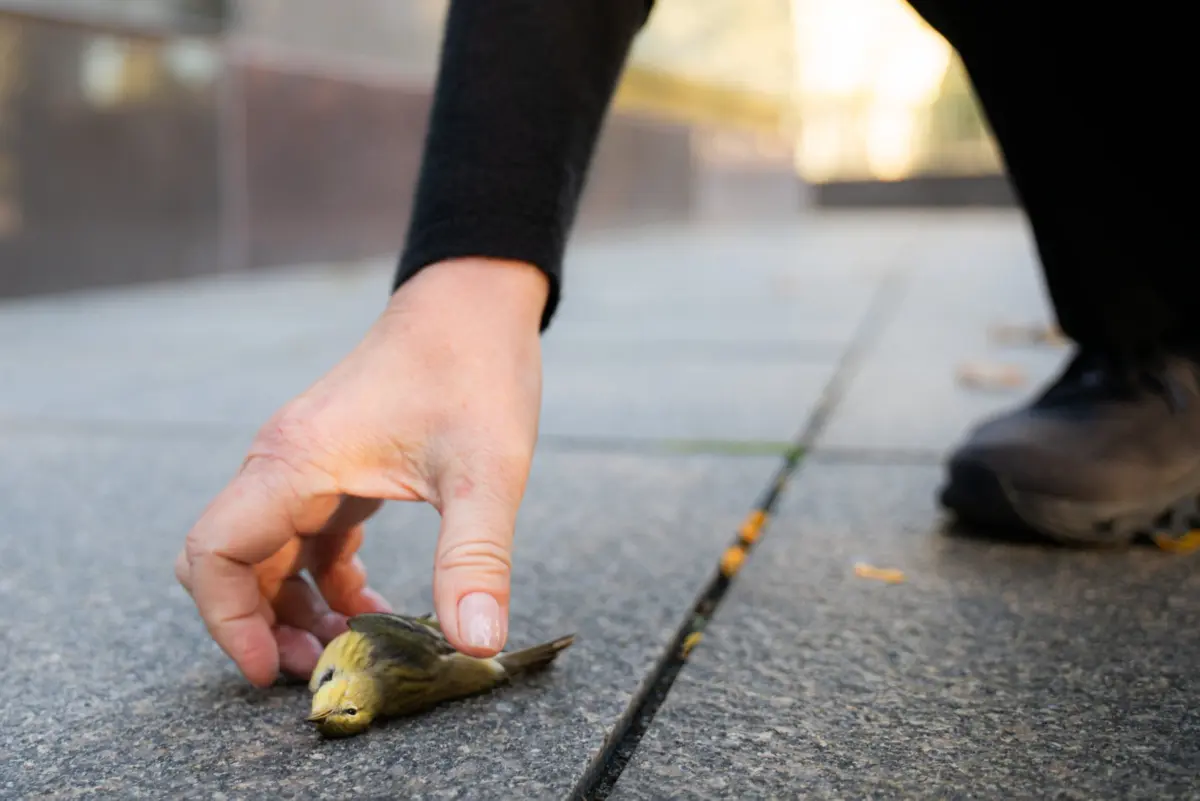
The consequences are staggering. According to a landmark recent study published regarding building collisions, more than one billion birds die annually in the United States due to impacts with architectural glass. While monumental skyscrapers in major metropolitan cores capture much of the public imagination, conservation experts emphasize that small structures—including residential homes, suburban apartments, and low-rise commercial buildings—collectively account for a massive share of these fatalities. Because these smaller structures are ubiquitous and scattered densely across the landscape, they form an invisible gauntlet for migrating flocks.
In response to this ecological crisis, Audubon North Carolina is ramping up its statewide campaign, urging homeowners, renters, business owners, and municipal leaders to participate in the Lights Out movement through November 30. By taking simple, actionable steps—such as extinguishing non-essential exterior lighting during peak migration hours—communities can dramatically reduce light pollution and provide safe passage for millions of vulnerable birds.
Detailed Chronology: The Rhythm of the Fall Migration and the Nocturnal Journey
To understand why turning off lights at night is so vital, one must first appreciate the intricate science and timing of avian migration. The journey is not a random scattering; it is a meticulously timed biological imperative driven by photoperiods (the changing length of daylight), hormonal shifts, and genetic programming.
Late Summer Preparations and Departure
As late August transitions into September, birds across Canada and the northern United States undergo hyperphagia—a period of intense feeding to build up the fat reserves necessary to fuel non-stop flights spanning hundreds or thousands of miles. Once these physiological preparations are complete, the departure window opens.
Unlike diurnal migrants like hawks and swallows, which utilize thermal currents during daylight hours, the vast majority of songbirds and forest-dwelling species—including warblers, thrushes, sparrows, and vireos—choose to migrate under the cover of darkness. This nocturnal strategy offers distinct evolutionary advantages:
- Predator Avoidance: Flying at night shields vulnerable migrants from aerial predators like falcons and hawks.
- Atmospheric Stability: The air at night is typically cooler, denser, and less turbulent, allowing for smoother, more energy-efficient flight.
- Hydration Management: Cooler nocturnal temperatures reduce the risk of dehydration during strenuous exertion.
Navigational Mechanics Under the Stars
For millennia, nocturnal migrants have navigated using celestial cues. By charting the positions of the moon and stars, combined with an innate sensitivity to the Earth’s geomagnetic field, birds maintain a precise southward vector across vast geographical barriers, such as the Appalachian Mountains and the expansive forests of the Eastern Seaboard.
However, this ancient navigational system is catastrophically disrupted by modern artificial lighting. When a migrating flock encounters a brightly lit urban or suburban area on an overcast or foggy night—conditions that force birds to fly at lower altitudes—the confusion begins.
Streetlights, decorative landscape lighting, illuminated sports fields, and unshielded porch lights create an artificial glow that essentially blinds and disorients the birds’ celestial compass. Trapped in a literal "light trap," birds will often circle continuously around illuminated structures, depleting their critical energy reserves. Exhausted, disoriented, and blinded by the glare, they inevitably collide with reflective windows, glass facades, and exterior walls, suffering fatal or debilitating injuries.
Supporting Context & Metrics: The Scale of the Crisis
The crisis of bird-building collisions is no longer speculative; it is a quantified ecological emergency backed by rigorous scientific research. The sheer scale of mortality underscores why grassroots initiatives like Lights Out are urgently needed.
Dismantling the Numbers: The One Billion Toll
For decades, conservation biologists suspected that window collisions represented a major anthropogenic threat to bird populations, ranking alongside habitat loss, domestic cats, and pesticide use. However, comprehensive empirical data was difficult to aggregate until recently.
A landmark study released by the New York City Bird Alliance (formerly NYC Audubon) and institutional partners confirmed a grim reality: more than one billion birds perish annually in the United States from building collisions.
Breakdowns of these collision metrics reveal critical insights into where and how these tragedies occur:
- The Residential Impact: While media attention frequently focuses on gleaming downtown skyscrapers, comprehensive studies indicate that low-rise buildings and residential homes account for approximately 44% to 56% of all collision-related mortalities. Because single-family homes and low-rise apartments vastly outnumber high-rises, their cumulative impact is profound.
- Low-Rise Commercial and Institutional Structures: Mid-rise buildings (four to eleven stories) account for roughly 30% of collisions, driven largely by large expanses of reflective glass combined with interior or exterior lighting that remains active overnight.
- Skyscrapers: High-rise buildings account for roughly 1% of total collisions by volume, though individual high-rises can act as localized "mass mortality sites" during peak migration nights, especially when architectural lighting is left ablaze.
The North Carolina Landscape
North Carolina occupies a crucial geographic position within the Atlantic Flyway, one of the primary migratory superhighways in the Western Hemisphere. Every autumn, millions of birds funnel through the state’s diverse ecosystems—from the high peaks of the Blue Ridge Mountains down through the Piedmont urban crescent and across the coastal plain to the barrier islands.
As North Carolina continues to experience rapid population growth and urban expansion, the proliferation of artificial light at night (ALAN) has accelerated. Urban centers like Charlotte, Raleigh, Durham, Greensboro, and Winston-Salem—along with rapidly developing suburban corridors—present an increasingly luminous gauntlet for nocturnal migrants. Without concerted mitigation efforts, the intersection of intense artificial light and dense architectural glass will continue to toll a heavy toll on already declining North American bird populations.
Official Statements and Grassroots Action: The Lights Out Movement in North Carolina
Individuals do not have to fight this battle alone. Over the past decade, proactive chapter advocacy and community organizing have transformed North Carolina into a leader in regional bird conservation. Cities and towns across the state have formally established Lights Out programs, creating a coordinated defense network for migrating wildlife.
Statewide Municipal Leadership
Municipalities that have embraced the Lights Out initiative include:
- Asheville
- Cary
- Chapel Hill
- Durham
- Charlotte
- Cumberland County
- Greensboro
- Matthews
- Raleigh
- Winston-Salem
These local programs work directly with city officials, commercial property managers, building owners, and residents to encourage the systematic dimming or extinguishing of non-essential exterior lighting between the peak migration hours of 11:00 PM and 6:00 AM from now through November 30.
What Homeowners, Renters, and Businesses Can Do
The beauty of the Lights Out movement lies in its accessibility. Unlike massive infrastructure overhauls, reducing light pollution is an immediate, cost-effective intervention that yields instantaneous ecological benefits.
Conservation experts recommend the following practical steps for anyone looking to participate:
- Turn Off Exterior Lights: Switch off unnecessary porch lights, decorative landscape lighting, and floodlights after 11:00 PM during migration season.
- Utilize Smart Technology: Install motion sensors, timers, or smart switches on necessary security lighting so they illuminate only when triggered, rather than burning brightly all night.
- Draw Blinds and Curtains: For indoor residents, closing window blinds and curtains at night prevents interior lighting from spilling outward and luring disoriented birds toward glass surfaces.
- Modify Commercial Lighting: Building managers are encouraged to extinguish architectural accent lighting, dim lobby and atrium lights that face outward, and utilize task lighting rather than overhead canopy illumination.
- Retrofit Problem Windows: Apply window films, patterned decals, or external netting to notoriously reflective residential or commercial glass to make windows visible to birds should daytime collisions occur.
Getting Involved
Residents eager to amplify their impact can connect with local conservation networks. To learn how to get involved with an active Lights Out program in your community, individuals are encouraged to contact their local Audubon chapter. Additionally, advocates can help raise awareness across digital platforms by utilizing the official social media toolkit provided by conservation organizers.
About Audubon North Carolina and the National Audubon Society
Understanding the breadth of this campaign requires looking at the institutional engine driving it forward. Audubon North Carolina, a state program of the National Audubon Society, operates dedicated regional offices strategically positioned in Durham, Boone, Corolla, and Wilmington.
For over a century, the organization has combined rigorous science, grassroots advocacy, environmental education, and on-the-ground habitat preservation to safeguard vulnerable bird populations. Its statewide initiatives address multifaceted threats, ranging from coastal habitat degradation and climate change adaptation to urban light pollution and window safety.
The parent organization, the National Audubon Society, has been a preeminent nonprofit conservation leader since 1905. Protecting birds and the places they need—today and tomorrow—remains the cornerstone of its mission. Operating throughout the Americas, Audubon utilizes a holistic approach to conservation that empowers local communities to enact meaningful, science-based change.
To learn more about Audubon North Carolina’s ongoing conservation initiatives, visit nc.audubon.org and follow their updates on Twitter, Facebook, and Instagram. To explore the broader national mission, visit audubon.org and connect with the @audubonsociety across Facebook, Twitter, and Instagram.
Future Outlook: Toward Lighter Skies and Resilient Ecosystems
As the calendar pages turn toward the chill of late autumn, the frantic pace of the southern migration will gradually subside. Yet, the lessons learned during this critical window extend far beyond November 30. The Lights Out movement represents a profound cultural and environmental shift in how human societies coexist with the natural world.
The ecological stakes could not be higher. Birds perform irreplaceable ecosystem services: they pollinate flowering plants, disperse seeds across fragmented landscapes, and act as natural pest control agents by consuming millions of agricultural insects and mosquitoes. The health of avian populations is an essential indicator of overall environmental vitality. When bird populations suffer, entire ecological webs experience cascading destabilization.
Looking forward, conservation advocates envision a future where dark skies are valued not merely for their aesthetic beauty or astronomical clarity, but as vital ecological corridors. By embedding bird-friendly building design into municipal zoning codes, advancing architectural glass standards, and normalizing nocturnal light management as a standard civic duty, communities can permanently mitigate the tragedy of building collisions.
Every extinguished porch light, every drawn blind, and every dimmed downtown skyscraper represents a beacon of hope for a weary traveler navigating the midnight skies. This fall, as millions of wings beat rhythmically through the dark, North Carolinians have the power to light the path forward—not by adding more illumination, but by simply turning the lights off.