
Executive Overview
In a strategic maneuver set to reshape the landscape of agricultural technology, Reservoir Farms has officially announced its expansion into the Pacific Northwest. Revealed by founder and CEO Danny Bernstein at the prominent FIRA (Farming Robots and Autonomous equipment) agtech event, the company will launch its newest agricultural technology incubator in Yakima, Washington, in the spring of 2027. This milestone marks the incubator’s second major expansion outside of California, signaling a crucial shift toward solving some of the most complex automation challenges in modern agriculture.
For years, agtech innovation has heavily concentrated on broadacre crops like corn and soybeans, leaving specialty crops—such as tree fruits, berries, and vineyards—underserved due to their physical and biological complexity. Reservoir Farms is directly addressing this disparity. By bridging the gap between cutting-edge software engineers, physical artificial intelligence (AI) developers, and commercial specialty crop growers, Reservoir is accelerating the deployment of robotic and automation solutions where they are needed most.
The upcoming Washington facility will leverage strategic partnerships with regional heavyweights, including the Washington Tree Fruit Research Commission, the Tri-City Development Council (TRIDEC), and the North American Blueberry Council. Furthermore, the expansion is backed by substantial financial and strategic backing from industry leaders like John Deere and Western Growers. As labor shortages and climbing operational costs continue to squeeze growers in the Pacific Northwest, Reservoir’s arrival promises to transform rugged prototypes into market-ready production tools faster than ever before.
Detailed Chronology of Expansion
The journey of Reservoir Farms from a localized California startup incubator to a national agtech powerhouse has been marked by steady, calculated growth. Understanding the trajectory of this expansion underscores the viability and scalability of Reservoir’s unique incubator model.
Foundation and California Roots
Reservoir Farms was established to solve a fundamental bottleneck in agricultural technology: the disconnect between technology creators and actual agricultural operations. Developers often build brilliant software or hardware in sterile laboratories, only to find that it fails in the chaotic, unpredictable environment of a working farm. To combat this, Reservoir pioneered a multi-tier subscription service—which includes a popular freemium option often likened to a "Spotify for farming innovation"—that provides startups with actual farmland to test, break, and refine their products.
Beginning with its flagship locations in Salinas and Sonoma, California, Reservoir quickly demonstrated that placing engineers side-by-side with commercial specialty crop producers dramatically shortened product development cycles. This success soon catalyzed a geographic leap into Arizona, expanding the incubator’s climate and crop diversity testing capabilities.
Securing Financial Muscle
The momentum behind Reservoir accelerated significantly in mid-2026. A pivotal moment arrived when agricultural machinery titan John Deere made a substantial $10 million investment in Reservoir Farms, validating the incubator’s model on a global stage. This capital infusion, combined with ongoing support from Western Growers, provided Reservoir with the financial runway necessary to look beyond the Southwest and target regions dominated by labor-intensive perennial specialty crops.
The Washington Announcement at FIRA
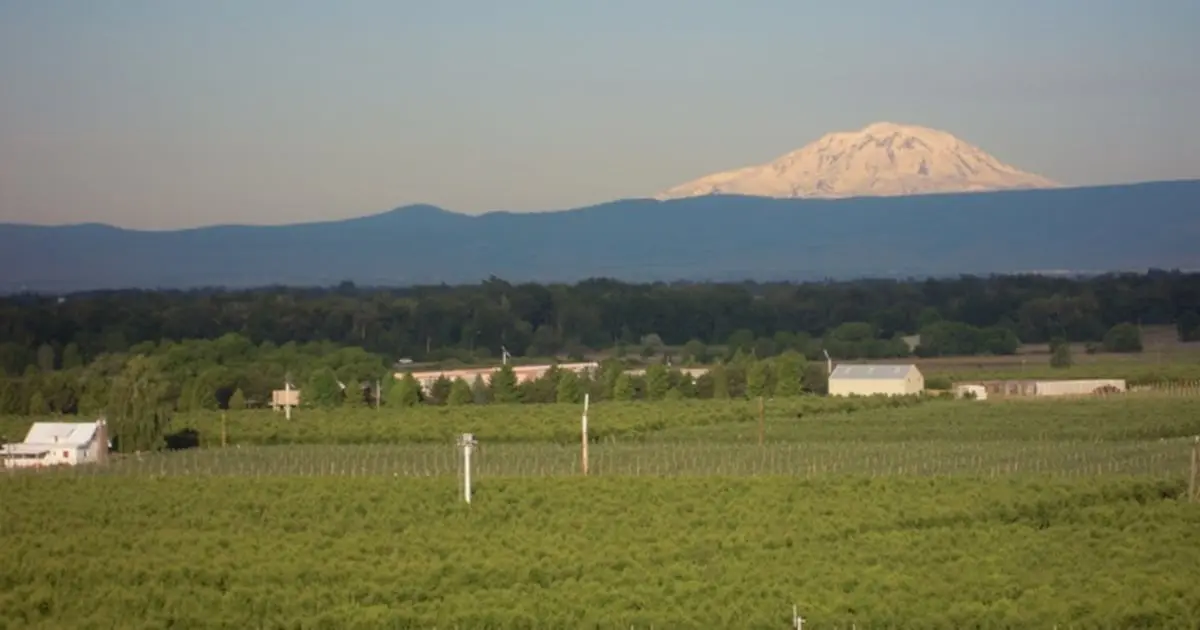
The culmination of these strategic developments came on October 20, when CEO Danny Bernstein took the stage at the FIRA event. Announcing the selection of Yakima, Washington, Bernstein outlined the vision for the spring 2027 launch. The choice of Yakima was no accident; it places the incubator at the beating heart of America’s premier tree fruit and berry-producing region.
In the wake of the announcement, a slate of high-profile agtech companies confirmed their participation in the Washington ecosystem. Established Reservoir alumni such as Bonsai Robotics and Sky Sense—alongside new members Cordon and Rootline—are slated to deploy their hardware and software solutions at the new Pacific Northwest facilities, setting the stage for an unprecedented collaborative rollout upon opening.
Supporting Context & Metrics: The Specialty Crop Challenge
To fully grasp the significance of Reservoir Farms’ expansion into Washington State, one must examine the unique economic and agronomic realities of the region’s agricultural sector.
The Dominance of Washington Agriculture
According to United States Department of Agriculture (USDA) data, Washington is an agricultural juggernaut when it comes to specialty crops. The state accounts for roughly two-thirds of all commercial apple production in the United States. Beyond apples, Washington is a leading national producer of:
- Pears
- Sweet cherries
- Blueberries
- Wine grapes
- Hops
These commodities share a common trait: they are perennial specialty crops. Unlike annual field crops that can be easily managed and harvested with standardized, massive machinery, specialty crops require delicate handling, multi-tiered canopy management, and selective harvesting across rugged terrain.
The Labor Crisis and the Automation Imperative
For Washington growers, labor is no longer just a logistical challenge—it is an existential threat. Escalating wages, tightening labor supplies, and unpredictable immigration policies have driven labor costs to historic highs, representing the single largest operational expense for regional farmers.
Tree fruits, wine grapes, and hops are widely considered by agricultural engineers to be among the hardest crops in the world to automate. The irregular shapes of orchards, the delicate skin of blueberries, and the vertical trellising of hops demand advanced computer vision, adaptive robotic arms, and highly resilient autonomous navigation systems. Traditional automation fails in these environments; what is required is "rugged physical AI." Reservoir Farms provides the rigorous, real-world testing grounds necessary to transition these complex AI systems from theoretical concepts into dependable farm machinery.
Official Statements and Industry Perspectives
The announcement of the Yakima incubator has generated immense enthusiasm across the Pacific Northwest’s agricultural, academic, and economic development sectors. Key stakeholders have emphasized the transformative potential of marrying local farming expertise with Silicon Valley-style technological innovation.
Danny Bernstein, founder and CEO of Reservoir Farms, encapsulated the core philosophy of the expansion in a press release:
"Tree fruit, blueberries, wine grapes and hops are some of the hardest crops in the world to automate, and labor is now the biggest cost Washington growers face. Expanding into the Pacific Northwest shows the Reservoir model is working. When you put builders on real farms with growers who will tell them the truth, rugged physical AI goes from prototype to production much faster."
The collaborative nature of the initiative is further highlighted by Reservoir’s integration with regional bodies like the Tri-City Development Council (TRIDEC), the Washington Tree Fruit Research Commission, and the North American Blueberry Council. TRIDEC’s commitment is designed to turbocharge economic development across the Tri-Cities region, positioning southeastern Washington not just as an agricultural hub, but as a global capital for agricultural technology development.
Furthermore, academic integration is taking center stage as Reservoir explores collaborative partnerships with Washington State University (WSU). Naidu Rayapati, director of WSU Prosser IAREC, highlighted the immense value of this academic-industrial synergy:
"Opportunities to bring ag-tech startups together with our faculty to evaluate emerging technologies across diverse cropping systems, including orchards and vineyards, could give growers valuable insights within a single growing season and rigorous validation over multiple seasons, helping them make informed decisions, reduce risks, and improve productivity and profitability."
By aligning WSU’s deep scientific research capabilities with Reservoir’s startup incubator model, participating innovators will have access to world-class agronomic expertise, ensuring that technological solutions are biologically and environmentally sound.
Future Outlook: What the 2027 Launch Means for Agtech
As the agricultural sector looks toward the spring 2027 opening of the Yakima incubator, the broader implications for the agtech industry are profound.
Accelerated Time-to-Market for Physical AI
The traditional path for an agricultural startup involves years of securing disjointed pilot programs with skeptical growers who cannot afford downtime or crop damage during critical harvest windows. Reservoir Farms short-circuits this friction. By embedding startups directly within active farming communities where growers are candid and demanding, software developers and roboticists receive immediate, unfiltered feedback. This feedback loop is expected to dramatically shorten the gestation period for physical AI, pushing autonomous pruning, spraying, and harvesting solutions into commercial deployment years ahead of schedule.
Risk Mitigation for Growers
For Washington growers, the presence of the Reservoir incubator offers a localized testing ground where they can preview and evaluate emerging technologies without betting their entire harvest on unproven systems. With multi-season validation backed by academic rigor from institutions like WSU, growers will gain the empirical data needed to make high-stakes capital investments in automation with confidence.
A Blueprint for National Agtech Ecosystems
Reservoir Farms’ expansion proves that the incubator model is not bound by geography or limited to flat, uniform fields. By successfully translating its Salinas and Sonoma methodology into the complex orchard and vineyard ecosystems of the Pacific Northwest, Reservoir is establishing a scalable blueprint for agtech innovation across North America.
As spring 2027 approaches, the Yakima Valley is poised to become a crucible for the future of farming. With powerful financial backing from John Deere, institutional support from TRIDEC and WSU, and a relentless focus on the world’s most difficult crops, Reservoir Farms is laying the groundwork for a more resilient, automated, and economically sustainable agricultural future.