
Executive Overview
In a landmark environmental announcement on October 27, 2026, the Government of Canada formally committed to protecting an additional three percent of its vast marine and ocean territories by the end of 2027. This ambitious pledge was unveiled as Madame Diana Fox Carney—serving concurrently as Canada’s Ocean Envoy and Chair of the 12th Our Ocean Conference—concluded her high-profile inaugural visit to Canada’s Arctic, specifically focusing on Nunavut.
The announcement represents a vital milestone in Canada’s broader environmental trajectory, catapulting the nation past the 20 percent threshold of total ocean waters under formal protection. This positions Canada within striking distance of its international commitments to conserve 30 percent of its lands and waters globally by 2030 (the "30×30" target).
Crucially, this new wave of conservation is not merely a top-down bureaucratic directive. Instead, it is anchored in Indigenous-led and Inuit-led stewardship, heavily featuring collaborative agreements, innovative blue financing frameworks—such as Project Finance for Permanence (PFP)—and deep partnerships with organizations like the Qikiqtani Inuit Association (QIA). Audubon and other conservation bodies worldwide have hailed the move as a monumental victory for global biodiversity. Because the Arctic acts as a vital cradle for billions of migratory birds, marine mammals, and fragile polar ecosystems, safeguarding these waters reverberates far beyond Canadian borders, ensuring ecological stability across the Western Hemisphere.
Detailed Chronology: The Road to the Arctic Announcement
To understand the weight of the October 2026 announcement, one must trace the deliberate diplomatic and policy steps that preceded Madame Diana Fox Carney’s historic northern tour.
Laying the Groundwork: The Evolution of Canada’s Marine Policy
For over a decade, Canada has faced mounting pressure from international bodies, Indigenous nations, and environmental watchdogs to accelerate its marine protection metrics. Holding the longest coastline in the world—bordering the Atlantic, Pacific, and Arctic Oceans—Canada bears a disproportionate responsibility for planetary ocean health.
In the years leading up to 2026, federal agencies worked alongside coastal Indigenous communities to map out ecologically sensitive marine zones. However, progress in the remote Arctic posed unique logistical, financial, and jurisdictional hurdles. Traditional funding models often failed to provide the long-term capital required to manage expansive offshore protected areas effectively.
The Historic Arctic Voyage of Ocean Envoy Madame Diana Fox Carney
The turning point crystallized in late October 2026, when Madame Diana Fox Carney embarked on her maiden voyage to Canada’s Arctic as Ocean Envoy. Stepping onto the tundra and engaging directly with northern leaders, hunters, elders, and youth in Nunavut, Madame Fox Carney immersed herself in the realities of climate change and localized marine management in the North.
During her travels, she evaluated the immense ecological pressures facing the Arctic, listened to Indigenous governance priorities, and discussed cutting-edge economic tools designed to fund conservation in perpetuity. Her visit culminated in the crafting of a comprehensive policy framework that bridges traditional environmental protection with modern financial instruments.
The October 27, 2026 Declaration
On October 27, 2026, following the wrap-up of her Nunavut mission, Madame Fox Carney and the federal government jointly released the formal declaration. The package included:
- A hard commitment to protect an additional 3 percent of Canada’s marine and ocean environments by the close of 2027.
- The immediate intention to explore and implement innovative "blue financing" models, specifically Project Finance for Permanence (PFP).
- A pledge to complete at least two major new ocean conservation agreements backed by multi-million-dollar endowment funds to guarantee generational management security.
Supporting Context & Metrics: The Ecological and Financial Architecture
Crunching the Numbers: The Path to 30×30
Canada’s oceans span millions of square kilometers, making management and enforcement a monumental task. Prior to the October 2026 announcement, Canada had successfully placed roughly 14 to 15 percent of its marine areas under protection.
By committing to a swift 3 percent expansion by 2027—translating to over 170,000 square kilometers of newly safeguarded waters—Canada surges past the 20 percent mark overall. This momentum is critical if the nation hopes to meet its 2030 target of 30 percent protection.
The Power of Indigenous-Led Conservation and the QIA
A defining characteristic of Canada’s new marine strategy is its reliance on Indigenous leadership. The Qikiqtani Inuit Association (QIA) stands out as a global vanguard in Arctic marine conservation. For generations, Inuit have managed these waters through a deep, experiential understanding of ice patterns, marine mammal migrations, and sustainable harvesting.
Under the newly announced agreements, Indigenous nations are not merely consulted; they are co-designers and primary guardians of these protected zones. Projects spanning Hudson Bay, James Bay, and the rugged coasts of Newfoundland and Labrador rely heavily on local Indigenous knowledge systems. By combining this stewardship with modern governance, Canada ensures that conservation efforts are culturally resonant, practically enforceable, and socially equitable.
Blue Financing and Project Finance for Permanence (PFP)
One of the most innovative elements of the October 2026 announcement is the embrace of blue financing models, most notably Project Finance for Permanence (PFP).
Historically, conservation funding has suffered from volatile government budgets, short-term grants, and unstable philanthropic cycles. PFP solves this by pooling large, upfront capital endowments from public and private sectors into a single, well-managed trust fund. The interest generated from this trust provides a reliable, permanent revenue stream for local management, monitoring, community engagement, and sustainable infrastructure in perpetuity. By utilizing PFP structures for upcoming Arctic agreements, Canada is creating a template that other nations can replicate to solve the perennial crisis of underfunded marine protected areas.
The Arctic: A Globally Significant Ecosystem
Why focus so intensely on the Arctic? Beyond its cultural importance to Inuit and northern communities, the Arctic marine environment hosts some of the most ecologically productive and sensitive habitats on Earth.
- Marine Mammals: The icy waters and coastal shelves serve as critical calving and nursing grounds for iconic Arctic species, including narwhals, beluga whales, and bowhead whales.
- Avian Biodiversity: The Arctic summer transforms the tundra and coastal cliffs into a bustling nursery for billions of migratory birds.
- Hemispheric Migrations: The region acts as a ecological nexus for long-distance flyers. Shorebirds such as the American Golden-Plover, Red-necked Phalaropes, and Semipalmated Sandpipers breed along Arctic shores before embarking on epic migrations spanning thousands of miles down the spines of the Americas, resting in coastal wetlands all the way to Peru, Colombia, Argentina, and Brazil.
- Winter Visitors: Down in southern Canada and the United States, bird enthusiasts eagerly await the winter arrival of Arctic breeding songbirds—including Redpolls, Snow Buntings, and American Tree Specimens—alongside the majestic Snowy Owl.
Official Statements and Stakeholder Reactions
The announcement has garnered widespread international acclaim, drawing praise from environmental NGOs, Indigenous leaders, and scientific communities alike.
Audubon’s Enthusiastic Endorsement
The National Audubon Society was among the first major conservation organizations to issue a formal statement celebrating the Canadian government’s decisive actions.
"The news out of the Arctic of Canada this week is exciting! The Arctic hosts such a wide array of amazing birds and other wildlife," declared Dr. Jeff Wells, Vice President of Audubon’s Canada Program.
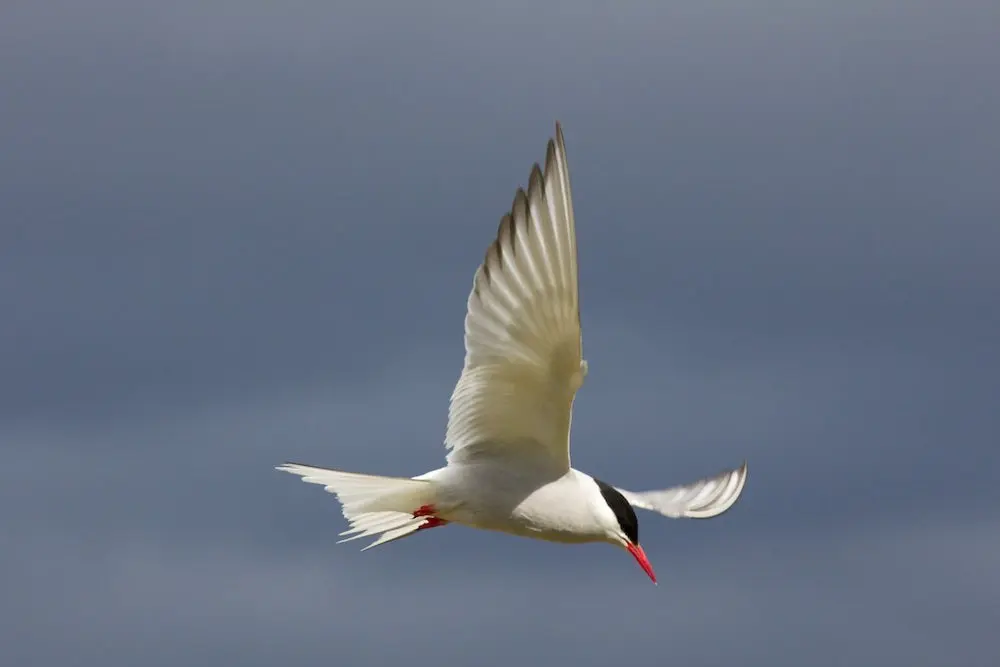
Dr. Wells emphasized the global interconnectedness of these ecosystems, pointing to species like the Arctic Tern, which undertakes pole-to-pole migrations across the globe’s oceans every year.
"For example, it supports migratory superstars like the Arctic Tern that trace the world’s oceans from pole to pole in their epic journeys every year. Investing in protections for the Arctic region of Canada is a globally significant decision that deserves world support," Dr. Wells added.
Indigenous Leadership Perspectives
Representatives from the Qikiqtani Inuit Association and other northern bodies expressed guarded optimism mixed with pride. Leaders emphasized that while federal financial commitments are essential, true success depends on honoring Inuit rights, ensuring self-determination, and maintaining community-level control over marine resource management. The integration of PFP models is viewed by Indigenous leaders as a practical step toward financial independence in conservation management, shifting away from burdensome, short-term bureaucratic funding applications.
Diplomatic and Ministerial Acclaim
Madame Diana Fox Carney’s leadership has been widely lauded across diplomatic circles. By bridging high-level international climate diplomacy—such as her role chairing the 12th Our Ocean Conference—with grassroots, on-the-ground listening tours in Nunavut, she has demonstrated a rare synthesis of macro-policy vision and localized empathy. Observers note that her tenure as Ocean Envoy is already injecting renewed urgency into global ocean protection dialogues.
Future Outlook: Challenges, Opportunities, and the Road to 2030
While the October 27, 2026 announcement marks a historic triumph for Canadian environmental policy, significant work remains ahead as the country transitions from pledges to concrete implementation.
Key Milestones Between Now and 2027
- Finalizing the Conservation Agreements: The federal government, in active partnership with the QIA and other Indigenous groups, must formally close at least two major new ocean conservation pacts before the December 31, 2027 deadline.
- Structuring PFP Endowments: Financial experts, philanthropic foundations, and government treasuries must finalize the capitalization of the blue financing trusts, ensuring that long-term funds are securely locked in.
- Equitable Enforcement and Monitoring: Establishing protected areas on paper is only the first step. Developing robust, community-led monitoring systems to guard against illegal fishing, shipping disruptions, and industrial encroachment will be paramount.
Hemispheric Collaboration and Upcoming Summits
Looking forward, organizations like Audubon are preparing to lean heavily into upcoming international forums, including the One Ocean Summit and the Global Indigenous Summits. At these gatherings, Canadian stakeholders and international conservationists plan to share best practices regarding hemispheric conservation strategies, Indigenous-led governance models, and sustainable blue finance toolkits.
Conclusion: A Legacy for Future Generations
Canada’s commitment to protect an additional three percent of its oceans by 2027 is far more than a statistical victory on a spreadsheet. It is a profound declaration that the health of our planet is non-negotiable. By marrying the ancestral wisdom of Inuit stewards with modern financial engineering like Project Finance for Permanence, Canada is proving that large-scale conservation is both ecologically imperative and economically viable.
As migratory shorebirds take flight across the hemispheres and whales calve safely in the icy sanctuaries of the far North, the echoes of this historic 2026 Arctic announcement will resonate across generations—securing a vibrant, resilient, and biodiverse future for the oceans of the world.