
Executive Overview
The U.S. Food and Drug Administration (FDA) has initiated aggressive legal action against an independent pet food manufacturer, filing an emergency court injunction aimed at shuttering the company’s operations permanently. Filed under the statutory authority of the Federal Food, Drug, and Cosmetic Act (FD&C Act), the federal suit targets alleged violations of 21 U.S.C. § 331(a). Specifically, regulators assert that the firm introduced adulterated food into interstate commerce under the definitions established by 21 U.S.C. § 342(a)(1) and (a)(4).
While federal regulators frame the enforcement action as a necessary measure to protect public health and safety, the case has ignited intense scrutiny over what industry advocates describe as systemic regulatory favoritism. Investigative findings reveal that while small-scale and independent pet food producers face immediate judicial suppression and court-ordered shutdowns, multi-billion-dollar corporate conglomerates operating under identical statutory conditions often receive no formal enforcement, warning letters, or public recall mandates.
Central to this legal dispute is 21 U.S.C. § 342(a)(4), which defines food as adulterated if it has been "prepared, packed, or held under insanitary conditions whereby it may have become contaminated with filth, or whereby it may have been rendered injurious to health." Documentation obtained through federal Freedom of Information Act (FOIA) requests demonstrates that major commercial pet food producers and industrial rendering facilities frequently breach this statute. Despite clear evidence of widespread pest infestations, open-air decomposition of animal matter, and severe structural contamination at major corporate facilities, the FDA routinely exercises "enforcement discretion"—effectively granting industry giants immunity while leveraging the full power of federal courts against smaller entities.
Detailed Chronology
The Genesis of Enforcement Disparity
The legal mechanics governing pet food oversight rely on statutory provisions established under the FD&C Act. However, the operational execution of these laws has diverged sharply based on company size, market share, and corporate alignment.
+-----------------------------------------------------------------------------------+
|                        TIMELINE OF REGULATORY DISPARITY                           |
+-----------------------------------------------------------------------------------+
| 2017–2018: FDA Inspections of Mars Petcare Facility                               |
|           • Critical findings: "Millions of roaches," severe structural filth.    |
|           • Regulatory Outcome: Zero injunctions, zero warning letters, no recall.|
+-----------------------------------------------------------------------------------+
| 2020–2021: Public Exposure of Industrial Rendering Conditions                     |
|           • Evidence documents open-air raw material holding at major suppliers.  |
|           • Regulatory Outcome: FDA relies on internal Compliance Policy Guides   |
|             (CPGs) to bypass statutory enforcement of 21 U.S.C. § 342(a)(4).       |
+-----------------------------------------------------------------------------------+
| Recent:    Federal Emergency Injunction Filed                                     |
|           • Action target: Independent, non-conglomerate pet food manufacturer.   |
|           • Regulatory Outcome: Immediate legal suit under 21 U.S.C. § 331(a)     |
|             seeking permanent shutdown for interstate distribution violations.     |
+-----------------------------------------------------------------------------------+
The Mars Petcare Facility Inspections (2017–2018)
In contrast to the rapid legal intervention against smaller market entrants, historical Establishment Inspection Reports (EIR) from the FDA demonstrate a pattern of forbearance toward market-dominant players. A notable example involved a multi-year inspection sequence at a major Mars Petcare manufacturing plant:
- Initial Findings: FDA inspectors documented structural infestations, including widespread populations of German cockroaches operating within active food preparation and packaging zones.
- Follow-Up Inspection: A subsequent inspection confirmed that the infestation persisted unabated. Official documentation noted "millions of roaches" crawling across machinery, raw material staging zones, and finished packaging lines.
- Official Inspector Remarks: The EIR explicitly recorded:
"The severity of our observations as related to filth and the failure to take adequate measures to exclude pests from the manufacturing and related areas of the firm… Failure to handle raw materials and ingredients used in manufacturing under conditions that will protect the animal food against contamination and minimize deterioration."
Despite language that mirrored the exact statutory definitions of adulteration under 21 U.S.C. § 342(a)(4), the FDA issued no injunction, ordered no product recall, and issued no formal Warning Letter. The facility continued commercial distribution uninterrupted, leaving consumers unaware of the underlying conditions.
The Emergency Suit against Independent Manufacturers
By comparison, the agency’s recent filing of a statutory injunction against an independent producer highlights a contrasting approach. The federal complaint relies on emergency injunctive relief under 21 U.S.C. § 331(a) to bar the firm from manufacturing or shipping pet food in interstate commerce.

This swift judicial prosecution demonstrates a stark operational threshold: while small operators face immediate business termination upon detection of statutory non-compliance, multinational conglomerates are frequently afforded administrative latitude to remediate issues internally without public disclosure or judicial interference.
Supporting Context & Metrics
The Legal Framework: 21 U.S.C. § 342(a)(4) and Industry Practices
Federal law makes no statutory distinction between human food and animal food regarding contamination and unsanitary conditions. Under 21 U.S.C. § 342(a)(4), a food product is legally adulterated if it meets specific structural parameters:
$$textAdulteration Status = f(textInsanitary Conditions) implies textRisk of Filth lor textRisk to Health$$
Despite this statutory clarity, standard commercial manufacturing practices across the commercial pet food sector routinely utilize ingredients processed under conditions that violate these basic standards.
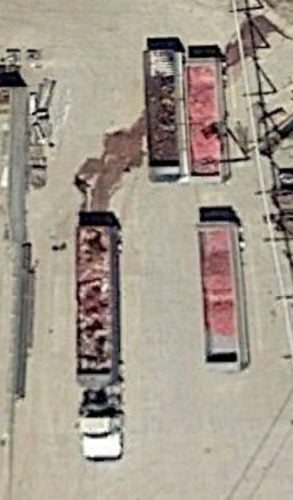
Industrial Rendering Facilities vs. Statutory Adulteration
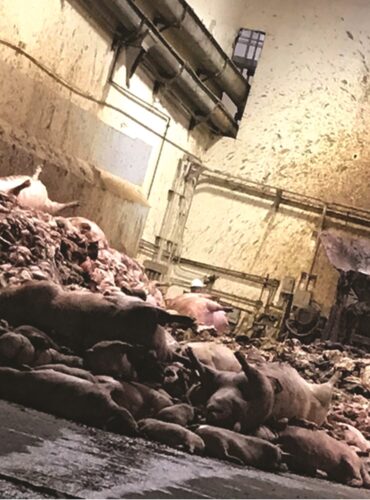
A substantial portion of commercial kibble produced by major manufacturers—including brands under Purina, Mars, Hill’s Pet Nutrition, and Blue Buffalo—relies on rendered protein meals and fats. Photographic evidence and regulatory audits from major rendering sites across California, Nebraska, and Colorado highlight structural practices that contrast sharply with federal food safety text:
- Open-Air Raw Material Storage: Raw animal offal, diseased tissues, and fallen stock are frequently exposed to environmental vectors, birds, flies, and ambient heat prior to thermal processing.
- Structural Contamination: Materials are routinely stored on unsealed outdoor concrete slabs, leading to localized rot, fluid accumulation, and decomposition.
- Regulatory Discrepancy: The FDA permits these raw material holding practices through informal regulatory mechanisms, such as Compliance Policy Guides (CPGs), despite their direct conflict with the legislative language of § 342(a)(4).
+-------------------------------------------------------------------------------------+
|                  COMPARATIVE REGULATORY ENFORCEMENT METRICS                         |
+---------------------------------------+---------------------------------------------+
| PARAMETER                             | REGULATORY RESPONSE MATRIX                  |
+---------------------------------------+---------------------------------------------+
| Violation Type                        | Independent / Small-Batch  | Corporate Giant|
+---------------------------------------+----------------------------+----------------+
| Presence of Insect/Pest Filth         | Emergency Court Injunction | No Public Action|
| Unsanitary Raw Material Storage       | Immediate Product Seizure  | Sanctioned via |
|                                       |                            | Internal CPGs  |
| Federal Court Filing (21 U.S.C. § 331)| High Probability           | Negligible Risk|
| Public Disclosure & Warning Letters   | Rapid Mandatory Issuance   | Administrative |
|                                       |                            | Discretion Used|
+---------------------------------------+----------------------------+----------------+
Market Concentration and Impact
The economic dynamics of the pet food industry exacerbate the consequences of this selective enforcement. A small group of global conglomerates controls more than 70% of the North American pet food market.
+-----------------------------------------------------------------------------------+
|               ESTIMATED US PET FOOD MARKET SHARE BY CONGLOMERATE                  |
+-----------------------------------------------------------------------------------+
| Mars Petcare           | [============================== ] 28%                    |
| Nestlé Purina          | [============================   ] 26%                    |
| General Mills (Blue)   | [=========                      ] 10%                    |
| Hill's (Colgate-Palm.) | [========                       ]  8%                    |
| Independent / Others   | [====================           ] 28%                    |
+-----------------------------------------------------------------------------------+
When regulatory enforcement targets small independent producers while bypassing dominant corporate entities, it destabilizes smaller market competitors. Independent brands operating in raw, fresh, or small-batch spaces face elevated regulatory burdens, while large-scale kibble processors utilize lower-cost, rendered ingredients under administrative immunity.
Official Statements & Regulatory Standpoints
Consumer Advocacy & Legal Analysis
Susan Thixton, a prominent pet food consumer advocate and founder of TruthaboutPetFood.com and the Association for Truth in Pet Food (ATPF), argues that the agency’s actions constitute a direct breach of public trust and legal impartiality:
"We are not defending or condemning any specific manufacturer; we cannot speak to the guilt or innocence of individual firms. But we must question why the FDA turns a blind eye to massive corporate giants committing the exact same legal violations.
This so-called ‘selective enforcement’ directly provides certain corporate entities with immunity to profit from selling adulterated pet food, while taking smaller competitors to court. This isn’t mere selective enforcement—it is regulatory favoritism that betrays every pet owner in the United States."
Advocacy groups argue that by choosing when and against whom to apply 21 U.S.C. § 342(a)(4), federal regulators have effectively created a two-tiered regulatory environment. Under this framework, compliance costs and legal risks are concentrated on independent businesses, while market-dominant entities are protected from public exposure and statutory injunctions.
The FDA’s Position on Enforcement Discretion
The FDA maintains that its enforcement decisions are guided by risk-based prioritizations and administrative discretion. In responses to consumer petitions and legal inquiries regarding the use of rendered ingredients and plant sanitation, federal officials consistently point to administrative leeway:

- Risk Mitigation: The agency contends that thermal processing steps (such as extrusion and high-heat rendering) effectively neutralize biological pathogens, such as Salmonella or E. coli, even if raw materials were held under unsanitary conditions beforehand.
- Resource Allocation: Regulators assert that formal judicial proceedings, including emergency court injunctions under 21 U.S.C. § 331(a), are reserved for instances where an immediate, unmitigated threat to animal or human health is identified.
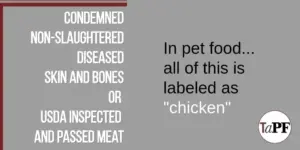
- Regulatory Flexibility: Through administrative instruments like CPG Sec. 675.400, the agency formally permits the inclusion of materials from non-slaughtered animals into pet food, provided the finished product does not present a direct health hazard.
Critics counter that this reliance on post-processing sterilization ignores the plain language of § 342(a)(4), which explicitly classifies food as adulterated based on the conditions under which it was held or prepared, regardless of whether subsequent processing neutralizes the resulting contamination.
Future Outlook
Impending Structural Reforms and Legal Challenges
The controversy surrounding the FDA’s enforcement strategies is driving several legal, legislative, and consumer initiatives aimed at reshaping federal oversight of animal feed:
+-----------------------------------------------------------------------------------+
|                        FUTURE INDUSTRY ROADMAP & CHALLENGES                       |
+-----------------------------------------------------------------------------------+
| 1. Administrative Challenges                                                      |
|    • Citizen Petitions challenging the legal validity of Compliance Policy Guides.|
|    • Demands for uniform application of 21 U.S.C. § 342(a)(4) across all firms.   |
+-----------------------------------------------------------------------------------+
| 2. Legislative Oversight & FSMA Implementation                                    |
|    • Congressional inquiries regarding FDA Center for Veterinary Medicine (CVM)   |
|      budget allocations and enforcement discretion metrics.                       |
|    • Implementation mandates under the Food Safety Modernization Act (FSMA).     |
+-----------------------------------------------------------------------------------+
| 3. Market and Consumer Responses                                                  |
|    • Increased market demand for transparent supply chains and human-grade foods. |
|    • Potential class-action litigation alleging consumer fraud based on statutory  |
|      adulteration definitions.                                                    |
+-----------------------------------------------------------------------------------+
The Federal Food Safety Modernization Act (FSMA) Gap
While the implementation of the Food Safety Modernization Act (FSMA) was intended to establish preventative controls across all food manufacturing sectors, systemic enforcement gaps remain. The Center for Veterinary Medicine (CVM)—the branch of the FDA responsible for pet food oversight—continues to face criticism for failing to apply Preventive Controls for Animal Food regulations consistently across both industrial kibble conglomerates and independent raw or fresh food processors.
Judicial and Consumer Implications
As emergency court injunctions against small manufacturers move through federal courts, advocacy coalitions plan to leverage discovery processes to compel the FDA to disclose its internal criteria for enforcement discretion. If federal courts determine that the agency has exceeded its statutory authority by applying arbitrary enforcement standards, the FDA could be forced to re-evaluate its long-standing Compliance Policy Guides.
For American consumers, the dispute highlights a growing disconnect between public safety expectations and federal regulatory practices. Until federal oversight is applied uniformly across all market participants—regardless of corporate scale—the pet food industry remains governed by a dual regulatory policy that challenges fundamental principles of legal fairness and consumer protection.