
In an escalating battle over animal welfare and conservation policy in the Pacific, international feline advocacy leader Alley Cat Allies has formally intervened against proposed amendments to Hawaii Administrative Rule (HAR) Chapter 13-124. The contentious regulatory changes, advanced by the Hawaii Department of Land and Natural Resources (DLNR), threaten to upend decades of progress in humane animal management by prioritizing lethal control methods over proven community-based solutions.
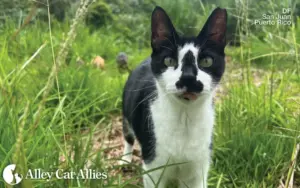
At the heart of the controversy is Trap-Neuter-Return (TNR)—widely recognized by veterinary professionals and animal welfare organizations as the only humane and effective method for stabilizing outdoor cat populations. The DLNR’s newly proposed rules would not only authorize the impoundment and destruction of un-crated or un-leashed domestic animals, including community cats, but would also effectively criminalize the feeding of these animals on state-managed lands.
Legal experts and advocates point out that the proposed regulatory overhaul exceeds the statutory authority granted to the DLNR by the Hawaii Legislature, directly conflicts with existing state animal cruelty laws, and sidesteps the democratic process. Furthermore, environmental scientists and policy analysts argue that focusing resources on the eradication of outdoor cats misdiagnoses the root causes of indigenous species loss in Hawaii. True conservation, advocates emphasize, requires tackling the primary drivers of ecological decline: human development, habitat destruction, and climate change. As the public comment period closes and stakeholders brace for a protracted legal and political struggle, the fate of Hawaii’s community cats—and the integrity of the state’s administrative rulemaking process—hangs in the balance.
Detailed Chronology & Regulatory Background
The conflict surrounding Hawaii Administrative Rule Chapter 13-124 is the latest flashpoint in a long-standing tension between wildlife preservationists and animal welfare advocates in the Aloha State. To understand the gravity of the current regulatory push, it is necessary to examine the sequence of events and legislative precedents leading to the DLNR’s recent actions.
[1990] Alley Cat Allies Founded ──> [2022] Hawaii HB 1987 Fails ──> [August 2026] DLNR Proposes HAR 13-124 Amendments ──> [Present] Formal Opposition & Public PushbackThe Legislative Precedent: HB 1987 and the Separation of Powers
The debate over how Hawaii manages its outdoor animal populations is not new to the state legislature. In 2022, the Hawaii House of Representatives introduced House Bill 1987 (HB 1987), a measure designed to tackle the complex interplay between animal welfare and wildlife conservation. The bill sought to clarify policy regarding community cats and management practices across public lands.
However, after substantial debate and public scrutiny, the legislature ultimately chose not to pass the bill. The decision reflected the profound complexity, division, and high stakes inherent in balancing native species protection with domestic animal welfare.
According to legal analysts and advocacy groups like Alley Cat Allies, the legislature’s refusal to enact HB 1987 is a critical turning point. When a legislative body explicitly declines to pass a specific statute, administrative agencies are generally barred from using the rulemaking process to implement substantially the same policy. By attempting to introduce lethal control and sweeping feeding bans via administrative rule, the DLNR faces serious accusations of violating the separation of powers—effectively attempting to enact policies that the democratically elected legislature chose to reject.
The Proposed Amendments to HAR Chapter 13-124
In mid-2026, the DLNR advanced proposed amendments to Hawaii Administrative Rule Chapter 13-124, framing them as necessary measures for protecting indigenous, threatened, and endangered wildlife. However, a close reading of the text reveals provisions that reach far beyond standard conservation practices:
- Authorization of Lethal Control: The amendments grant the DLNR the power to "impound or destroy domestic animals that are not crated, caged, contained, or leashed." Because community cats live outdoors and cannot practically be contained in this manner, this rule places them directly in the crosshairs of state-sanctioned extermination.
- Prohibition of Feeding: The rules dismantle the operational backbone of TNR programs by banning the feeding of animals on DLNR-managed lands. Without organized feeding, caretakers cannot effectively trap, monitor, or manage colonies.
- Expansion of Statutory Definitions: The rules broaden the definitions of terms such as "take," "harm," and "harass" to cover indigenous wildlife alongside threatened and endangered species, stretching the agency’s legal mandate past its statutory breaking point.
Supporting Context & Metrics: The Science of Cat Management and Conservation
To evaluate the validity of the DLNR’s proposed rules, it is essential to examine the empirical data surrounding community cat populations, Trap-Neuter-Return efficacy, and the genuine threats facing Hawaii’s native ecosystems.
The Mechanics and Success of Trap-Neuter-Return (TNR)
For decades, traditional animal control relied on catch-and-kill policies—removing outdoor cats from an area only to have new cats move in to take advantage of remaining food sources, a phenomenon known in ecology as the "vacuum effect."
Trap-Neuter-Return fundamentally changes this dynamic through a structured, scientific approach:
- Humane Trapping: Cats are safely captured using humane box traps.
- Veterinary Care: Each cat is spayed or neutered, vaccinated against rabies and other diseases, treated for medical issues, and eartipped (the universal sign of a sterilized outdoor cat) for visual identification.
- Return: The cats are returned to their outdoor home, where they live out their natural lives without reproducing.
Published scientific studies consistently demonstrate that TNR successfully ends the breeding cycle. Over time, colony populations stabilize and naturally decline through attrition, all while eliminating nuisance behaviors associated with unsterilized cats, such as yowling, territorial fighting, and spraying. Furthermore, mandatory vaccinations protect both the feline population and the surrounding human community from disease.
Misdiagnosing Ecological Decline: The Real Threats to Wildlife
Proponents of lethal cat control often point to predation as the primary driver of native bird and wildlife declines in Hawaii. However, leading environmental science organizations—including the American Bird Conservancy—conclude that habitat loss is the single largest threat to birds and biodiversity globally.
Primary Threats to Native Hawaiian Wildlife:
┌─────────────────────────┐     ┌─────────────────────────┐     ┌─────────────────────────┐
│   Habitat Destruction   │     │     Climate Change      │     │    Human Development    │
│  (Leading Cause of Loss)│     │  (Altering Ecosystems)  │     │  (Encroaching Spaces)   │
└─────────────────────────┘     └─────────────────────────┘     └─────────────────────────┘
In Hawaii, centuries of intensive human development, agricultural expansion, deforestation, and the introduction of invasive plant species and non-native predators have structurally dismantled fragile island ecosystems. Blaming community cats for systemic biodiversity loss serves as a convenient oversimplification, deflecting attention and resources away from the complex, expensive, and politically difficult work of habitat restoration and climate mitigation.
Legal and Constitutional Vulnerabilities of the Rules
The DLNR’s proposed amendments are vulnerable on multiple legal fronts, according to formal opposition testimony submitted by legal scholars and animal advocates:
- Exceeding Statutory Authority: Under Hawaii Revised Statute (HRS) § 195D-6, the DLNR is authorized to adopt rules to carry out Chapter 195D. However, HRS § 195D-2 explicitly defines "take" to apply only to endangered and threatened species, specifically excluding indigenous species. By expanding these definitions to include indigenous wildlife, the DLNR has engaged in an impermissible substantive expansion of statute law.
- Conflict with Animal Cruelty Statutes: HRS § 711-1108.5 makes it a crime to intentionally, knowingly, or recklessly cause an animal’s death, physical harm, or subject it to cruel neglect. Because administrative rules are subordinate to state statutes, any rule that authorizes lethal removal and denies sustenance to living animals is legally invalid.
- Vagueness and Lack of Due Process: Due process requires fair notice of prohibited conduct and clear enforcement standards. The proposed rules suffer from imprecise drafting, undefined terms, and ambiguous enforcement guidelines, making them unconstitutionally vague and prone to arbitrary application.
- One-Size-Fits-All Flaws: The rules impose a blanket ban across all DLNR-managed lands without requiring site-specific analyses to determine if a genuine wildlife conflict exists in a given location. Treating a remote forest ecosystem identically to an urban-adjacent public park violates foundational principles of sound resource management.
Official Statements & Organizational Perspectives
The resistance to HAR Chapter 13-124 is spearheaded by Alley Cat Allies, an international advocacy organization founded in 1990 that has spent decades transforming community standards around feline care.
In their official testimony to the Department of Land and Natural Resources, organization leaders stated:
"Alley Cat Allies supports efforts to protect Hawaii’s indigenous, threatened, and endangered wildlife while ensuring that cats living on the islands are treated humanely. However, the proposed amendments to Hawaii Administrative Rule Chapter 13-124 exceed existing state law and agency authority, are inhumane, and undermine effective approaches to community cat management, particularly TNR."
Highlighting the ethical and practical failures of eradication, the organization emphasized:
"Lethal control is proven ineffective, archaic, and cruel. The destruction of one species to save another is morally indefensible, especially when species loss and the solutions to it are primarily due to human development."
Local advocates, grassroots groups, and veterinary professionals in Hawaii have echoed these sentiments, expressing deep concern that the rules will criminalize the compassionate work of volunteers who spend their own time and money maintaining healthy cat colonies. For years, these coalitions have worked hand-in-hand with shelters and municipalities to foster a culture of humane coexistence. The DLNR’s proposed shift threatens to dismantle these collaborative networks overnight.
Future Outlook: What Lies Ahead for Hawaii’s Wildlife and Cats
As public scrutiny intensifies, the debate over HAR Chapter 13-124 has reached a critical juncture. The formal opposition mounted by Alley Cat Allies and allied legal experts has placed the DLNR under intense pressure to justify regulatory overreach that many believe is legally indefensible and morally bankrupt.
Potential Trajectories
- Withdrawal of Amendments: In the face of overwhelming legal challenges regarding statutory authority and constitutional vagueness, the DLNR may choose to withdraw the proposed amendments in their entirety, returning stakeholders to the drawing board.
- Litigation and Judicial Review: Should the DLNR move forward and adopt the rules as written, animal welfare organizations are fully prepared to challenge the regulations in court. Given the clear conflict with HRS § 711-1108.5 (animal cruelty) and the misinterpretation of HRS § 195D (statutory authority), the judiciary would likely invalidate the rules.
- Legislative Reform: A third path involves the Hawaii Legislature stepping in to codify clear, statewide standards for community cat management—resolving the vacuum left by the defeat of HB 1987 through transparent, democratic debate rather than administrative fiat.
A Call for Comprehensive Conservation
Ultimately, the controversy in Hawaii serves as a cautionary tale for policymakers worldwide. True conservation cannot succeed by pitting domestic animal welfare against wildlife protection. Eradicating community cats does nothing to heal fragmented forests, reverse climate change, or halt destructive commercial development.
Hawaii has an opportunity to model a truly holistic approach—one that embraces Trap-Neuter-Return to stabilize feline populations humanely while dedicating state resources where they will make a measurable difference: protecting and restoring natural habitats. For the cats, the wildlife, and the people of Hawaii, the path forward must be rooted in science, compassion, and the rule of law.