
BETHESDA, Md. — As neighborhoods across the country prepare for the frights, festivities, and festivities of October 31, animal welfare organizations are issuing urgent reminders that the season’s thrills can pose serious, sometimes life-threatening hazards to domestic and community felines. Alley Cat Allies, a preeminent national advocacy organization dedicated to the protection of cats, has released its official 2026 Halloween Cat Safety Guide. The comprehensive advisory outlines critical steps pet owners and community cat caregivers must take to ensure a safe holiday, while also highlighting year-round systemic issues affecting feline populations nationwide.
Executive Overview
Halloween is widely celebrated for its imaginative costumes, sugary treats, and elaborate neighborhood displays. However, the sudden influx of costumed visitors, open doors, flickering flames, and toxic confectioneries creates a volatile environment for domestic animals. Cats, which are sensitive to environmental disruptions and changes in routine, are particularly vulnerable during this high-stimulus holiday.
According to Alley Cat Allies, the risks span both indoor and outdoor environments. Indoor cats face dangers from decorative choking hazards, toxic ingestions, and accidental escapes caused by frequent trick-or-treating traffic. Meanwhile, outdoor community cats confront risks associated with pranksters, seasonal mischief, and general neighborhood disruptions. By implementing proactive measures—ranging from secure indoor sanctuaries to updated microchip registries—caregivers can significantly mitigate these risks, ensuring that Halloween remains a night of harmless fun rather than an emergency veterinary crisis.
Detailed Chronology and Risk Factors
To understand the full scope of Halloween hazards, animal safety experts have broken down the evening into key phases of risk, detailing how standard holiday traditions intersect with feline biology and behavior.
Phase 1: Pre-Evening Setup and Decorations
As homes are transformed into haunted houses, the introduction of foreign objects into a cat’s territory can trigger curiosity or anxiety.
- Choking Hazards and Intestinal Blockages: Synthetic spider webs, hanging wires, plastic spider rings, and small costume accessories are easily batted around by playful cats. If ingested, these materials can cause severe linear foreign body obstructions or choking. Similarly, natural elements like decorative corn, dried leaves, and artificial moss can cause dangerous gastrointestinal blockages if chewed or swallowed.
- Open Flames and Electrical Hazards: Traditional jack-o’-lanterns illuminated by open candle flames pose a severe burn and fire hazard, especially when placed near low ledges or surfaces where cats can jump. Furthermore, the extensive use of electrical cords for animated decorations and string lights presents a dual risk of electrocution and entanglement if not properly secured or taped down.
Phase 2: Peak Trick-or-Treat Hours (The Festivity Surge)
When the sun goes down and neighborhood foot traffic peaks, the home environment changes dramatically.
- The Doorway Dilemma: The constant opening and closing of front doors as trick-or-treaters arrive provides ample opportunity for indoor-only cats to bolt outdoors into the dark, unfamiliar, and chaotic night. Once outside, panicked cats can easily become lost, injured, or disoriented.
- Sensory Overload: The sound of doorbell chimes, loud knocks, shouting, and costumed strangers shouting "trick or treat" can induce acute stress in felines. Cats possess acute hearing and a strong preference for routine; sudden environmental chaos often leads to fear-based aggression, hiding, or stress-induced physiological responses.
Phase 3: The Aftermath and Community Cat Monitoring
While household festivities wind down late in the evening, the responsibilities of animal caregivers extend into the following days.
- Outdoor Colony Checks: Community cats (feral and stray felines living outdoors) naturally seek shelter during periods of high human activity. However, neighborhood disturbances can displace them. Caregivers must conduct thorough wellness checks in the days immediately following Halloween to account for every member of a colony and ensure no animals have fallen victim to seasonal pranks or localized hazards.
Supporting Context & Metrics: Toxicities and Veterinary Emergencies
The festive treats that define Halloween are among the most hazardous elements for domestic pets. Veterinary poison control centers report significant spikes in emergency calls during the autumn holiday season, largely driven by accidental ingestions of candy and decorative substances.
The Dangers of Confectionery Toxins
- Chocolate Toxicity: Both dark and milk chocolate contain theobromine and caffeine, stimulants that cats and dogs cannot efficiently metabolize. Ingesting even small amounts can lead to vomiting, diarrhea, rapid breathing, increased heart rate, seizures, and, in severe cases, death.
- Artificial Sweeteners (Xylitol): Frequently found in sugar-free candies, gums, and baked goods, xylitol triggers a rapid and dangerous insulin release in animals, leading to profound hypoglycemia (low blood sugar), liver failure, and severe blood-clotting disorders.
- Wrappers and Packaging: Beyond the chemical toxicity of the candy itself, foil and plastic wrappers present immediate choking and intestinal obstruction risks if chewed and swallowed by curious pets.
Emergency Protocols
Veterinary professionals urge pet owners to keep all candy bowls entirely out of reach. In the event that an animal is suspected of consuming a toxic substance, immediate professional intervention is required.
- Caregivers should immediately contact their primary veterinarian, a local 24-hour emergency veterinary hospital, or a dedicated animal poison control hotline, such as the Pet Poison Helpline at 855-764-7661.
- Early detection and intervention are the single most significant factors in successfully treating poisoning cases.
Official Guidelines and Expert Recommendations
Alley Cat Allies has synthesized decades of animal advocacy and veterinary science into a clear, actionable checklist designed to safeguard felines before, during, and after Halloween.
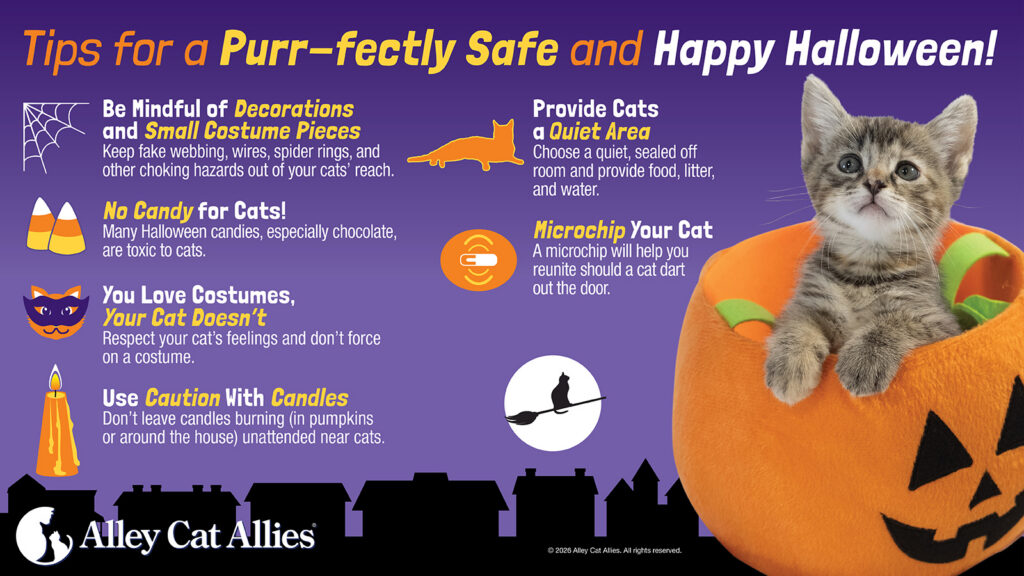
1. Secure Decorations and Eliminate Choking Hazards
Keep all fake webbing, string lights, small plastic novelties, and autumnal foliage securely out of feline reach. If using traditional carved pumpkins, opt for battery-operated LED candles rather than open flames to prevent burns and fire risks.
2. Maintain a Strict Zero-Candy Policy for Pets
Store all human treats safely in cupboards or high countertops. Educate children in the household about why sharing Halloween candy with pets is dangerous, and provide cat-safe treats as an alternative so pets can partake in the holiday spirit safely.
3. Respect Feline Boundaries Regarding Costumes
While dressing up pets has become a popular social media trend, animal behaviorists emphasize that most cats find clothing deeply stressful. Forcing a cat into a restrictive costume limits their range of motion, interferes with their breathing and non-verbal communication (such as ear and tail positioning), and induces acute psychological distress. It is always best to let cats go "costume-free."
4. Establish a Safe, Quiet Sanctuary Room
To protect indoor cats from the sensory overload of trick-or-treating and the hazard of an open front door, designate a quiet, secure room for them on Halloween night.
- Equip the space with essentials: fresh food and water, a clean litter box, comfortable bedding, and favorite toys.
- Muffle outside noises by turning on a television or radio to a low, soothing volume, or utilize feline-specific pheromone diffusers (such as Feliway) to promote a calm atmosphere.
- Check on the cat periodically throughout the evening to offer reassurance.
5. Verify and Update Microchip Information
Because the constant motion of opening doors creates a high escape risk, ensuring permanent identification is critical. Every cat—even indoor-only pets—should be microchipped. Caregivers must verify that their contact information is current in the microchip manufacturer’s registry database, ensuring a rapid reunification process should the worst occur and a cat slip outside.
6. Track Community Cat Colonies
For those who care for outdoor community cats, organization is key. Maintaining detailed records that include each cat’s physical description, medical history, and photo ensures that caregivers can accurately account for every animal in the colony during post-holiday sweeps. Alley Cat Allies provides specialized tracking systems to streamline this process year-round.
Future Outlook: Beyond Halloween—Advocating for Felines Year-Round
While holiday safety is a pressing seasonal concern, Alley Cat Allies emphasizes that the broader fight for feline welfare extends far beyond a single night in October. Across the globe, cats of all descriptions face systemic threats rooted in outdated municipal policies, misinformation, and a historical undervaluation of feline life.
Combating Cruel Policies Through Education and Advocacy
True institutional change begins with community engagement and legal reform. Alley Cat Allies champions the core principle that Cats Are Community and deserve comprehensive legal protection across animal shelters, veterinary clinics, and legislative bodies.
- Auditing Local Laws: Cat advocates have a fundamental right to understand local animal control ordinances and shelter operations. Resources are readily available to help citizens access public animal shelter records and evaluate shelter live-release rates.
- Advocating for Nonlethal Programs: Modern animal management must pivot away from outdated, lethal control methods and fully embrace humane, evidence-based practices—most notably Trap-Neuter-Return (TNR) for community cat populations. TNR stabilizes colony sizes naturally, improves public health, and dramatically reduces shelter intake and euthanasia rates.
- Zero Tolerance for Cruelty: Animal advocates are urged to remain vigilant, learning how to properly report suspected animal cruelty and advocating for strict enforcement and maximum legal penalties for perpetrators of abuse.
As communities transition from the autumn festivities into the winter months, organizations like Alley Cat Allies continue to rally millions of supporters worldwide. Through continuous education, grassroots advocacy, and immediate emergency preparedness, animal lovers can build a society where every cat is valued, protected, and respected every single day of the year.