
Executive Overview
The land-based aquaculture sector has reached a critical inflection point. While decades of engineering trials, biological experimentation, and significant capital investments have proven that Recirculating Aquaculture Systems (RAS) are technically viable, the industry now faces a much sterner test: proving consistent, scalable commercial profitability.
Speaking on a high-profile panel at Seafood Expo Asia in Singapore, senior executives from industry pioneers FRD Japan and Nordic Aqua (Ningbo) addressed the shifting tides of land-based fish farming. The consensus was clear: the era of simply demonstrating that fish can be grown in closed-loop, land-based facilities has passed. The mandate for the next five years is monetization, operational excellence, and investor reassurance.
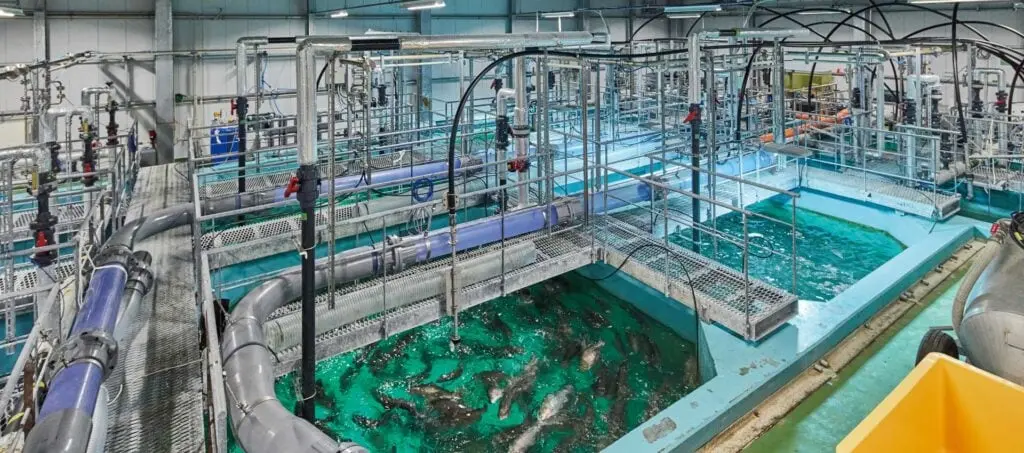
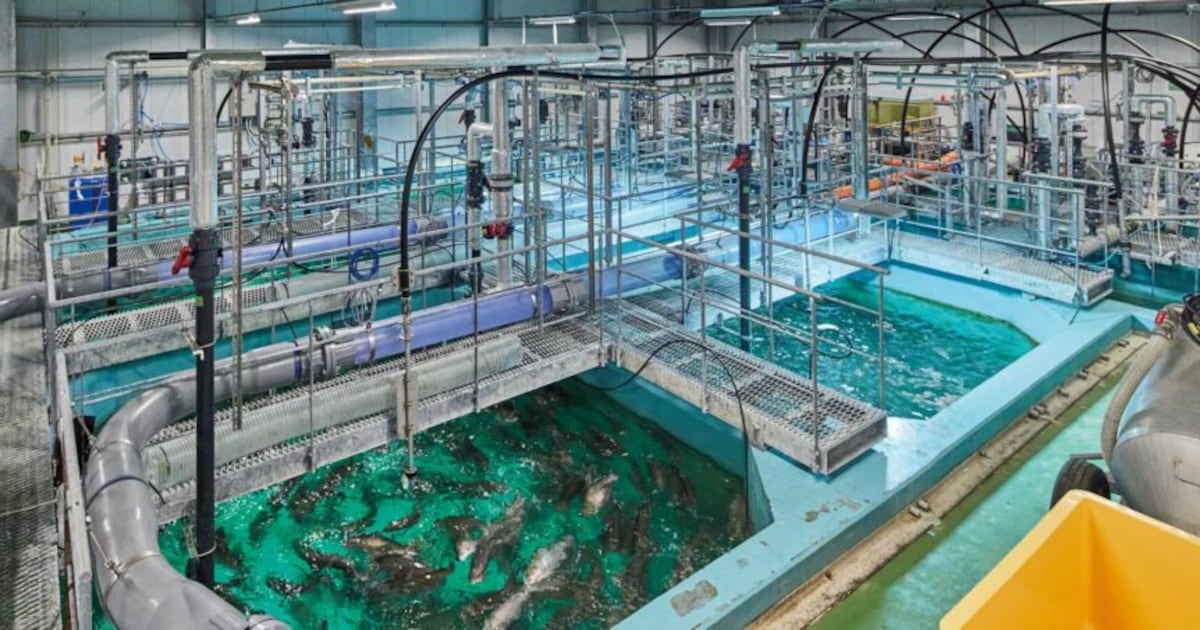
As traditional wild-caught fisheries face ecological pressures and open-net pen aquaculture grapples with environmental regulations, disease management, and climate volatility, RAS technology has emerged as a beacon of sustainable food production. By filtering, treating, and recycling up to 99% of the water used in production, RAS isolates fish from ocean-borne pathogens, sea lice, and algal blooms.
However, constructing and operating these capital-intensive facilities—complete with complex biological filters, oxygenation systems, and energy-intensive climate control—has pushed many early ventures to their financial limits. As the industry enters a make-or-break phase, market leaders are betting that larger production scales, refined operational efficiencies, and a specialized workforce will finally unlock long-term, positive cash flows.
Detailed Chronology: The Evolution of Modern RAS Farming
The journey of Recirculating Aquaculture Systems from theoretical laboratory models to commercial-scale production facilities has been marked by iterative engineering breakthroughs, steep learning curves, and high financial stakes.
The Foundation Years (2013–2016)
FRD Japan was established in 2013 with a distinct vision: rather than merely building traditional flow-through systems or adopting high-maintenance saltwater RAS technologies, the company sought to pioneer proprietary closed-loop filtration mechanisms optimized for regional markets. During this period, the broader aquaculture sector viewed land-based farming with skepticism, citing high capital expenditures (CapEx) and operational risks tied to biological system crashes, often referred to as "system resets."
Research, Development, and Pilot Scaling (2017–2023)
To de-risk its technology, FRD Japan inaugurated a dedicated research and development (R&D) farm in Chiba Prefecture in 2017. This facility served as a vital testing ground for optimizing water quality parameters, feed conversion ratios (FCR), and fish welfare protocols. Concurrently, international players began breaking ground on mega-projects globally. Nordic Aqua established its footprint in Ningbo, China, targeting the world’s burgeoning appetite for fresh Atlantic salmon and positioning itself geographically closer to end consumers to drastically reduce transportation emissions and supply chain lag.
Commercial Realization and First Harvests (2024–Present)
The landscape shifted rapidly as pilot projects graduated to full commercial operations. In February of this year, FRD Japan transitioned from its R&D phase by launching its first commercial-scale facility, focusing on rainbow trout marketed locally as "salmon trout." Meanwhile, Nordic Aqua’s facility in Ningbo ramped up commercial output, proving that large-scale Atlantic salmon production could be successfully localized in mainland China.
Despite these operational milestones, industry leaders acknowledge that sustained commercial viability remains unproven across a multi-year economic cycle, making the current operational period the most critical in the history of land-based aquaculture.
Supporting Context & Metrics: Scale, Economics, and Market Dynamics
The economic viability of RAS farming hinges on a delicate balance between high upfront capital costs, ongoing operational expenditures (OpEx)—particularly electricity and feed—and market-clearing prices. Industry data reveals that smaller facilities struggle to compete with traditional open-net or imported fresh seafood due to unamortized fixed costs. Consequently, the push toward industrial-scale facilities has become an absolute necessity.
FRD Japan: Scaling for Cost Efficiency
FRD Japan’s foundational strategy relies on overcoming the cost barriers inherent in closed-containment production. Having transitioned from its Chiba R&D base to a commercial-scale operation, the company has set an interim production target of 3,500 tonnes. Looking further ahead, CEO Tez Sogo has outlined an ambitious roadmap to scale output to 10,000 tonnes annually by 2030.
According to Sogo, achieving true cost competitiveness requires consolidating production into ultra-large facilities capable of turning out upwards of 10,000 tonnes under a single roof. Once this scale is reached, production costs will drop sufficiently to allow the company to successfully penetrate the frozen seafood market, expanding its customer base beyond the premium fresh segment.
Nordic Aqua (Ningbo): Capturing the Chinese Market
Nordic Aqua has demonstrated remarkable operational stability at its Ningbo facility, achieving an annualized production rate of 8,000 tonnes of Atlantic salmon. The company’s cumulative production metrics underscore the biological feasibility of modern RAS:
- Total Volume Produced: Exceeding 14,000 tonnes of Atlantic salmon.
- Total Volume Harvested: Nearly 6,000 tonnes successfully brought to market.
- Mortality Rates: Maintained at an impressively low average of approximately 6 percent—significantly outperforming many traditional open-net marine farms facing environmental stressors.
Building on this success, Nordic Aqua is actively planning an expansion phase designed to add another 12,000 tonnes of production capacity, ultimately bringing its total output ceiling to 20,000 tonnes. Strategically positioned within China—which has rapidly ascended to become the world’s second-largest Atlantic salmon market behind the United States—Nordic Aqua enjoys localized market access that mitigates geopolitical freight bottlenecks and tariff fluctuations.
Official Statements and Industry Insights
The panel at Seafood Expo Asia provided a transparent forum for industry executives to dissect the current psychological and economic barriers facing the RAS sector.
Tez Sogo, CEO of FRD Japan
Addressing the financial realities of land-based aquaculture, Sogo offered a candid assessment of the sector’s monetization hurdles:
"I think RAS is a very difficult project to monetise. In the next five years, a couple of companies will be in positive cash flow and will make it happen. We are trying to be one of those companies."
Emphasizing the imperative of industrial consolidation, Sogo reiterated the mathematical reality of land-based farming margins:
"To minimise the production cost, we need to scale to above 10,000 tonnes in one facility. Once we do that, our production costs will be low enough to sell in the frozen market."
Andreas Thorud, Managing Director of Nordic Aqua
Echoing the sentiments of his industry peer, Nordic Aqua’s Andreas Thorud reflected on the maturation of the sector while emphasizing the necessity of risk mitigation for prospective investors:
"I think what’s been shown is that RAS is difficult but doable. What the industry needs now are concrete examples that show investors RAS projects can generate sustainable, predictable returns."
Thorud also addressed the human capital deficit plaguing the industry, noting that operating a high-tech bio-secure facility requires specialized competencies far exceeding those of conventional aquaculture:
"The technology is vastly more knowledge-intensive than conventional salmon farming. We require personnel with specialized RAS expertise who understand water chemistry, microbial management, and complex automated systems."
Rather than viewing land-based aquaculture as a total market disruptor that will eradicate traditional farming overnight, Thorud positioned RAS as a complementary force within the global protein supply chain:
"There will be different approaches pursued, and some will succeed while others will not. What still needs to be established is a strong commercial example that proves the model works, has been tested, and can be monetized. Has that been proven over time yet? No. Will it happen? I think so. If it does, the sector could have a very exciting future."
Future Outlook: The Next Five Years
As the land-based aquaculture sector moves deeper into the latter half of the decade, its trajectory will likely be defined by three primary vectors: financial validation, technological diversification, and human resource development.
- The Quest for Positive Cash Flow: The next three to five years will separate viable commercial enterprises from speculative ventures. As pioneers like FRD Japan and Nordic Aqua approach their volume targets, their ability to post consistent net profits will determine whether institutional capital flows back into the sector en masse.
- Technological Coexistence: Industry experts increasingly agree that RAS will not operate in a vacuum. Instead, the future of aquaculture will likely feature a mosaic of production methodologies, including hybrid systems (utilizing land-based smolt production followed by sea-grown finishing), advanced offshore containment rigs, and hyper-intensive land-based RAS facilities. Each model will carve out a niche based on regional geography, species biology, and capital availability.
- Talent Acquisition and Training: As facilities scale up, academic institutions and industry bodies must collaborate to establish robust training pipelines for RAS technicians, biological data analysts, and facility managers. Bridging the knowledge gap will be paramount to preventing operational anomalies and safeguarding livestock investments.
Ultimately, while the path forward remains laden with technical and financial challenges, the foundational groundwork laid by today’s trailblazers suggests that the promise of sustainable, land-based seafood production is steadily transforming from an engineering vision into an enduring commercial reality.