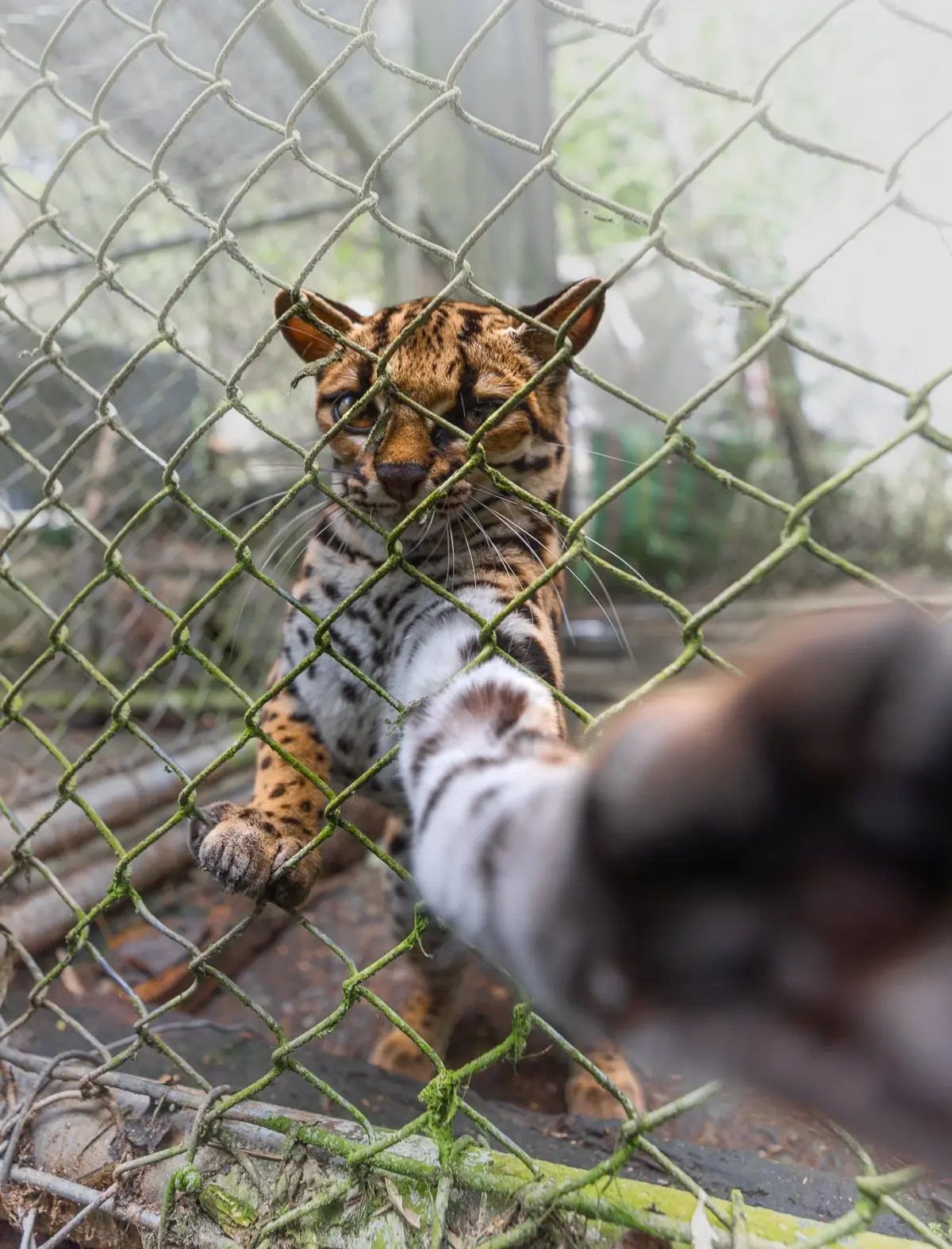
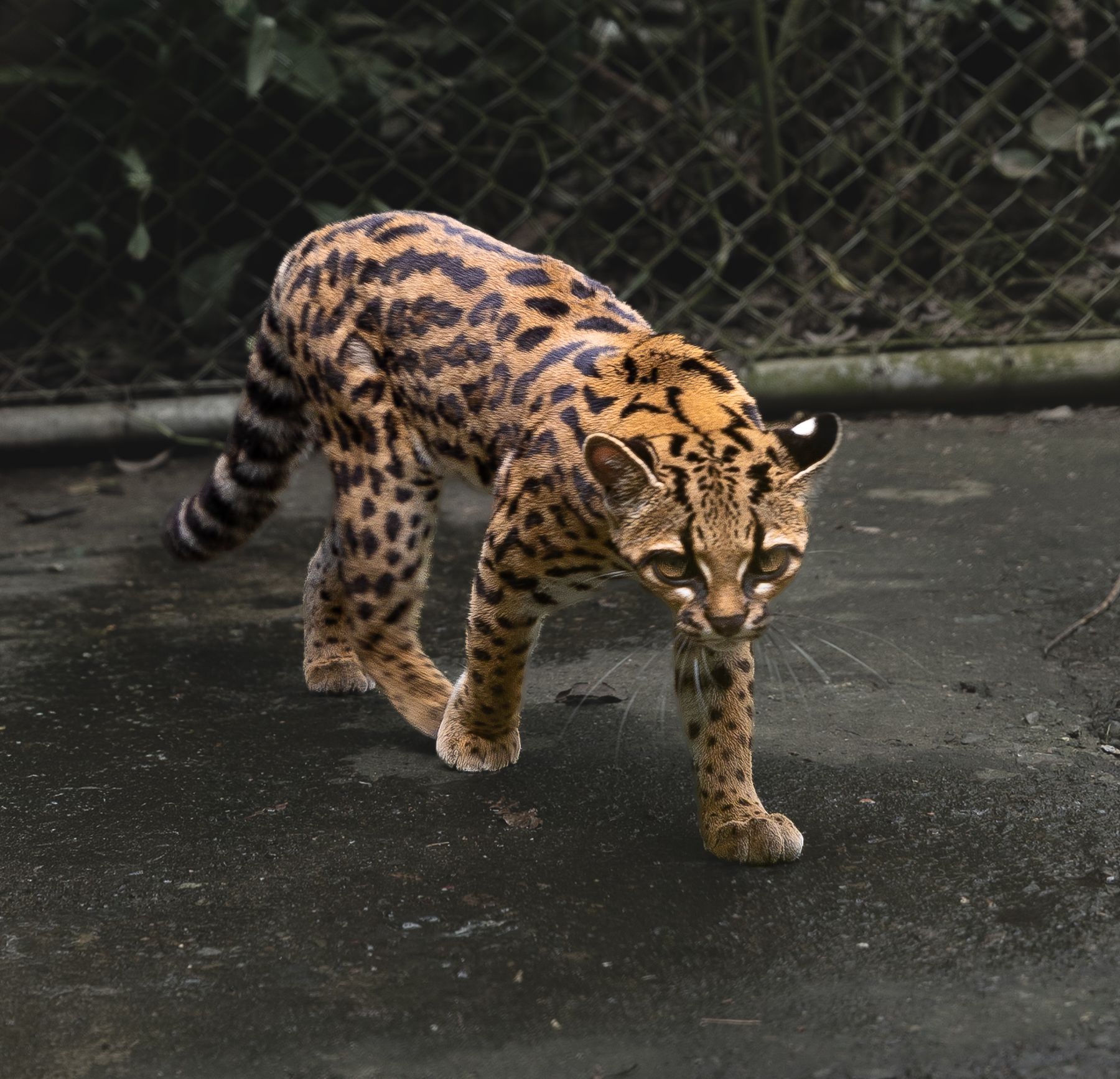
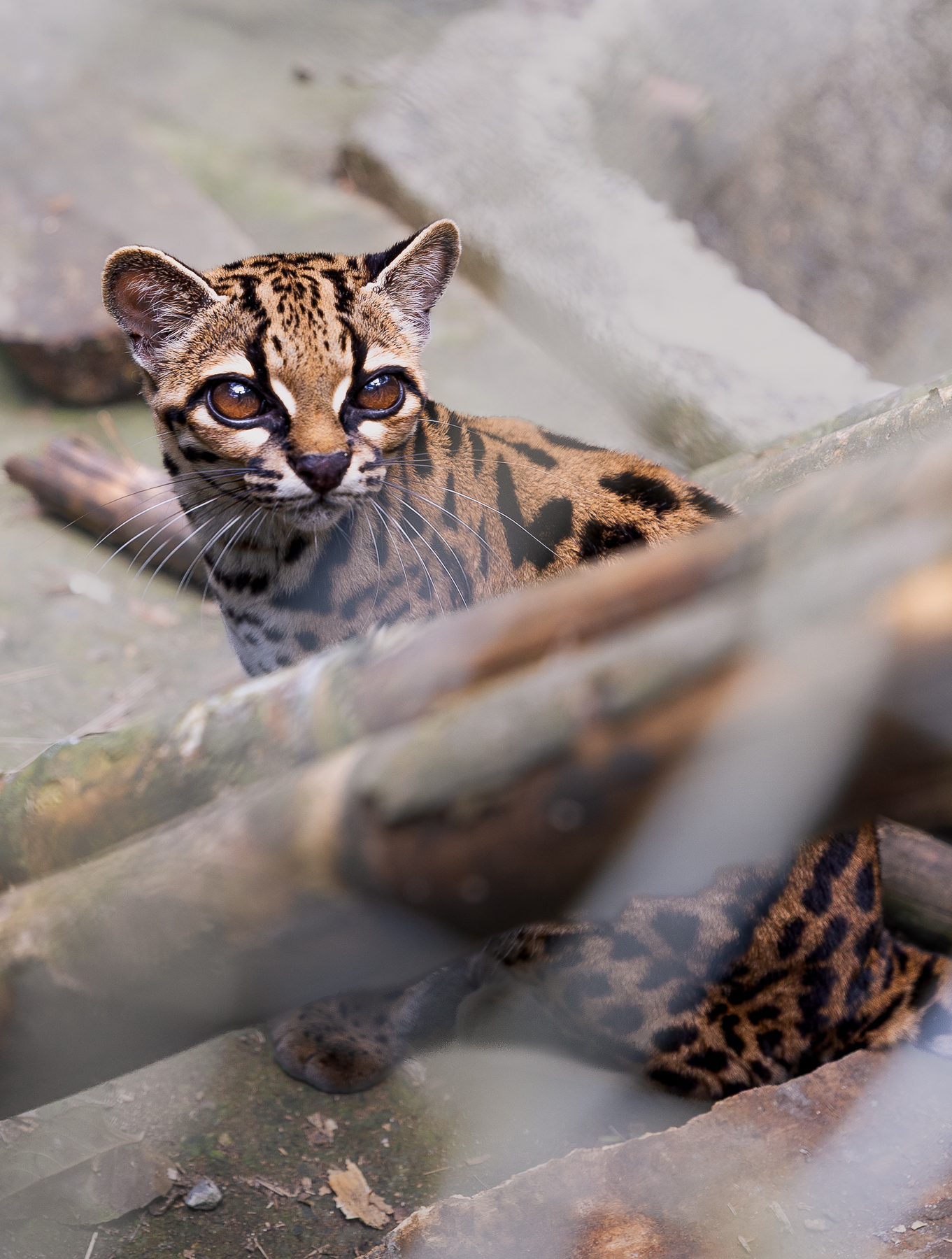
In the sprawling, mist-shrouded tropical cloud forests of Bolivia’s Yungas region, a quiet revolution in modern mammalogy has taken place. For over a decade, a diminutive, spotted cat lived out its days at a local wildlife sanctuary. To the family that rescued it and the caretakers who fed it, the animal was simply an unusual pet—a bit smaller than a typical domestic feline, strikingly patterned, and undeniably peculiar, but ultimately dismissed as an oddity of no grand scientific note.
That casual oversight has now been upended. According to ground-breaking research highlighted by PBS News, this sanctuary resident has been officially confirmed as a wild feline species entirely new to science. Named Leopardus tilcayo, this extraordinary predator represents the first newly designated wild cat species in more than a century, with the last formal classification of its kind occurring in 1923 with the Uruguayan pampas cat.
Measuring a mere 18 inches from the tip of its head to the base of its tail and weighing a feather-light 3 pounds, Leopardus tilcayo is physically smaller than the average house cat. Yet, its genetic lineage is an evolutionary titan. Comprehensive genomic mapping reveals that this micro-predator split from its closest relatives roughly 1.4 million years ago. Furthermore, this discovery fundamentally rewrites the taxonomy of South America’s tiger cats, shattering long-held assumptions that these animals belonged to a single monolithic species and proving instead that the continent harbors at least five distinct feline lineages.
Beyond its biological significance, the naming of Leopardus tilcayo marks a triumph for indigenous preservation. Eschewing the conventional scientific tradition of naming new species after Western explorers or researchers, the lead biologists honored the ancestral heritage of the Andean cloud forests by adopting a moniker already utilized by local communities. As scientists race to understand the animal’s behavior, diet, and fragile habitat, this tiny cat has become a high-profile ambassador for the imperiled biodiversity of South America’s vanishing wilderness.
Detailed Chronology: From Sanctuary Curiosity to Global Discovery
The journey of Leopardus tilcayo from an overlooked sanctuary pet to a landmark biological discovery spans over a decade of serendipity, rigorous fieldwork, and state-of-the-art genetic sleuthing.
The Years of Anonymity
Long before the scientific community took notice, the male cat at the center of this discovery was living a quiet life in Bolivia. Taken in by a local family when he was just a kitten, the animal displayed traits that set him apart from domestic cats, but his exact origins were obscured by the remote nature of the Yungas region. Eventually, the cat was transferred to a local wildlife sanctuary where he lived for years, quietly sharing space with other rescued animals. Caretakers noted his diminutive stature, his rounded ears, and his striking light brown coat covered in dark, leopard-like spots, but without comparative baseline data from the wild, no one suspected he belonged to an undescribed taxonomic group.
The Spark of Recognition
The turning point arrived when Bolivian biologist Paola Nogales-Ascarrunz, a National Geographic explorer and one of the lead authors of the subsequent study, visited the sanctuary. She was there at the invitation of a colleague who suspected that the resident cat did not quite match the profile of any known regional species.
Upon first laying eyes on the animal, Nogales-Ascarrunz was immediately struck by his proportions. "Knowing other wild cats, it was peculiar," she recalled to PBS News. "He really is tiny."
Recognizing that visual identification alone was insufficient in a continent where small-scale felids notoriously mimic one another in appearance, Nogales-Ascarrunz and her research team initiated a formal investigation to unlock the animal’s biological identity.
The Genomic Deep Dive
To determine whether the sanctuary cat was an anomaly or a representative of an entirely distinct population, the research team embarked on a massive comparative DNA undertaking. Scientists gathered and sequenced genomes from more than 30 small spotted cats distributed across diverse geographic regions, including Colombia, Peru, and Brazil.
When fresh tissue or blood samples were unavailable for certain historical populations, the researchers bridged the gaps by extracting DNA from ancient bones and preserved skins housed in museum collections across the United States and Europe.
When the sequencing data was fully processed and aligned, the results were definitive. The mitochondrial and nuclear DNA extracted from the sanctuary cat did not cluster with any known species of tiger cat (Leopardus genus). Instead, it belonged to an isolated genetic lineage that had diverged from its closest phylogenetic relatives approximately 1.4 million years ago during the Pleistocene epoch.
Honoring Indigenous Heritage
When it came time to christen the newly confirmed species, the research team made a deliberate ethical and cultural choice. Rather than naming the animal after a prominent European or American naturalist, they chose the species name tilcayo—a term already embedded in the vernacular of the indigenous communities inhabiting the tropical cloud forests of the Andes.
"It’s our way of honoring their ancestral knowledge and connection to this animal," Nogales-Ascarrunz explained to PBS News. This gesture bridges modern molecular biology with centuries of localized, observational wisdom, acknowledging that local populations had long recognized the nuance of their forest neighbors even if Western science lagged behind.
Supporting Context & Metrics: Unraveling the Mystery of South America’s Tiger Cats
To fully appreciate the magnitude of the discovery of Leopardus tilcayo, one must examine the complex taxonomic history of South America’s small spotted cats, often collectively referred to as tiger cats or oncillas.
Anatomy of a Micro-Predator
Leopardus tilcayo defies conventional expectations of what a wild apex or meso-predator should look like. Key physical metrics of the male cat currently serving as the species type include:
Total Length: Approximately 18 inches from the tip of the head to the base of the tail.
Weight: A mere 3 pounds, placing it beneath the weight threshold of a typical domestic house cat (Felis catus), which generally ranges from 8 to 10 pounds.
Coat Morphology: A light-brown, tawny background coat densely adorned with dark, rosetted, and solid leopard-like spots designed for optimal camouflage in dappled forest light.
Physical Proportions: A slender, elongated body paired with distinctly rounded ears and robust paws adapted for climbing and navigating dense undergrowth.
Rewriting the Leopardus Genus
For decades, mammalogists struggled to accurately classify South America’s tiger cats. Because several species—such as the oncilla (Leopardus tigrinus)—exhibited strikingly similar physical traits, scientists historically lumped them together into a single, highly polymorphic species with multiple subspecies.
The comprehensive DNA analysis spearheaded by the research team shattered this long-standing taxonomic consensus. By demonstrating that genetic divergence among these populations is far deeper and more ancient than previously understood, the study reorganized the genus Leopardus. Scientists now recognize at least five distinct species within this complex: four previously named species, and the newly minted Leopardus tilcayo.
This revelation highlights a profound reality of modern conservation biology: even within vertebrate groups that have been intensely studied for centuries, hidden biodiversity persists in remote and underexplored ecosystems.
Official Statements and Expert Perspectives
The discovery of Leopardus tilcayo has sent ripples through the global scientific community, prompting leading evolutionary biologists and conservationists to reflect on both the resilience of nature and the urgent threats facing tropical habitats.
Jonas Lescroart, an evolutionary biologist at the University of Antwerp and a co-author of the study, emphasized the humbling nature of the find in his remarks to PBS News:
"Even in groups that are very well studied, like the cat family, apparently there’s still a diversity that is hidden."
Lescroart’s observation underscores how much of the natural world remains undocumented, particularly among nocturnal, elusive, and forest-dwelling carnivores that maintain low population densities and avoid human contact.
At the same time, the researchers have been vocal about the precarious timing of their discovery. Because Leopardus tilcayo has thus far been confirmed exclusively within Bolivia’s fragile Yungas cloud forests—an ecosystem currently under severe ecological duress from anthropogenic pressures—the window to study and protect the species is narrowing. Lescroart warned:
"We should make haste in doing these kinds of discoveries, because all of this biodiversity is under pressure, and it’s disappearing as we speak."
Complementing this sentiment, lead author Paola Nogales-Ascarrunz emphasized the human element of the discovery. By anchoring the cat’s scientific nomenclature to the indigenous traditions of the Andes, the research team hopes to forge a stronger coalition between local communities and international conservation bodies. The recognition of Leopardus tilcayo is framed not merely as an academic trophy, but as a vital legal and cultural tool to advocate for habitat preservation.
Future Outlook: What Lies Ahead for Leopardus tilcayo?
While the formal naming of Leopardus tilcayo marks a historic milestone in zoology, it simultaneously opens a Pandora’s box of unanswered scientific questions. The road ahead for researchers studying this microscopic wild cat involves intensive field expeditions, ecological monitoring, and policy advocacy.
Mapping the Geographic Range
At present, the physical presence of Leopardus tilcayo has been scientifically verified only within the specific micro-climate of Bolivia’s Yungas forests. However, biogeographers suspect that the cat’s true range may extend along similar cloud forest corridors into neighboring countries, such as Peru or Argentina. Future expeditions will rely heavily on camera trapping, environmental DNA (eDNA) water sampling, and non-invasive hair snags to map the precise boundaries of the species’ habitat.
Behavioral and Dietary Ecology
Virtually everything about the daily life of Leopardus tilcayo remains a mystery. Researchers have yet to document:
Dietary Preferences: Given its 3-pound frame, what specific prey items does the cat target? Does it specialize in small rodents, arboreal lizards, large insects, or nestlings?
Social Structure: Are these cats solitary and territorial, or do they exhibit overlapping home ranges? How do they communicate and reproduce in the wild?
Reproductive Biology: What is the average litter size, gestation period, and kitten mortality rate for a feline of this scale?
Conservation Threats and Habitat Protection
The greatest challenge facing Leopardus tilcayo is not its biology, but its geography. The Yungas cloud forests of Bolivia—while staggeringly rich in endemic flora and fauna—are increasingly fragmented by aggressive deforestation, expanding agricultural frontiers, and unregulated mining operations.
Conservationists are hopeful that the official designation of Leopardus tilcayo as a unique species will serve as a legal and ecological catalyst. By establishing this tiny predator as a flagship species for the Yungas region, environmental organizations can leverage its newfound status to lobby for expanded protected areas, stricter anti-mining regulations, and enhanced funding for local wildlife sanctuaries.
Conclusion
For more than ten years, a tiny, spotted cat lived out its life behind the fences of a Bolivian wildlife sanctuary, loved and cared for by people who had no inkling that they were harboring a ghost from the Pleistocene epoch. Today, that anonymous resident has been elevated to the global stage as Leopardus tilcayo.
As scientists return to the mist-drenched Andean forests to search for its wild brethren, this micro-cat stands as a powerful reminder: the Earth still holds breathtaking secrets, and protecting them requires listening equally to the cutting edge of genomic science and the timeless wisdom of the people who call the wilderness home.