
Executive Overview
In recent years, a profound shift in grief literacy and pet care culture has brought increased visibility to Día de Muertos para mascotas—a dedicated period of remembrance for deceased pets celebrated on October 27. Originating as a contemporary expansion of Mexico’s ancient Día de Muertos (Day of the Dead) tradition, this observance provides grieving families with a structured, culturally rooted ritual to honor the memory of departed dogs, cats, and other domestic companions.
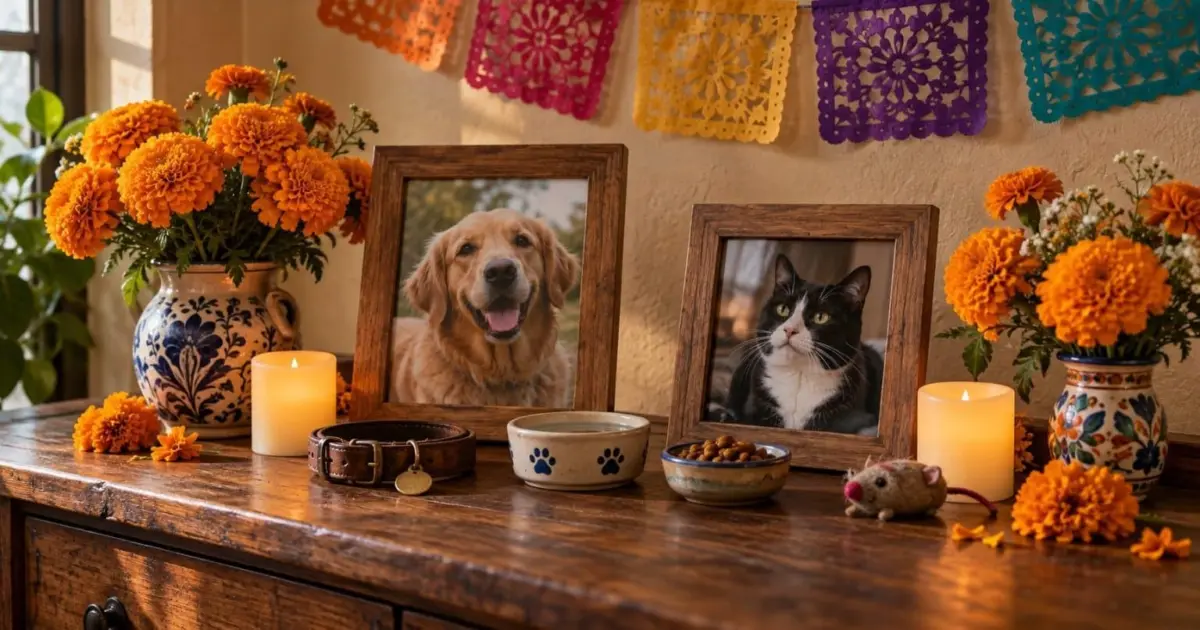
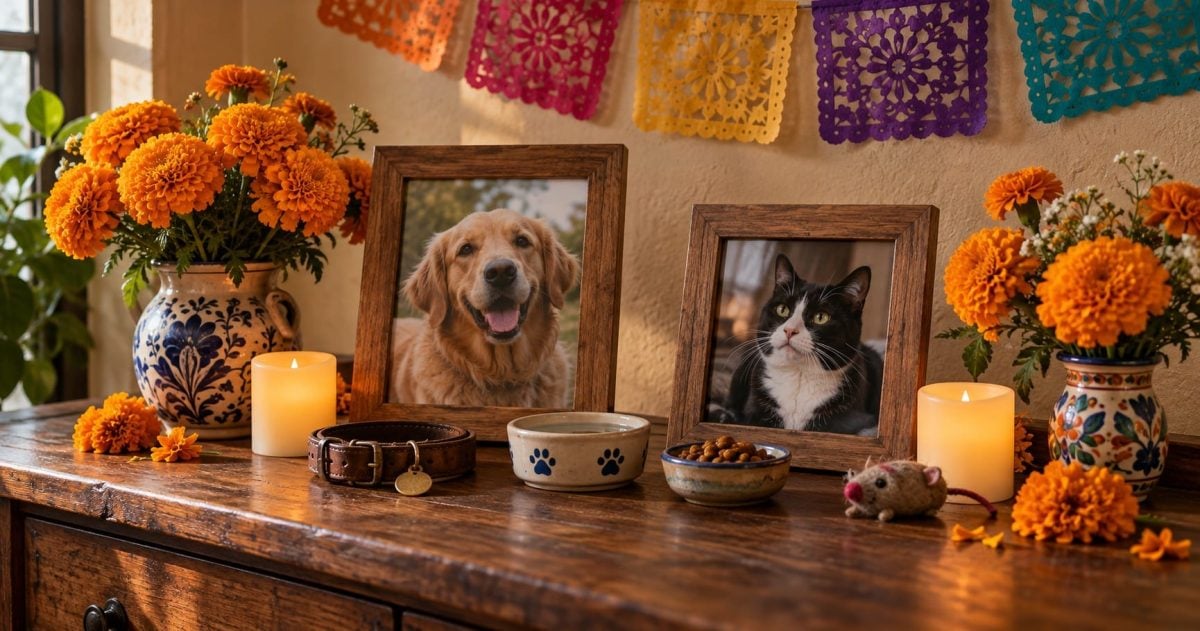
Central to this observance is the construction of an ofrenda (a memorial altar), curated with photographs, familiar keepsakes, marigolds (cempasúchil), water, and symbolic food offerings. While Día de Muertos traditionally centers on human ancestors from November 1 through November 2, community adoption and digital discourse have formally established October 27 as the designated night when the spirits of animals are believed to cross back into the physical realm to visit their former homes.
As the custom gains international recognition, cultural historians, veterinarians, and animal advocates emphasize two key responsibilities for participants: understanding the deep Indigenous and Mesoamerican roots of the practice to avoid cultural misrepresentation, and implementing practical home safety measures to protect living pets from environmental hazards associated with traditional altar items.
Detailed Chronology: From Mesoamerican Mythology to October 27
To understand the modern pet ofrenda, one must examine the deep historical connection between animals and the afterlife in Mesoamerican iconography, followed by the 21st-century emergence of a specific date dedicated solely to companion animals.
+-----------------------------------------------------------------------------------+
|                         HISTORICAL TIMELINE OF REMEMBRANCE                        |
+-----------------------------------------------------------------------------------+
| PRE-COLUMBIAN ERA                                                                 |
| • Aztec mythology places the Xoloitzcuintli (hairless dog) as the mandatory guide  |
|   for human souls traveling across the subterranean river to reach Mictlán.       |
+-----------------------------------------------------------------------------------+
| COLONIAL TO MODERN ERA (16th–20th Century)                                        |
| • Indigenous funerary rites merge with Catholic All Saints' & All Souls' Days.    |
| • November 1 (Children/Día de los Inocentes) and November 2 (Adults) become the   |
|   standard calendar dates for human remembrance.                                 |
+-----------------------------------------------------------------------------------+
| 2003                                                                              |
| • UNESCO recognizes Día de Muertos as an Intangible Cultural Heritage of Humanity, |
|   highlighting its role in community cohesion and ancestral honoring.             |
+-----------------------------------------------------------------------------------+
| LATE 2010s–PRESENT                                                                |
| • Grassroots movements, animal rescue organizations, and social networks in       |
|   Mexico establish October 27 as "Día de Muertos para Mascotas."                  |
| • The date becomes globally recognized across pet-loving communities.             |
+-----------------------------------------------------------------------------------+
The Indigenous Foundation
Long before Spanish colonizers arrived in the Americas, Indigenous peoples—including the Aztecs (Mexica), Maya, and Zapotecs—maintained complex belief systems surrounding death, rebirth, and the animal kingdom. In Mexica mythology, the journey to Mictlán (the underworld) was fraught with physical trials across nine distinct levels.
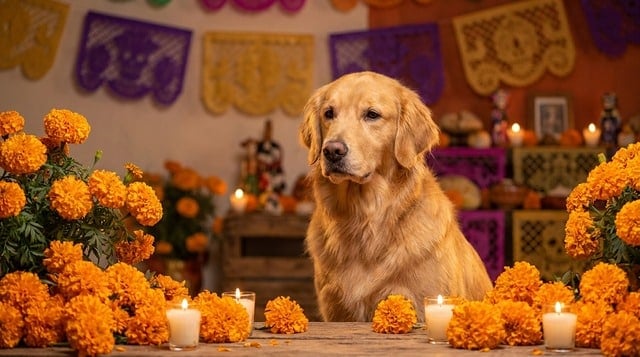
To cross the formidable first level—the river Apanohuohua—the soul required the assistance of a Xoloitzcuintli, the sacred hairless dog associated with the god Xolotl. The dog recognized its former owner based on how kindly the human had treated animals during their earthly life; a person who mistreated animals would be refused passage, remaining trapped on the riverbank indefinitely. Thus, domestic animals were viewed not merely as working property or casual companions, but as essential spiritual guides.
The Modern Origin of October 27
While the traditional Día de Muertos calendar focuses primarily on human spirits returning on November 1 (Día de los Inocentes, honoring children) and November 2 (Día de los Muertos, honoring adults), civil society groups and animal welfare organizations in Mexico began advocating in the late 2010s for an explicit day of remembrance for non-human family members.
Through public awareness initiatives, art installations, and social media campaigns, October 27 emerged as the accepted date for animal spirits to return. Today, this preliminary date acts as the soft opening of the multi-day holiday season, establishing a dedicated space for pets before the broader familial observances begin.
Supporting Context & Metrics: Symbolism, Elements, and Household Safety
Creating a pet ofrenda requires balancing sacred cultural symbols with modern home safety standards. Traditional ofrendas rely on specific elements designed to appeal to the physical senses of visiting spirits. When applied to pets, these symbols adapt to tell the story of a companion’s life while requiring precautions for households with living animals.
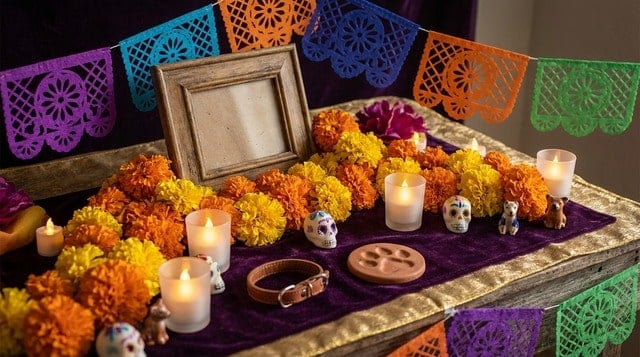
                  +----------------------------------------------+
                  |         THE STRUCTURE OF A PET OFRENDA       |
                  +----------------------------------------------+
                  |                                              |
                  |                [ PAPEL PICADO ]              |
                  |               (Hanging Overhead)             |
                  |                                              |
                  |               +------------------+           |
                  |               |  PHOTOGRAPH(S)   |           |
                  |               |   OF DECEASED    |           |
                  |               |      PET(S)      |           |
                  |               +------------------+           |
                  |                                              |
                  |   [LED CANDLE]    (WATER BOWL)   [LED CANDLE]|
                  |                                              |
                  |  (CEMPASÚCHIL)   (PET'S FAVORITE) (CEMPASÚCHIL) |
                  |   FLOWERS/PAPER     FOOD/TREATS    FLOWERS/PAPER
                  |                                              |
                  |   +--------------------------------------+   |
                  |   |    PERSONAL KEEPSAKES / TOYS / COLLAR|   |
                  |   +--------------------------------------+   |
                  +----------------------------------------------+
Key Elements of the Pet Ofrenda
- Photograph (Retrato): Placed in a central, elevated position, the image identifies the specific soul being welcomed back. For a pet ofrenda, this usually depicts the animal during a moment of high energy or characteristic comfort.
- Fresh Water (Agua): Placed in a dish to quench the spirit’s thirst after their long travel between worlds. Using the pet’s original water bowl adds a deeply personal touch.
- Favorite Foods and Treats (Comida): Portions of dry kibble, wet food, or specialized treats beloved by the animal during life act as a welcoming sensory gesture.
- Mexican Marigolds (Cempasúchil): Known in Nahuatl as cempohualxochitl (twenty-flower), these vibrant orange and yellow blooms are essential. Their bright color and pungent aroma are believed to trail through the night air, guiding souls back home.
- Light (Veladoras / Candles): Candles represent hope, faith, and illumination, lighting the pathway for returning spirits so they do not lose their way in the dark.
- Purification (Sal / Salt): Traditionally placed on a small saucer to purify the soul during its journey and prevent spiritual corruption while visiting the physical world.
- Cut Paper (Papel Picado): Delicately carved tissue paper representing wind and the fragility of human and animal life.
- Personal Keepsakes: Collars, leashes, chew toys, sleeping blankets, or ID tags that bear the animal’s physical scent and memory.
Veterinary Safety Considerations for Living Pets
While constructing a memorial, households with active dogs, cats, or other animals must account for domestic hazards. Standard ofrenda materials can pose health risks if ingested, knocked over, or chewed by curious living pets.
| Ofrenda Element | Risk to Living Pets | Recommended Safety Adaptation |
|---|---|---|
| Open-Flame Candles | Fire hazards, singed fur, tail-swipe tip-overs, severe burns. | Use battery-operated, flameless LED candles or sealed lantern housings. |
| Fresh Cempasúchil (Marigolds) | Mild toxicity (Tagetes species); sap contains phototoxic thiophenes causing drooling, oral irritation, diarrhea, and nausea if ingested in quantity. | Place out of reach on high shelving, or substitute with paper, fabric, or silk marigold flowers. |
| Food Offerings & Salt | Salt toxicity (hypernatremia in dogs/cats); digestive distress from spoiled wet food left sitting at room temperature. | Offer dry kibble only in small quantities; discard perishable food daily; keep salt dishes elevated or enclosed in glass containers. |
| Papel Picado & Ribbons | Intestinal blockage or foreign-body linear obstruction if ingested by cats or young dogs. | Secure tightly to walls or ceilings well above jumping/climbing range. |
| Standing Vase Water | Bacteria buildup or sap leaching from stems causing bacterial gastroenteritis if consumed by living pets. | Cover flower vases or check and refresh water daily. |
Step-by-Step Guide: Safe Home Assembly
To create an elevated, secure display, follow this nine-step installation process:
- Location Selection: Choose a sturdy, stable piece of furniture (e.g., a high mantle, secured bookcase, or heavy sideboard) situated away from high-traffic zones and pet jumping points.
- Surface Preparation: Clean the area thoroughly and lay down an easily washable cloth base to prevent liquid spills or wax drippings from damaging furniture.
- Primary Focal Point: Position the framed photograph of the pet securely against the rear back-wall of the display to prevent accidental knock-downs.
- Hydration & Food Placement: Set out a small, stable bowl containing fresh water alongside a modest portion of the pet’s favorite dry treats directly in front of the portrait.
- Floral Arrangement: Border the display with fresh cempasúchil stems kept inside heavy, weighted glass vases, or arrange handcrafted paper flowers to eliminate plant toxicity risks.
- Safe Illumination: Arrange low-voltage, flameless LED tealights or pillar lights around the perimeter to produce a warm glow without fire hazard.
- Personal Narrative Integration: Place single personal items—such as an engraved ID tag, a favorite squeak toy, or a worn collar—beside the food dish to personalize the space.
- Decorative Accents: Hang paper or plastic papel picado banners along the wall behind the display, anchoring all corners with durable tape.
- Reflection & Storytelling: Dedicate quiet time on the evening of October 27 to pause at the display, share stories with family members, and reflect on the animal’s life.
Official Statements & Cultural Context
Understanding Día de Muertos requires recognizing its classification by cultural institutions and avoiding common fallacies that conflate it with commercialized holidays like Halloween.
Institutional Recognition
In 2008, the United Nations Educational, Scientific and Cultural Organization (UNESCO) officially inscribed the Día de Muertos festivities onto its Representative List of the Intangible Cultural Heritage of Humanity. UNESCO highlights the cultural vitality of the observance, noting:
"The cultural expression of Día de Muertos integrates ancestral Indigenous practices with European religious customs, reinforcing social status, family identity, and community solidarity. The temporary return of deceased loved ones to the domestic sphere is a vital expression of collective memory."
Culture experts emphasize that while the holiday shares calendar dates with Halloween, the two events stem from fundamentally different traditions. Halloween historically derives from ancient Celtic Samhain customs centered on warding off roaming spirits, whereas Día de Muertos is a joyous, welcoming invitation for family members—both human and animal—to return home.
+-----------------------------------------------------------------------------------+
|                        CULTURAL DISTINCTIONS & INTENTIONS                         |
+-----------------------------------------------------------------------------------+
| HALLOWEENS / ALL HALLOWS' EVE                                                     |
| • Historical focus: Ward off mischievous or malevolent spirits.                   |
| • Primary visual themes: Costumes, darkness, fear, trick-or-treating.            |
+-----------------------------------------------------------------------------------+
| DÍA DE MUERTOS (INCLUDING PET OFRENDAS)                                           |
| • Historical focus: Welcome and celebrate returning loved ones and ancestors.     |
| • Primary visual themes: Vibrant marigolds, glowing candles, ancestral portraits. |
+-----------------------------------------------------------------------------------+
Perspectives on Cultural Respect
Anthropologists and Mexican scholars urge participants outside the Mexican diaspora to approach the custom with respect and mindfulness:
- Acknowledge Origins: Understand that the ofrenda is a living tradition deeply tied to Mexican heritage, rather than a generic aesthetic or home decorating trend.
- Transparent Adaptations: Acknowledge when personal modifications are made for modern convenience or pet safety (such as using LED lights or synthetic flowers), framing them as practical adaptations rather than historical requirements.
- Focus on Community and Storytelling: Honor the practice’s underlying spirit by treating the ofrenda as an interactive family memorial centered on memory, rather than merely an ornamental setup.
Future Outlook: The Evolution of Pet Loss Recognition
The rapid spread of Día de Muertos para mascotas mirrors broader social shifts in how society views pet loss. Veterinary grief counselors and human-animal bond researchers note that disenfranchised grief—grief that is not openly acknowledged or socially supported—has historically made pet loss difficult for owners to process.
+-----------------------------------------------------------------------------------+
|                   THE EVOLVING LANDSCAPE OF PET BEREAVEMENT                       |
+-----------------------------------------------------------------------------------+
| HISTORICAL MODEL (20th Century)                                                   |
| • Pet loss often viewed as minor or trivial by broader society.                   |
| • Limited public rituals available to process grief.                              |
| • Mourning held privately, often without formal closure.                          |
+-----------------------------------------------------------------------------------+
| CONTEMPORARY MODEL (21st Century)                                                 |
| • Pets recognized as full family members ("companion animals").                   |
| • Rise of public memorial rituals, including October 27 pet ofrendas.             |
| • Growth of specialized veterinary bereavement counseling and digital memorials. |
+-----------------------------------------------------------------------------------+
Key Trends Shaping the Tradition
- Globalization via Digital Communities: Social media platforms allow pet owners across the globe to share photos of their pet ofrendas, creating a shared space for collective healing every October 27.
- Integration into Veterinary Bereavement: Veterinary clinics, animal shelters, and pet hospices are increasingly adopting the tradition, distributing educational materials on safe ofrenda building and hosting community altars in their waiting areas.
- Commercial and Artistic Expansion: Local artisans, cultural institutions, and pet organizations are producing specialized ofrenda kits, including clay sculptures, custom pet sugar skulls (calaveras), and non-toxic decorative items designed specifically for homes with living pets.
As the pet ofrenda continues to evolve, it offers a meaningful way to cope with loss. By blending the ancient symbolic rich tradition of Día de Muertos with modern safety measures, pet owners around the world can create a lasting tribute to the animals that have left an indelible mark on their lives.