
Executive Overview
As the autumn air grows crisp and neighborhoods transform into haunted spectacles of glowing jack-o’-lanterns, artificial cobwebs, and ghoulish displays, communities gear up for one of the most festive nights of the year: Halloween. While trick-or-treating brings joy, creativity, and a heavy supply of sweets to millions, the holiday also introduces a hidden labyrinth of environmental hazards—particularly for our feline companions.
From curious indoor housecats to resilient outdoor community cat colonies, felines face an array of seasonal dangers. Artificial decorations, toxic sweets, open flames, and the chaotic influx of costumed strangers ringing doorbells can quickly turn a night of fun into a medical emergency. Recognizing these risks, advocacy organizations like Alley Cat Allies have amplified their annual safety campaigns to educate pet owners and community caregivers alike.
Beyond the immediate seasonal risks, animal welfare advocates emphasize that safeguarding cats requires a year-round commitment. From ensuring proper identification protocols to combating systemic, lethal municipal policies rooted in misinformation, protecting cats demands both individual vigilance and community-wide legislative action. This comprehensive report explores the crucial steps necessary to keep cats safe this Halloween, outlines best practices for outdoor colony management, and highlights the broader advocacy movement transforming how society values feline lives.
Detailed Chronology: Navigating Halloween Night Safely
To ensure a seamless and safe holiday for both humans and animals, cat owners and community caregivers must anticipate the specific ways Halloween disrupts a feline’s environment. The evening unfolds in distinct phases, each carrying unique risks that require careful proactive management.
Phase 1: Pre-Evening Setup and Decoration Dangers
Weeks before October 31st, homes and yards become canvases for spooky aesthetics. However, many popular decorations pose severe physical threats to cats.
- Choking Hazards and Intestinal Blockages: Synthetic spider webbing, dangling electrical wires, small plastic spider rings, and glittery confetti are irresistible playthings for cats with a predilection for batting and chewing. Furthermore, natural-looking additions such as decorative corn stalks, dried fake leaves, and faux moss frequently cause devastating gastrointestinal blockages if ingested. Experts advise keeping these items completely out of a cat’s reach or restricting feline access entirely when decorations are present.
- Fire Hazards and Open Flames: The quintessential jack-o’-lantern illuminated by a flickering candle inside is a Halloween staple. However, an inquisitive cat brushing past a carved pumpkin with a swaying tail can easily knock over an open flame, risking severe burns or starting a household fire. The same caution applies to decorative household candles. Pet safety advocates strongly recommend swapping traditional flame candles for battery-operated LED alternatives. Additionally, electrical cords for illuminated displays must be safely taped down or routed completely out of chewing range.
Phase 2: The Sifting and Swarming of Trick-or-Treaters
As twilight falls and the neighborhood fills with costumed children shouting "trick-or-treat," the household dynamic shifts dramatically.
- The Doorbell Dilemma: Doors opening and closing continuously throughout the evening create prime opportunities for indoor cats to dart outside into the dark, unfamiliar chaos.
- Sensory Overload: The sound of screaming crowds, heavy foot traffic, and strange knocking causes profound anxiety for most felines.
To mitigate these stressors, experts recommend establishing a designated "safe room" well before the festivities begin. This room should be completely sealed off from the front entrance and stocked with essentials: fresh water, food, a clean litter box, comfortable bedding, and favorite toys. To mask the startling sounds of the outside world, caregivers can turn on a television at a low volume, play soothing instrumental music, or plug in synthetic feline facial pheromone diffusers, such as Feliway, which are clinically proven to reduce stress. Caregivers should make a point to check in on their pets throughout the evening to offer reassurance.
Phase 3: The Candy Bowl and Toxic Ingestions
Halloween is synonymous with sugar, but what is a treat for a human can be a lethal poison for an animal.
- Chocolate Toxicity: Both dark and milk chocolates contain theobromine and caffeine, compounds that are metabolized very slowly by cats and dogs, leading to severe poisoning.
- Artificial Sweeteners: Xylitol, a common sugar substitute found in sugar-free candies and gums, causes a rapid and dangerous insulin release in animals, leading to acute liver failure.
- Packaging Perils: Even if a cat avoids the actual candy, gnawing on foil, cellophane, or plastic wrappers can result in dangerous intestinal lacerations or blockages.
If a pet owner even suspects that their cat or dog has ingested a toxic substance, immediate professional intervention is vital. Veterinarians, emergency clinics, and specialized resources like the Pet Poison Helpline (855-764-7661) must be contacted immediately. Educational guides detailing the early signs and symptoms of feline poisoning are readily available through organizations such as Alley Cat Allies.
Supporting Context & Metrics: Community Cats and Identification
While indoor pets face the chaos of costumed visitors and open doors, outdoor community cats—often referred to as feral or stray cats—experience Halloween night within their natural habitats.
The Realities for Community Cats
By instinct, outdoor community cats will naturally seek out secluded hiding spots to hunker down and ride out the commotion of Halloween night. Because they are typically wary of humans, they avoid the trick-or-treating crowds altogether. However, their safety depends heavily on the preparation of their caregivers.
Colony managers are urged to track their populations meticulously. Maintaining up-to-date documentation—including individual cat names, clear photographs, and health histories—allows caregivers to accurately account for every animal in their colony during the days immediately following the holiday. Utilizing structured tracking systems, such as the Feral Cat Colony Tracking System, represents a gold standard in responsible colony management 365 days a year.
The Critical Role of Microchipping
Despite the best preventative measures, accidents happen. A sudden dart through an open front door can leave an indoor cat stranded in a terrified state outside.
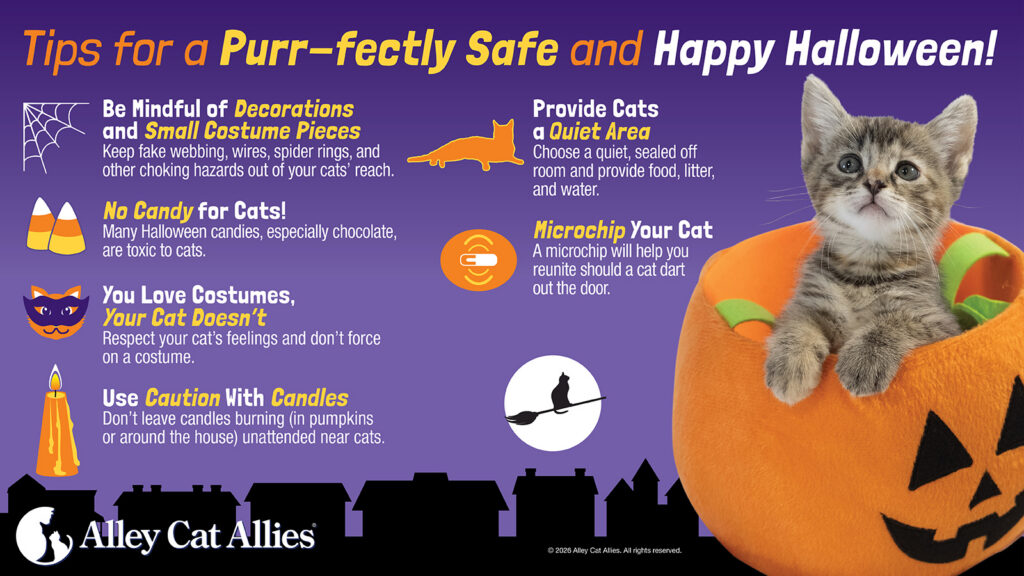
To dramatically increase the likelihood of a happy reunion, all pet cats must be microchipped. Crucially, simply getting a microchip implanted is only half the battle; owners must ensure that their contact information remains current within the registry database. Without up-to-date phone numbers and addresses, a scanned microchip is rendered useless, leaving a lost pet stranded in a shelter system.
Official Statements and Humane Advocacy
As animal welfare organizations unite during the autumn season, leadership emphasizes that feline protection extends far beyond holiday safety tips. True protection requires a fundamental cultural shift in how society views cats.
"Every day of the year, cats of all coat colors are at risk from a true horror: cruel and lethal policies. Most of these policies are rooted in dangerous misinformation about cats and a lack of respect for the inherent value of their lives," notes organizational literature from Alley Cat Allies.
Advocacy groups consistently stress that Cats Are Community™ and are fully deserving of legal protections across every institution, from local animal shelters and veterinary clinics to courtrooms. Systemic change begins with community education and translates directly into legislative action.
Demystifying Local Laws and Shelter Practices
Cat advocates encourage citizens to take an active role in examining their local municipal codes. Every community member has the legal right to understand local animal ordinances and review shelter transparency reports. By utilizing resources that guide individuals through obtaining animal shelter public records, advocates can hold municipal facilities accountable for their live-release rates and intake policies.
Furthermore, community members are empowered to become vocal advocates by lobbying local leadership for humane, non-lethal policies. Foremost among these is Trap-Neuter-Return (TNR), the proven, evidence-based method for stabilizing community cat populations humanely without resorting to catch-and-kill practices.
In cases where malicious intent or neglect arises, citizens are urged to know the proper protocol for reporting suspected animal cruelty. Advocacy networks provide clear directives on how to demand that law enforcement and judicial systems investigate, prosecute, and penalize acts of animal cruelty to the absolute fullest extent of the law.
Future Outlook: Building a World Where Every Cat is Valued
As we look toward the future of animal welfare, the trajectory is clear: education, proactive protection, and systemic reform must go hand in hand.
The annual push for Halloween safety serves as an entry point for deeper community engagement. When pet owners learn to secure their homes against seasonal hazards, they often develop a heightened awareness of broader animal care principles. Similarly, when community cat caregivers implement rigorous tracking systems, they build resilient networks capable of withstanding not only holiday disruptions, but also seasonal weather extremes, disease outbreaks, and policy threats.
The ultimate vision championed by organizations like Alley Cat Allies—supported by millions of advocates worldwide—is a world where every cat’s life is inherently valued. Achieving this reality requires sustained financial support, grassroots volunteerism, and an unyielding commitment to humane, science-based policies. By taking action today—whether by securing a candy bowl, microchipping a beloved pet, or reforming municipal shelter laws—society moves steadily closer to ensuring that all cats and kittens live safe, protected lives, on Halloween night and every day of the year.