
GLOBAL REPORT — As the agricultural sector faces an unprecedented convergence of climate pressures, escalating labor shortages, and tightening environmental regulations, the path forward is increasingly being paved by breakthrough technology. TIME magazine has officially unveiled the agricultural category of its prestigious annual Best Inventions list, spotlighting six pioneering technologies that are fundamentally transforming farming, crop cultivation, and animal husbandry.
Selected from a rigorous global pool of nominations evaluated by TIME’s editors, correspondents, and industry experts, these innovations form a cornerstone of the broader 2026 Best Inventions ranking. Comprising 300 products, software systems, and conceptual breakthroughs designed to make the world "better, smarter, and more fun," this year’s agricultural cohort underscores a seismic shift: agriculture is no longer just about working harder on the land; it is about working smarter through precision, automation, circularity, and biotechnology.
From autonomous vineyard rovers running UV-C light treatments to AI-powered beehives and fertilizers upcycled from human waste, the 2026 honnores represent a masterclass in modern problem-solving. This comprehensive report examines the winning technologies, explores the macro-trends driving their adoption, and analyzes what their success signifies for the future of global food systems.
Executive Overview: The Macro-Trends Reshaping Modern AgTech
The inclusion of these six distinct technologies on a globally recognized innovation list highlights the multi-pronged approach required to modernize contemporary agriculture. Modern farmers are operating under tightening margins, grappling with the dual pressures of maximizing yields while drastically shrinking their environmental footprints.
According to market analysts, the AgTech sector is witnessing accelerated capital deployment into three primary pillars:
- Labor Augmentation: With rural depopulation and restrictive immigration policies shrinking the available agricultural workforce, robotics are shifting from novelty experiments to core operational infrastructure.
- Biological and Light-Based Precision: Chemical inputs face heightened regulatory scrutiny and consumer resistance. Consequently, innovations leveraging seed-level priming (such as photobiology) and non-chemical disease management (such as ultraviolet light) are surging.
- Circular Bio-Economy: Waste reduction has graduated from compost heaps to sophisticated biochemical recovery, transforming agricultural side streams and human waste into valuable economic assets and synthetic-free nutrients.
TIME’s 2026 agriculture category captures this exact transition, offering a snapshot of technologies that are moving rapidly from research and development facilities into commercial deployment across global acreage.
Detailed Breakdown of the 2026 Agricultural Laureates
1. BioLumic (xTraits Platform): Giving Crops a Stronger Start Through Photobiology
Crop performance begins long before a seed is planted in the soil, and New Zealand-headquartered BioLumic is rewriting the rules of early-stage plant development. Recognized for its proprietary xTraits platform, BioLumic harnesses precise light treatments applied directly to seeds to trigger natural, beneficial genetic expressions.
Unlike traditional genetic modification (GMO) or gene-editing techniques that alter the underlying DNA sequence, BioLumic’s technology uses targeted light-activation protocols to unlock latent potential within the seed. The result is accelerated root growth, enhanced natural vigor, and superior resilience against abiotic stresses such as drought, heat, and nutrient deficiencies.
As global climate volatility threatens traditional growing seasons, seed innovations that can reliably boost productivity and resilience without altering the core genome are seeing exponential demand. Seed companies—particularly in major agricultural hubs like Brazil—are increasingly turning to BioLumic to fast-track the development of high-performing crop hybrids, ensuring plants hit the ground running from day one.
2. Burro (Burro Grande 44): The All-Purpose Workhorse Combating Labor Shortages
Labor scarcity remains the single most persistent operational bottleneck for specialty crop producers worldwide. Enter the Burro Grande 44, developed by robotic automation firm Burro. Described by TIME as an "all-purpose farm robot," this autonomous heavy-duty vehicle is designed to operate seamlessly alongside human workforces, taking over the back-breaking logistical tasks that slow down harvest workflows.
Rather than attempting to replace human harvesters entirely—a notoriously difficult feat in delicate specialty crops—Burro focuses on augmentation. The robot autonomously navigates fields, following human workers or operating along pre-programmed routes to carry harvested fruit and produce directly to central collection points.
In an interview with TIME, Burro CEO Charlie Andersen underscored the profound economic and operational impact of the technology:
"When you have a robot running around carrying the fruit people pick back to central points, each person is 30% more productive."
By eliminating the transit time workers spend hauling heavy loads across expansive fields, farms can dramatically amplify their existing labor capacity, mitigating wage pressures and keeping operations economically viable.
3. Beewise (Robi): Artificial Intelligence Meets Apiculture
Pollination is the invisible engine of the global food system, underpinning roughly one-third of the human diet. Yet, commercial beekeeping is plagued by immense challenges, including colony collapse disorder, Varroa mites, extreme weather events, and pesticide exposure.
Beewise earned its place on the TIME Best Inventions list for Robi, an advanced, AI-powered automated beehive management system. Robi transforms traditional beekeeping into a precision science by continuously monitoring hive health, internal temperatures, humidity, and pest presence in real-time.
Utilizing computer vision and automated mechanical interventions, Robi can autonomously detect distress or disease within a colony and execute corrective measures—such as targeted pest treatments or climate adjustments—before a collapse occurs. By safeguarding pollinator health at scale, Beewise is injecting much-needed predictability into commercial pollination services, ultimately protecting yields for high-value crops like almonds, apples, and berries.
4. 2nd Nature (AgWaste Portal): Unlocking Hidden Value in Agricultural Side Streams
Agriculture is inherently wasteful, generating millions of tons of crop residues, food processing side streams, and organic byproducts annually. Traditionally viewed as a disposal cost or a low-value fertilizer, this agricultural waste is being entirely reimagined by the 2nd Nature AgWaste Portal.
Recognized by TIME for giving agricultural scraps "a second life," the 2nd Nature platform leverages artificial intelligence to analyze, categorize, and unlock commercial value from complex waste streams. The software connects food processors, agricultural producers, and industrial manufacturers, identifying valuable biochemical compounds, proteins, fibers, and energy precursors hidden within materials that would otherwise be discarded.
By turning agricultural liabilities into high-value secondary inputs for cosmetics, pharmaceuticals, packaging, and animal feed, 2nd Nature is championing the transition toward a true circular bio-economy within the sector.
5. Saga Robotics (Thorvald): Revolutionizing Disease Control with Ultraviolet Light
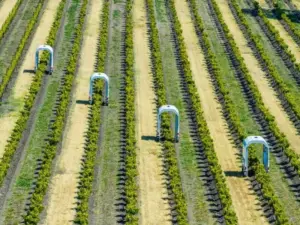
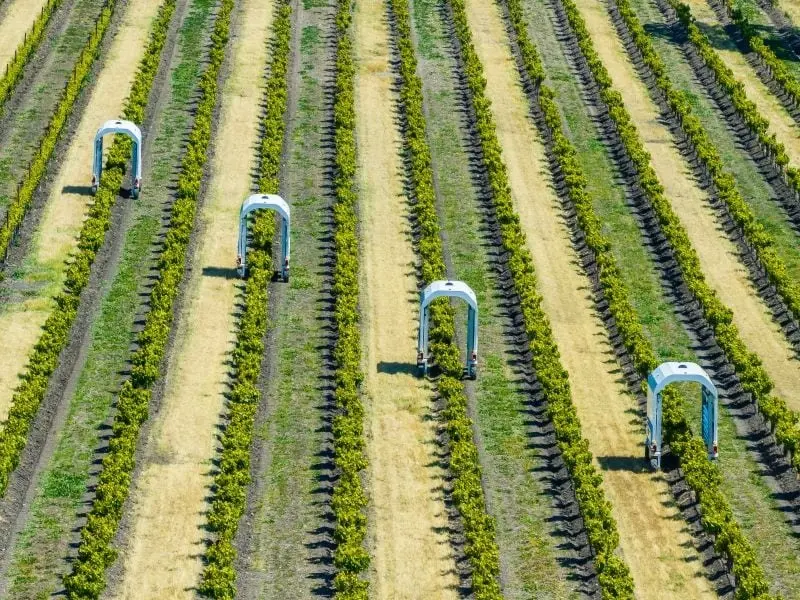
Powdery mildew is one of the most persistent and destructive fungal pathogens plaguing specialty crops, traditionally managed through frequent, heavy applications of synthetic fungicides. Saga Robotics has upended this paradigm with Thorvald, its autonomous agricultural robot designed to suppress powdery mildew using ultraviolet-C (UV-C) light treatments.
Operating autonomously through vineyards, greenhouses, and berry fields, Thorvald cruises rows at night—when UV light is most effective against fungal spores without damaging plant tissues—irradiating crops with precise dosages of UV-C light. This non-chemical intervention significantly reduces a grower’s reliance on conventional fungicides, protecting soil and water ecosystems while preventing the development of chemical-resistant pathogen strains.
Thorvald’s commercial footprint has expanded dramatically. By 2026, the autonomous platform is treating an estimated 30% of the United Kingdom’s tabletop strawberry production and patrolling roughly 2,500 acres of high-value California vineyards, proving that autonomous field robotics are ready for prime-time commercial scaling.
6. VunaNexus (Aurin): Closing the Loop with Urine-Derived Fertilizer
Rounding out TIME’s agricultural category is an innovation that challenges deep-seated cultural taboos while addressing a critical global resource constraint: chemical fertilizer dependency. VunaNexus Aurin is a high-grade, liquid garden fertilizer derived entirely from recycled human urine.
Nutrient runoff from synthetic fertilizers remains a leading driver of aquatic dead zones and greenhouse gas emissions. At the same time, traditional phosphorus and nitrogen mining face long-term supply vulnerabilities. VunaNexus has developed sophisticated separation, stabilization, and sanitization technologies that safely capture human urine at the source, transforming it into a pathogen-free, nutrient-dense fertilizer rich in nitrogen, phosphorus, and potassium.
TIME highlighted the innovation as "garden fertiliser from urine," capturing the growing mainstream appetite for radical nutrient recovery systems. As municipalities and agricultural districts seek closed-loop sanitation and fertilization models, Aurin points the way toward a future where human waste is no longer a pollutant, but a vital agricultural input.
Supporting Context & Metrics: The Shifting Economics of AgTech
The convergence of these six innovations highlights broader structural transformations across the global agricultural technology landscape. According to recent ag-fintech and market intelligence reports, venture capital and corporate investment in specialized farm robotics, biological seed treatments, and circular waste tech have displayed remarkable resilience despite broader macroeconomic headwinds.
| Innovation Category | Core Market Driver | Primary Environmental/Economic Benefit |
|---|---|---|
| Agricultural Robotics (Burro, Saga Robotics) | Severe labor shortages & rising operational costs | 30% labor productivity boost; 70%+ reduction in chemical fungicide usage via UV-C. |
| Biotech & Photobiology (BioLumic) | Climate volatility & demand for sustainable inputs | Enhanced early-stage root vigor and abiotic stress tolerance without genetic modification. |
| Precision Apiculture (Beewise) | Declining pollinator populations & colony collapse | Real-time AI hive monitoring and automated disease prevention. |
| Circular Economy & Upcycling (2nd Nature, VunaNexus) | Waste reduction mandates & synthetic fertilizer scarcity | Valorization of agricultural side streams; closing nutrient loops via urine recycling. |
Industry analysts note that adoption rates are highest where regulatory pressures intersect with acute cost-centers. For instance, European and Californian regulations restricting synthetic fungicide applications have directly supercharged commercial deployments of Saga Robotics’ Thorvald system. Concurrently, escalating labor costs in the Americas have accelerated the uptake of Burro’s collaborative logistics platforms.
Future Outlook: What the 2026 List Signals for Tomorrow’s Farms
The recognition of these six technologies by TIME magazine serves as both an endorsement of current engineering marvels and a roadmap for the next decade of agricultural evolution.
As we look toward 2030 and beyond, several key trajectories emerge from the 2026 Best Inventions cohort:
- Hyper-Personalization of Inputs: Technologies like BioLumic’s photobiology platform prove that treating plants at the microscopic and molecular levels prior to planting yields superior resilience compared to blanket chemical applications. The future of agronomy will be deeply personalized, treating every seed and every square inch of soil according to its precise biological profile.
- Autonomous Fleets as Standard Infrastructure: Robots like Burro and Thorvald are transitioning from standalone trials into coordinated, fleet-managed operational layers. Future farms will feature heterogeneous fleets of specialized robots communicating via centralized farm management software to harvest, weed, treat diseases, and monitor crop health 24/7.
- Total Elimination of "Waste": The success of 2nd Nature and VunaNexus signals the dawn of a zero-waste agricultural paradigm. In the coming years, regulatory frameworks and market incentives will likely mandate circular accounting, making the monetization of agricultural byproducts and human nutrient recovery standard operating procedure rather than innovative exception.
Ultimately, TIME’s 2026 Best Inventions list in agriculture sends an unequivocal message: the tools to feed a growing global population in a warming climate already exist. The challenge moving forward lies in scaling these technologies, breaking down regulatory and cultural barriers, and ensuring that sustainable innovation remains accessible to farmers of all scales across the globe.