
Executive Overview
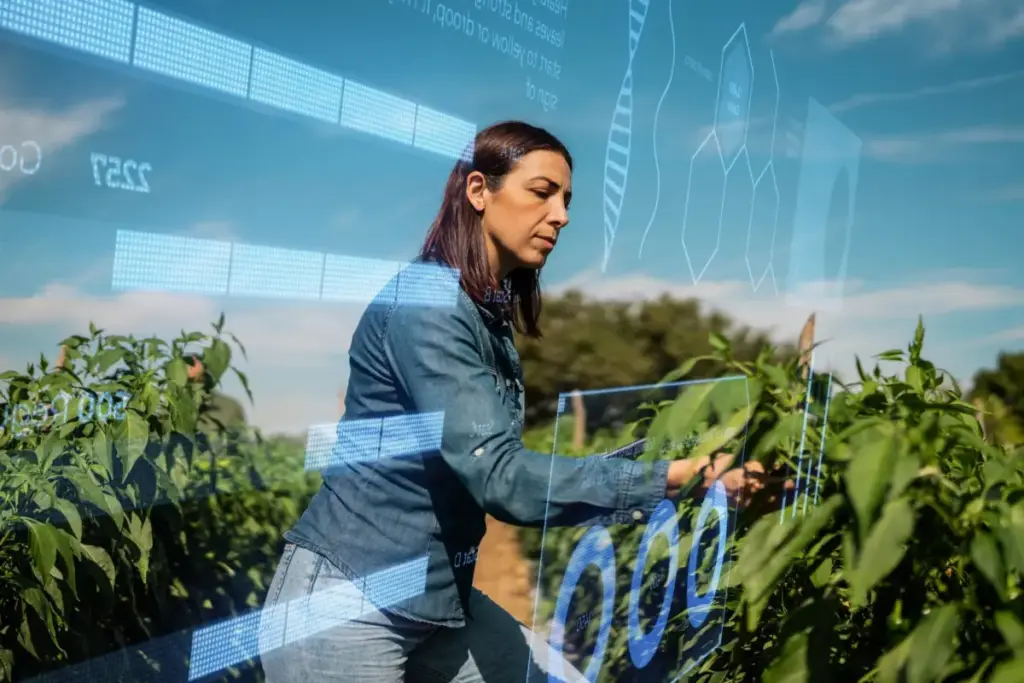
In a milestone development for agricultural biotechnology and sustainable crop production, New Zealand-headquartered agtech pioneer BioLumic has joined forces with the International Rice Research Institute (IRRI). The strategic collaboration aims to rigorously test and validate light-based seed trait activation technology tailored specifically for direct-seeded rice (DSR) systems. As traditional rice cultivation faces mounting pressures from water scarcity, labor shortages, and stringent environmental regulations regarding greenhouse gas emissions, this partnership offers a transformative, non-GMO, and chemical-free pathway to climate-resilient agriculture.
The joint initiative centers on a comprehensive 15-month pilot program set to take place in the Philippines across the 2026 wet season and the 2026/27 dry season. By leveraging six elite IRRI-bred direct-seeded rice varieties, the project will evaluate whether ultraviolet (UV) light signaling can successfully induce traits that minimize water consumption and drastically curb methane emissions. Success in this pilot is expected to lay the commercial groundwork for wide-scale deployment across India and the broader South and Southeast Asian agricultural corridors.
Simultaneously, this high-profile partnership coincides with BioLumic’s critical funding push to accelerate its global commercialization roadmap. Having already established commercial and developmental footprints across the United States and South America—spanning partnerships with organizations like Gro Alliance, GDM, and Tropical Melhoramento & Genética (TMG)—BioLumic is entering an inflection point. By treating parent seeds to pass down beneficial traits through multi-generational inheritance cycles, the company’s proprietary xTraits platform is poised to scale efficiently across millions of acres of staple crops worldwide, fundamentally shifting how the agricultural industry views epigenetic enhancement.
Detailed Chronology: From Photobiological Research to Global Commercialization
To understand the weight of the BioLumic-IRRI partnership, it is essential to examine the trajectory of the underlying technology and the strategic milestones that have brought the company to this juncture.
Foundation and the xTraits Platform (2013–2023)
Founded in 2013 by Dr. Jason Wargent, BioLumic emerged from a vision to harness nature’s own regulatory systems to improve plant performance. Based in New Zealand with critical operational hubs in the United States, the company engineered its proprietary xTraits platform. This advanced technological framework compiles vast arrays of photobiological, genomic, and phenotypic data from disparate global sources.
Unlike traditional genetic modification (GM) techniques or gene-editing tools such as CRISPR, the xTraits platform does not alter the underlying DNA sequence of a plant. Instead, it utilizes precise, algorithmic ultraviolet-based light signal "recipes" to activate or deactivate existing genes already present within the seed’s genome. This precise biochemical activation triggers enhanced vigor, root architecture development, disease resistance, and environmental stress tolerance without the regulatory hurdles, public skepticism, or prolonged developmental timelines associated with transgenic crops.
Philanthropic Support and Initial Rice Validations (2023–2025)
BioLumic’s journey toward revolutionizing rice production received a vital catalyst through a $2.1 million grant from the Bill and Melinda Gates Foundation. This philanthropic backing enabled the company to focus explicitly on developing robust, climate-adaptive rice traits tailored to the developing world.
During this exploratory phase, BioLumic successfully demonstrated repeatable, highly predictable gains in early-stage seedling growth and crop establishment across 11 distinct rice varieties. These trials encompassed both standard lowland cultivars and specialized lines adapted specifically for direct-seeded rice systems, proving that the light-based treatments could maintain efficacy across diverse genetic backgrounds.
Geographic Expansion into Corn and South American Markets (Late 2024–2025)
While continuing its foundational work in staple grains like rice, BioLumic aggressively expanded its commercial validation footprint into other major crops and global markets. In the United States, the company partnered with Wisconsin-based contract corn seed producer Gro Alliance to test and scale the application of light-based seed treatments on commercial corn hybrids.
Late last year, BioLumic officially brought its technology to South America through landmark partnerships with major regional seed and genetics heavyweights GDM and Tropical Melhoramento & Genética (TMG). These collaborations proved instrumental in demonstrating that BioLumic’s seed treatments could integrate seamlessly into existing, highly industrialized seed-processing and distribution workflows, paving the way for multi-crop commercial adoption.
The IRRI Partnership and the Borlaug Dialogue Announcement (2026)
The culmination of years of scientific refinement and strategic networking arrives in 2026. BioLumic officially structured its alliance with IRRI to address the specific vulnerabilities of direct-seeded rice in Southeast Asia. Highlighting the global significance of this initiative, BioLumic Chief Science Officer and Founder Dr. Jason Wargent is scheduled to present deeper insights into the partnership during an executive side panel at the prestigious Norman E. Borlaug International Dialogue on October 21, 2026.
Following the dialogue, the 15-month operational phase in the Philippines will commence, marking the first time BioLumic’s marker-assisted light recipes will be rigorously tested all the way through a complete multi-generational inheritance cycle under real-world tropical field conditions.
Supporting Context & Metrics: Why Direct-Seeded Rice Needs a Light-Based Revolution
Rice is the caloric staple for more than half of the global population, yet traditional cultivation methods are among the most resource-intensive and environmentally taxing in modern agriculture.
The Crisis of Traditional Paddy Systems
Conventionally, lowland rice is established by manually or mechanically transplanting pre-germinated seedlings into heavily flooded, puddled soil paddies. While this practice effectively suppresses weeds and ensures consistent yields under reliable water conditions, it presents severe structural vulnerabilities:
- Water Scarcity: Flooded paddy cultivation consumes immense volumes of freshwater. In an era marked by accelerating climate change and depleting aquifers across Asia, maintaining continuous flooding is becoming increasingly untenable.
- Methane Emissions: Anaerobic conditions in flooded paddy soils create ideal environments for methanogenic bacteria, making rice farming one of the single largest agricultural contributors to global atmospheric methane ($CH_4$) emissions.
- Labor Intensity: Manual transplanting is backbreaking, labor-intensive, and increasingly plagued by rural labor shortages as younger generations migrate away from agrarian livelihoods toward urban centers.
The Direct-Seeded Rice (DSR) Imperative
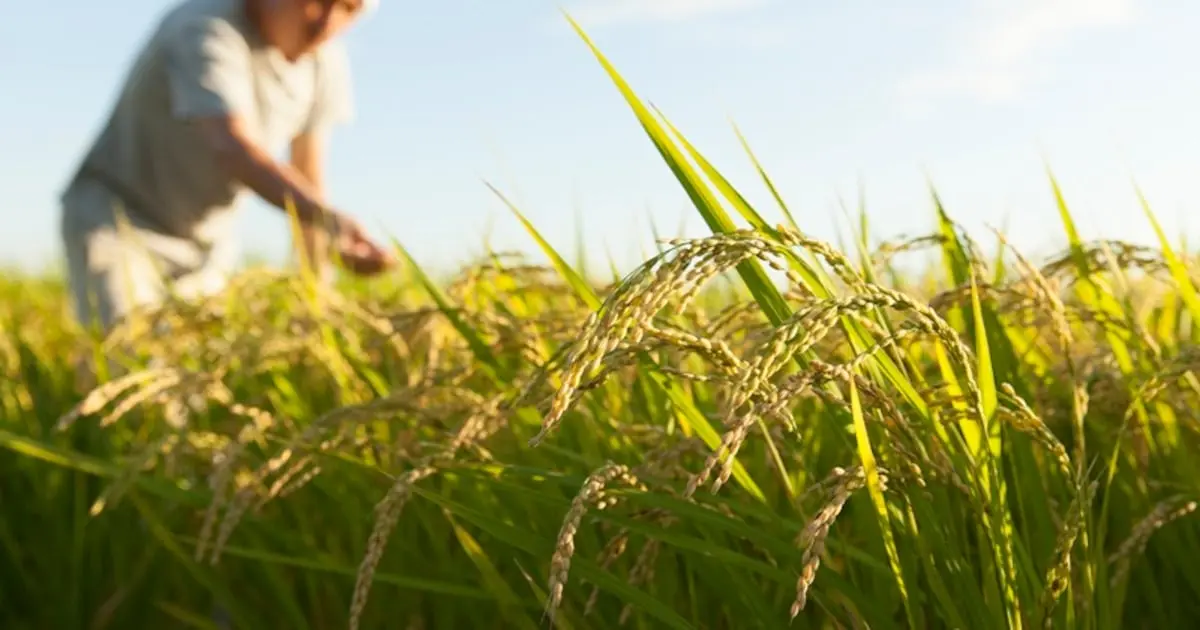
To combat these systemic issues, agricultural scientists and international research bodies like IRRI have championed direct-seeded rice (DSR), a method where seeds are sown directly into the main field either through dry seeding or wet seeding, bypassing the nursery-raising and transplanting stages entirely.
Dr. Jason Wargent emphasizes the monumental operational and environmental advantages of transitioning to DSR:
"Direct-seeded rice is seen as a game changer because it’s going to bypass those traditional resource-heavy steps, and there’s all sorts of upsides for direct seeded rice because you can remove that stressful labor component. You can also, you know, you’re saving water because you’re not flooding fields. There’s a methane component too."
Despite its immense promise, DSR systems are not without challenges. Direct-seeded crops frequently struggle with poor seedling emergence, uneven crop establishment, heightened vulnerability to early-season weed competition, and susceptibility to lodging or drought stress during critical germination windows.
This is precisely where BioLumic’s xTraits technology enters the equation. By utilizing algorithmic ultraviolet light treatments on the seed prior to planting, BioLumic can prime the plant’s internal regulatory pathways to maximize early vigor, expand root systems rapidly, and enhance stress resilience. This ensures that direct-seeded rice crops can establish uniform, vigorous stands even in the absence of standing water, effectively bridging the gap between ecological sustainability and high agricultural productivity.
Official Statements and Industry Perspectives
The convergence of cutting-edge photobiology and international agricultural research has generated significant enthusiasm among scientific and commercial leaders alike.
Scaling Through Epigenetic Inheritance
A critical breakthrough that makes BioLumic’s commercial model economically and logistically viable is its ability to trigger heritable traits without touching every individual grain destined for the farmer’s field. In large-scale commodity agriculture—such as the 100 million acres of corn hybrids grown annually in the United States alone—physically treating billions of individual seed units presents a massive logistical hurdle.
Dr. Wargent explained the mechanics of BioLumic’s parent-seed treatment model during recent industry briefings:
"There’s 100 million acres of corn hybrids being grown in the U.S. alone. How do you activate physically all those bushels of seed? What we now know is that we can activate the parents, so that could be anywhere from a 50 to a hundredfold reduction in the number of seeds that we physically have to touch because we’re only treating the parents."
By focusing the xTraits light recipes exclusively on parent seed lines, the resulting epigenetic and physiological enhancements are successfully locked in and passed down to the subsequent generation of commercial offspring seeds. This geometric reduction in operational complexity allows BioLumic to scale its technology globally using only a compact footprint of specialized xTraits treatment devices stationed at key seed production hubs.
Collaborative Validation in South and Southeast Asia
The partnership with IRRI—an institution globally renowned for its leadership in rice science and germplasm development—serves as the ultimate validation for BioLumic’s technology in the developing world. IRRI maintains an extensive, highly targeted direct-seeded rice breeding program spanning South and Southeast Asia.
By incorporating six elite, regionally optimized IRRI-bred direct-seeded rice varieties into the 2026–2027 pilot in the Philippines, the collaboration ensures that the light-activated traits are tested directly on genetics that local farmers already trust and cultivate. Successful validation in the Philippines will immediately open commercial pathways into India, Bangladesh, Vietnam, and other major rice-producing nations where water conservation and methane mitigation are top national priorities.
Future Outlook: The Road Ahead for Epigenetic Seed Technologies
As BioLumic navigates its current round of fundraising to support full-scale commercialization, the global agricultural sector is watching closely. The partnership with IRRI and the upcoming presentation at the Norman E. Borlaug International Dialogue mark a definitive transition from experimental validation to large-scale, commercial reality.
Key Milestones on the Horizon (2026–2030)
- Completion of the Philippine Pilot (2026–2027): Results from the wet and dry season trials will quantify exact percentage gains in water-use efficiency, methane reduction, and early-season vigor across the six IRRI-bred varieties.
- South Asian Commercial Deployment: Leveraging the success of the Philippine trials, BioLumic plans to establish commercial seed-treatment partnerships in India, targeting millions of hectares of transitionary DSR farmland.
- Broadening Crop Portfolios: Beyond corn, soybeans (via South American partnerships with GDM and TMG), and rice, the xTraits platform is continuously expanding its algorithmic database to encompass wheat, vegetables, and other high-value horticultural crops.
- Regulatory and Market Acceptance: Because BioLumic’s technology relies entirely on non-transgenic, light-based physiological activation, it bypasses the lengthy and costly regulatory hurdles of GMO crops, allowing for rapid go-to-market execution across international jurisdictions.
Conclusion
The collaboration between BioLumic and the International Rice Research Institute represents more than just a scientific pilot program; it signals a fundamental evolution in how humanity approaches crop enhancement in the face of escalating climate pressures. By proving that targeted light signals can permanently unlock elite performance, stress resilience, and environmental sustainability within staple crops like rice, BioLumic is turning the promise of climate-smart agriculture into an immediate, scalable reality. As the rubber hits the road in BioLumic’s commercialization journey, the global agricultural industry stands on the cusp of a quiet revolution—one powered entirely by light.