
By Stacey Hendershott, DVM, DABVP (Canine/Feline)
Executive Overview
Veterinary medicine is evolving at an unprecedented pace. The modern companion animal practitioner is routinely greeted by a dazzling, ever-expanding marketplace of diagnostics, therapeutics, advanced software platforms, and artificial intelligence-driven tools. Each new entry promises faster answers, elevated standards of care, and enhanced diagnostic precision. However, for today’s veterinary hospitals, the fundamental challenge is no longer a lack of access to innovative technology; rather, it is determining which of these tools truly deserve a permanent place in the hospital ecosystem.
This phenomenon can be likened to a "diagnostic buffet." Every platform presents distinct advantages, every vendor builds a compelling business case, and every emerging tool appears to fill a critical clinical gap. Yet, adding technology without a coherent, strategic roadmap creates severe financial pressure, operational friction, and cognitive exhaustion for doctors, support teams, and clients alike.
The ultimate goal of modern practice management is not to blindly adopt every technological option available, but to build a curated diagnostic ecosystem. This ecosystem must simultaneously support medical excellence, practice financial sustainability, team efficiency, and deep-seated client trust. This report examines the multifaceted challenges of diagnostic integration across practice operations, clinical teams, and pet owners, while outlining a strategic framework for intentional, value-driven technology selection.
Detailed Chronology: The Evolution of Diagnostic Overload
To understand the current pressures facing veterinary clinics, one must examine how the diagnostic landscape has shifted over the past two decades.
Phase I: The Shift from Reference Laboratories to Point-of-Care (Early 2000s)
Historically, companion animal practices relied heavily on external reference laboratories for comprehensive blood chemistries, endocrinology, and infectious disease screening. While accurate, this model introduced a waiting period of 24 to 48 hours—an eternity when managing critically ill patients. The introduction of early in-house biochemistry and hematology analyzers began to shift the paradigm, allowing veterinarians to obtain basic data tables chairside.
Phase II: The Biomarker Explosion and Specialty Testing (2010–2020)
As molecular diagnostics matured, the market saw an influx of disease-specific biomarkers. Tests for acute kidney injury (e.g., SDMA), cardiac health (e.g., NT-proBNP), pancreatitis (e.g., SPEC fPL/cPL), and vector-borne pathogens moved from esoteric research facilities into general practice. While these tools vastly improved early detection, they also multiplied the number of testing modalities a clinician had to master.
Phase III: The Digital and AI Era (2020–Present)
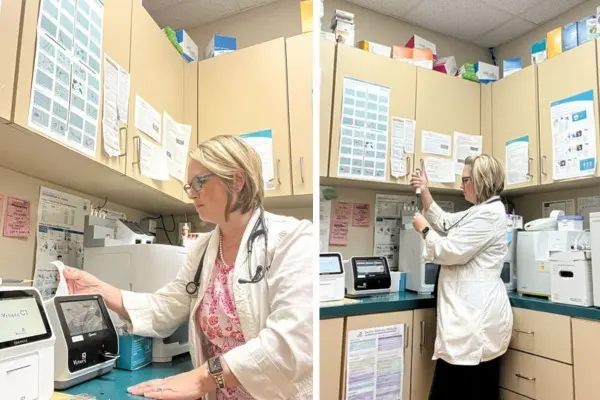
Today, the market is flooded with cloud-based diagnostic platforms, AI-assisted digital cytology, machine learning-driven radiology interpretation software, and near-patient immunoassay systems (such as Bionote’s Vcheck200 used for rapid quantitative biomarker analysis). Concurrently, direct-to-consumer health products and online symptom checkers have altered how clients perceive diagnostic data. Practices are no longer just purchasing hardware; they are buying into complex software ecosystems, subscription models, and continuous data streams that demand constant evaluation.
Supporting Context & Metrics: The Triad of Practice Pressure
Walking through the exhibit hall of any major veterinary conference exposes the magnitude of the problem: dozens of vendors vying for limited square footage in modern clinics. Hospital owners, clinical directors, and practice managers are forced to navigate complex procurement decisions that impact every level of the business.
[Diagnostic Innovation Boom]
       │
       ├──> Practice Level: Financial Pressures & Contract Lock-in
       ├──> Clinical Level: Cognitive Load & Staff Burnout
       └──> Client Level: Cost Sensitivity & Information Overload
1. The Practice Operations Dilemma
Practice owners face significant capital expenditure and overhead challenges. Integrating a new diagnostic platform involves more than the initial purchase price or lease agreement. It requires evaluating:
- Consumable Costs & Minimums: Reagent stability, kit shelf-life, and mandatory monthly testing minimums.
- Contractual Obligations: Navigating exclusive supplier contracts that may limit a practice’s ability to adopt superior third-party innovations.
- Return on Investment (ROI): Ensuring that the acquisition cost translates into either measurable improvements in medical outcomes or sustainable non-duplicative revenue streams.
2. The Clinical Team and Cognitive Load
Veterinarians and licensed veterinary technicians (LVTs) experience the diagnostic landscape through the lens of daily workflow and patient caseloads. Clinicians must synthesize a vast amount of incoming data while managing full schedules, intricate medical cases, and anxious pet owners.
The introduction of continuous new testing modalities increases cognitive load. A clinician must constantly answer operational questions: When is this specific biomarker clinically indicated? What are its statistical sensitivities and specificities? How do I interpret borderline results, and what are the known physiological interferences?
When diagnostic tools are implemented without comprehensive training or clear standard operating procedures (SOPs), the results can be catastrophic for team morale. Inconsistent use leads to delayed follow-ups, redundant testing, and staff frustration—factors that directly contribute to the broader crisis of professional burnout within veterinary medicine.
3. The Modern Client Experience
Today’s pet owners occupy a unique psychological and financial space. Armed with internet searches, social media anecdotes, pet health apps, and AI-driven symptom checkers, clients frequently arrive at the clinic with pre-formed hypotheses and heightened anxiety.
Simultaneously, economic pressures make affordability a paramount concern. Clients are forced to balance a deep, emotional desire to provide optimal care for their animals against very real household budget constraints. Consequently, transparency and value communication are no longer optional—they are central to clinical compliance.
When a veterinary team can seamlessly articulate what a diagnostic test measures, how the results will directly modify the treatment plan, and why the recommendation is medically necessary, client trust increases dramatically. Conversely, vague diagnostic recommendations or unexpected testing fees erode trust and depress compliance rates.
Official Perspectives and Industry Insights
Industry leaders, specialty practitioners, and practice management experts increasingly advocate for a structured, disciplined approach to technology acquisition.
"The goal is not to adopt every option available, but to build a curated diagnostic ecosystem that supports medical quality, practice sustainability, team efficiency, and client trust."
According to veterinary internal medicine specialists, the proliferation of point-of-care (POC) testing has revolutionized emergency and critical care triage. Quantitative assays—such as in-house cardiac marker testing (e.g., NT-proBNP)—allow clinicians to rapidly differentiate between respiratory distress caused by primary cardiac disease versus primary pulmonary pathology within minutes of patient presentation. This rapid turnaround time alters immediate therapeutic intervention, stabilizes critical patients faster, and reduces prolonged hospitalization stress.
However, industry consultants caution against "shiny object syndrome." Procurement decisions driven purely by marketing hype rather than clinical utility frequently result in underutilized equipment sitting on clinic countertops, serving as expensive reminders of unstrategic purchasing. Clinics that thrive in the current economic climate are those that perform thorough internal audits before signing multi-year agreements, ensuring that every piece of diagnostic hardware aligns directly with the hospital’s core medical identity.
Future Outlook: Transitioning to Intentional Diagnostic Stewardship
As veterinary medicine continues to mature, the path forward relies on diagnostic stewardship—the intentional, evidence-based selection and utilization of diagnostic tools to maximize patient benefit while minimizing operational and financial waste.
Evaluating New Technologies: The Five Core Questions
To prevent decision fatigue and operational chaos, practices should subject every prospective diagnostic acquisition to a rigorous multi-disciplinary evaluation:
- Clinical Impact: Does this tool genuinely improve patient outcomes, diagnostic accuracy, or clinical decision-making speed compared to existing methods?
- Workflow Integration: Does the tool fit smoothly into our current physical footprint and daily staffing model without creating bottlenecks?
- Training & Consistency: Can our entire team—from new graduates to experienced assistants—be easily trained to use, run, and interpret this tool consistently?
- Financial Viability: Does the pricing and consumable structure support a sustainable return on investment without pricing our core clientele out of care?
- Client Communication: Can the clinical value of this test be explained clearly and transparently to pet owners to drive informed consent and compliance?
Getting Started: A Tailored Approach
The implementation strategy must match the maturity stage of the practice:
- For Start-Up Practices: The focus should be on defining a lean, highly efficient core diagnostic menu that establishes the hospital’s medical identity and maintains low initial overhead.
- For Established Practices: The review process should begin with a forensic audit of current analyzer utilization patterns, existing vendor contracts, operational workflow bottlenecks, and uncaptured diagnostic opportunities.
Conclusion
Veterinary medicine does not need to choose between stagnation and technological overwhelm. By transforming diagnostic complexity into purposeful, strategic selection, practices can build robust testing systems that honor clinical standards, protect operational profitability, support team well-being, and remain infinitely adaptable to future innovations.
Stacey Hendershott, DVM, DABVP (Canine/Feline), is a small animal veterinarian based in Texarkana, Texas, with a dedicated clinical focus on internal medicine and oncology at her private practice, Pleasant Grove Animal Hospital. Dr. Hendershott collaborates closely in practice and life with her husband, Ben, a licensed veterinary technician.