
Executive Overview
For millions of residents living within the sprawling concrete labyrinth of Los Angeles, nature is not a distant escape requiring a weekend road trip to the mountains or the desert; it is an immediate, daily neighbor. From the rustling oak woodlands of Ernest E. Debs Regional Park in the northeast to the coastal expanses of Peck Park in the San Pedro harbor area, urban green spaces serve as the lungs of the metropolis. They cool neighborhoods during intensifying heat waves, filter polluted air, provide sanctuaries for endangered migratory birds, and offer free, accessible spaces for children to play and communities to congregate.
Yet, beneath the verdant canopy of these urban oases lies a sobering reality: the parks system of the second-largest city in the United States is in a state of quiet crisis. Decades of structural underinvestment, bureaucratic neglect, and an increasingly antiquated municipal budgeting framework have left the city’s recreational infrastructure battered. Los Angeles currently faces an estimated $3 billion deferred maintenance backlog—a staggering fiscal chasm that impacts everything from basic janitorial services and irrigation repairs to the preservation of delicate native ecosystems and aging urban tree canopies.
This institutional neglect is reflected in national metrics. In the Trust for Public Land’s comprehensive ParkScore rankings, Los Angeles routinely languishes near the bottom of the nation’s 100 largest cities, ranking a dismal 93rd. For a global capital that prides itself on progress, environmental leadership, and outdoor lifestyle, this metric represents an urgent policy failure.
Enter Measure PRK, a critical municipal ballot initiative facing Los Angeles voters this November. Designed to address the root cause of the parks’ decline, Measure PRK seeks to modernize the city’s guaranteed funding formula for the Department of Recreation and Parks—a formula that has remained virtually frozen in time since the mid-1920s. By doubling the baseline allocation from 0.0325% to 0.065% of the city’s general fund, the measure aims to secure predictable, dedicated revenue streams without imposing new taxes on local residents.
This in-depth investigative report examines the historical context of Los Angeles’s park funding, explores the ecological and social significance of these urban sanctuaries, details the structural mechanisms of Measure PRK, and analyzes what this pivotal vote means for the future livability of Southern California’s urban core.
Detailed Chronology: A Century of Structural Underfunding
To understand how Los Angeles parks arrived at their current deficit, it is necessary to examine the historical architecture of municipal finance in the city. The systemic challenges facing the Department of Recreation and Parks are not the result of a single administration’s oversight; rather, they are baked into the city’s foundational governance documents.
1925: The Charter and the Creation of a Baseline
In 1925, the citizens of Los Angeles ratified a new City Charter that fundamentally reshaped municipal governance. Amidst this restructuring, city leaders recognized the need to protect nascent parklands from being entirely swallowed by commercial and residential development. To achieve this, the Charter established a mandatory minimum funding allocation for the Department of Recreation and Parks, guaranteeing it a fixed percentage of the city’s general tax receipts: 0.0325%.
In the Roaring Twenties, when Los Angeles was a rapidly expanding but comparatively compact city with a fraction of its current population, this formula provided a workable, albeit modest, financial floor. However, as the decades rolled on, the city expanded outward, annexing vast swaths of the San Fernando Valley and absorbing independent communities. The urban footprint ballooned, and with it, the acreage of parkland, the density of neighborhoods, and the demand for recreational programming.
The Post-War Expansion and Fiscal Squeeze
Through the mid-20th century, the post-World War II boom brought unprecedented population growth to Southern California. Yet, while the demands on municipal infrastructure multiplied exponentially, the funding mechanism for parks remained structurally tethered to the 1925 baseline.
As inflation compounded and city budgets grew increasingly complex, competing municipal priorities—ranging from aging police and fire pensions to massive transportation projects and wastewater infrastructure overhauls—squeezed the general fund. Because the parks department’s charter-mandated minimum was never adjusted upward to reflect contemporary realities, the department increasingly found itself dependent on discretionary allocations, competitive grants, and sporadic bond measures. These stopgap measures proved wholly inadequate for maintaining a world-class park system across a sprawling metropolis of nearly four million residents.
The Turn of the Century: Deferred Maintenance Compounds
By the turn of the 21st century, the accumulated deferred maintenance had reached crisis proportions. City auditors and parks advocates began sounding the alarm over crumbling infrastructure: aging playground equipment that failed modern safety standards, broken irrigation systems turning park lawns into dust bowls, cracked asphalt walking paths, and historic park clubhouses falling into disrepair.
The financial strain was exacerbated by economic downturns, including the 2008 Great Recession and the subsequent municipal budget crises, which triggered deep cuts to park staffing. Maintenance workers, recreation coordinators, and park rangers were laid off or left unreplaced, leading to a visible decline in park cleanliness and safety.
2024–2026: The Reckoning and the Path to Measure PRK
In recent years, the impacts of global climate change have placed an entirely new set of demands on Los Angeles parks. No longer viewed merely as recreational amenities, parks are now recognized as vital climate resilience infrastructure. They serve as carbon sinks, stormwater management zones during increasingly erratic atmospheric rivers, and crucial urban cooling centers during prolonged, life-threatening heat waves.
Yet, despite this heightened role, the funding crisis persisted, culminating in the Trust for Public Land’s 2026 ranking placing Los Angeles parks at 93rd out of the nation’s top 100 cities. Recognizing that incremental budget adjustments were no longer viable, parks advocates, environmental organizations, and civic leaders mobilized. Through extensive coalition building and polling that revealed overwhelming public support, the groundwork was laid for Measure PRK—a direct legislative appeal to the voters to correct a century-old fiscal imbalance.
Supporting Context & Metrics: The Anatomy of a Crisis
Numbers tell the story of an underfunded system. To grasp the urgency of Measure PRK, one must examine the quantitative data detailing the state of Los Angeles parks, their ecological value, and public sentiment regarding their preservation.
The $3 Billion Deficit
The most staggering statistic facing the Department of Recreation and Parks is its deferred maintenance backlog, estimated at nearly $3 billion. This backlog represents accumulated, unaddressed repairs across the city’s hundreds of parks, spanning more than 16,000 acres of land.
- Infrastructure Decay: Critical systems—including plumbing, electrical grids, lighting, and HVAC units in community centers—frequently fail, forcing the closure of public facilities.
- Tree Canopy Stress: Los Angeles’s urban forest is suffering from prolonged drought, invasive pests, and lack of dedicated arboricultural staff, threatening the shade canopy vital for urban cooling.
- Recreational Disparities: Low-income neighborhoods frequently bear the brunt of underinvestment, possessing fewer parks per capita and older, more degraded facilities than wealthier enclaves.
National Benchmarks: The ParkScore Reality
According to the Trust for Public Land’s 2026 ParkScore index, Los Angeles ranked 93rd out of the 100 largest American cities. The index evaluates city park systems across five key categories:
- Acreage: The percentage of city area dedicated to parkland and median park size.
- Investment: Per capita spending on parks by municipal governments and private foundations.
- Amenities: Availability of popular park features such as basketball hoops, dog parks, playgrounds, splash pads, and recreation centers.
- Accessibility: The percentage of residents living within a 10-minute walk of a park.
- Equity: A comparative analysis of park space distribution and quality between communities of color and white neighborhoods, as well as low-income and high-income areas.
While Los Angeles performs reasonably well in sheer geographic accessibility due to the sheer number of distributed neighborhood parks, it plummets in Investment and Amenities, driven directly by chronic under-resourcing.
Public Sentiment: An Overwhelming Mandate
Despite the systemic funding shortfalls, public affection for Los Angeles parks remains extraordinarily high. Far from being apathetic, local residents recognize the indispensable role these spaces play in their daily lives.
A comprehensive recent public opinion poll conducted ahead of the November ballot revealed that 8 out of 10 Los Angeles voters (80%) believe parks and recreational services are chronically underfunded and actively support initiatives to increase financial backing for them. This broad, bipartisan, and cross-demographic consensus indicates that the passage of Measure PRK aligns directly with the values of the electorate.
Ecological Significance: Sanctuaries in the Concrete Jungle
While parks are heavily utilized for human recreation, athletics, and cultural events, they also function as vital biological corridors within the heavily urbanized Los Angeles Basin. Urban green spaces are critical nodes in regional conservation networks, providing essential stopovers and permanent habitats for native and migratory wildlife.
The Ecosystem at Ernest E. Debs Regional Park
Take, for instance, Ernest E. Debs Regional Park, situated in the Montecito Heights neighborhood of Northeast Los Angeles. Encompassing over 280 acres of native walnut woodland, coastal sage scrub, and grasslands, Debs Park is one of the largest parks in the city.
Visitors walking its winding dirt trails are routinely greeted by the sensory juxtaposition of urban life and untamed nature: the rustling of California sycamore leaves and the gurgling of natural springs, punctuated by the distant drone of traffic on the nearby 110 Freeway.
Debs Park and similar green spaces across the city are essential habitats for diverse fauna, including:
- The Least Bell’s Vireo (Vireo bellii pusillus): This small, endangered migratory songbird relies heavily on riparian and scrub habitats in Southern California to breed and raise its young. Urban parks with restored native vegetation provide the critical nesting grounds necessary for its ongoing recovery.
- The California Towhee (Melozone crissalis): A charismatic, resident ground-dwelling bird found throughout the chaparral and suburban gardens of California, depending on urban parks for foraging and cover.
- Migratory Avian Species: The Pacific Flyway passes directly over the Los Angeles metropolitan area. Urban parks act vital "refueling stations" for warblers, tanagers, and other neo-tropical migrants navigating the vast urban expanse.
Climate Resilience and Environmental Justice
Beyond wildlife conservation, parks are frontline defenses against anthropogenic climate change. As global temperatures rise, urban heat island effects disproportionately bake asphalt-heavy, tree-poor neighborhoods in Los Angeles. Mature park trees and expansive lawns measurably reduce local ambient temperatures, protecting vulnerable populations—particularly the elderly and young children—from heatstroke and heat exhaustion.
Furthermore, parks play a vital hydrological role. Traditional urban planning relies on concrete storm drains that channel rainwater rapidly into the Pacific Ocean, carrying urban pollutants with it. Naturalized parks and bioswales capture stormwater, allowing it to percolate into local aquifers, replenish groundwater supplies, and naturally filter out heavy metals and trash before they reach the ocean.
The Mechanics of Measure PRK: A Sustainable Solution
Measure PRK is structured as a pragmatic, surgically precise fiscal adjustment rather than a sprawling tax hike. It addresses the core structural deficit of the Department of Recreation and Parks by updating the century-old funding formula established in the 1925 City Charter.
How the Funding Formula Changes
- Current Framework (Since 1925): The City Charter mandates that the Department of Recreation and Parks receive a baseline allocation of 0.0325% of the city’s general fund receipts.
- Proposed Framework under Measure PRK: The initiative doubles this guaranteed baseline allocation to 0.065% of the general fund.
Fiscal Responsibility: No New Taxes
Crucially, Measure PRK does not levy new property taxes, sales taxes, or parcel fees on Los Angeles residents. Instead, it reallocates existing municipal revenues by prioritizing parks within the city’s overall budgetary framework. By shifting a slightly larger fraction of the general fund toward recreational infrastructure, the measure establishes a predictable, dedicated revenue stream that the department can rely on year after year.
This predictability is game-changing for municipal planning. Currently, park managers operate in a state of chronic fiscal precarity, unable to commit to long-term capital improvement projects, deferred maintenance overhauls, or multi-year staffing pipelines. With guaranteed baseline funding, the department can:
- Execute proactive maintenance rather than costly reactive emergency repairs.
- Expand staffing levels for park rangers, maintenance crews, and youth program coordinators.
- Invest in comprehensive urban forestry management to combat tree loss and expand the urban canopy in historically underserved neighborhoods.
- Restore and expand free community programming, including after-school tutoring, art classes, senior wellness programs, and environmental education workshops.
Official Statements and Community Perspectives
The campaign for Measure PRK has drawn a broad coalition of support from environmental organizations, labor unions, neighborhood councils, and civic leaders who witness firsthand the transformative power of urban green spaces.
Voices from the Frontlines of Urban Conservation
Staff members and environmental educators working within the city’s park system emphasize that parks are fundamentally about community building.
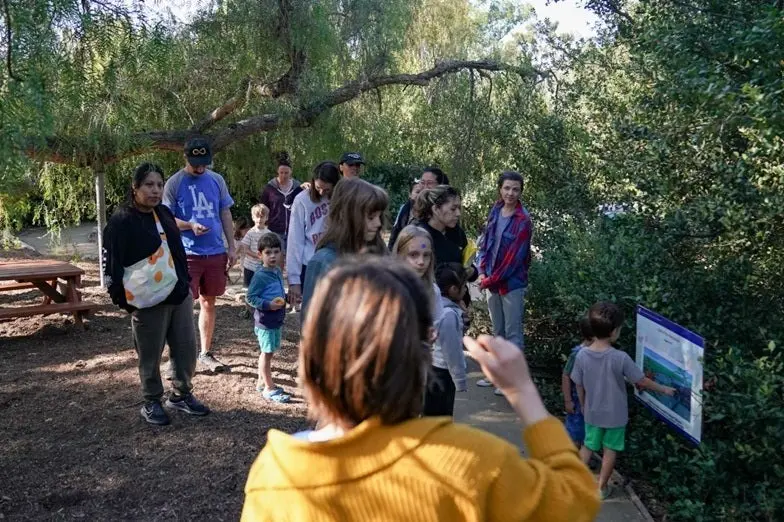
"At Debs Park, we see how much people depend on these spaces," reflects an educator at the Audubon Center at Debs Park. "Residents use the trails every day. Families gather to enjoy movie nights, art classes, and bird sits. Volunteers learn to identify and plant native species. Young people gain hands-on experience caring for the land and begin to see themselves as leaders and land stewards. These experiences are possible because a park is more than a place people pass through; it can be a place where people belong, participate, and build a relationship with their community and natural environment."
Advocates point out that underinvestment in parks is ultimately an investment failure directed at the people who rely on them. When playground equipment breaks and remains unfixed, children lose safe places to play. When community centers are shuttered due to budget cuts, youth lose constructive after-school outlets. When natural areas are neglected, surrounding neighborhoods lose access to clean air, shade, and mental health respite.
The Broad Coalition
The "Yes on Measure PRK" campaign has united diverse stakeholders who rarely find common ground on municipal ballot measures. Conservation groups like the Audubon Society, local Sierra Club chapters, urban forestry advocates, and community health organizations have joined forces. They argue that a city’s character is defined by how it treats its most vulnerable environments and its most public spaces.
Future Outlook: What Is at Stake for Los Angeles?
As Los Angeles voters head to the polls this November, they face a profound philosophical and practical choice regarding the identity and future livability of their city.
Two Divergent Futures
- The Status Quo Trajectory: If Measure PRK fails, the city’s parks will continue to limp along under the archaic 0.0325% funding formula. The $3 billion deferred maintenance backlog will inevitably swell, leading to more facility closures, deteriorating recreational infrastructure, and a deepening of environmental inequities across neighborhoods. Los Angeles will remain near the bottom of national park rankings, forcing its residents to contend with degraded public amenities in an era of intensifying climate pressures.
- The Revitalized Green Future: If Measure PRK passes, Los Angeles embarks on a new chapter of urban stewardship. By doubling the guaranteed baseline funding for parks without raising taxes, the city can systematically chip away at its maintenance backlog, green its urban core, protect endangered wildlife habitats, and ensure that every child—regardless of zip code—has access to clean, safe, and vibrant recreational spaces.
Conclusion: A Call to Action
Los Angeles has long defined itself as a city of reinvention, innovation, and outdoor lifestyle. Yet, the neglected state of its parks threatens to undermine that legacy. Parks are not optional luxury amenities; they are the essential civic infrastructure that holds neighborhoods together, protects public health, and preserves the natural heritage of Southern California for future generations.
This November, voters have the power to turn the page on a century of underinvestment. By voting Yes on Measure PRK, Angelenos can stop forcing their parks to do more with less, and instead provide the stable, predictable resources required to help these green hearts of the community thrive.
To learn more about Measure PRK and how you can support Los Angeles parks, visit the official campaign platform at www.yesonprk.com.