
Executive Overview
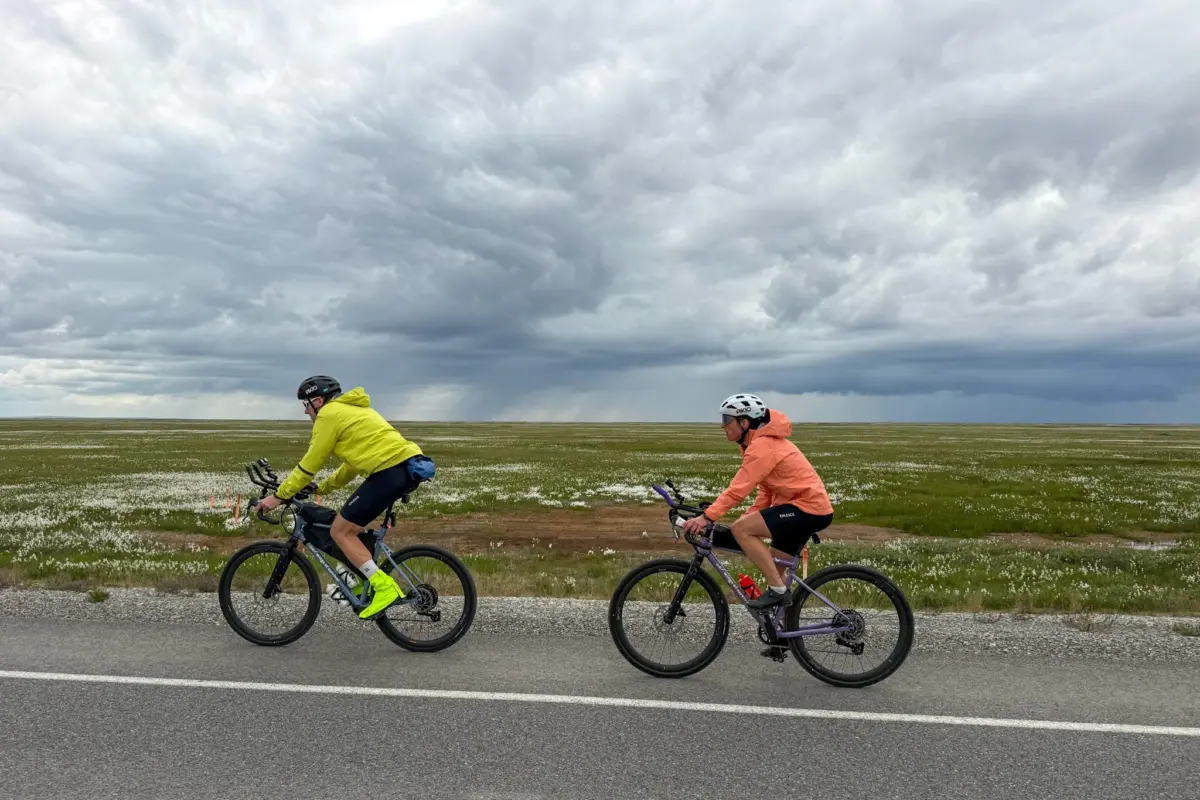
On August 1, university ecologist Timm Döbert and extreme athlete Leanna Carriere wheeled their bicycles away from the desolate, windswept expanse of Prudhoe Bay on Alaska’s Arctic coast. Ahead of them lay an arduous, 18,600-mile odyssey stretching southward across two continents. More than three months and 5,000 miles into their nine-month endurance feat—a project they have aptly named Wings of Survival—the couple is not merely cycling across the Americas; they are chasing a ghost.
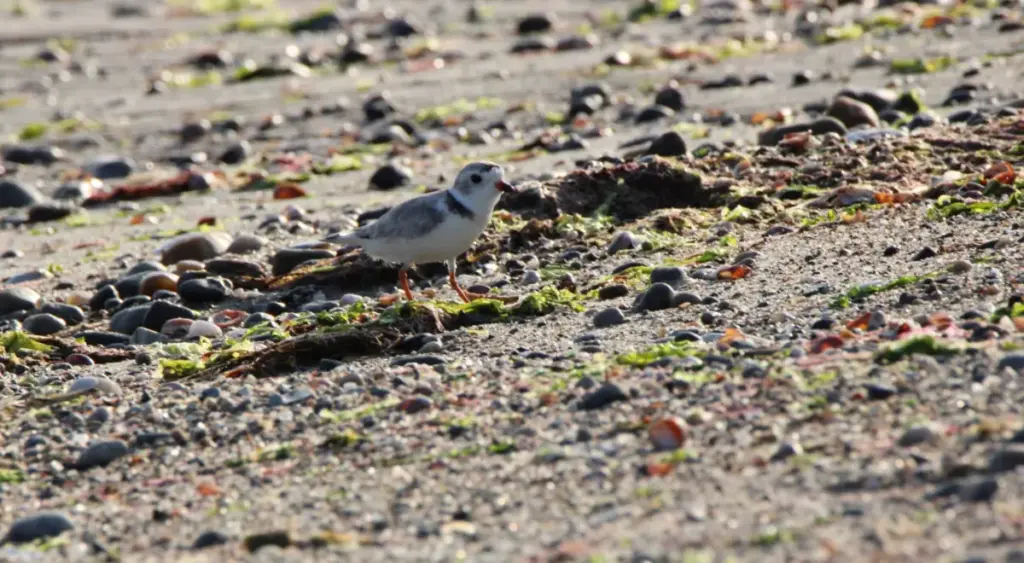
Their route loosely mirrors the migratory path of a single, satellite-tracked Hudsonian Whimbrel (Numenius hudsonicus) as it journeys from its Arctic breeding grounds to the southernmost tips of Patagonia. By shadowing this fragile shorebird, Döbert and Carriere aim to bridge critical gaps in scientific understanding regarding avian migration corridors, draw international attention to an imperiled species, and engage local communities in habitat conservation.
The Hudsonian Whimbrel faces mounting existential threats, including the rapid degradation of its coastal foraging and nesting grounds, increasingly volatile migration weather driven by climate change, and rising sea levels that submerge vital stopover mudflats. Although the species has suffered an estimated 70 percent population decline over the past two decades—prompting the United Nations’ Convention on the Conservation of Migratory Species to declare it endangered—much of its flight path remains a mystery. Through Wings of Survival, scientists hope to unlock the ecological "connectivity" required to safeguard the species before it vanishes entirely.
Detailed Chronology
The Genesis in Chiloé
The groundwork for this expedition was laid in January, thousands of miles south in the windswept fjords of Chiloé Island in southern Chile. There, Döbert and Carriere rendezvoused with Juan Navedo, a Universidad Austral de Chile ecologist who has spent two decades studying migratory shorebirds. With Navedo’s guidance, the team successfully secured high-resolution satellite transmitters onto five Hudsonian Whimbrels.
These lightweight trackers immediately began recording the birds’ return journeys northward to their Arctic breeding grounds. The telemetry data exposed staggering variations in individual migratory strategies. While one whimbrel island-hopped along the Pacific coast from Baja California northward to Alaska, another took a far more daring route, flying straight across the open expanse of the ocean directly to Anchorage.
From Arctic Tundra to Baja
Of the five tagged subjects, only one continues to reliably transmit data: Whimbrel 59764. Having spent the summer breeding season on the swampy tundra near Hooper Bay in southwest Alaska, the bird initiated its southward trek in July. Its journey traced a familiar, perilous arc: flying south to Baja California, crossing the treacherous Sea of Cortez to the Mexican mainland, pausing briefly in Ecuador, and continuing deeper into the Southern Hemisphere.
The silence from the other four birds remains an open question. According to Döbert, they may have perished from exhaustion or predation during transit, or simply managed to shed their GPS harnesses.
While Whimbrel 59764 sails over oceans and mountain ranges in continuous, multi-day non-stop flights, the human duo is forced to take a slower, vastly more terrestrial route. Their cycling path hugs coastal highways wherever possible, intentionally intersecting with known or suspected stopover sites used by the species.
"There’s definitely excitement when you know you’re in a spot that the birds were," Carriere reflects. "It feels very special."
Supporting Context & Metrics
The Physiology of Endurance
To comprehend the magnitude of the whimbrel’s journey—and, by extension, the cyclists’ grueling enterprise—one must look to avian physiology. Whimbrels are unassuming endurance superstars featuring long, curved bills and football-shaped bodies. Yet, their biological preparations for migration border on the miraculous.
According to Chris Guglielmo, co-director of the Advanced Facility for Avian Research at Western University, basic physics and nutritional math dictate that a whimbrel should completely exhaust its energy reserves after three or four days of continuous flight. Yet, satellite data confirms these birds routinely fly nonstop for over a week, covering up to 5,000 miles in a single leg at speeds reaching 50 miles per hour.
Before departure, whimbrels gorge themselves on insects, crabs, and marine invertebrates, nearly doubling their body weight and packing on dense layers of fat while restructuring their muscles and organs. Once they land, those reserves are entirely spent.
"The digestive system can be half the size that it was on take-off," Guglielmo explains. "Even the heart can shrink by 25 percent."
Human Metronomes on Two Wheels
Döbert and Carriere are no strangers to extreme physical trials. Seasoned adventurers who previously biked across Canada, Carriere also holds the historic distinction of being Canada’s first female decathlete. Yet, Wings of Survival eclipses all their previous endeavors.
A typical day for the cyclists involves 12 hours in the saddle, covering 80 to 90 miles while consuming several thousand calories each just to maintain basic metabolic function. By intentionally casting themselves as biological test subjects—collaborating with a University of Alberta colleague studying human resilience under extreme stress—they draw a direct, humbling parallel to the birds they track.
"It puts things in perspective for us because we’re barely hanging in there," Carriere notes.
Uncovering Unknown Refuges
Historically, tracking an entire migratory cohort has been prohibitively expensive. High-tech satellite transmitters cost thousands of dollars per unit, leaving massive data blackouts along the Western Hemisphere. However, Wings of Survival is already paying immediate conservation dividends by identifying previously undocumented pit stops.
Earlier this year, a Mexican colleague responded to coordinates pinged by one of the tagged birds, investigating a commercial strawberry field near San Quintín. There, he discovered a staggering congregation of 500 whimbrels.
"That was the largest number of whimbrels he’s seen in northwestern Mexico ever in one spot," Döbert says. "So, we’re identifying new places that should be protected."
Guglielmo hopes that proving the efficacy of these initial high-cost tags will pave the way for cheaper, broader deployment of Motus wildlife-tracking stations in the future. By pinpointing exact touchdown zones in places like Mexico and Chile, researchers can install regional antenna networks at a fraction of the cost—reducing tracking equipment expenses from thousands of dollars to just a few hundred per tag.
Official Statements
The implications of the Wings of Survival expedition extend far beyond social media milestones and athletic endurance; they provide foundational data for international conservation strategies.
Juan Navedo emphasizes the necessity of mapping ecological "connectivity" to save the species from extinction. "Not many Hudsonian Whimbrels have been tracked along their entire migration, due largely to the expense involved," Navedo explains. "Scientists don’t know exactly which places the birds rely on to complete their migration successfully—something Wings of Survival aims to help with. If we solve connectivity, we can focus conservation efforts in those areas."
Beyond the scientific community, Döbert and Carriere are leveraging their journey to foster grass-roots environmental stewardship. They frequently pause their cycling to visit rural schools, lead local children on bird-watching excursions, and host dialogue sessions with farmers, regional officials, and conservation groups.
The choice of the Hudsonian Whimbrel was deliberate. Because its migration corridor spans the breadth of the Americas, it serves as a unifying ecological thread.
"It allows us to visit many communities along the route, and they all have a relationship and a contact point to this particular bird," Döbert points out.
Through weekly virtual livestreams hosted by the Canadian NGO Exploring by the Seat of Your Pants, the couple connects with classrooms worldwide. They use these broadcasts to tie the plight of migrating shorebirds to broader planetary crises, such as biodiversity loss and declining air quality.
"I think it’s just a really exciting way for kids to connect the dots a little bit differently about human and planetary health," Döbert says.
Future Outlook
As the expedition presses southward, nature has delivered a poetic validation of the project’s tracking efforts. Telemetry data confirms that Whimbrel 59764 has successfully returned to Chiloé Island—the exact spot where it was originally captured and fitted with its satellite tag earlier this year.
Döbert and Carriere hope to orchestrate a physical reunion with the bird on Chiloé before pushing on to their ultimate destination: Ushuaia, Argentina, situated near the dramatic, windswept southern tip of Patagonia. There, their bicycle journey will conclude just as the whimbrels prepare to launch themselves northward, initiating their monumental cycle of life all over again.
The adventurers already envision a future beyond this initial ride. They have conceptualized Wings of Survival as an ongoing series of global migration-tracing expeditions. Potential future routes include following the Atlantic flyway of the Red Knot from Europe to Africa, or tracking the staggering intercontinental flights of the Bar-tailed Godwit from Asia to New Zealand.
"Let’s see how it feels when we get to Ushuaia," Döbert remarks cautiously.
For now, motivation remains literally underfoot. Small decal silhouettes of whimbrels adorn the frames of their bicycles, catching their eyes with every rotation of the pedals. The images serve as an enduring reminder of how the journey began: holding the rapid, fragile heartbeats of newly tagged birds in their bare hands.
"You let them go, and you understand they’re going to embark now on this epic migration," Döbert reflects, capturing the emotional core of the enterprise. "There’s this bond between the birds and us. It feels like a responsibility towards them as well to hang in there and make it happen."