
By the Global Environmental Desk
As world leaders, policymakers, Indigenous delegates, civil society organizations, and corporate stakeholders convene for the milestone summits of the Convention on Biological Diversity’s COP17 and the UN Framework Convention on Climate Change’s COP31, a sobering consensus has crystallized among the scientific and diplomatic communities.
Despite decades of high-level pledges, global frameworks, and international declarations, the world’s forests are at a critical precipice. As the recent UNEP Limiting Overshoot report warns, humanity is poised to surpass the crucial 1.5-degree Celsius threshold of global temperature rise, meaning our collective challenge is no longer merely prevention, but active climate mitigation and rapid atmospheric recovery.
Amidst these compounding global crises, one immutable truth remains: forests must be restored immediately to the absolute center of international climate and biodiversity strategies. They are simply too vast, too ecologically critical, and too economically foundational to fail. Renewed leadership, unprecedented capital investments, and cross-sector collaboration are urgently required to turn existing political commitments into meaningful, measurable conservation action.
Executive Overview: The 2030 Forest Imperative
The countdown to the 2030 climate and biodiversity targets has entered a tense and decisive phase. In recent years, international attention has frequently been pulled away from systemic land-use challenges toward immediate geopolitical flashpoints and economic disruptions. Consequently, progress toward halting global deforestation has fallen dangerously short of what is required to secure a stable planetary future.
While a momentary bright spot emerged in 2025—when annual global deforestation rates dipped by 15%—the world remains off-track to fulfill the core mandate established by Parties to the Paris Agreement during the first Global Stocktake: to completely halt and reverse deforestation and forest degradation by the end of the decade.
Failing to meet this objective carries catastrophic implications. It threatens to lock in irreversible climate feedback loops, devastate terrestrial biodiversity, undermine global water and food security, and trigger tens of billions of dollars in systemic economic losses.
Yet, hope is far from lost. The architectural foundations for success are largely in place. Innovative financing mechanisms, unprecedented Indigenous-led governance models, and cutting-edge analytical tools are ready for deployment. What is desperately missing is the political will and scaled-up capital necessary to transform these blueprints into on-the-ground reality. COP17 and COP31 present the ultimate testing ground for governments, corporations, and civil society to reignite global momentum, close the funding gap, and honor the unfulfilled promises of past decades.
Detailed Chronology: Milestones in Global Forest Commitments
To understand where global forest governance stands today, it is essential to trace the historical evolution of international commitments, identifying where political will has historically surged and where implementation has repeatedly stalled.
[2014] New York Declaration on Forests
  │
  ├─► [2021] Glasgow Leaders' Declaration (COP26)
  │     │
  │     └─► [2023] Paris Agreement Global Stocktake (2030 Goal Set)
  │           │
  │           └─► [2025] 15% Dip in Global Deforestation Rates
  │                 │
  │                 └─► [2026–2027] Convergence at CBD COP17 & UNFCCC COP31
2014: The New York Declaration on Forests
The modern era of ambitious, collective forest targets began with the voluntary New York Declaration on Forests. Bringing together over 200 entities—including national governments, subnational jurisdictions, indigenous groups, and multinational corporations—this coalition committed to cutting natural forest loss in half by 2020 and striving to end it entirely by 2030. While the 2020 target was missed globally, the declaration laid the vital groundwork for accountability and multistakeholder partnerships.
2021: The Glasgow Leaders’ Declaration (COP26)
Momentum surged forward at the UN Climate Change Conference in Glasgow (COP26). World leaders representing over 85% of the world’s forests signed the historic Glasgow Leaders’ Declaration on Forests and Land Use. Leaders pledged to halt and reverse forest loss and land degradation by 2030, backed by unprecedented pledges of public and private climate finance totaling nearly $20 billion. This moment bridged land-use policy directly with corporate supply chain accountability.
2023: The Paris Agreement Global Stocktake
At COP28, the first-ever Global Stocktake under the Paris Agreement codified the 2030 forest mandate into international law. All Parties formally agreed to accelerate efforts toward halting and reversing deforestation, forest degradation, and land degradation by 2030, cementing it as an indispensable pillar of global climate stabilization.
2025: A Fleeting Glint of Progress
Reflecting the cumulative impact of early supply chain interventions and tighter regulatory enforcement in key tropical nations, annual global deforestation rates dropped by 15% in 2025. Environmental analysts hailed this as proof that policy interventions can work when properly enforced, though they warned it was merely a down payment on a much larger debt.
2026–2027: The Current Convergence at COP17 and COP31
As the world gathers for CBD COP17 and UNFCCC COP31, the international community faces a reckoning. These summits represent the primary window to recalibrate strategies, introduce next-generation financial architectures like the Tropical Forests Forever Facility (TFFF), and launch the comprehensive Forests Roadmap—a definitive reference guide designed to marshal collective action ahead of 2027’s diplomatic milestones.
Supporting Context & Metrics: Why Forests Matter
The scientific case for forest conservation is comprehensive, interdisciplinary, and absolute. Forests are not merely collections of trees; they are complex, living systems that sustain the biosphere.
The Science of Climate Mitigation
According to a forthcoming peer-reviewed publication highlighted in pre-print research (Cui, Ryna, et al.), halting deforestation and addressing forest degradation represent two of the absolute fastest and most cost-effective ways to limit near-term global temperature rise. Seminal studies published in scientific literature demonstrate that aggressive forest conservation, combined with large-scale ecosystem restoration, could provide up to one-third of the global climate mitigation needed between now and 2030 to prevent catastrophic climate tipping points.
Biodiversity Strongholds
The ecological footprint of forests extends far beyond carbon. Globally, forest ecosystems provide irreplaceable habitats for:
- 80% of all amphibian species
- 75% of all bird species
- 68% of all mammal species
- Over 60,000 unique tree species
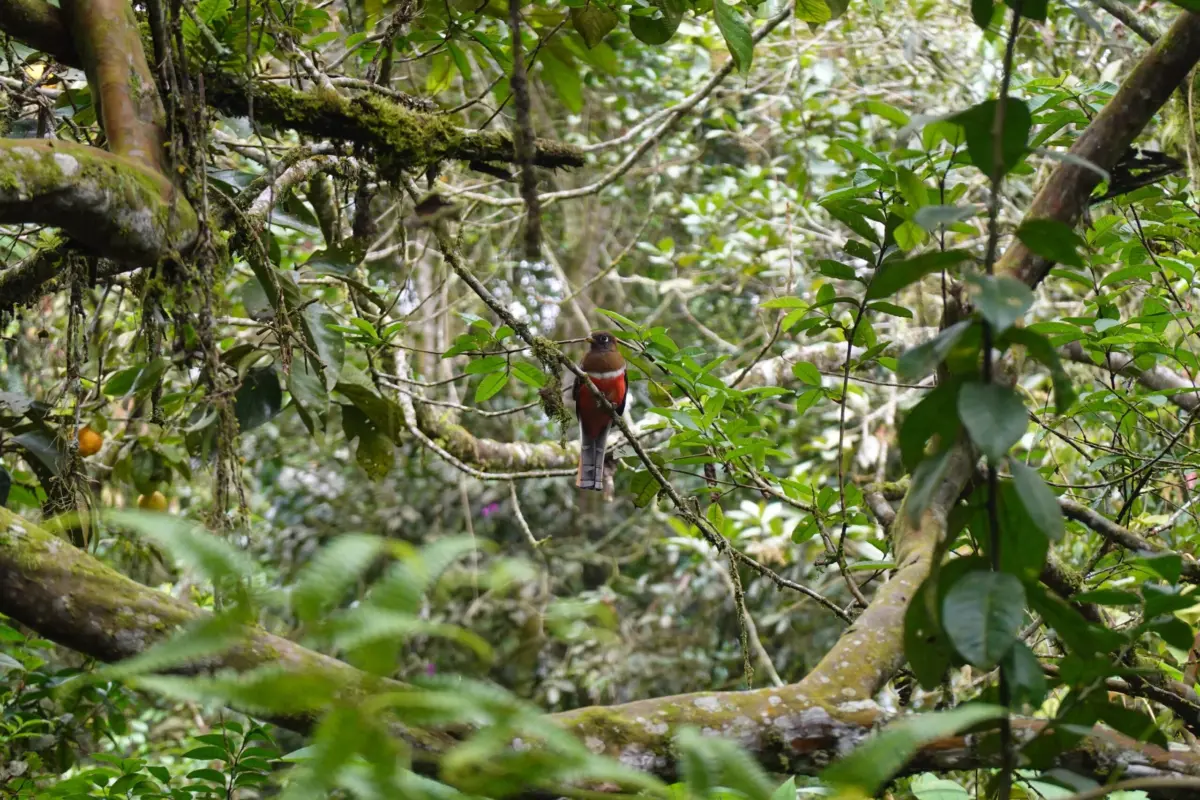
For conservation organizations such as Audubon, the intersection of forests and avian life is particularly critical. Audubon science reveals that more than 75% of threatened forest bird species in Latin America face heightened vulnerability to extinction if global warming surpasses the 1.5-degree thresholds of the Paris Agreement. Conversely, intact, resilient forests act as vital climate strongholds, protecting vulnerable species while continuously sequestering atmospheric carbon.
Ecosystem Services and Human Livelihoods
Beyond biodiversity, forests regulate the planetary life-support system. They produce atmospheric oxygen, filter water supplies, regulate regional and global water cycles, prevent soil erosion, and drive the atmospheric moisture loops essential for agricultural productivity.
Economically, the stakes are equally monumental. More than one billion people worldwide depend directly on forests for their daily livelihoods, subsistence, and cultural survival. Forests generate tens of billions of dollars annually through timber markets, sustainable non-timber forest products, ecotourism, and ecosystem service payments.
Specific global market metrics underline this value:
- Forest Carbon Revenues: Account for more than $473 million annually.
- Bioeconomy Products: Contribute at least $1.73 billion to regional and global economies.
- Certified Sustainable Forest Products: Exceed $2.3 billion in annual trade value.
Crucially, economic analyses demonstrate that every dollar invested in halting deforestation and restoring degraded forest ecosystems yields an estimated 83-fold return in saved ecosystem services, avoided disaster recovery costs, and secured natural capital.
Official Statements & Emerging Financial Mechanisms
The transition from ambition to implementation requires specialized institutional frameworks and bold financial engineering. Fortunately, several groundbreaking tools and coalitions have emerged to bridge the funding gap.
The Forests & Climate Leaders’ Partnership (FCLP)
Uniting over 40 national governments, the FCLP works to accelerate political and financial momentum, holding member states accountable to their Glasgow and Paris commitments while dismantling structural barriers to land-use reform.
Innovative Financing: The Tropical Forests Forever Facility (TFFF)
A breakthrough mechanism designed to reward developing nations for maintaining and expanding their forest cover, the TFFF complements existing compliance and voluntary carbon markets, including:
- The LEAF Coalition (Lowering Emissions by Accelerating Forest finance)
- The International Civil Aviation Organization’s CORSIA framework
- Article 6 market mechanisms established under the Paris Agreement
Indigenous-Led Conservation Leadership
As highlighted in recent policy briefs from conservation networks, Indigenous peoples continue to lead the world in effective forest guardianship. Spanning legal frameworks, rights-based governance, and innovative local financing models, Indigenous-managed lands consistently boast lower deforestation rates and higher biodiversity retention than conventionally managed state or private protected areas. Any authentic strategy to save the world’s forests must place Indigenous leadership at its epicenter.
Future Outlook: The Path to 2030 and Beyond
As COP17 and COP31 draw international focus, the path forward demands an unprecedented harmonization of political will, financial mobilization, and societal engagement.
The upcoming release of the Forests Roadmap will offer a standardized, highly practical reference document, harmonizing varied methodologies and tools into a single coherent strategy for governments and corporations alike. However, policy papers and roadmaps alone cannot plant a sapling or halt a chainsaw.
A Call to Action
The global community must mobilize across every sector of society. Heads of state, corporate chief executives, financial institutions, insurance underwriters, agribusiness leaders, and multilateral organizations must come to the negotiating table prepared to make binding, accountable investments in our natural capital.
The year 2027 will provide a cascading series of diplomatic opportunities to catalyze this political will and lock in permanent global momentum. But the work begins now, in the negotiating halls and plenary rooms of COP17 and COP31.
The global movement to save our forests—and ourselves—is open to all. Join the effort, demand accountability from your leaders, and champion the policies that keep our canopy green.
#ForestsForward