
By Dani Rabwin, DVM
Published with special insights from the Ready, Vet, Go program and upcoming industry white papers.
Executive Overview
When a fresh veterinary graduate walks through a clinic door on day one, they represent the product of one of the most grueling, rigorous professional tracks in modern academia. They have survived four years of relentless pressure, completed a grueling clinical year, conquered the North American Veterinary Licensing Examination (NAVLE), and proven their capacity to work through complex medical diagnostics. They hold the foundation of a healer.
Yet, holding a foundation is a world away from possessing fluency.
The technical confidence born from sheer repetition, high-volume case handling, and the chaotic realities of real-world veterinary practice still lie ahead. More importantly, almost everything that surrounds clinical medicine—the psychological weight of unvarnished client interactions, the navigation of financial constraints, workplace team dynamics, and the burden of professional uncertainty—is left entirely unaddressed by textbooks.
Across the veterinary industry, a silent crisis is unfolding. Practices focus their onboarding energy on clinical milestones: surgical logs, procedural checklists, and diagnostic competencies. While vital, this narrow focus addresses only half the equation. Recent qualitative research and cohort data from programs like Ready, Vet, Go reveal that early-career retention and long-term professional longevity do not hinge solely on clinical hand-holding. Instead, they depend on psychological safety, structured communication training, and the reassurance that a new doctor is never truly alone in their anxiety.
This article explores the critical gap between academic veterinary training and clinical reality, examining how clinics can completely overhaul their mentorship paradigms to protect their newest team members, improve client outcomes, and combat industry-wide burnout.
Detailed Chronology: The Trajectory of the New Graduate
To understand why traditional mentorship models fall short, we must examine the precise arc a veterinarian travels from the academic lecture hall to the exam room floor.
Phase 1: The Illusion of Completion (Graduation Day)
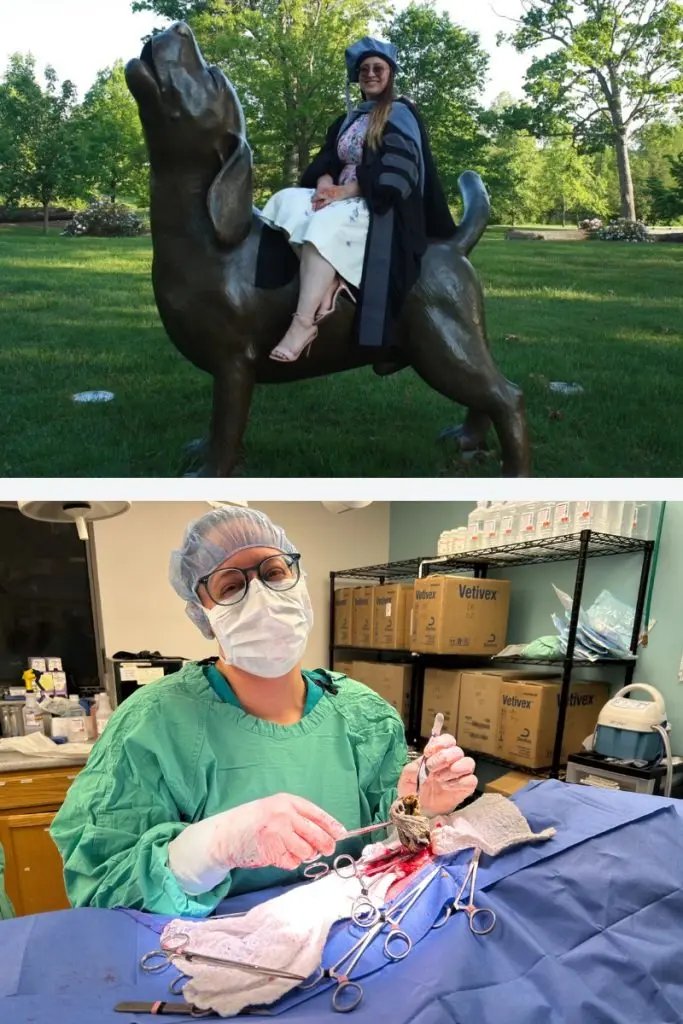
On graduation day, newly minted Doctors of Veterinary Medicine stand at the finish line of a marathon. They understand the pathophysiology of organ systems, possess encyclopedic pharmacological knowledge, and know how to calculate CRI (constant rate infusion) dosages down to the microgram. But as program alumni like Dr. Olivia Rieff and Dr. Nellie Campbell note, stepping across that stage marks not an ending, but a steep drop-off into uncharted territory. The academic environment is controlled, theoretical, and structured; veterinary practice is chaotic, fluid, and relentlessly immediate.
Phase 2: The First 90 Days—Autonomy Under Fire
Within weeks of starting their first jobs, new graduates face independent decision-making—often for the very first time. They must diagnose, treat, and counsel clients while battling imposter syndrome.
Data from qualitative studies tracking early-to-mid-career veterinarians highlight this window as high-risk. New graduates describe making high-stakes decisions while crippled by uncertainty. Without a dedicated "safety net"—a mentor who offers not just clinical backup, but emotional validation—these young professionals internalize their stress. Many leave their first jobs within eighteen months, carrying emotional scars into subsequent positions that make them even more guarded and prone to burnout.
Phase 3: The Turning Point—Action Preceding Confidence
A pervasive myth among early-career veterinarians is the belief that they must feel confident before they can act decisively. Experienced mentors recognize the inverse: confidence follows action; it is never a prerequisite for it.
Consider the case of a two-year practitioner who spent her early career paralyzed by fear of making a mistake. Her diagnostic choices were timid, her case management over-reliant on referrals, and her self-doubt palpable. The turning point arrived out of necessity: a canine pyometra case where the pet owner could not afford referral surgery. Backed by a mentor who provided psychological safety—the explicit promise that she would not be abandoned and that mistakes would be debriefed rather than weaponized—she performed the surgery.
In doing so, she unlocked not just technical competence, but her core professional identity. She realized that she was capable of saving a life under less-than-ideal conditions.
Supporting Context & Metrics: What the Data Reveals
The challenges facing early-career veterinarians are not merely anecdotal; they are backed by rigorous qualitative and quantitative metrics gathered through programs dedicated to transition-to-practice support.

The Power of Shared Struggles
In data compiled from Ready, Vet, Go cohorts comprising 63 early-career veterinarians, an overwhelming 44 percent of open-ended responses unprompted identified the exact same factor as the most crucial element of their transition: the realization that they were not alone.
It was not a specific module, a suture pattern, or a diagnostic flow chart. It was the visceral comfort of learning that their fears, mistakes, and uncertainties were universally shared by their peers.
Communication and the Exam Room
Clinical brilliance matters little if it cannot be translated across the exam room table.
- Baseline Competence: At the start of structured mentorship cohorts, only 59 percent of participants reported baseline confidence in client communication.
- Post-Intervention: By the conclusion of the program, that figure surged to 91 percent.
Participants consistently correlated this leap in communication confidence with a profound reduction in day-to-day exhaustion. When a veterinarian feels equipped to handle difficult conversations—delivering bad news, discussing prognoses, or navigating angry clients—they expend significantly less emotional energy dreading their appointments.
The Spectrum of Care: Bridging Ideology and Reality
Veterinary schools teach students to practice "gold-standard" medicine. Yet, in the real world, gold standards frequently collide with financial realities, geographic isolation, and client limitations.
- Cost-of-Care Conversations: Prior to targeted mentorship training, only 49 percent of new graduates felt comfortable navigating financial discussions with clients.
- Post-Training Competency: That figure rose to 77 percent following structured guidance on practicing across a spectrum of care.
Without this support, new graduates typically fall into one of two damaging traps: they either carry crushing, chronic guilt whenever they modify a treatment plan due to cost, or they avoid financial conversations entirely. Both extremes fail the patient, alienate the client, and accelerate practitioner burnout.
Official Insights & The Human Element
To build an authoritative framework for modern veterinary mentorship, we must examine the specific human dynamics that dictate workplace retention.
Team Dynamics and Workplace Integration
According to the landmark AAHA Stay, Please study, teamwork is the single strongest retention factor across all veterinary roles surveyed—ranking higher than compensation, schedule flexibility, or administrative perks.
New graduates do not simply enter a vacuum; they step into established ecosystems with deeply entrenched cultures, unspoken rules, and complex interpersonal hierarchies. A "sink-or-swim" clinic culture isolates new hires, leaving them vulnerable to ostracization or quiet professional withdrawal. Conversely, collaborative mentors actively facilitate integration by:
- Formally introducing new hires to long-standing clients to instantly validate their authority.
- Role-playing difficult conversations (e.g., admitting a clinical error or delivering a terminal diagnosis) before they happen in real time.
- Debriefing difficult staff interactions to cultivate genuine psychological safety.
+-------------------------------------------------------------------+
|                   THE PILLARS OF MODERN MENTORSHIP                |
+---------------------------+---------------------------------------+
| 1. Psychological Safety   | Creating a no-fault zone for debriefing |
| 2. Communication Mastery  | Role-playing difficult client talks   |
| 3. Spectrum of Care       | Validating modified treatment plans   |
| 4. Team Integration       | Actively building relational bridges  |
+---------------------------+---------------------------------------+
As Dr. Dani Rabwin observes in her seminal work Mentorship in Veterinary Medicine (Wiley, 2026), true mentorship demands a paradigm shift:
"The technical confidence from volume and repetition is still ahead of them, and so is almost everything that surrounds clinical medicine in practice. There is a useful distinction in this work between what is ‘lookupable’ and what is not. Differential diagnoses are lookupable. How to talk with a client about a treatment plan they cannot fully access? That is not in any textbook."
Future Outlook: The Return on Investment in Comprehensive Mentorship
As the veterinary industry continues to grapple with staffing shortages, mental health crises, and high turnover rates, the economic and cultural argument for robust mentorship has never been clearer.
Practices that cling to outdated, sink-or-swim onboarding mentalities will continue to churn through young talent, suffering from quiet disengagement, plummeting morale, and constant recruitment costs. Conversely, forward-thinking clinics that invest in comprehensive mentorship—embracing communication, spectrum-of-care flexibility, and emotional validation alongside clinical skill-building—will reap undeniable rewards.
Summary of Future Action Items for Practice Owners:
- Audit Onboarding Programs: Move beyond surgical logs and clinical checklists to incorporate dedicated communication and client-management workshops.
- Normalize Uncertainty: Foster an environment where asking for help is celebrated as a sign of rigorous medicine, not professional weakness.
- Train the Mentors: Recognize that being an exceptional clinician does not automatically make someone an exceptional teacher. Mentors themselves require training in active listening, psychological safety, and feedback delivery.
- Embrace Structured External Frameworks: Utilize remote peer groups and structured frameworks (such as Ready, Vet, Go or professional texts like Mentorship in Veterinary Medicine) to supplement internal clinic bandwidth.
Ultimately, the future of the veterinary profession depends on how we treat those who inherit it. By recognizing that confidence follows action—and that support is just as vital as a scalpel—we can bridge the chasm between graduation day and clinical mastery, ensuring that the next generation of veterinarians survives and truly thrives.
References & Further Reading
- Early-to-Mid-Career Veterinarian Qualitative Retention Studies (Internal Program Data, 2024–2025).
- Ready, Vet, Go Cohort Outcomes Data and White Papers (Available at readyvetgo.co/outcomes).
- American Animal Hospital Association (AAHA). Stay, Please Study on Workplace Culture and Retention.
- Rabwin, Dani, DVM (Ed.). Mentorship in Veterinary Medicine. Wiley, Published September 2026.