
Executive Overview
On Sunday, October 18, 2026, a routine emergency call transformed into a dramatic, life-saving rescue mission in the heart of Marina del Rey, California. A sudden and ferocious van fire on Panay Way trapped an unsuspecting feline companion inside, threatening a grim outcome. However, through the rapid mobilization, flawless cross-agency coordination, and compassionate intervention of the Los Angeles County Sheriff’s Department (LASD) and the Los Angeles County Fire Department (LACFD), a tragedy was successfully averted.
At the center of this heroic effort was LASD Deputy Lopez, stationed out of the Marina del Rey facility, whose quick thinking and decisive action brought an unresponsive cat back from the brink of death. While firefighters bravely battled the aggressive flames and secured the perimeter, Deputy Lopez deployed specialized first-aid techniques—administering vital oxygen via a specialized pet mask—to revive the struggling animal.
This harrowing incident underscores more than just the physical dangers of vehicle fires; it highlights the profound dedication of modern first responders who view all lives—human and animal alike—as precious and worthy of protection. Supported by comprehensive veterinary care following the incident, the feline survivor was ultimately returned safely to its grateful owner. This detailed report explores the chronology of the event, the critical importance of interagency collaboration, the broader implications of animal rescue protocols in emergency services, and the official statements honoring the heroes of Panay Way.
Detailed Chronology: From Smoke-Filled Van to Miracle on Panay Way
The Initial Alarm: 10:59 a.m.
The sequence of events began at approximately 10:59 a.m. on a brisk Sunday morning. The Los Angeles County Sheriff’s Department’s Marina del Rey Station received a high-priority dispatch regarding a commercial-style van engulfed in thick, acrid smoke parked along the 4000 block of Panay Way.
Vehicle fires present unique and volatile hazards to first responders. Aside from the immediate threat of thermal burns and structural explosions due to compromised fuel lines or pressurized aerosol containers, vehicle interiors rapidly fill with toxic synthetic smoke. Plastics, upholstery, and electrical insulation combust to release lethal compounds, including hydrogen cyanide and carbon monoxide. In closed environments like the cabin or cargo area of a van, these gases are rapidly fatal—particularly to smaller animals with accelerated respiratory rates.
Tactical Extraction by the LACFD
Upon arrival at the scene, units from the Los Angeles County Fire Department were already actively engaged. The fire had taken hold of the vehicle’s engine and passenger compartments, spewing dense plumes of black smoke into the neighborhood. Realizing that time was of the essence, firefighting crews initiated an aggressive interior attack while simultaneously conducting a rapid primary search of the vehicle to ensure no human occupants were trapped inside.
During this sweep, firefighters made a critical discovery: tucked away inside the smoke-filled interior was a cat. Without hesitation, members of the fire crew breached the hazard zone, extracted the unconscious animal, and rushed it to the relative safety of a nearby asphalt parking lot away from the immediate heat and toxic emissions.
However, extracting the animal from the fire was only the first hurdle. Once out in the open air, the grim reality of the cat’s condition became starkly apparent. The feline was completely unresponsive, limp, and failing to breathe on its own. It was suffering from severe smoke inhalation and acute oxygen deprivation (hypoxia).
Deputy Lopez Steps In
As the firefighting crew re-entered the burning vehicle to finish suppressing the flames and check for any additional trapped pets or hazards, LASD Deputy Lopez rushed to assist the vulnerable animal. Recognizing that seconds counted in preserving brain function and reversing the effects of asphyxiation, Lopez took immediate command of the medical intervention.
Knowing that standard human medical gear is ill-equipped for small feline anatomies, Lopez urgently requested specialized pet oxygen equipment from the responding LACFD paramedics. The fire crew swiftly supplied the necessary apparatus, demonstrating seamless tactical cooperation between law enforcement and fire rescue personnel.
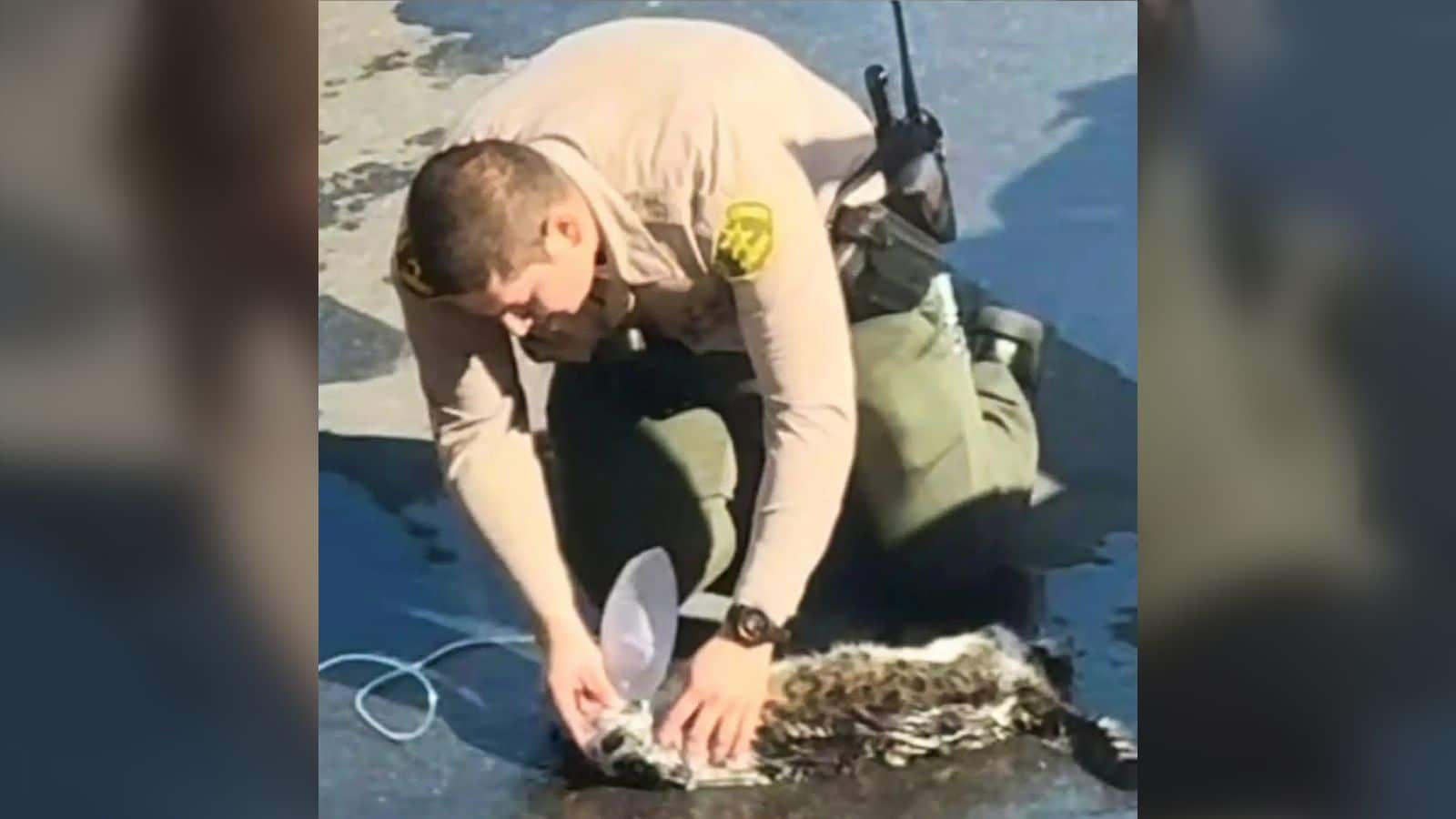
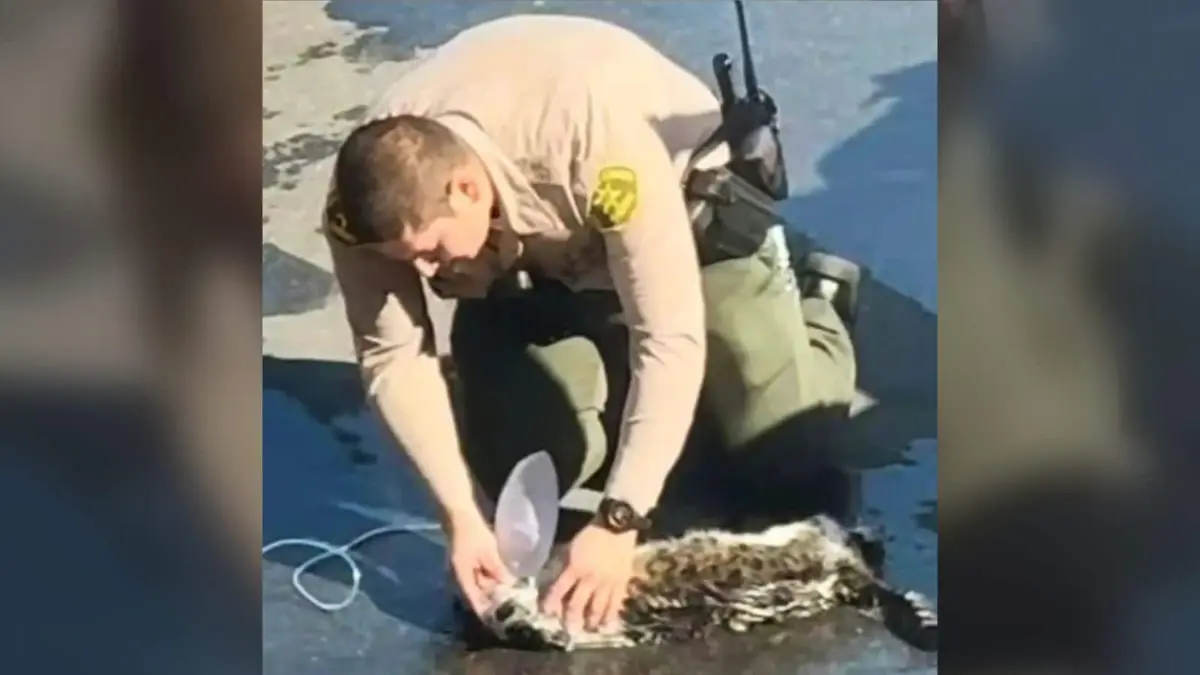
Krouched on the pavement beside the unconscious cat, Deputy Lopez meticulously positioned a small, specialized oxygen mask over the animal’s snout. With gentle precision, the deputy administered controlled flows of oxygen while simultaneously performing basic first-aid monitoring.
Photographs later released by the LASD captured this poignant moment: a heavily equipped law enforcement officer transformed into a delicate caregiver, tenderly nursing a tiny, defenseless creature back to life.
The Turning Point and Recovery
For several tense minutes, the outcome hung in the balance. Smoke inhalation injuries in felines frequently induce laryngospasm, pulmonary edema, and systemic carbon monoxide poisoning, making resuscitation exceptionally difficult.
Yet, perseverance prevailed. Gradually, the cat’s chest began to rise and fall independently. Its heart rate stabilized, and the feline finally opened its eyes, officially regaining consciousness. The collective tension among the gathered emergency personnel dissolved into profound relief.
Following successful resuscitation, Deputy Lopez was photographed cradling the recovering cat, wrapped securely in a clean thermal blanket to prevent post-smoke-inhalation hypothermia—a common complication when metabolic functions are severely depressed.
Understanding that physical recovery from smoke inhalation requires advanced clinical oversight, the cat was immediately transferred to a nearby emergency veterinary hospital. There, veterinary specialists administered comprehensive evaluations, monitored pulmonary function, and treated the animal for residual toxin exposure.
To the immense joy of all involved, the veterinary team cleared the cat shortly thereafter, allowing for a heartwarming family reunion that brought this harrowing chapter to a deeply satisfying close.
Supporting Context & Metrics: The Reality of Vehicle Fires and Animal Vulnerability
The Mechanics of Smoke Inhalation in Pets
To fully appreciate the gravity of Deputy Lopez’s actions, one must understand the physiological impact of vehicular fires on domestic animals. Unlike humans, who may possess a greater mass and thus a slightly delayed systemic absorption rate for certain toxins, cats have small lung capacities and extremely delicate respiratory tracts.
When synthetic materials burn inside an enclosed space like a van, they produce a toxic soup of particulate matter and chemical gases. Carbon monoxide (CO) binds aggressively to hemoglobin in the blood, starving the brain and vital organs of oxygen within minutes. Furthermore, thermal damage can cause rapid swelling of the upper airways, resulting in fatal asphyxiation even if the animal manages to escape the direct flames.
According to veterinary emergency data, survival rates for pets rescued from structural or vehicular fires drop significantly for every minute oxygen therapy is delayed. The immediate administration of 100% supplemental oxygen via a properly fitted mask—as executed by Deputy Lopez—is the single most effective pre-hospital intervention for reversing carbon monoxide poisoning and preventing permanent neurological damage.
The Rising Trend of Pet-Equipped Emergency Services
Incidents like the Marina del Rey van fire highlight a growing, positive shift within modern emergency response agencies across the United States. Historically, police cruisers and fire apparatus were outfitted strictly for human trauma care. Over the past decade, however, animal advocacy campaigns and progressive department policies have led to the widespread adoption of specialized pet oxygen masks and basic animal first-aid training for first responders.
Organizations such as Wayside Waifs, Project Breathe, and various local humane societies have donated thousands of pet oxygen kits to fire stations and sheriff departments nationwide. Each kit typically contains three distinct sizes of conical rubber masks designed to fit dogs and cats of all breeds, ensuring a tight seal for effective oxygen delivery.
The Marina del Rey incident serves as a textbook example of why these investments are invaluable. Without the immediate availability of specialized equipment and the willingness of law enforcement officers to step outside traditional enforcement roles to practice veterinary first aid, the outcome of this call would have been tragic.
Official Statements and Public Reception
The Los Angeles County Sheriff’s Department took to social media and official public information channels to celebrate the successful rescue, praising the synergy between local municipal agencies.
"What began as a routine call regarding a smoking vehicle quickly turned into an extraordinary rescue mission," the LASD stated in a public address. "Thanks to the swift and fearless response of our deputies and the collaborative efforts of the Los Angeles County Fire Department, a helpless life was saved. Deputy Lopez’s compassion and immediate application of first aid changed the course of this emergency."
The department specifically highlighted the importance of interagency interoperability. While fire crews neutralized the physical hazard of the burning van and executed the initial extraction, law enforcement stepped in to manage the critical medical window prior to veterinary transport.
Public reaction was overwhelmingly positive. Within hours of the LASD sharing images of Deputy Lopez administering oxygen and cradling the blanket-wrapped cat, community members flooded social media platforms with expressions of gratitude and admiration. Comments praised the empathy displayed by the officers, reminding the public that modern policing extends deeply into community care, animal protection, and humanitarian service.
Future Outlook and Best Practices for Pet Safety in Transit
While the Marina del Rey incident concluded with a miraculous reunion, it also serves as an important cautionary tale for pet owners regarding travel safety and vehicular hazards.
Best Practices for Traveling with Pets in Vehicles
- Secure Crates and Carriers: Whenever pets are transported in cars, vans, or trucks, they should be securely housed in crash-tested, well-ventilated crates or restrained using certified pet seatbelts. This prevents animals from becoming projectiles during an accident or panicking and hiding in inaccessible areas (such as under floorboards or inside dashboard cavities) during an emergency.
- Never Leave Pets Unattended: Electrical failures, mechanical malfunctions, and climate extremes can turn a parked or idling vehicle into a deathtrap within minutes. While this van fire was an unpredictable mechanical emergency, minimizing the time pets spend unsupervised in vehicles reduces overall vulnerability.
- Emergency Preparedness for Pet Owners: Pet owners are encouraged to keep a dedicated pet first-aid kit in their vehicles alongside human trauma supplies. Knowing the basics of pet CPR and recognizing the signs of heatstroke or smoke inhalation can buy crucial minutes before emergency responders arrive.
Conclusion
The successful rescue of the Marina del Rey cat stands as a testament to the dedication, adaptability, and boundless compassion of the Los Angeles County Sheriff’s Department and the Los Angeles County Fire Department. Deputy Lopez’s instinctive pivot from law enforcement officer to emergency paramedic saved a cherished family member from the brink of tragedy.
As emergency agencies continue to integrate specialized animal care tools into their daily operations, stories like this one provide a powerful reminder of the good that happens when highly trained professionals refuse to give up on any life in peril. Today, that unnamed feline survivor is safely back home—a living symbol of courage, teamwork, and humanity on Panay Way.