
Executive Overview
From the remote, sprawling coral atolls of the Northwest Hawaiian Islands to the bustling, accessible tidepools of the California coast, the marine waters of the United States harbor a wealth of ecological and historical treasures. Encompassing five marine national monuments and 18 national marine sanctuaries, America’s federally protected aquatic ecosystems are vital engines of biodiversity, cultural heritage, and economic vitality. Together, these protected seascapes host more than 42 million visitors annually, balancing public recreation, sustainable commerce, scientific discovery, and the preservation of fragile marine habitats.
Yet, these waters face unprecedented pressures. Global climate change, industrial overfishing, habitat degradation, and invasive species are pushing marine and coastal wildlife to the brink. Among the most visible indicators of this oceanic crisis are seabirds. According to landmark scientific research, global seabird populations have plummeted by a staggering 70 percent since the 1950s—a loss of over 230 million birds.
Against this backdrop of rapid ecological decline, the United States’ network of marine national monuments and sanctuaries serves as an indispensable lifeline. Managed collaboratively by the U.S. Fish and Wildlife Service (USFWS) and the National Oceanic and Atmospheric Administration (NOAA), these protected areas do more than conserve charismatic wildlife; they safeguard underwater cultural history, bolster coastal economies, and enhance planetary resilience against a shifting climate. This report examines the historical foundation, ecological significance, economic impacts, and future imperatives of America’s premier marine conservation areas.
Detailed Chronology: The Evolution of U.S. Marine Conservation
The modern architecture of American marine conservation is built upon a century-old legislative framework that balances executive authority with public legislative processes. Understanding how these protected spaces came to be requires examining the key legislative milestones that shaped the nation’s blue frontier.
1906: The Antiquities Act and the Foundation of Executive Protection
The cornerstone of American monument designation was laid on June 8, 1906, when President Theodore Roosevelt signed the Antiquities Act into law. Originally conceived to protect prehistoric Indian ruins and artifacts (collectively termed "antiquities") on federal lands, the statute granted the president unilateral authority to designate historic landmarks, historic and prehistoric structures, and other objects of historic or scientific interest as national monuments.
While initially applied primarily to terrestrial landscapes, the broad phrasing of "historic or scientific interest" ultimately unlocked a powerful mechanism for marine conservation. Presidents across generations have utilized this statute to safeguard vulnerable offshore environments, establishing massive ocean sanctuaries with swift executive action when legislative consensus proved too slow to counter immediate environmental threats.
2000–2016: The Era of Mega-Marine Monuments
As scientific understanding of marine ecosystems matured at the turn of the 21st century, conservationists and policymakers realized that localized protection was insufficient to shield vast, highly migratory species like albatrosses, sharks, and marine mammals. This realization ushered in an era of unprecedented large-scale marine monument designations:
- June 2006: President George W. Bush established the Northwestern Hawaiian Islands Marine National Monument (later renamed Papahānaumokuākea Marine National Monument). Encompassing an area that would stretch from Manhattan to Omaha if laid out across the continental United States, it initially protected nearly 140,000 square miles of pristine coral atolls, seamounts, and seabird nesting grounds.
- January 2009: Expanding the nation’s oceanic footprint further, President George W. Bush designated three additional marine national monuments in the Pacific: Mariana Trench Marine National Monument, Pacific Remote Islands Marine National Monument, and Rose Atoll Marine National Monument.
- August 2016: President Barack Obama quadrupled the size of Papahānaumokuākea, making it briefly the largest ecologically protected area on the planet. Months later, in September 2016, Obama designated the Northeast Canyons and Seamounts Marine National Monument—the first marine national monument in the Atlantic Ocean.
1972 to Present: The Legislative Path of National Marine Sanctuaries
Running parallel to executive monument designations is the National Marine Sanctuaries Act (NMSA), enacted by Congress in 1972. Unlike monuments designated via executive order under the Antiquities Act, national marine sanctuaries are created through a rigorous, multi-year public legislative and consultative process.
The NMSA empowers NOAA to identify, designate, and manage areas of coastal and ocean waters of special national significance due to their conservation, recreational, ecological, historical, research, educational, or aesthetic qualities. From the historical shipwrecks of Maryland’s Mallows Bay-Potomac River to the vibrant coral ecosystems of the Flower Garden Banks off Texas and Louisiana, the sanctuary system has grown to 18 distinct sites, each tailored to local ecological and community needs.
Supporting Context & Metrics: The Anatomy of Marine Protection
To fully grasp the value of these marine spaces, one must examine the metrics that define their ecological contributions, economic output, and the stark threats facing the species that inhabit them.
Ecological Scale and Diversity
The sheer scale of America’s marine protected areas defies casual imagination. Papahānaumokuākea Marine National Monument alone encompasses more than 500,000 acres (expanded significantly over time in oceanic square mileage) of pristine coral atolls, deep-sea seamounts, and vital seabird nurseries. Across all five marine national monuments and 18 national marine sanctuaries, the U.S. safeguards an astonishing cross-section of global marine biodiversity:
- Deep-Sea Frontiers: The Mariana Trench Marine National Monument encompasses the deepest natural trench on Earth, plunging nearly 36,000 feet into the ocean’s abyssal plain, shielding unique chemosynthetic ecosystems and trench fauna.
- Historical Submerged Heritage: Maryland’s Mallows Bay-Potomac River sanctuary preserves the remnants of more than 100 World War I wooden steamships, creating an artificial reef ecosystem where history and marine biology intersect.
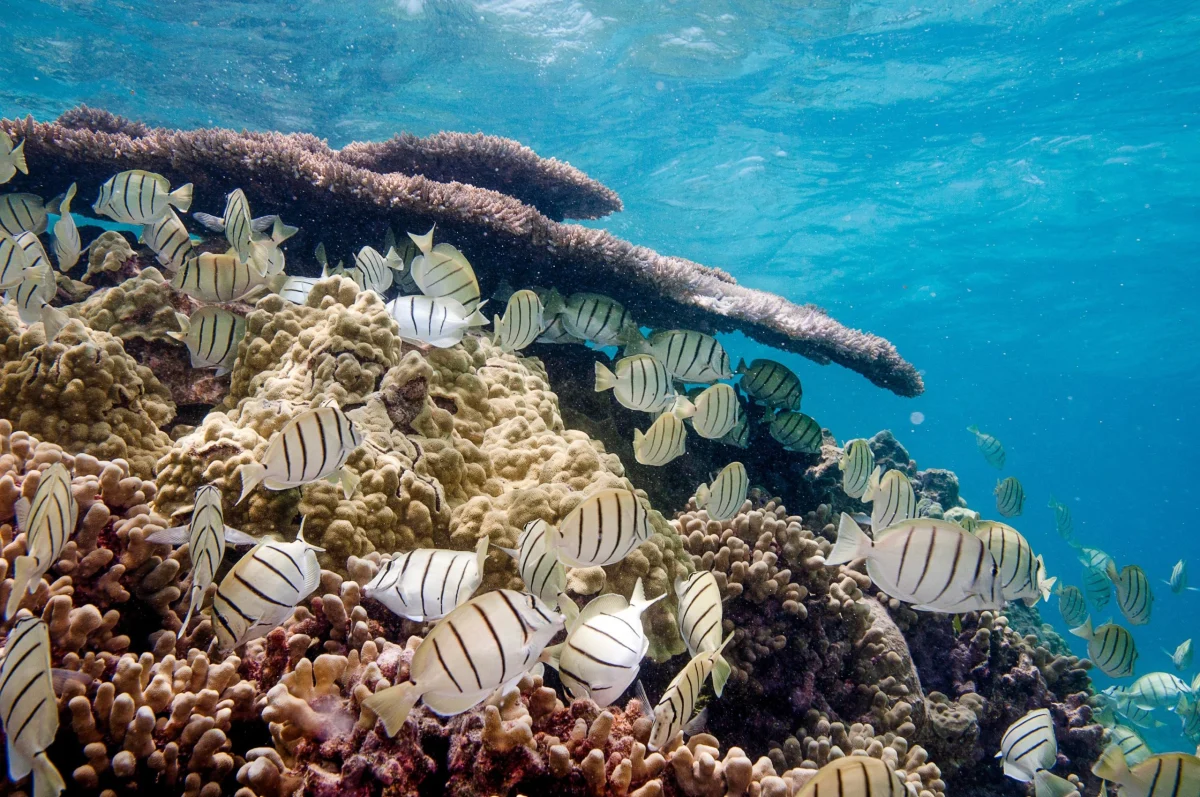
- Coral Reef Refuges: Flower Garden Banks National Marine Sanctuary, located 100 miles off the coasts of Texas and Louisiana, hosts some of the healthiest and most vibrant coral reef systems in the wider Caribbean and Gulf of Mexico basin.
The Seabird Crisis: Metrics of Decline
Seabirds serve as living barometers of ocean health. Because they occupy high trophic levels and depend entirely on the marine environment for food and nesting grounds, their population trajectories reflect the underlying stability of entire marine food webs.
The crisis facing these species is thoroughly documented:
- The 70% Drop: According to a landmark University of British Columbia study published in the 2010s, global seabird populations plummeted by an alarming 70 percent between 1950 and the present day.
- 230 Million Lost: This percentage translates to a catastrophic loss of over 230 million individual seabirds over roughly six decades.
- Vulnerable Taxa: Arctic and cold-climate specialists—such as the Arctic Tern and Arctic Skua—have experienced some of the steepest population crashes. Meanwhile, pelagic wanderers like petrels, penguins, and albatrosses continue long-term downward trends driven by oceanic warming, industrial fisheries bycatch, and invasive species on nesting islands.
Economic Drivers and Marine GDP
Far from locking away resources at the expense of human prosperity, marine national monuments and sanctuaries are proven economic catalysts. They sustain robust coastal economies through tourism, recreation, commercial fishing, and guided charter operations.
According to data compiled by NOAA and the U.S. Bureau of Economic Analysis:
- Total Economic Contribution: In 2023, America’s broader marine economy contributed an astounding $511 billion to the national gross domestic product.
- Job Creation: The marine sector supported 2.6 million jobs nationwide, ranging from hospitality and eco-tourism to maritime research and sustainable fisheries.
- Annual Visitation: The 23 combined monuments and sanctuaries draw over 42 million visitors annually, who engage in diving, sportfishing, surfing, whale watching, and tidepool exploration.
Official Perspectives and Management Frameworks
The effective governance of America’s marine protected areas requires a delicate balance between rigorous environmental defense and sustainable public access. This dual mandate is executed through joint federal agency partnerships and deep integration with Indigenous knowledge holders.
Co-Management and Federal Stewardship
Once designated, marine monuments and sanctuaries remain public lands belonging to all Americans. They are not closed zones of exclusion, but rather actively managed commons. Day-to-day stewardship is primarily shared between two federal entities:
- The U.S. Fish and Wildlife Service (USFWS): Focuses heavily on the protection of migratory birds, endangered species, terrestrial island habitats, and wildlife refuges within marine boundaries.
- The National Oceanic and Atmospheric Administration (NOAA): Oversees broader oceanic resource management, scientific research, hydrographic surveying, fisheries coordination, and the day-to-day operations of national marine sanctuaries.
These agencies are tasked with an intricate balancing act: safeguarding the ecological resources that make these sites nationally significant while simultaneously accommodating public access, recreational diving, scientific monitoring, and—where legally and ecologically appropriate—traditional commercial and subsistence uses.
Indigenous Knowledge and Cultural Heritage
Modern marine conservation has increasingly recognized that ecological preservation cannot be divorced from cultural stewardship. Many national marine sanctuaries and monuments are managed in close coordination with Native Hawaiian communities, Pacific Island nations, and coastal Indigenous tribes.
Indigenous populations offer invaluable, generational wisdom regarding the history, sacred ancestry, and sustainable management of oceanic and coastal ecosystems. By embedding Indigenous perspectives into management planning, federal agencies ensure that conservation strategies honor ancestral ties to the water. As conservationists frequently emphasize, the ocean connects all Americans, and preservation efforts achieve maximum efficacy only when rooted in mutual respect, shared heritage, and inclusive governance.
Future Outlook: Building Resilience on the Blue Frontier
As the global community confronts the twin existential crises of rapid biodiversity loss and accelerating climate change, the role of marine protected areas will only expand in urgency and scale.
Climate Mitigation and Carbon Sequestration
Healthy marine ecosystems are formidable natural climate solutions. Coral reefs, mangrove forests, seagrass meadows, and deep-sea pelagic environments act as vital carbon sinks, absorbing and sequestering atmospheric carbon dioxide. Furthermore, large marine protected areas reduce localized stressors like overfishing and habitat destruction, granting marine species—from juvenile forage fish to apex predators—greater ecological resilience to adapt to warming ocean temperatures, shifting currents, and ocean acidification.
The Imperative of Expansion and Enforcement
Scientists warn that approximately 30 percent of seabird species worldwide face the immediate risk of extinction. To reverse this trajectory, conservation biologists stress that establishing and strictly enforcing key marine protected areas—particularly around critical nesting, breeding, and migratory staging grounds—is one of the most effective tools available to humanity.
Looking forward, the future of America’s blue frontier depends on sustained political will, robust federal funding for NOAA and USFWS, and an expansion of collaborative management models that empower local and Indigenous communities. By shielding the ocean’s past through historical preservation, protecting its vulnerable wildlife through science-based zoning, and securing its future through climate-resilient management, the United States can ensure that its marine monuments and sanctuaries remain vibrant, life-sustaining lifelines for generations to come.