
Executive Overview
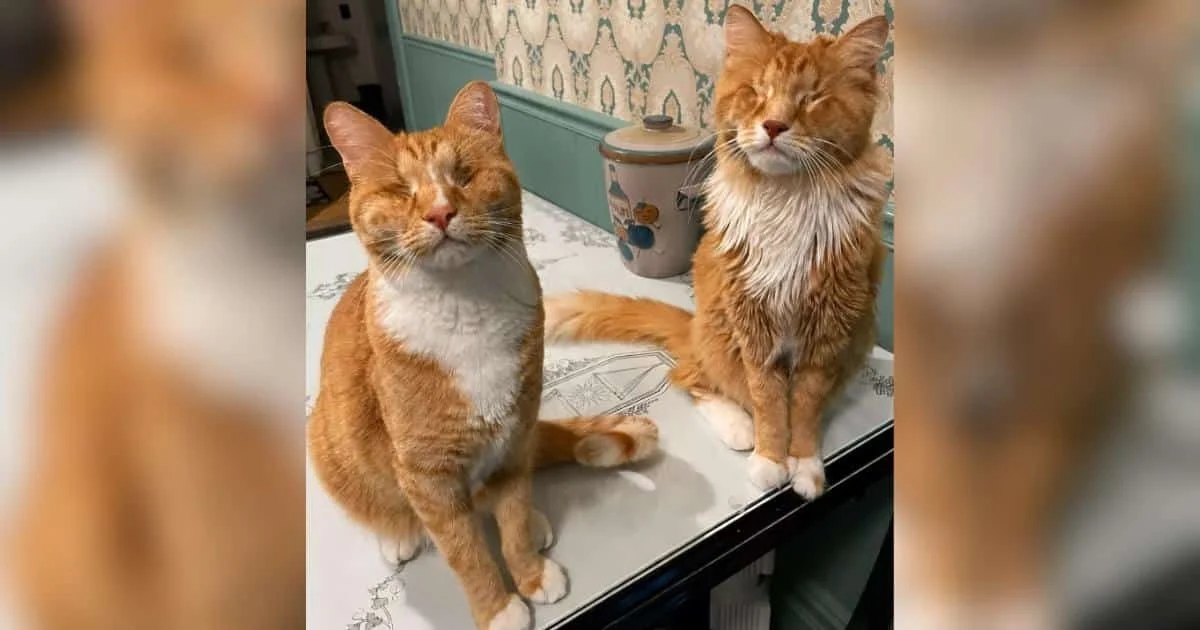
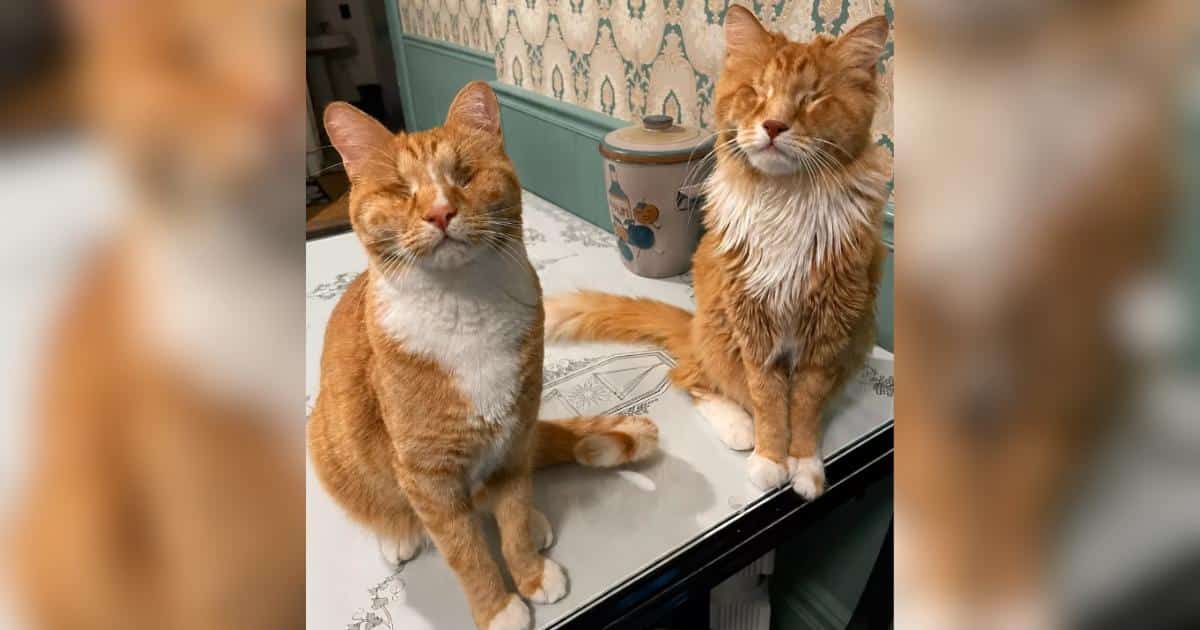
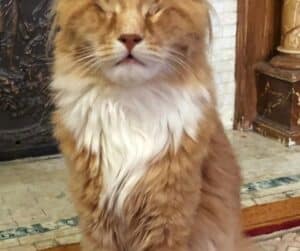
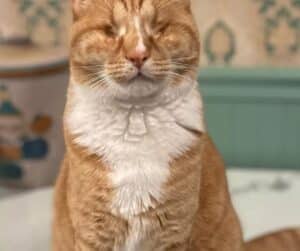
For decades, the boundaries of veterinary medicine have been continuously expanded by observant pet owners and dedicated clinicians who refuse to dismiss biological anomalies as mere quirks of nature. A groundbreaking medical and genetic case study has now altered our understanding of feline pathology. Two domestic shorthair cat brothers, affectionately named Gary and Shaggy, have officially been diagnosed with Marfan syndrome—marking the first confirmed instance of this rare genetic connective tissue disorder in domestic pets.
Characterized by striking physical traits from kittenhood—most notably their exceptionally elongated limbs—Gary and Shaggy stood out long before scientists understood the true nature of their condition. Through years of rigorous veterinary examinations, advanced diagnostic imaging, and international genetic collaboration involving institutions across the United States and Europe, researchers uncovered a complex genetic profile underlying the brothers’ health challenges.
While the condition drastically altered their lives, resulting in significant medical hurdles including ocular complications and cardiovascular monitoring, Gary and Shaggy lived to relative maturity. More importantly, their legacy extends far beyond a clinical curiosity. By revealing how Marfan syndrome manifests in felines—down to a unique "functionally heterozygous" genetic mutation—these two cats have provided veterinarians, geneticists, and researchers with an unprecedented framework for diagnosing and understanding connective tissue disorders in animals. This report delves into the chronology of their discovery, the underlying science of Marfan syndrome, expert commentary, and the profound implications this research holds for the future of veterinary science.
Detailed Chronology: From Unusual Kittens to Medical History
The journey of Gary and Shaggy began like that of many rescued domestic shorthairs, defined by playful energy and affectionate bonds with their human family. However, even as tiny kittens, it was immediately apparent that something set the brothers apart from their peers. Their skeletal development followed an unconventional trajectory, resulting in limbs that stretched far beyond the standard proportions expected in domestic cats.
The Early Signs and Alarming Measurements
As the brothers grew, the physical discrepancy became impossible to ignore. Veterinary measurements later quantified what the family observed daily. Most strikingly, formal research data revealed that Gary’s radius and tibia bones were more than 42 percent longer than the average measurements recorded in typical male domestic shorthair cats.
While long legs can occasionally be attributed to specific feline breeds or natural variations, the brothers’ anatomy was accompanied by deeper internal warning signs. Over time, comprehensive veterinary workups uncovered progressive medical complications extending well beyond skeletal frame differences. Examinations identified significant abnormalities involving their eyes and their aortas—the primary arterial highways responsible for pumping oxygen-rich blood directly away from the heart.
The Quest for Answers and International Collaboration
Rather than chalking up these systemic abnormalities to isolated health issues, the cats’ caregivers and primary veterinarians pursued a rigorous path of investigation. This dedication catalyzed a collaborative network bringing together veterinary specialists and molecular geneticists from across the United States and Europe.
Genetic sequencing finally provided the missing puzzle piece. By analyzing DNA samples from both cats, researchers pinpointed mutations directly affecting the FBN1 (fibrillin 1) gene. This genetic confirmation bridged the gap between their unusual physical phenotype and Marfan syndrome, a connective tissue disorder previously documented almost exclusively in humans and, on one isolated occasion in 2005, in cattle.
Medical Interventions and Lifespans
Managing Marfan syndrome required intensive medical management and vigilance. Due to severe ocular complications associated with the disease, both cats eventually underwent procedures to have their eyes removed—an intervention that significantly improved their comfort and quality of life.
Despite the systemic cardiovascular and structural stresses imposed by their condition, the brothers displayed remarkable resilience. Shaggy lived to reach 7 years and 2 months of age, while Gary survived to 5 years and 10 months. Though their lives were cut short by the progressive nature of a complex genetic disorder, the clinical data and tissue samples they left behind initiated a new chapter in comparative medicine.
Supporting Context & Metrics: Understanding Marfan Syndrome
To fully appreciate the scientific significance of Gary and Shaggy’s diagnosis, it is essential to examine the biological mechanisms of Marfan syndrome, its presentation in humans, and the unique genetic twist discovered in the feline brothers.
The Role of Connective Tissue and Fibrillin 1
Marfan syndrome is fundamentally a disorder of connective tissue—the cellular scaffolding that provides structural support, elasticity, and cohesion to virtually every organ, bone, blood vessel, and tissue system throughout the body. Because connective tissue is ubiquitous, a defect in its composition triggers widespread systemic effects.
The root cause of the disorder lies in mutations within the FBN1 gene. This gene is responsible for producing fibrillin 1, a crucial glycoprotein that forms microscopic cable-like microfibrils. These microfibrils provide tensile strength and elasticity to elastic and non-elastic tissues, including blood vessels, ligaments, the ciliary zonules of the eyes that hold the lens in place, and the periosteum covering bones.
Human Prevalency and Diagnostic Criteria
In human medicine, Marfan syndrome is classified as a rare genetic disorder, impacting approximately 1 in every 4,000 individuals. The condition typically manifests through a triad of primary symptom categories:
- Skeletal System: Individuals frequently display dolichostenomelia (unusually long, slender limbs), arachnodactyly (spider-like fingers), scoliosis, and distinct facial or cranial structural differences.
- Ocular System: Severe myopia (nearsightedness) and ectopia lentis (dislocation of the lens of the eye) are widespread.
- Cardiovascular System: Approximately 90 percent of human patients develop cardiovascular involvement. This most dangerously includes progressive dilation of the aorta, which can lead to aortic aneurysms or life-threatening aortic dissections if left unmonitored and untreated.
Most human cases are inherited in an autosomal dominant pattern from an affected parent. However, roughly 25 percent of cases arise from de novo (spontaneous) mutations, occurring without any prior family history of the disorder.
The Feline Genetic Paradox: Functionally Heterozygous
When researchers sequenced the genomes of Gary and Shaggy, they uncovered an unexpected twist that deepened the scientific intrigue of their cases.
In humans, inheriting a single mutated copy of the FBN1 gene is typically sufficient to cause the full-blown clinical presentation of Marfan syndrome due to a dominant-negative effect, where the abnormal protein interferes with the normal protein produced by the healthy gene copy.
Gary and Shaggy, however, presented with mutations affecting both copies of their FBN1 gene (making them genetically homozygous). Ordinarily, a double-copy mutation of this severity would be expected to cause prenatal lethality or profoundly truncated survival. Yet, laboratory analysis revealed that the specific mutation the brothers carried did not entirely shut down gene functionality. The cats retained the ability to produce a low baseline of functional FBN1 protein.
Consequently, researchers categorized the brothers as genetically homozygous but functionally heterozygous. This retained molecular activity likely explains how the cats managed to survive into adulthood despite the severity of their physical and cardiovascular symptoms.
Official Statements and Expert Perspectives
The formal documentation of Gary and Shaggy’s cases has generated considerable excitement within the academic and veterinary research communities. By establishing an animal model for a historically human-centric syndrome, the discovery opens broad avenues for translational medical research.
Dr. Jacquelyn Evans, an assistant professor at Cornell University and the senior study author on the research, emphasized the collaborative nature of the breakthrough in an interview with the Cornell Chronicle:
"This discovery is a great example of how pet parents can collaborate with veterinary and genetic experts to learn something that could help other animals in the future."
Dr. Evans noted that recognizing Marfan syndrome in domestic animals transforms what was once considered an isolated oddity into a structured diagnostic category. Prior to Gary and Shaggy, the only other confirmed nonhuman mammalian cases were documented in a 2005 study of cattle with spontaneous FBN1 mutations. The addition of the feline cases provides comparative pathologists with a richer dataset to evaluate how connective tissue mutations express themselves across different species.
Furthermore, veterinary cardiologists and geneticists point out that pet owners and primary care veterinarians are now equipped with a broader differential diagnosis. When clinicians encounter young cats presenting with extreme limb elongation, ocular abnormalities, and early-onset cardiovascular shifts, Marfan syndrome—once thought impossible in felines—must now be weighed as a clinical possibility.
Future Outlook: Implications for Veterinary Medicine and Beyond
The legacy of Gary and Shaggy promises to reshape clinical protocols and genetic screening standards within the veterinary industry. As awareness of feline connective tissue disorders spreads among practitioners, several key advancements are anticipated:
1. Enhanced Diagnostic Protocols
Veterinary hospitals are increasingly adopting advanced imaging modalities, such as echocardiograms and specialized genetic panels, for patients exhibiting unusual growth patterns. Early identification of cardiovascular vulnerabilities in cats with skeletal anomalies could allow clinicians to implement proactive management strategies, potentially mitigating life-threatening complications before they escalate.
2. Targeted Genetic Screening
As researchers map the specific FBN1 mutations identified in Gary and Shaggy, the groundwork is laid for commercial genetic tests. Breeders and shelter veterinarians may eventually utilize these screening tools to identify carriers or affected animals early in life, ensuring specialized care and informing breeding programs to eliminate hereditary connective tissue defects.
3. Translational Insights for Human Medicine
Beyond veterinary benefits, studying rare genetic disorders in companion animals frequently aids human medicine. Because pets share our living environments and experience similar physiological stressors, understanding how Gary and Shaggy’s "functionally heterozygous" mutation allowed them to survive provides valuable comparative data for human geneticists studying variable expressivity in Marfan syndrome patients.
A Lasting Legacy
Gary and Shaggy entered this world as tiny kittens with an unexplained physical trait. Through the unwavering dedication of their family and an international alliance of veterinary scientists, their unique biology was unraveled, transforming unanswered questions into a permanent cornerstone of medical literature. Their story stands as a testament to the power of observant pet care, proving that even the rarest biological mysteries can be illuminated when curiosity meets rigorous scientific collaboration.