
Executive Overview
The modern pet owner’s relationship with their companion animal has evolved into one of deep familial integration. Dogs routinely accompany their humans across municipal lines, on cross-country road trips, and through daily errand runs. Yet, while human occupants enjoy decades of rigorous automotive safety standards—encompassing crumple zones, advanced multi-stage airbags, and precise seatbelt geometry—the canine passenger has historically been treated as an afterthought.
For years, pet travel accessories have prioritized convenience, aesthetic appeal, and basic containment over verifiable crash safety. Many pet parents assume that securing a small dog inside a stylish carrier or a soft-sided fabric tube is sufficient to protect them during a collision. However, independent and standardized safety evaluations, such as those conducted by the Center for Pet Safety (CPS), have shattered these assumptions, revealing that numerous popular products fail catastrophically under impact.
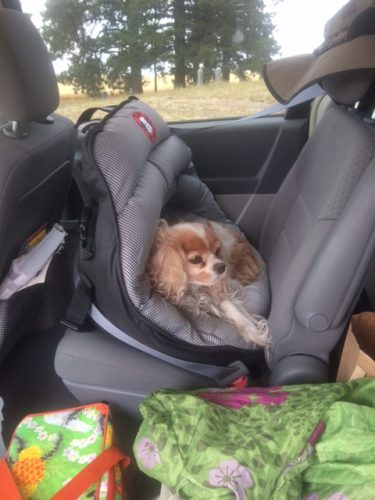
This investigative review chronicles one pet owner’s exhaustive quest to find a genuine safety solution for Chloe, a 15-pound small dog. It examines the market shortcomings of leading contenders, explores the mechanics of alternative protective systems, and provides an authoritative breakdown of the AirPupSaver. Through a meticulous month-long real-world test encompassing daily commuting and extended highway travel, this report evaluates the AirPupSaver’s design integrity, installation complexities, day-to-day usability, and overall safety efficacy.
The findings indicate that while modern inflatable restraint systems offer significant safety advantages over traditional enclosures, they demand a distinct compromise between absolute vehicular security and operational convenience.
Detailed Chronology: The Evolution of a Canine Car Safety Journey
The False Promise of Traditional Containment
The journey toward finding an adequate automotive bed began years prior with an ongoing effort to locate a car bed spacious enough for Chloe to sprawl naturally, yet engineered to withstand the violent forces of a motor vehicle collision. This search initially led to the acquisition of PetEgo’s Pet Tube, a collapsible, tunnel-like enclosure designed to give dogs a bounded space in the back seat.
For a considerable duration, the Pet Tube appeared to be an ideal compromise. It was lightweight, easily collapsed, and gave Chloe a defined, cozy compartment. However, this sense of security was abruptly shattered when the product was subjected to standardized crash testing. The results were catastrophic, exposing structural vulnerabilities that rendered the tube a hazard rather than a safeguard during high-impact decelerations.
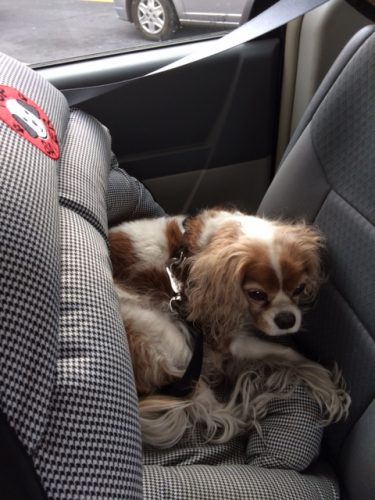
Faced with the alarming reality that a trusted product could fail so thoroughly, the search recommenced with a heightened sense of urgency and critical skepticism.
Navigating the Landscape of Certified Carriers
Returning to the drawing board required a thorough review of independent research, most notably the findings published by the Center for Pet Safety (CPS) in their comprehensive 2015 carrier evaluations. The CPS benchmarks represent the gold standard in pet travel safety, subjecting market offerings to rigorous crash-test simulations modeled after federal child safety seat standards.
The 2015 CPS evaluations highlighted two standout performers: the Pet Ego Jet Set Forma Frame Carrier equipped with an ISOFIX-Latch Connection, and the Sleepypod Mobile Pet Bed paired with the PPRS Handilock system. While these products earned top marks for crash retention, a significant design hurdle emerged for owners of small-to-medium dogs: both systems are exceptionally diminutive.
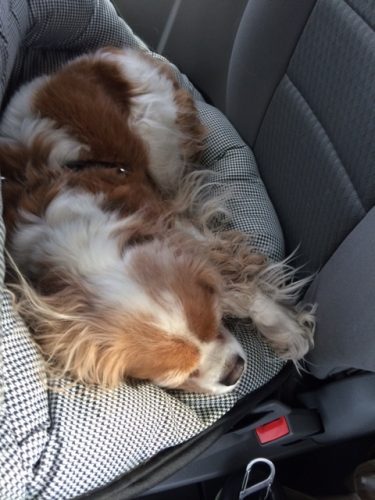
The Pet Ego Jet Set carrier, a handsome and meticulously crafted product, presented immediate ventilation and visibility concerns. Its design features a sparse distribution of mesh panels, which limits airflow and restricts the dog’s ability to monitor its surroundings—a common trigger for travel-induced anxiety. Furthermore, sizing discrepancies proved problematic. The largest iteration of the Jet Set measures 22 inches in length, 10 inches in width, and 13 inches in height. While the manufacturer marketed this size as suitable for dogs weighing up to 22 pounds, practical assessment suggests otherwise. At only 2 inches wider than Chloe’s existing long-form carrier, the body space is markedly constricted. A 15-pound dog could manage short trips, but housing a 22-pound animal on an extended cross-country excursion inside such tight confines is impractical.
Similarly, the Sleepypod Mobile Pet Bed emerged as an engineering marvel, boasting superior ventilation and an admirable build quality. Yet, spatial constraints once again intervened. Even the largest model in the line, the Sleepypod Medium, proved too restrictive for Chloe. Measuring 13 inches in height and 17 inches in round circumference externally, the usable interior space is reduced by insulating padding, making it a snug, restrictive environment for any animal exceeding 10 to 12 pounds. For truly diminutive pets weighing under 10 pounds, the Sleepypod remains an unreserved recommendation; for larger small dogs, it falls short of providing a sprawl-friendly environment.
Discovering the AirPupSaver
Prompted by community recommendations from experienced pet travelers, the investigation pivoted away from rigid carriers and enclosed pods toward an alternative design: the AirPupSaver. Although omitted from the initial 2015 CPS testing matrix, the manufacturer’s independently conducted crash-test documentation presented a compelling alternative.
The AirPupSaver is distributed in two distinct size configurations: a smaller model engineered for dogs weighing up to 25 pounds, and a larger variant designed to accommodate animals up to 45 pounds. Driven by analytical curiosity and a desire to test portability, both sizes were acquired for simultaneous evaluation.
Supporting Context & Metrics: Structural Engineering and Design Mechanics
To fully comprehend the operational mechanics of the AirPupSaver, one must examine its conceptual architecture, which diverges sharply from standard box-style carriers or basic tether harnesses.
The "Baseball Mitt" Paradigm
The structural philosophy of the AirPupSaver mimics the mechanics of a heavy, padded baseball mitt. The canine occupant rests securely within the "palm" of the structure, anchored directly to the base via an integrated harness and strap system. The extended boundaries of the bed—acting as the "fingers" of the mitt—are strategically engineered to catch, decelerate, and cradle the animal in the event of a frontal collision or sudden, violent braking incident.
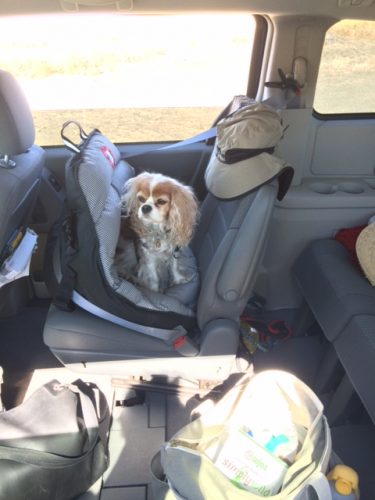
Inflatable Air Chambers
Unlike rigid plastic or static foam beds, the AirPupSaver incorporates two or three internal air chambers (varying by model size) located within the forward structural walls. Utilizing an included hand pump, the user inflates these chambers to a pressurized state. This pneumatic cushioning provides a dynamic, energy-absorbing barrier designed to dissipate kinetic impact forces before they can be transferred to the animal’s skeletal structure.
Comparative Size Metrics & Spatial Utilization
| Product Model | External Dimensions | Maximum Recommended Dog Weight | Key Structural Advantages | Primary Limitations |
|---|---|---|---|---|
| PetEgo Pet Tube | Variable length/diameter tunnel | Varies | Lightweight, highly collapsible | Failed independent crash testing catastrophically |
| Pet Ego Jet Set Forma Frame | 22"L x 10"W x 13"H | Up to 22 lbs (Manufacturer claim) | ISOFIX-Latch integration | Restricted mesh ventilation; narrow interior width |
| Sleepypod Medium | 17" round x 13"H | Under 15 lbs (Comfort limit ~10 lbs) | Exceptional build quality, verified crash safety | Usable interior space too restrictive for dogs >10-12 lbs |
| AirPupSaver 25 | Compact small-dog footprint | Up to 25 lbs | No top tethers required; spacious palm area | Complex initial installation; blocks driver line of sight |
| AirPupSaver 45 | Extended station-wagon footprint | Up to 45 lbs | Maximum sprawl potential for larger small dogs | Cumbersome; requires dual top tether anchors; difficult to relocate |
Official Statements and Practical Field Observations
A month-long empirical trial involving daily urban commutes and an exhaustive long-distance road trip provided deep insight into the practical realities of owning and operating the AirPupSaver systems.
Installation Challenges and Nuances
Installing automotive safety equipment requires precision, and the AirPupSaver is no exception. Manufacturer documentation—comprising printed instruction packets, seating clamps, air pumps, and online video tutorials—offers a starting point, but the installation process remains non-trivial.
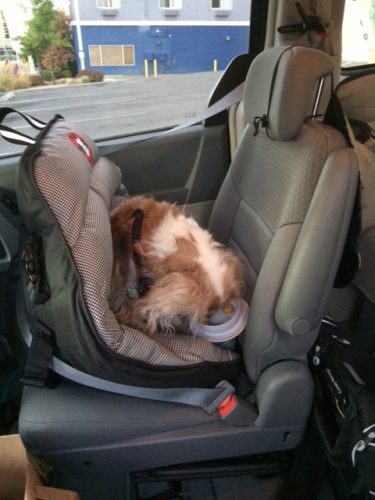
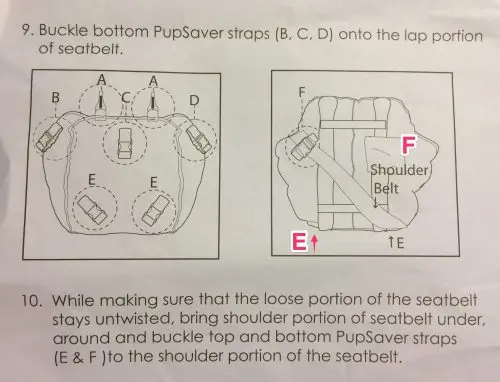
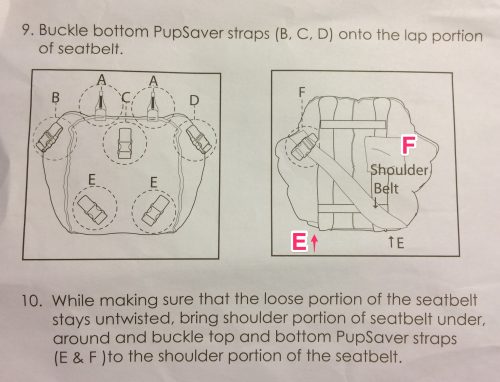
For the AirPupSaver 25, integration into a minivan second-row seat involves dual lower hooks (designated as clips "A" on manufacturer charts) locking securely onto the vehicle’s metal LATCH anchor bars. Crucially, the 25-pound model dispenses with overhead top-tether straps, relying instead on the vehicle’s standard three-point seatbelt. This belt is guided through specialized plastic channels on the shoulder and foreground of the bed, immobilized at the vehicle wall with a heavy-duty mechanical clamp to maintain the precise play required for the safety system to function, while preventing the belt from pulling the upper structure downward.
Conversely, the AirPupSaver 45 introduces an elevated layer of installation complexity. In addition to lower LATCH clips and the vehicle seatbelt routing, the larger model demands the engagement of two overhead top-tether straps. These straps stretch from the upper handle housing of the bed, extend over the rear contour of the vehicle seat, and anchor directly to the seatback tether points found in station wagons and SUVs.
Usability and Ergonomic Compromises
While the structural safety of the bed inspires confidence, daily operation highlights notable ergonomic trade-offs:
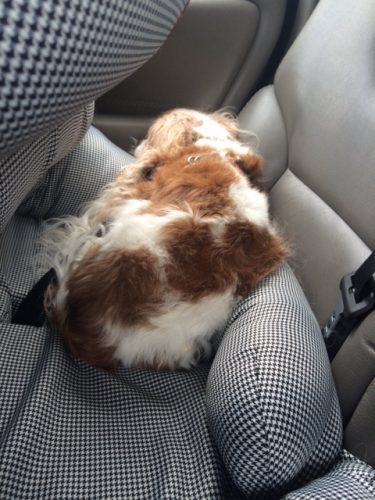
- Portability: Unlike the Pet Tube, which could be unclipped and tossed into the cargo area or collapsed flat in seconds, the AirPupSaver is designed as a semi-permanent fixture. Once installed through its intricate web of straps and LATCH anchors, relocating it to a different seating position or vehicle is sufficiently tedious that owners will actively avoid doing so on a whim.
- Accessing the Harness: Securing a dog into the internal harness requires threading the strap from the floor of the bed and clipping it to the rear dorsal D-ring of the harness. This process takes approximately thirty seconds—noticeably slower than zipping a pet into an enclosed tube. Furthermore, for urban dwellers parking on busy streets (such as in Seattle), leaning deep into the vehicle interior to buckle a pet exposes the user to passing traffic. A workable workaround involves climbing entirely into the rear cabin space to manage the harness from the opposite side.
- Driver Line of Sight: The elevated "fingers" of the mitt design create a visual barrier. From the driver’s perspective, the canine occupant is largely obscured unless actively peeking around the perimeter of the bed.
- Pneumatic Maintenance: The integrity of the pneumatic air chambers must be monitored regularly. If air pressure drops significantly, the upper walls collapse inward like a soft taco—a state that unnerves the animal occupant. Keeping the hand pump permanently stored in the vehicle is a operational necessity.
- Harness Sizing Discrepancies: Field experience revealed that the safety harness bundled with early production runs of the AirPupSaver runs exceptionally large. A 15-pound dog with the build of a large house cat required an extra-small harness tightened to its absolute structural limit. Owners must verify harness inclusion at the time of purchase and ensure a heavy-duty, rear-clip design (such as the Solvit safety harness) is utilized, strictly avoiding neck collars or front-clip walking harnesses during transit.
Future Outlook: The Trajectory of Canine Automotive Safety
The evolution of pet travel safety products reflects a broader cultural shift: companion animals are no longer viewed merely as property, but as vulnerable passengers deserving of the same rigorous protection afforded to human family members.
As independent bodies like the Center for Pet Safety continue to test and publicly grade pet travel gear, market pressures will inevitably force manufacturers to bridge the gap between crash-tested security and everyday usability. Future innovations in canine automotive safety are expected to focus on several key areas:
- Quick-Release Anchoring Systems: Developing universal, high-strength quick-latch mechanisms that mimic ISOFIX child safety seats, allowing heavy-duty crash-tested beds to be installed and removed in seconds without sacrificing structural integrity.
- Integrated Smart-Monitoring: Incorporating pressure sensors within inflatable or foam-based containment walls to alert drivers via dashboard displays or smartphone applications if air pressure drops or if the occupant unhooks from the internal harness system.
- Ergonomic Versatility: Engineering structural frameworks that provide high-impact deceleration performance while collapsing or lowering dynamically when the vehicle is parked, restoring outward visibility and cabin space.
- Standardized Sizing and Universal Ergonomics: Moving away from generalized weight-tier classifications toward precise anatomical measurements (chest girth, torso length, and weight distribution) to eliminate sizing ambiguities for intermediate breeds.
Until these next-generation systems become standard industry practice, pet owners must navigate a landscape of deliberate compromises. For owners of small-to-medium dogs (ranging from 10 to 25 pounds) who prioritize crash-test validity and open-air comfort over effortless portability, products like the AirPupSaver 25 represent a viable, highly protective milestone in an industry striving toward uncompromising vehicular safety.