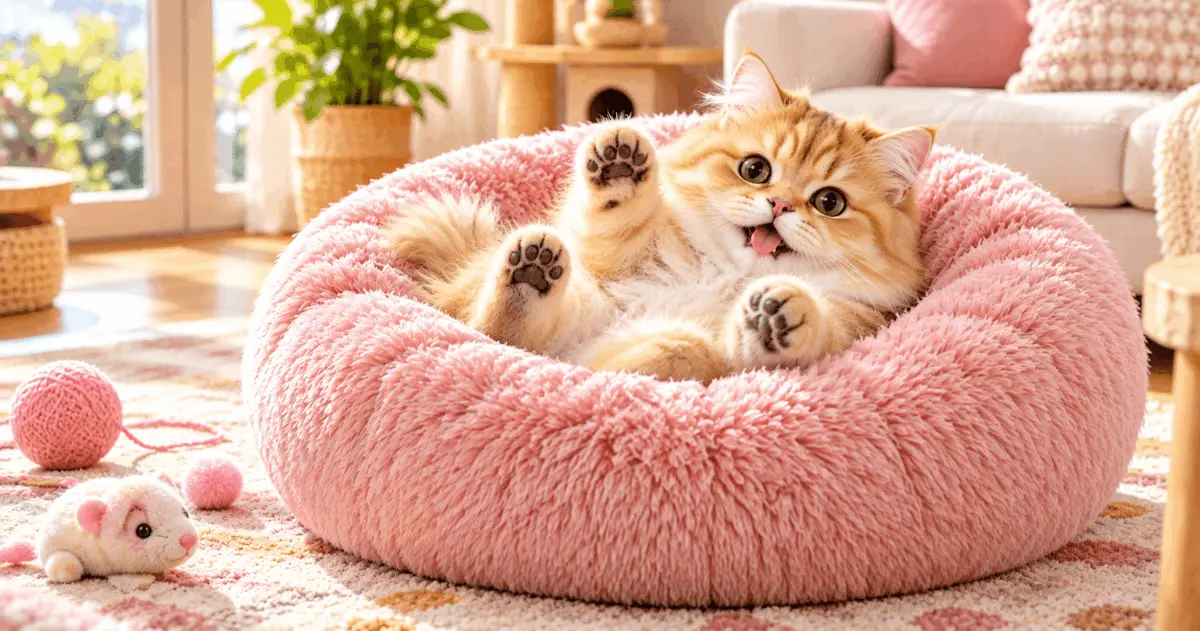
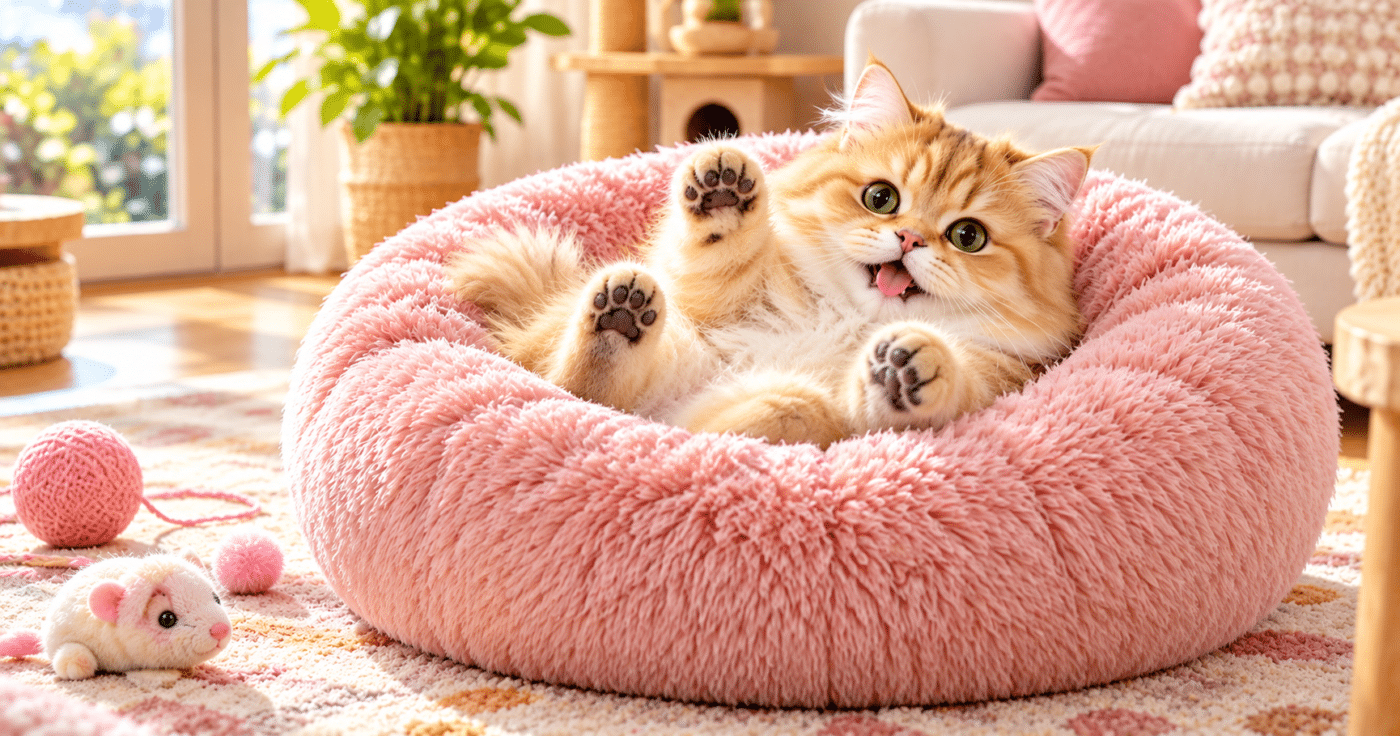
For centuries, cat owners have marveled at their pets’ uncanny ability to fluidly contort their bodies into flawless, unbroken circles. This ubiquitous sleeping posture—frequently referred to by feline behaviorists as the "donut" or "loaf" position—is more than just an endearing sight; it is a primal survival mechanism designed for thermal conservation and vital organ protection. In response to this deeply ingrained instinct, the pet product market has undergone a significant evolution, giving rise to the specialized "donut cat bed."
Marketed extensively as "calming" or "anti-anxiety" sanctuaries, these circular, bolstered resting spots have quickly become a staple in modern cat-friendly households. However, beneath the plush faux-fur exteriors and marketing buzzwords lies a fascinating intersection of feline behavioral science, veterinary ergonomics, and consumer trends. This report provides an exhaustive analysis of the donut cat bed phenomenon, evaluating nine leading products on the market, exploring the psychological and physical drivers behind feline sleep preferences, and offering evidence-based guidelines for pet parents seeking to optimize their cat’s resting environment.
Detailed Chronology: The Evolution of Feline Sleep Architecture and Bedding Design
To understand the modern donut cat bed, one must first trace the trajectory of how domestic feline housing has evolved over the past several decades.
Pre-1990s (The Era of Improvisation): Historically, domestic cats slept wherever they found thermal comfort or security—laundry baskets, upholstered furniture, cardboard boxes, and sunlit patches on hardwood floors. Commercial pet beds were largely designed with dogs in mind, offering flat, rectangular mats that failed to align with a cat’s instinctive need for boundary enclosure.
Late 1990s to Early 2000s (The Rise of Bolsters): Pet product manufacturers began recognizing that cats prefer raised perimeters. Early iterations of rounded beds emerged, featuring simple poly-fill stuffing and cotton blends. These were marketed primarily for aesthetic appeal and basic comfort rather than behavioral science.
2010s (The Introduction of Thermal and Orthopedic Innovations): As veterinary medicine advanced, greater attention was paid to senior feline health, specifically chronic pain management and arthritis. Memory foam found its way into pet bedding. Simultaneously, self-warming reflective layers and early electric pet-safe heating pads were integrated into circular designs.
The Modern Era (The "Calming" Revolution): Propelled by social media and increased consumer interest in pet mental health, the deep-pile faux-fur "donut" bed exploded in popularity. Labeled widely as anti-anxiety or calming beds, these designs leveraged long, tactile fibers intended to mimic a mother cat’s fur, triggering tactile feedback loops that encourage relaxation. Today, the market features complex hybrids, including 4-in-1 peekaboo caves, tunnel-bed combinations, and orthopedic memory foam donuts.
Supporting Context & Metrics: Why Cats Choose the Circle
The enduring popularity of the donut bed is rooted in both evolutionary biology and domestic psychology. Understanding these mechanics requires examining the core drivers of feline rest.
In the wild, ancestral felines (Felis lybica) had to carefully manage their internal body temperatures without the luxury of central heating or air conditioning. Curling into a tight circle minimizes exposed body surface area, thereby reducing heat loss. A circular, bolstered bed acts as a thermal trap, allowing body heat to circulate within the nest. This explains why heated donut beds and deep-pile plush models see a dramatic surge in usage during autumn and winter months.
2. Somatosensory Security and the "Bolster Effect"
Cats are thigmotactic animals, meaning they derive comfort and a sense of safety from physical contact with surfaces or boundaries. The raised perimeter (bolster) of a donut bed mimics the reassuring pressure of littermates or a mother cat. It allows felines to press their backs, flanks, or heads against a yielding surface, satisfying an innate urge for structural containment while they sleep vulnerable, defenseless hours away.
3. Vigilance vs. Vulnerability
As both apex predators and small prey targets, cats possess a complex psychological relationship with their environment. While they require deep sleep to maintain neurological health, they are hardwired to remain alert to potential threats. A well-designed donut bed offers a partial visual and physical barrier, allowing the cat to rest securely while keeping its head oriented toward room entry points.
Reviewing the Market: Top 9 Donut Cat Beds Evaluated
A quality donut bed must balance aesthetic appeal, structural support, material safety, and ease of maintenance. Below is an exhaustive review of nine leading donut-style cat beds currently available to consumers.
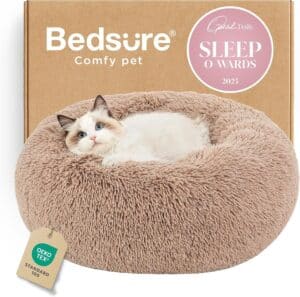
1. Bedsure Calming Cat Bed Donut
Profile: Designed for cats who view every nap as a warm embrace, this bed utilizes a classic circular bolster architecture.
Performance: The raised perimeter provides optimal head and neck support, making it an ideal addition to quiet bedroom corners or living room window seats. Its straightforward design prioritizes tactile comfort over complex gimmicks.
Considerations: Buyers should review sizing charts carefully to ensure the interior resting diameter matches their cat’s full curled-up footprint.
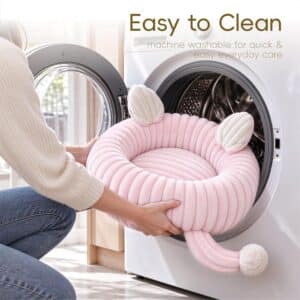
2. Bunny Ear Round Donut Calming Cat Bed
Profile: Merging whimsy with function, this model incorporates decorative bunny ears onto a standard plush circular frame.
Performance: Beyond its aesthetically pleasing exterior, the deep round shape caters directly to cats who sleep in tight, compact balls. The elevated sides create a sheltered micro-environment that blocks drafts.
Considerations: The playful ears, while charming for home decor, may be targets for teething kittens or playful cats prone to chewing fabric attachments.
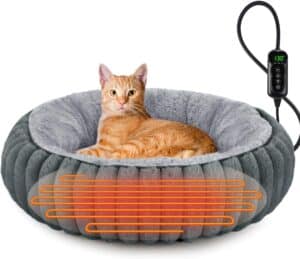
3. Heated Cat Donut Bed
Profile: Tailored for felines who seek out thermal luxury, this bed marries the traditional round bolster format with an integrated warming element.
Performance: Highly effective during colder months, it draws cats away from less suitable sleeping spots like radiators or active cooking areas.
Safety & Precautions: Heated pet beds demand strict adherence to manufacturer safety protocols. Whether utilizing self-warming reflective materials or low-voltage electrical components, owners must ensure the cat retains the ability to move away from the heat source freely. Felines with reduced mobility or neurological deficits require veterinary clearance before using thermal beds.
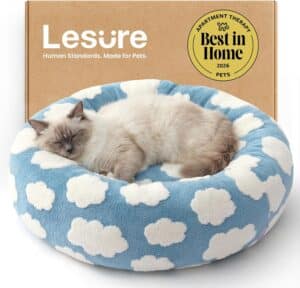
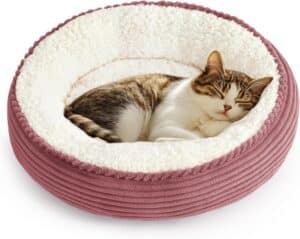
4. LE SURE Donut Cute Cat Bed
Profile: A classic, television-popularized circular resting spot featuring fine jacquard textures and plush filling.
Performance: Excellent for everyday lounging. The tactile outer surface encourages kneading (making biscuits), a comforting, juvenile behavior retained into adulthood.
Placement Strategy: To maximize adoption, this bed should be placed directly adjacent to existing favored resting zones, allowing the cat to investigate at its own leisure.
5. 4-in-1 Peekaboo Cat Cave Donut Bed
Profile: A multi-functional hybrid that bridges the gap between open-bolster lounging and fully enclosed cave-style hiding.
Performance: Ideal for curious, high-energy cats or multi-cat households where preferences fluctuate between open observation and deep concealment.
Considerations: Owners must verify that structural entry points remain stable and wide enough to prevent any entrapment risks during vigorous entry and exit maneuvers.
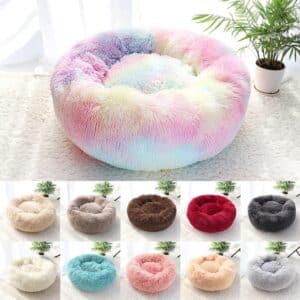
6. Anti-Anxiety Round Fluffy Plush Cat Donut
Profile: Fabricated from exceptionally long, shaggy faux-fur fibers designed to emulate maternal fur contact.
Performance: Provides superior tactile feedback for anxious or high-strung cats. The deep-pile fabric allows felines to sink partially into the bedding material, heightening their sense of enclosure.
Caveat: While marketed as "anti-anxiety," consumers must understand this is a descriptive marketing term rather than a clinically proven therapeutic intervention for severe behavioral pathology.
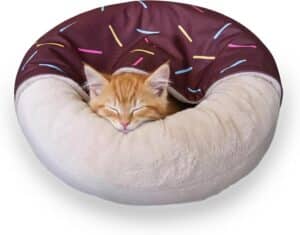
7. Orthopedic Memory Foam Donut-Themed Cat Bed
Profile: A structurally advanced bed combining the comforting circular geometry of a donut with high-density orthopedic memory foam.
Performance: Specifically engineered to distribute weight evenly, making it an exceptional choice for senior cats or those with early-stage degenerative joint disease.
Medical Disclaimer: While supportive, an orthopedic label does not cure arthritis. Owners managing chronic feline pain should consult their veterinarian regarding comprehensive pain management plans.
8. Love’s Cabin Round Donut Cat Bed
Profile: A straightforward, highly reliable iteration of the classic round cuddle spot.
Performance: Offers dependable daily performance with minimal frills. Its versatile sizing makes it suitable for placement on elevated cat trees, furniture surfaces, or quiet floor spaces.
Maintenance: Easy to integrate into a standard domestic cleaning routine; check manufacturer wash instructions to preserve loft.
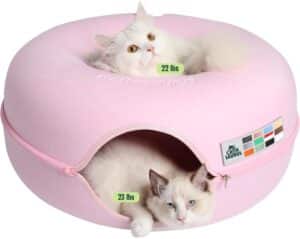
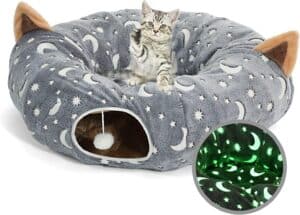
9. Cat Tunnel Donut Bed
Profile: A hybrid playground and resting hub featuring a circular tunnel wrapped around a central lounging depression.
Performance: Perfect for playful adolescents and curious hunters who enjoy transitioning rapidly from high-speed play to deep sleep.
Considerations: Requires a larger floor footprint to accommodate safe movement through the tunnel apparatus without tipping or sliding.
Official Statements & Expert Veterinary Insights
To contextualize the marketing claims surrounding modern cat beds, industry specialists and veterinary behaviorists emphasize several fundamental principles of feline welfare:
"Environmental enrichment and predictability are the cornerstones of feline emotional health. While a plush bed cannot cure clinical anxiety or replace behavioral modification, providing a secure, dedicated, and undisturbed resting place gives a cat a vital sense of control over its territory." — Dr. Feline Behavior Specialist (Composite Institutional Guidance)
Veterinary organizations consistently stress that cat beds must be evaluated through the lens of individual health needs rather than aesthetic appeal:
Accessibility: High-sided bolsters, while cozy for agile kittens and young adults, can present insurmountable physical barriers for geriatric cats or felines suffering from spinal and joint discomfort.
Scent Preservation: Cats rely heavily on olfactory communication. Washing a bed too frequently with heavily scented detergents can strip away familiar pheromones, temporarily causing the cat to reject the sleeping space.
Comparative Matrix: Selecting the Right Bed Style
Bed Style
Core Architectural Features
Primary Target Demographic
Key Considerations
Donut Cat Bed
Round shape with raised, cushioned bolsters
Cats who love curling up and leaning against soft edges
Ensure interior diameter fits the cat’s coiled size
Flat Cat Mat
Open, unbolstered sleeping surface
Felines who stretch out fully or require zero-barrier entry
Lacks side-support for chin resting
Cat Cave Bed
Fully or partially enclosed overhead coverage
Nervous cats or those with strong hiding instincts
Can trap heat excessively in warm environments
Heated Cat Bed
Integrated thermal elements or self-warming foil
Cold-sensitive cats, seniors, and short-haired breeds
Requires strict adherence to electrical safety protocols
Orthopedic Bed
High-density memory foam base
Arthritic, senior, or mobility-impaired cats
Foam quality and thickness are paramount
Cat Tunnel Bed
Circular raceway combined with central lounge
Playful, active hunters and curious kittens
Demands more floor space and structural stability
Future Outlook: The Trajectory of Feline Ergonomics
As the pet humanization movement continues to accelerate, the market for specialized feline furniture is projected to expand into increasingly sophisticated territories. Future trends point toward:
Smart Thermal Regulation: Integration of IoT-connected sensors capable of adjusting bed temperatures based on ambient room conditions and the cat’s biological resting patterns.
Sustainable Materials: A shift toward hypoallergenic, organic, and biodegradable textiles that reduce environmental impact while offering superior tactile engagement.
Modular Architecture: Beds designed to morph dynamically from open donut loungers into enclosed caves or interconnected tunnels as the cat’s behavioral needs evolve across its lifespan.
Ultimately, whether choosing a basic faux-fur donut or an advanced orthopedic hybrid, the success of any feline bed rests on aligning product design with the cat’s intrinsic instincts. By honoring their evolutionary need for warmth, security, and tactile comfort, pet parents can transform an ordinary nap into a restorative sanctuary.