
Executive Overview
Alaska has lost a cultural icon, an eccentric luminary, and one of its most passionate defenders of the natural world. Mr. Whitekeys—affectionately known to generations of Alaskans simply as "Keys"—passed away on October 19, 2026. While he was widely celebrated for his decades as an entertainer, writer, musician, and purveyor of politically charged, delightfully irreverent satire, his impact on the Last Frontier extended far beyond the footlights of a stage. For decades, Keys served as the heartbeat of urban conservation and avian appreciation in Southcentral Alaska, most notably as the longtime president of the Anchorage Audubon Society.
In a state defined by its sweeping wilderness, Mr. Whitekeys bridged the gap between human culture and ecological preservation. He understood that protecting Alaska’s majestic landscapes required both sharp wit to capture the public’s attention and deep scientific literacy to drive meaningful action. Whether he was updating regional bird checklists, guiding school children across the remote tundras of Utqiagvik, spearheading massive urban reforestation projects, or offering trademark pieces of wisdom like "Birding is easy to begin and impossible to master," Keys was a master communicator.
This retrospective examines the extraordinary life of a man who seamlessly wove together vaudevillian showmanship and fierce environmental advocacy. Through an exploration of his chronology, his concrete conservation achievements, and reflections from the organizations he shaped, this article honors a singular figure whose contributions to Alaska’s natural and cultural heritage will resonate for decades to come.
Detailed Chronology: From Showbiz to the Tundra
The trajectory of Mr. Whitekeys’ life in Alaska is a testament to the state’s unique capacity to nurture independent thinkers and multidisciplinary creators. To understand his environmental legacy, one must first look at the cultural fabric he helped weave in Anchorage during the late 20th and early 21st centuries.
The Entertainment Years: Satire in the Subarctic
Long before he was recognized as an elder statesman of Alaska’s conservation community, Keys established himself as an entertainment powerhouse in downtown Anchorage. Operating out of his legendary venue, the Fly By Night Club, he became the self-appointed chronicler of Alaska’s eccentricities. Through musical revues, historical retrospectives of questionable accuracy, and relentless political satire, he provided a vital outlet for community reflection and laughter.
Yet, beneath the sequins, vintage postcards, and piano medleys lay a profound attachment to the physical landscape of the North. Keys viewed Alaska not merely as a backdrop for novelty acts, but as a fragile, breathtaking ecosystem deserving of deep respect. As his career in entertainment matured, he increasingly channeled his public platform, sharp intellect, and storytelling gifts into environmental education.
Leadership and the Anchorage Audubon Society
A defining chapter of Keys’ life was his long-tenured presidency of the Anchorage Audubon Society. In a state with vast wilderness, urban chapters face the unique challenge of managing human-wildlife coexistence within rapidly developing municipal boundaries. Under his guidance, the Anchorage chapter evolved into an active, highly visible force for conservation.
Keys recognized that environmentalism could occasionally suffer from overly dry, academic delivery. Armed with his signature humor, he dismantled the intimidation factor often associated with birding and conservation. He welcomed novices and seasoned ornithologists alike, fostering a community that viewed nature protection not as a chore, but as a shared communal joy. His tenure saw the chapter pivot toward hands-on urban conservation, addressing issues ranging from wetland degradation to habitat loss following natural disasters.
Expanding Horizons: Arctic Outreach and Community Science
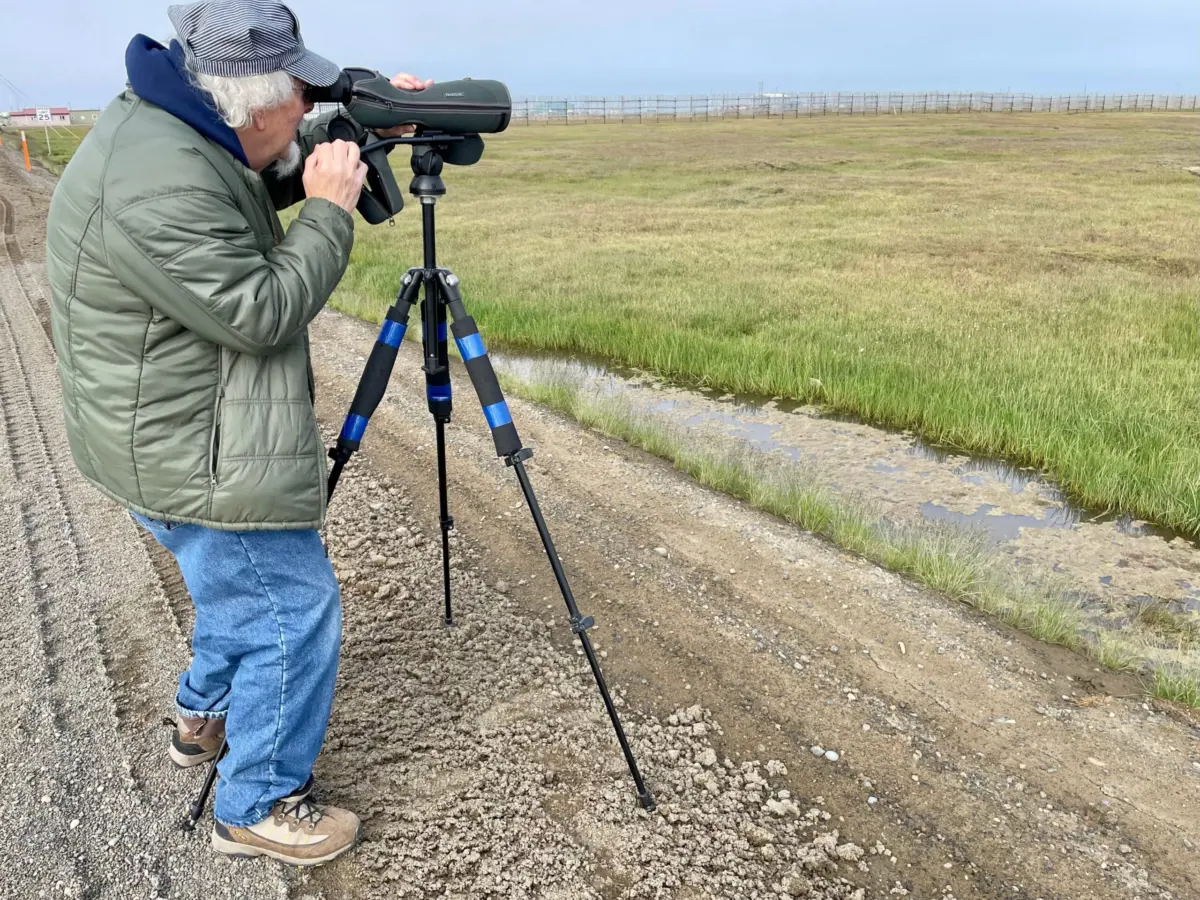
Keys’ dedication was never confined to the boundaries of Anchorage. In 2023, he partnered with Audubon Alaska for a landmark expedition to Utqiagvik (formerly Barrow), participating in the Barrow Arctic Research Center (BARC) Science and Culture Fair. There, he engaged diverse audiences—from local children to visiting researchers—explaining the complex miracles of Arctic migratory birds. He led field excursions across the northern tundra, demonstrating a rare ability to connect people of all ages to the ecological rhythms of the High North.
Simultaneously, Keys remained an anchor for local community science initiatives. For many years, he coordinated and led the Anchorage Christmas Bird Count, a critical citizen-science effort that provides baseline population data for North American birds during the dead of winter. His leadership ensured that everyday citizens could contribute directly to professional ornithological databases.
Supporting Context & Metrics: Environmental Milestones and Habitat Defense
Mr. Whitekeys was not merely a figurehead; he was an active practitioner of ecological restoration and urban planning advocacy. His policy and grassroots achievements left a tangible imprint on the physical landscape of Anchorage.
The Birds of Anchorage Checklist and Birding Trail
One of Keys’ most enduring intellectual contributions to regional ornithology was his collaboration on the recently updated Birds of Anchorage, Alaska Checklist and the Anchorage Birding Trail. These resources serve as vital navigational and educational tools for residents and ecotourists alike.
- The Checklist: Providing a comprehensive, scientifically rigorous accounting of avian species inhabiting or migrating through the municipality, this document reflects Keys’ commitment to accurate, accessible biological data.
- The Anchorage Birding Trail: Designed to highlight the urban wilderness embedded within Alaska’s largest city, the trail directs observers to premier viewing sites across municipal parks, wetlands, and coastal zones. Keys’ editorial hand ensured that these guides retained a personable, encouraging tone, inviting everyday citizens to step outside and observe the winged wildlife sharing their neighborhoods.
The 2025 Anchorage Sapling Distribution Initiative
Following a massive, climate-driven spruce bark beetle infestation and subsequent spruce die-off across Southcentral Alaska, urban and suburban Anchorage lost significant canopy cover. This loss severely impacted local bird populations, which rely on mature trees for nesting, foraging, and shelter from harsh winter elements.
In response, Keys spearheaded a massive grassroots remediation effort in 2025. Working alongside local conservation partners, he oversaw the distribution of thousands of saplings to Anchorage residents. This initiative was designed to enhance urban forestry and restore vital micro-habitats for birds. By mobilizing the community to plant trees in backyards and public spaces, Keys transformed a systemic ecological crisis into an opportunity for collective, hands-on stewardship.
Defending Wetlands and Natural Spaces
Urban sprawl poses a persistent threat to Anchorage’s rich biodiversity. The city is uniquely situated amid a mosaic of crucial wetlands, boreal forests, and coastal mudflats that serve as critical staging grounds for millions of migratory birds along the Pacific Flyway.
Throughout his life, Keys was a vocal, persistent advocate for the preservation of these natural spaces. He understood a foundational ecological truth: bird diversity is a direct indicator of ecosystem health. By actively engaging in municipal land-use debates, supporting wetland protections, and educating the public on stormwater management and habitat conservation, Keys helped safeguard the ecological infrastructure that keeps Anchorage a haven for wildlife.
Official Statements and Tributes
The loss of Mr. Whitekeys prompted an outpouring of grief, gratitude, and remembrance from environmental organizations, civic leaders, and fellow Alaskans across the state.
Audubon Alaska’s Reflection
In an official tribute, Audubon Alaska highlighted the rare synthesis of joy and rigor that Keys brought to the conservation movement:
"Alaska has lost an original. Mr. Whitekeys… devoted himself to spreading the love for the birds that make Alaska extraordinary… Keys integrated his diverse talents, bringing a sophisticated humor into environmental education and nature protection. And we will miss that a lot, as humor is an essential ingredient for human well-being. We will always remember and be thankful for Keys’ productive partnership, his enthusiasm for the natural world, and generosity in sharing his knowledge and talents with all people."
Colleagues noted that Keys possessed an innate ability to make complex ecological concepts understandable without diluting their scientific integrity. His big-eyed smile and self-deprecating wit disarmed skeptics and brought reluctant stakeholders into conservation conversations that might otherwise have grown contentious.
Cultural and Civic Impact
Across municipal radio waves, social media platforms, and local news outlets, Alaskans shared personal anecdotes of encountering Keys. Whether they remembered him from a provocative cabaret show at the Fly By Night Club, a middle-school field trip to an Anchorage marsh, or a bitterly cold Christmas Bird Count where he kept spirits high with thermoses of coffee and relentless humor, citizens recognized that a irreplaceable thread of the community’s fabric had frayed.
Future Outlook: Sustaining the Legacy
As Alaska adjusts to a future without Mr. Whitekeys, the challenge facing the Anchorage Audubon Society and the broader conservation community is how to sustain the momentum he generated. Climate change continues to reshape Arctic and subarctic ecosystems at an unprecedented rate, putting increased pressure on migratory flyways and local bird populations.
However, the framework Keys left behind provides a robust roadmap for the future:
- Democratizing Conservation: By proving that environmental education can be funny, accessible, and deeply engaging, Keys inspired a broad demographic of Alaskans who might otherwise have tuned out traditional, academic conservation messaging.
- Actionable Urban Ecology: Through projects like the sapling distribution initiative and the Anchorage Birding Trail, Keys demonstrated that conservation is not just about protecting remote wilderness; it is about cultivating biodiversity right where we live.
- Intergenerational Engagement: His work with youth—exemplified by his outreach in Utqiagvik—ensures that the next generation of Alaskans views the natural world not as a resource to be exploited, but as a community of life to be cherished and protected.
Mr. Whitekeys often reminded his audiences that “birding is easy to begin and impossible to master.” The same can be said of the work to protect our natural environment. As Alaska moves forward, the legacy of Keys—his fierce advocacy, his tireless community science, and his unwavering belief in the healing power of laughter—will continue to guide everyone who looks up at the Anchorage sky and hears the wings of migratory birds passing overhead.