
Executive Overview
In an ongoing effort to eliminate dangerous foodborne pathogens from pet diets, prominent pet food manufacturer Vital Essentials has officially integrated Electron-Beam (E-Beam) irradiation technology into its production processes. Announced via an updated corporate FAQ, the company confirmed that it now employs high-energy electricity to neutralize harmful microorganisms in its packaged products.
While the technique is celebrated by food technology proponents and approved by the U.S. Food and Drug Administration (FDA) as a modern solution to microbial contamination, its implementation has reignited a fierce, long-standing debate within the veterinary and pet advocacy communities.
Pet food irradiation sits at the complex intersection of federal safety mandates, corporate risk management, and veterinary science. On one hand, manufacturers face severe regulatory penalties under the FDA’s strict zero-tolerance enforcement for pathogens such as Salmonella, Listeria monocytogenes, and Escherichia coli. On the other hand, seasoned pet owners and industry watchdogs remember historical disasters associated with irradiated pet foods—most notably the mass poisoning and paralysis of cats in Australia in 2008, as well as unresolved illness outbreaks linked to imported irradiated treat products.
This investigative report examines the mechanics of E-Beam technology, evaluates the historical timeline of pet food irradiation, analyzes decade-long recall metrics, and explores critical scientific concerns that processing technologies fail to address—specifically, the lingering danger of bacterial endotoxins and the systemic failures of post-processing "kill steps."
Detailed Chronology
The trajectory of food irradiation within the pet food sector is marked by technological shifts, regulatory mandates, and tragic historical precedents that continue to shape consumer skepticism.
+-----------------------------------------------------------------------------------+
| CHRONOLOGY OF PET FOOD IRRADIATION & REGULATORY MILESTONES                        |
+-----------------------------------------------------------------------------------+
| 2008: Australia Orijen Disaster                                                   |
|       Mandatory gamma irradiation of imported pet foods causes vitamin A          |
|       depletion and free radical formation, resulting in feline paralysis & death. |
+-----------------------------------------------------------------------------------+
| 2013: FDA Zero-Tolerance Policy & Jerky Treat Investigation                       |
|       FDA establishes zero tolerance for pathogens in pet food. Simultaneously,   |
|       investigations into irradiated Chinese jerky treats reveal a lack of        |
|       validated methods to measure radiation dosing.                              |
+-----------------------------------------------------------------------------------+
| Present Day: Integration of E-Beam Technology                                     |
|       Vital Essentials adopts electricity-based E-Beam processing to eliminate    |
|       pathogens while claiming preservation of nutritional integrity.              |
+-----------------------------------------------------------------------------------+
2008: The Australian Gamma Irradiation Disaster
The modern controversy surrounding pet food irradiation gained global attention in 2008 when Canadian pet food brand Orijen began exporting cat food into Australia. Under Australian biosecurity laws at the time, imported raw or minimally processed animal products were subjected to mandatory high-dose gamma irradiation at border quarantine facilities to prevent foreign animal diseases from entering the continent’s ecosystem.
Shortly after these products entered the Australian market, veterinary neurologists reported a wave of severe, unexplained neurological illnesses in cats. Affected felines exhibited progressive hind-limb weakness, ataxia, severe pain, loss of motor control, and, in dozens of cases, paralysis resulting in death or euthanasia.
A formal inquiry conducted by the Australian Parliament subsequently identified a clear cause-and-effect relationship. The Parliamentary report determined that the severe gamma irradiation applied for quarantine purposes had severely depleted Essential Vitamin A within the food while simultaneously generating high levels of toxic free radicals through lipid peroxidation. Australia subsequently amended its quarantine laws to ban mandatory irradiation for cat foods, but the tragedy left a permanent scar on consumer trust.
2013: FDA Zero Tolerance and the Chinese Jerky Crisis
Five years after the Australian crisis, the U.S. pet food industry faced its own regulatory watershed. In 2013, the FDA instituted a strict zero-tolerance policy for pathogenic bacteria—including Salmonella, Listeria, and E. coli—in all pet food and treat products. Under this framework, the detection of a single colony-forming unit of these pathogens in a commercial product rendered it adulterated, triggering mandatory public recalls and potential legal enforcement.
Simultaneously, federal authorities were embroiled in an investigation into thousands of canine illnesses and deaths tied to imported jerky treats, predominantly manufactured in China. Many of these treats had been subjected to food irradiation prior to export. During its investigation, the FDA conducted extensive chemical screening for markers of food irradiation, such as 2-alkylcyclobutanones (2-ACBs). Crucially, during the height of the pet mortality investigation, the FDA issued a sobering public update acknowledging a major technological limitation:
"Currently there are no validated methods to determine the dose of radiation that was used to ensure the product was properly irradiated."
This admission raised fundamental questions among consumer advocates: if regulatory agencies lacked standardized, validated methodologies to measure the precise radiation dosage applied to commercial pet products, could manufacturers guarantee that foods were neither under-irradiated (leaving pathogens viable) nor over-irradiated (causing nutrient destruction or chemical toxicity)?
Present Day: Vital Essentials and the Shift to E-Beam Technology
In response to lingering safety concerns associated with traditional gamma irradiation, processing facilities have increasingly turned to Electron-Beam (E-Beam) technology. Vital Essentials, a prominent manufacturer of freeze-dried and raw pet foods, updated its public disclosures to confirm that it has implemented E-Beam processing across its product lines.
Unlike older methods that rely on radioactive isotopes like Cobalt-60, E-Beam technology uses linear accelerators to direct a focused stream of high-energy electrons through packaged food products. Vital Essentials asserts that this electricity-driven mechanism reliably neutralizes pathogens while preserving the raw structural and nutritional integrity of the ingredients.

Supporting Context & Metrics
Scientific Comparison: Gamma vs. E-Beam Irradiation
To understand the current market transition, it is necessary to differentiate between traditional irradiation modalities and emerging electronic alternatives.
+------------------------+------------------------------------+------------------------------------+
| Feature                | Gamma Irradiation                  | E-Beam (Electron Beam)             |
+------------------------+------------------------------------+------------------------------------+
| Energy Source          | Radioactive Isotopes (Cobalt-60)   | Electricity (Linear Accelerator)   |
| Penetration Depth      | High (Deep penetration through bulk)| Moderate (Optimized for packaging) |
| Dose Rate              | Low to moderate (Requires time)    | Extremely High (Applied in seconds)|
| Public Perception      | Associated with nuclear waste      | Viewed as a non-nuclear technology |
| Primary Risk Factor    | High nutrient degradation potential| Requires precise dose calibration |
+------------------------+------------------------------------+------------------------------------+
While E-Beam processing eliminates the need for radioactive material handling, both methods function by breaking molecular bonds within microbial DNA, rendering bacteria incapable of replication. However, pet food consumer advocates note that high-energy electron bombardment can still alter delicate food chemistry if dosing parameters are improperly calibrated.
Federal Labeling Requirements: The Radura Symbol
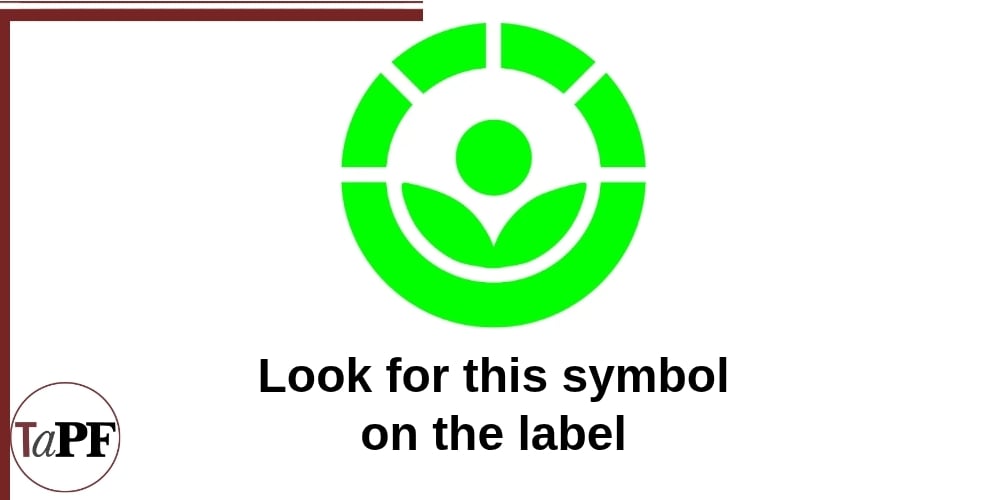
Under U.S. federal regulations enforced by the FDA, any packaged food—whether intended for human or animal consumption—that undergoes irradiation must carry specific, unambiguous labeling.
      | /
   .-'   '-.
  /  (o) (o)      <--- THE RADURA SYMBOL
 |     ^      |         Mandatory international emblem
    ___/   /          for irradiated food products.
   '-.___.-'
     / |
Regulated entities are required to prominently display the international Radura symbol on product packaging, accompanied by one of two explicit statement options:
- "Treated with radiation"
- "Treated by irradiation"
This disclosure requirement provides pet owners with visual transparency, allowing them to make informed choices based on their personal risk tolerance and feeding philosophies.
Regulatory Metrics: The Failure of the "Kill Step" Paradigm
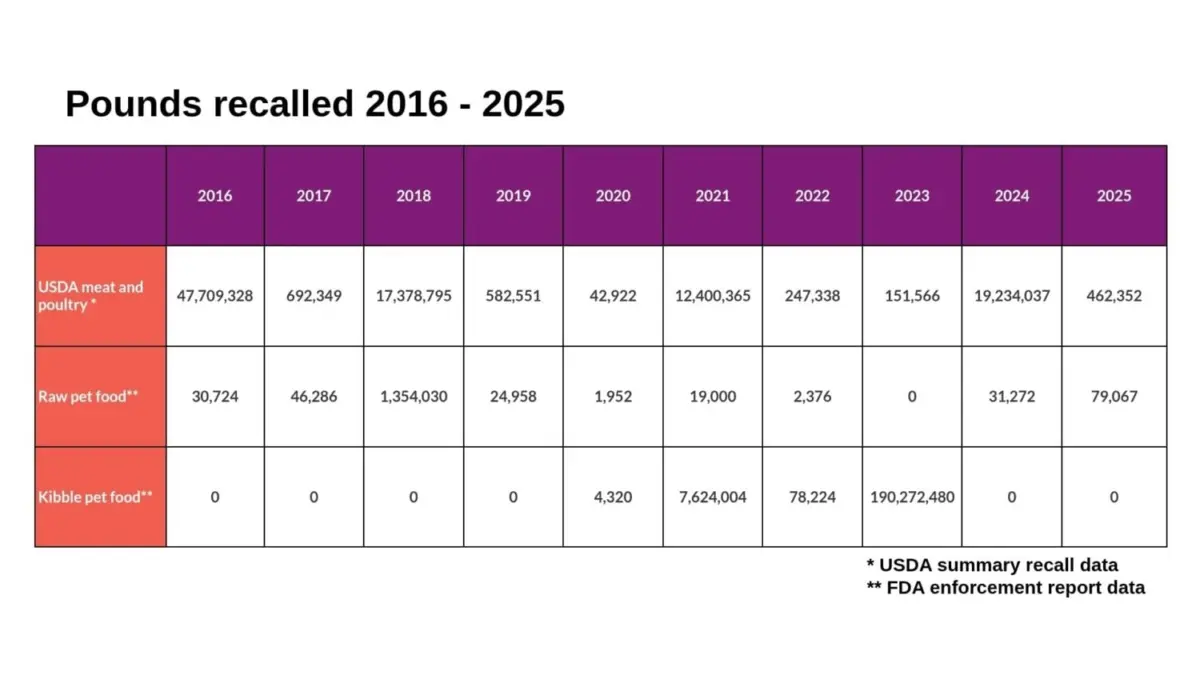
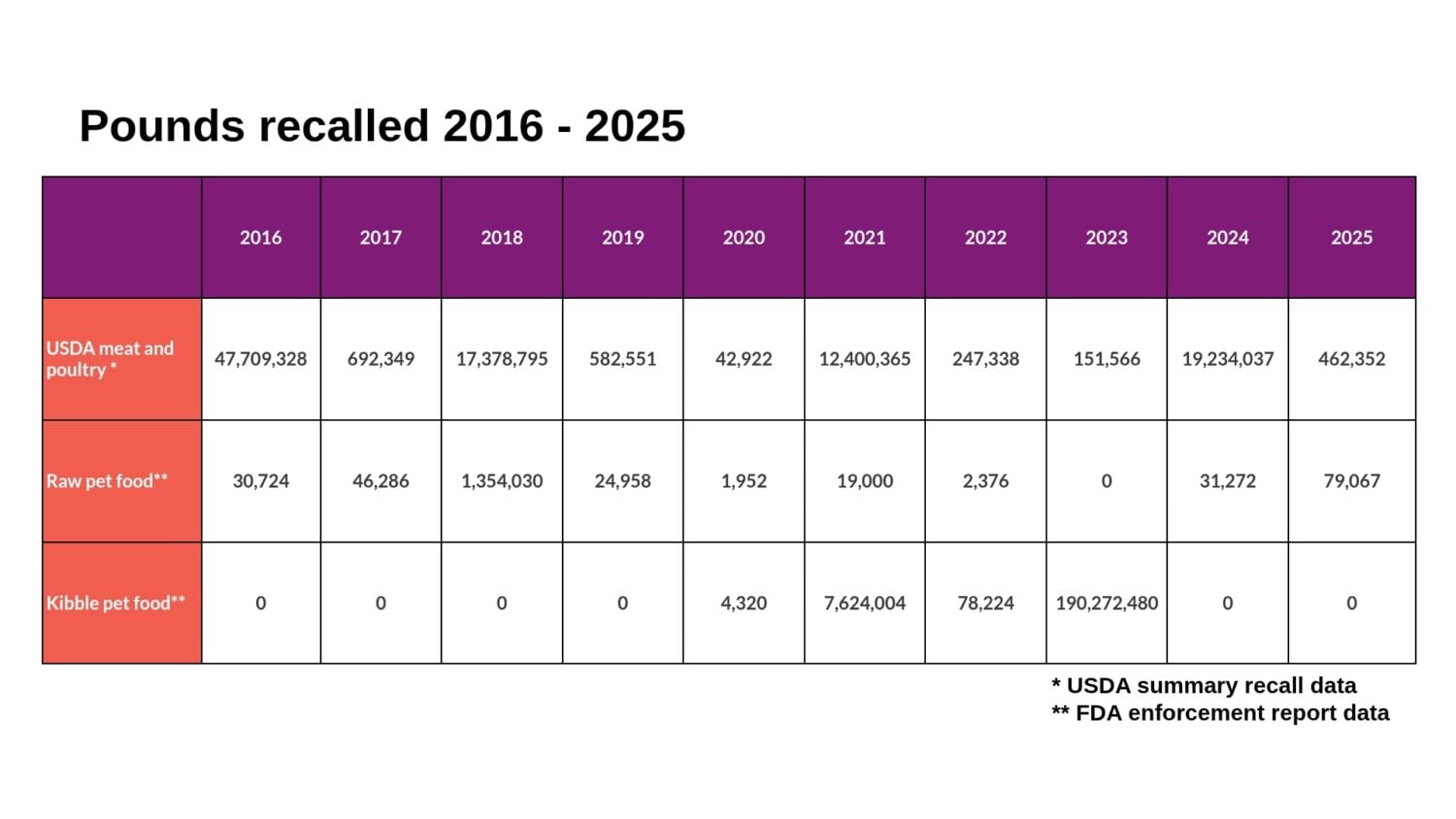
The pet food industry’s heavy reliance on terminal pathogen interventions—such as heat extrusion (cooking), High-Pressure Processing (HPP), and irradiation—is driven by the FDA’s enforcement of zero-tolerance standards. However, historical recall data over the past decade reveals a troubling pattern: mandatory kill steps have failed to yield a meaningful downward trend in overall product recalls.
Despite the fact that traditional commercial kibble undergoes high-temperature thermal processing explicitly designed to kill bacteria, millions of pounds of extruded kibble are recalled annually due to post-processing contamination during cooling, oil spraying, and packaging.
+-----------------------------------------------------------------------------------+
| RECALL COMPARISON & INDUSTRY PARADOX                                             |
+-----------------------------------------------------------------------------------+
| USDA Meat/Poultry Standards for Human Food:                                       |
| - Zero tolerance enforced for E. coli O157:H7.                                    |
| - Salmonella and Listeria managed via baseline statistical tolerance limits.     |
+-----------------------------------------------------------------------------------+
| FDA Pet Food Standards:                                                           |
| - Absolute zero tolerance for Salmonella, Listeria, AND E. coli.                  |
| - Result: Millions of pounds of kibble recalled despite mandatory heat processing. |
+-----------------------------------------------------------------------------------+
This persistent recall volume highlights a fundamental flaw in regulatory strategy: relying entirely on end-stage processing to sanitize contaminated raw materials rather than enforcing hygiene controls at the agricultural source.
The Biological Blind Spot: Endotoxins and Hepatic Stress
A critical, yet widely overlooked, consequence of relying on terminal kill steps—whether thermal, high-pressure, or radiative—is the retention of endotoxins.
When Gram-negative bacteria such as Salmonella and E. coli are destroyed by irradiation or heat, their outer cell membranes rupture, releasing lipopolysaccharides (LPS)—commonly known as endotoxins. While the live bacteria are rendered non-viable and will not grow in culture tests, the endotoxins remain chemically stable and heat-resistant within the food matrix.
[ Live Gram-Negative Bacteria ]
               │
               ▼  (Irradiation / Heat / Kill Step Applied)
[ Bacteria Cell Rupture & Death ]
               │
               ▼
[ Endotoxins / Lipopolysaccharides (LPS) Released into Food ]
               │
               ▼
[ Ingestion by Animal ] ──────> [ Influx to Liver via Portal Circulation ]
                                              │
                                              ▼
                                 [ Potential Hepatic Toxicity & Damage ]
Renowned veterinary researcher and Professor Emeritus at the University of California, Davis, School of Veterinary Medicine, Dr. Donald R. Strombeck, documented the clinical dangers of dietary endotoxin exposure in companion animals:
"Endotoxin entering the body is carried to the liver where it is inactivated. Increased endotoxin levels can damage the liver. Moreover, when the amount of endotoxin reaching the liver is normal, the presence of another potential toxin can interact with endotoxin to damage the liver. The other substances are not necessarily toxins. They include vitamin A, copper and iron, and many drugs. Thus, any level of endotoxin can damage the liver. Exposure to endotoxin should be minimized as much as possible."
When pet food manufacturers use raw ingredients carrying high initial bacterial loads, applying a late-stage kill step neutralizes the live bacteria but leaves behind concentrated levels of endotoxins. Over time, daily consumption of endotoxin-rich pet food forces the animal’s liver to operate under continuous metabolic stress.
Official Statements & Stakeholder Positions
The implementation of irradiation technology highlights sharp divisions between manufacturing entities, federal regulatory bodies, and consumer advocacy organizations.

Corporate Position: Vital Essentials
In official communications detailing their E-Beam implementation, Vital Essentials defended the technology as an advanced, safe safety measure:
"We have implemented E-Beam Technology to eliminate harmful pathogens using electricity… Our validation work shows the food maintains nutritional integrity after treatment."
The company emphasizes that E-Beam technology operates without radioactive materials, offering an efficient method for pathogen mitigation while retaining raw food attributes.
Consumer Advocacy Perspective: TruthaboutPetFood.com
Susan Thixton, founder of TruthaboutPetFood.com and representative at the Association for Truth in Pet Food (ATPF), offers a critical counter-perspective, focusing on regulatory shortcomings and the systemic neglect of endotoxin accumulation:
"If there is no validated method to determine the dose of radiation—should anyone (human food or pet food) be using it? … Endotoxin levels in pet food is a subject the FDA Center for Veterinary Medicine refuses to address. Shouldn’t the focus be to control pathogenic bacteria at the source?"
Thixton argues that regulatory authorities and manufacturers are placing "the cart before the horse" by treating symptoms of poor supply-chain sanitation rather than reforming the sourcing of agricultural inputs.
Future Outlook
As processing technologies evolve, the pet food industry stands at a critical juncture regarding safety oversight and supply chain integrity.

+-----------------------------------------------------------------------------------+
| STRATEGIC INDUSTRY REFORMS REQUIRED                                               |
+-----------------------------------------------------------------------------------+
| 1. Upstream Agriculture Reform                                                    |
|    Shift focus from post-hoc sterilization to sanitary sourcing at farms and       |
|    slaughterhouses.                                                               |
+-----------------------------------------------------------------------------------+
| 2. Standardized Testing Methodologies                                             |
|    Establish validated, quantifiable regulatory protocols for measuring applied    |
|    radiation doses.                                                               |
+-----------------------------------------------------------------------------------+
| 3. Comprehensive Endotoxin Limits                                                 |
|    Require the FDA Center for Veterinary Medicine to monitor and establish safety |
|    thresholds for Lipopolysaccharides (LPS) in finished pet foods.                 |
+-----------------------------------------------------------------------------------+
Key Recommendations for Pet Owners
In light of these industry developments, pet parents navigating commercial pet food choices are advised to exercise targeted diligence:
- Inspect Packaging Labels: Check for the mandatory Radura symbol or explicit irradiation statements ("Treated with radiation" or "Treated by irradiation").
- Inquire with Manufacturers: Contact pet food producers directly to determine whether irradiation, High-Pressure Processing (HPP), or thermal kill steps are utilized.
- Request Comprehensive Lab Verification: Ask manufacturers for post-treatment, full-spectrum nutritional analysis and microbial testing data to ensure that delicate micro-nutrients (such as B-vitamins and Vitamin A) remain intact following processing.
Until regulatory agencies transition from post-hoc pathogen destruction to rigorous upstream sanitation standards, the debate over pet food irradiation will remain a central point of contention in companion animal health.