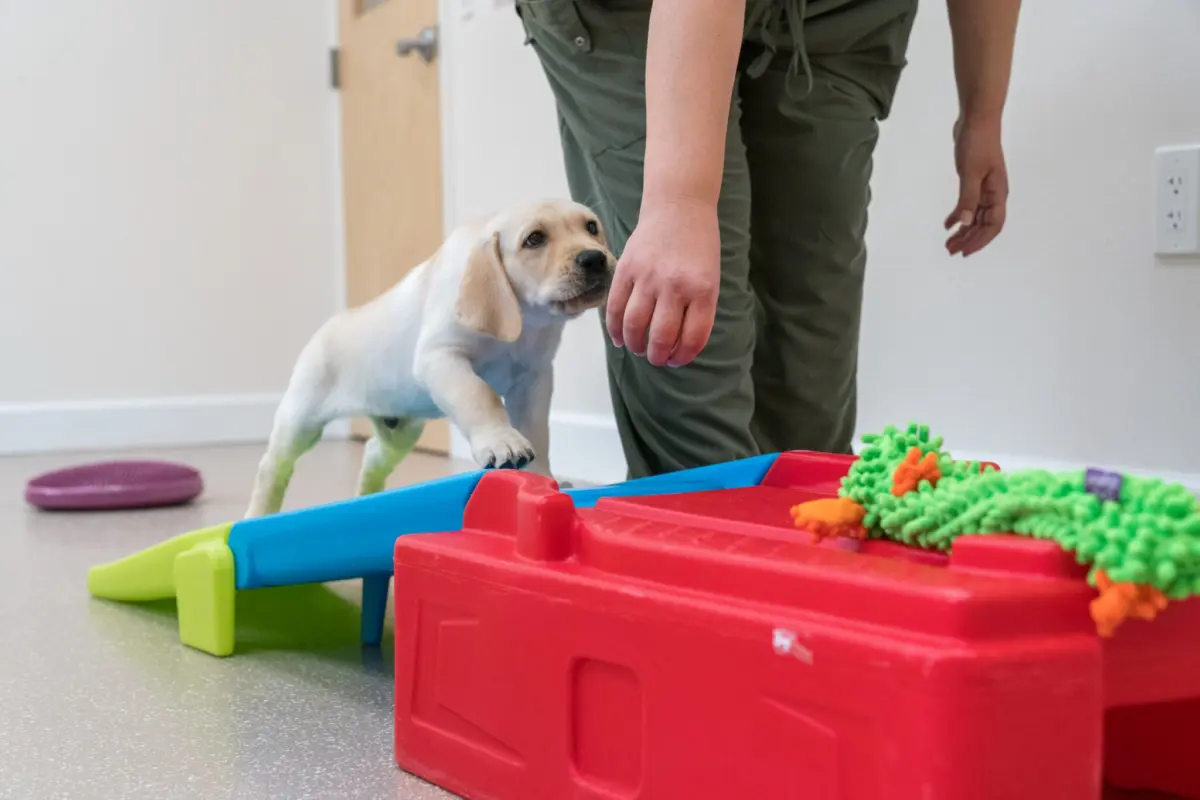

Executive Overview
Long before a puppy learns to sit, heel on a leash, or navigate complex urban landscapes to guide a visually impaired individual, a profound transformation is already underway behind the scenes. In the quiet, dimly lit hours of a neonatal nursery, biological mechanisms are firing at a microscopic level. Weeks before their eyes or ears open to the sights and sounds of the world, newborn puppies are experiencing rapid neurological development that will ultimately dictate how they process stress, adapt to novel environments, and master complex commands.
At Dogs Inc, preparing future guide dogs and service dogs is an art form rooted firmly in hard science. The organization understands that elite working dogs cannot be manufactured overnight through standard training alone; their success is structurally dependent on what occurs during the earliest, most vulnerable chapters of their lives. One of the foundational methodologies utilized in this process is Early Neurological Stimulation (ENS).
While ENS is only one piece of a much larger, highly sophisticated puzzle of puppy rearing, it represents an intentional, science-backed approach to early development. This comprehensive report explores the physiological mechanics of the neonatal stage, the protocol and purpose of ENS, the critical distinctions between neurological stimulation and socialization, and how these early developmental building blocks create the calm, resilient temperament required of life-changing service dogs.
Detailed Chronology: From Neonatal Roots to Adolescent Independence
A puppy’s journey from a helpless newborn to a confident, fully trained service dog is marked by distinct, scientifically recognized developmental stages. Each phase requires specialized care, environmental enrichment, and behavioral management.
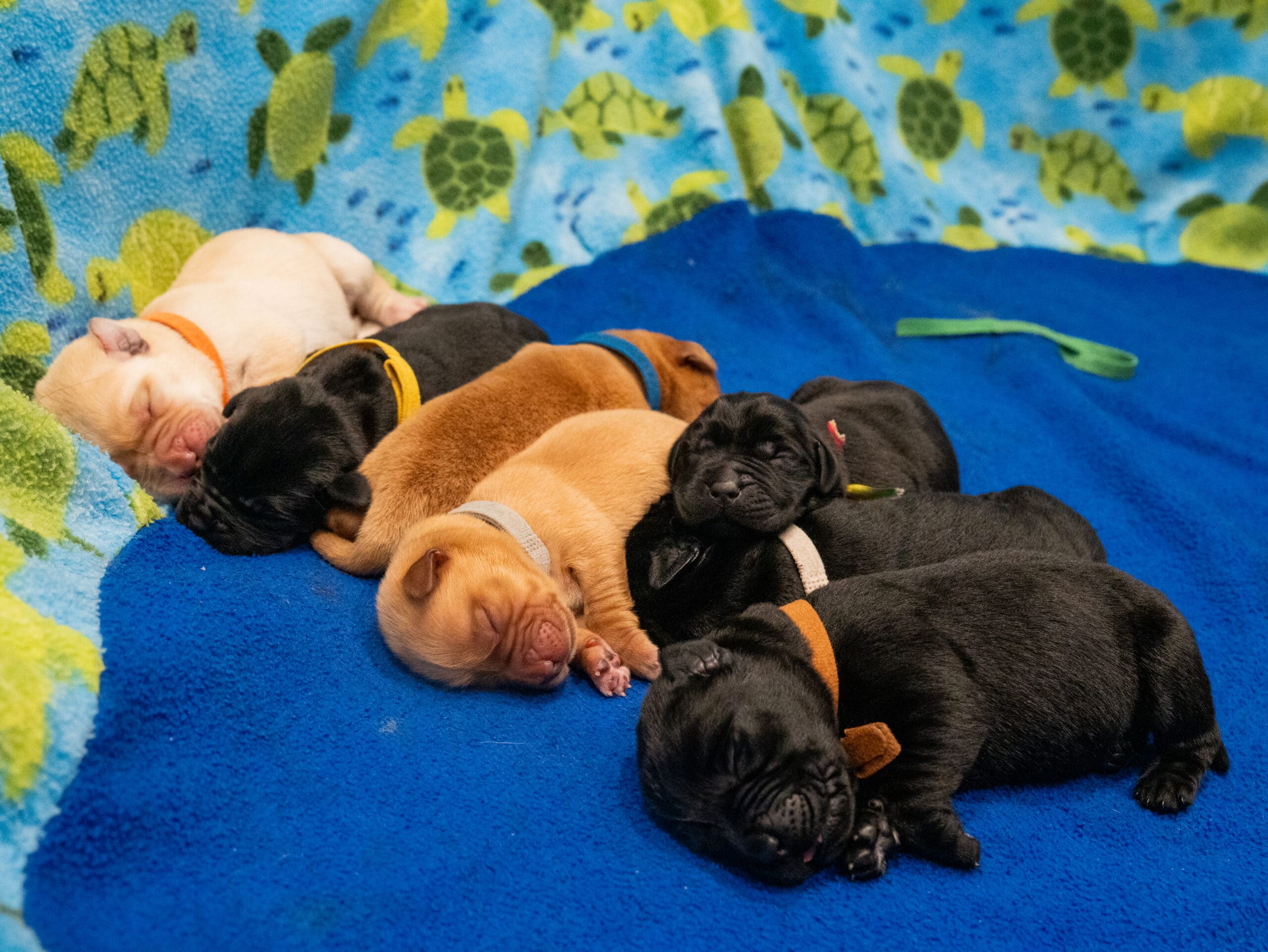
1. The Neonatal Stage (Birth to 2 Weeks)
During the first two weeks of life, puppies exist in a state of complete dependency. Blind, deaf, and entirely incapable of regulating their own body temperature, they spend the vast majority of their time nursing and sleeping against their mother and littermates.
Despite their outwardly vulnerable appearance, their brains and central nervous systems are undergoing explosive growth. This is the precise window during which Early Neurological Stimulation is introduced. Because puppies at this stage cannot yet process standard training, ENS utilizes mild tactile and thermal stimulations designed to jumpstart neurological pathways without triggering chronic stress.
2. The Transitional Stage (2 to 4 Weeks)
As puppies cross the threshold into the transitional stage, a dramatic sensory awakening occurs. Their eyes and ears begin to open, allowing them to experience sights and sounds for the very first time.
- By four weeks of age, puppies begin to take their first wobbly steps, emit their first barks, and interact more dynamically with littermates.
- Biologically, their deciduous (baby) teeth begin to erupt, signaling the gradual shift from an exclusive milk diet to soft gruel and eventually solid food.
- Learning during this stage is primarily experiential, rooted in interactions with their mother and siblings, which teaches vital early lessons such as bite inhibition and canine body language.
3. The Socialization Period (3 to 12 Weeks)
If the neonatal and transitional stages lay down the internal wiring, the socialization period is where the dog learns how to interface with the external world. Spanning from roughly three to twelve weeks of age, this window is arguably the most critical period in a dog’s life.

- Building Positive Associations: Beginning around eight weeks of age, puppies are systematically introduced to a wide array of stimuli—different flooring surfaces, unfamiliar human faces, novel sounds, and safe interactions with other animals.
- Mitigating Fear and Aggression: Thoughtful exposure during this window helps prevent fear-based reactivity and aggression in adulthood. By twelve weeks, a well-socialized puppy has built a reservoir of resilience, learning to view new experiences with curiosity rather than panic.
- The Onset of Formal Learning: Around three months of age, puppies are ready to engage in short, positive-reinforcement-based training sessions, learning basic cues and establishing routines, sometimes aided by early crate training to foster independence.
4. The Adolescent Stage and Fear Periods (6 Months to 12 Months)
As puppies mature into adolescence—which can begin as early as six months—they enter a phase analogous to human teenagerhood.
- Boundary Testing: Adolescent dogs frequently test boundaries, requiring consistent, positive guidance from their puppy raisers.
- Hormonal and Reproductive Maturity: Most dogs reach reproductive maturity between six and twelve months. For female dogs, this includes experiencing their first heat cycle; for males, it often brings hormone-driven behavioral shifts.
- Fear Periods: Throughout development, puppies pass through an average of four distinct fear periods, during which they may display sudden, uncharacteristic wariness toward familiar or unfamiliar objects. Organizations like Dogs Inc navigate these sensitive phases with careful, positive conditioning to ensure temporary frights do not become permanent phobias.
Supporting Context & Metrics: Understanding Early Neurological Stimulation (ENS)
To appreciate the value of programs like ENS, one must examine what the practice actually entails and what science suggests about its efficacy. Originally developed through canine military research programs and later popularized for broader working dog breeding, ENS involves a series of five precise, gentle tactile exercises administered daily from day three through day sixteen of a puppy’s life.
The Five ENS Exercises
Each exercise lasts approximately three to five seconds per puppy, keeping stress levels strictly negligible while providing beneficial physiological challenges:
- Tactile Stimulation: Holding the puppy in one hand and gently tickling them between the toes using a Q-tip for a few seconds.
- Head Up: Holding the puppy perpendicular to the ground, with their head pointing straight up toward the ceiling.
- Head Down: Holding the puppy gently upside down, with their head pointing toward the floor.
- Supine Position: Resting the puppy on their back in the palm of the handler’s hand, allowing them to relax.
- Thermal Stimulation: Placing the puppy on a cool, damp towel for a brief, controlled duration.
Proposed Physiological Benefits
Decades of anecdotal observation and physiological studies suggest that these brief stressors prompt beneficial changes in the canine body. Potential benefits include:

- Improved Cardiovascular Performance: Enhanced heart rate efficiency and cardiovascular health.
- Stronger Glandular Systems: Improved adrenal function and hormonal regulation.
- Greater Tolerance to Stress: Enhanced ability to bounce back from sudden environmental stressors.
- Advanced Brain Development: Greater neurological capacity and problem-solving potential.
However, experts emphasize that ENS is not a magic bullet. A puppy’s final temperament, emotional maturity, and suitability for working roles are dictated by an intricate matrix of genetics, maternal care, holistic socialization, and ongoing positive reinforcement training.
Official Statements and Industry Insights
Leading organizations in the assistance dog industry emphasize that producing a world-class guide or service dog requires a holistic, cradle-to-career philosophy.
Industry experts at Dogs Inc note that preparing a puppy for a life of service begins long before a volunteer puppy raiser takes the animal home. "A service dog’s journey starts on day one," program representatives explain. "Guide dogs and service dogs require far more than obedience; they need deep psychological resilience. They must navigate bustling transit hubs, remain unflappable amidst unexpected city noises, and maintain absolute focus on their handler through every imaginable distraction."
According to canine behaviorists collaborating with working dog breeding programs, the early neonatal and socialization windows represent irreversible developmental thresholds. "If you miss the window to build neural resilience and positive environmental associations, you cannot simply retro-fit that confidence into an adult dog," animal science literature consistently indicates. By incorporating protocols like ENS, organizations ensure that puppies possess the baseline neural architecture required to absorb and excel in advanced service training later in life.

Future Outlook: The Ongoing Evolution of Service Dog Breeding
As veterinary medicine and canine behavioral science continue to advance, the standards for raising working dogs are evolving. Modern breeding and rearing programs are moving away from rigid, one-size-fits-all models toward individualized, data-driven developmental tracking.
The future of service dog preparation lies in the seamless integration of early physical interventions (like ENS), scientifically guided socialization periods, and customized adolescent training plans. By understanding the intricate biology of the neonatal brain and respecting the complex emotional milestones of puppyhood, organizations like Dogs Inc are continually refining how future life-changing partners are nurtured.
Ultimately, a puppy’s first weeks on earth may pass in the blink of an eye, but they leave an indelible mark. Through continuous innovation, dedicated volunteer puppy raisers, and unwavering adherence to science-backed rearing practices, these tiny paws grow up to open doors, bridge worlds, and grant independence to individuals in need.