
Executive Overview
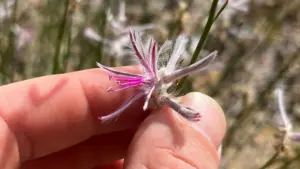
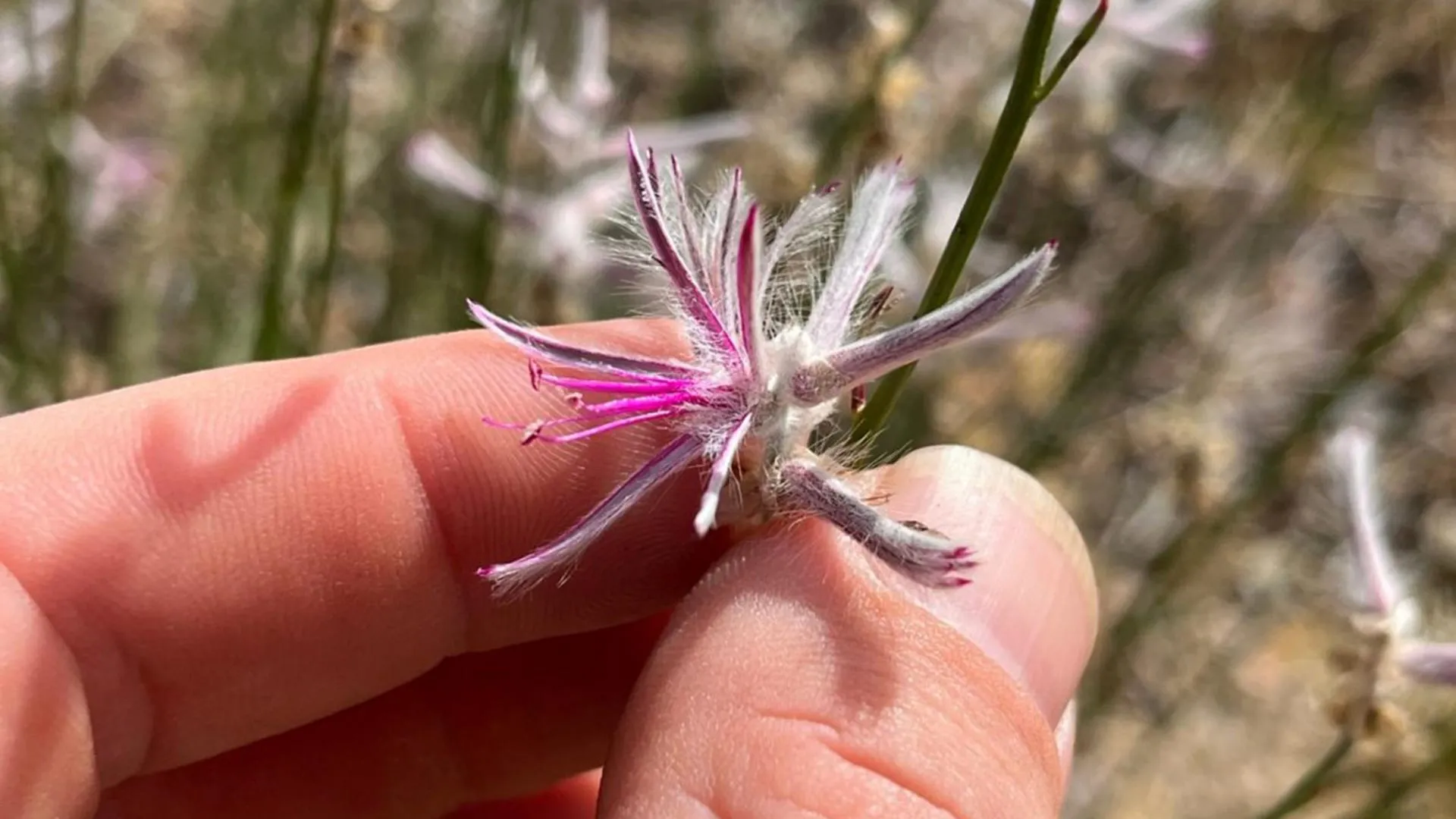
In the vast, sun-baked expanse of Australia’s remote northern outback, a botanical ghost has been coaxed back into the realm of the living. Ptilotus senarius—a delicate, mauve-pink shrub whose blossoms mirror the bursts of miniature feathered fireworks—had not been officially documented in the wild since 1967. For nearly six decades, science presumed the species had succumbed to the relentless pressures of habitat modification, climate variability, and environmental attrition, joining the grim catalog of roughly 900 plant species lost to the globe since the 1750s.
Today, however, that narrative has fundamentally shifted. The resurrection of Ptilotus senarius did not happen in a high-tech government laboratory or during a heavily funded academic expedition. Instead, it was catalyzed by a chance observation, an outback property gate, a digital upload to the citizen science platform iNaturalist, and a striking alignment of professional serendipity.
This remarkable rediscovery underscores a profound paradigm shift in modern conservation biology. As professional research institutions face chronic underfunding, vast geographic hurdles, and limited field personnel, everyday naturalists, horticulturalists, and private landowners are stepping into the breach. Platforms like iNaturalist are bridging the gap between casual observation and rigorous taxonomy, turning millions of smartphone-wielding citizens into an expansive, decentralized army of biodiversity scouts.
As scientists reclassify Ptilotus senarius from "extinct" to "critically endangered," the event serves as a watershed moment for Australian ecology. It highlights the untapped potential of private land stewardship, validates the growing integration of citizen science into peer-reviewed research, and offers a glimmer of hope that other forgotten species may yet be waiting in the shadows, waiting for the right set of eyes to pass by.
Detailed Chronology: Anatomy of a Botanical Resurrection
To understand how a plant missing for 58 years re-entered the scientific canon, one must retrace a chain of events spanning remote wilderness, digital infrastructure, and expert taxonomic sleuthing.
Phase 1: The Outpost Encounter
The story begins on a sprawling, privately owned pastoral property near the rugged terrain of the Gulf of Carpentaria in northern Australia. Aaron Bean, a professional horticulturalist by trade, was on-site assisting with avian research—specifically banding birds across the expansive outback landscape.
Amidst the demanding physical labor of wildlife tracking, Bean’s trained horticultural eye caught a flash of unfamiliar flora. Growing quietly in the harsh, sun-scorched soil was a small shrub featuring striking purple-pink flowers shaped like feathered fireworks. Recognizing that the morphology did not match the common flora of the immediate region, Bean paused to capture several high-resolution photographs of the plant, its foliage, and its growth habit.
Because of the extreme isolation of the property, immediate identification was impossible. The digital files remained dormant on his camera’s memory card until days later, when he finally regained cellular service and could connect to the internet.
Phase 2: The Digital Catalyst
Upon reconnecting with the digital grid, Bean opened the iNaturalist mobile application—a global social network for sharing biodiversity observations—and uploaded his outback photographs.
In the grand ecosystem of modern internet data, millions of images are uploaded to iNaturalist annually, ranging from common urban pigeons to ubiquitous backyard dandelions. Yet, algorithms and human curators work in tandem to sift through the noise. Bean’s upload drifted into the digital ether, where it eventually caught the attention of an expert eye: botanist Anthony Bean (no relation) from the Queensland Herbarium.
Phase 3: The Taxonomic Breakthrough
Scrolling through the platform’s queue, Anthony Bean stopped short when he viewed the outback shrub. He instantly recognized the distinctive floral structure of Ptilotus senarius.
The connection was deeply personal: Anthony Bean had formally described and named the species himself a decade prior to the 1967 disappearance, operating off historical herbarium sheets and fragmented records. To see a living, breathing specimen of a plant he thought he would only ever know through dried museum pressings was nothing short of surreal.
"It was very serendipitous," noted Thomas Mesaglio, a researcher from the UNSW School of Biological, Earth and Environmental Sciences who subsequently documented the rediscovery for the Australian Journal of Botany. "Aaron Bean is an avid iNaturalist user who opportunistically took some photos of a few plants that were interesting on the property."
Phase 4: Verification and Reclassification
A digital photograph alone, while compelling, does not satisfy the rigorous standards of formal botanical taxonomy. To officially transition Ptilotus senarius out of the "extinct" ledger, physical evidence was required.
Mobilizing quickly, the research network coordinated with the property owner, who granted access to the site to collect an official voucher specimen. With the physical plant secured, examined, and cross-referenced against historical type specimens, the scientific community reached a definitive conclusion: Ptilotus senarius was not extinct.
The International Union for Conservation of Nature (IUCN) and local authorities swiftly updated the species’ status. Moving from the ghost-like realm of extinction to the critically endangered list, the plant instantly transformed from a historical footnote into a high-priority conservation target, granting land managers and scientists the legal and institutional leverage necessary to protect its fragile habitat.
Supporting Context & Metrics: The Scale of the Hidden World
The miraculous survival of Ptilotus senarius forces a broader examination of Australia’s biodiversity crisis, the realities of continental-scale surveying, and the explosive growth of citizen-driven data collection.
Australia’s Biodiversity and the Tyranny of Distance
Australia is recognized globally as a megadiverse continent, housing tens of thousands of endemic plant and animal species found nowhere else on Earth. However, managing this biological wealth presents an almost insurmountable logistical challenge.
- Continental Vastness: Australia spans roughly 7.69 million square kilometers. Professional academic institutions, state herbariums, and government conservation departments lack the human and financial resources to systematically survey every square kilometer of this immense landmass.
- The Private Land Barrier: The logistical hurdle is compounded by land tenure. Approximately one-third of the entire Australian continent consists of privately owned or leased pastoral land. Academic researchers cannot simply walk onto private stations without explicit permission, leaving massive swaths of potential biodiversity hotspots completely unmonitored by professional scientists.
- The Extinction Shadow: Since European colonization in the late 1700s, Australia has suffered some of the highest mammalian and botanical extinction rates in the developed world. Hundreds of native plants are currently recognized as endangered, and dozens are suspected to have vanished before they could even be formally described.
The Rise of iNaturalist as a Scientific Instrument
In the face of these structural limitations, citizen science platforms have evolved from casual hobbyist clubs into mission-critical scientific infrastructure.
[Citizen Observer]
       │
       ▼ (Uploads photos + metadata)
[iNaturalist Platform]
       │
       ▼ (Community validation & expert review)
[Taxonomic Identification]
       │
       ▼ (Peer-reviewed documentation: e.g., Australian Journal of Botany)
[Conservation Action & Status Reclassification]
Research conducted by Thomas Mesaglio has demonstrated that data generated via iNaturalist is no longer a peripheral novelty; it is deeply embedded in mainstream academic literature. Studies utilizing iNaturalist observations have now been cited in scientific papers spanning 128 countries, documenting thousands of species distributions, range expansions, and—in rare, dramatic instances—the Lazarus-like rediscovery of presumed-extinct organisms.
This crowdsourced model solves the "tyranny of distance" problem. Millions of pairs of eyes—hikers, farmers, horticulturalists, birdwatchers, and indigenous land managers—are moving across landscapes every day. When equipped with a smartphone and an internet connection, they effectively function as distributed sensor nodes for planetary biodiversity.
Official Statements & Expert Insights
The convergence of professional taxonomy and amateur field observation has prompted prominent figures in Australian conservation to rethink how research is funded, prioritized, and executed.
Reflecting on the sheer improbability of the Ptilotus senarius discovery, Thomas Mesaglio of the UNSW School of Biological, Earth and Environmental Sciences emphasized the delicate intersection of preparation and pure luck:
"It’s one of these situations where everything had to fall into place and there was a bit of good fortune involved. Aaron Bean is an avid iNaturalist user who opportunistically took some photos of a few plants that were interesting on the property… If you are the property owner or you’re someone who has permission from the owner to be there, then suddenly it opens up this whole new world."
Mesaglio also points out that the benefits of citizen science extend far beyond mere data collection. By actively involving everyday citizens and private landholders in the documentation of their local flora and fauna, conservationists foster a deep-seated stewardship ethic.
"Engaging landholders themselves with science and the natural world and getting them more passionate about diversity makes them far more likely to be interested and invested in protecting that diversity," Mesaglio explained.
To scale this engagement, government and non-profit initiatives are beginning to institutionalize landholder participation. A prime example is the Land Libraries project, spearheaded by the New South Wales government’s Biodiversity Conservation Trust. This program provides specialized training and field equipment to rural landowners, empowering them to catalog the complex ecosystems thriving within their fence lines and upload these vital records directly into public databases.
Future Outlook: Maximizing the Value of Citizen Science
The rediscovery of Ptilotus senarius is not merely an isolated feel-good story; it serves as a blueprint for the future of wildlife and plant conservation. As human pressures on natural habitats intensify, conservationists argue that traditional, top-down scientific surveys must be augmented by crowdsourced ecological monitoring.
However, scientists stress that the quality of citizen science data must continually evolve to meet academic standards. Casual snapshots are helpful, but targeted, highly contextualized observations are transformative.
Best Practices for Aspiring Citizen Scientists
Drawing from guidelines outlined by researchers like Mesaglio, individuals engaging with platforms like iNaturalist can significantly increase the scientific utility of their observations by following key field protocols:
- Go Beyond the Single Close-Up: A macro shot of a flower is rarely sufficient for definitive identification, especially within large, complex genera where related plants share identical bloom morphologies.
- Capture Holistic Morphology: Observers should systematically photograph multiple plant components, including:
- Leaves (top and underside)
- Stems, bark, and branching patterns
- Overall growth habit and scale relative to the surrounding environment
- Record Environmental Context: Metadata that cannot be captured by a camera lens is often vital to botanists. Documenting soil composition, moisture levels, parent rock geology, associated overstory or understory vegetation, and the presence of specific pollinators provides crucial ecological clues.
- Engage the Senses: Subtle characteristics—such as sap color, crushing odors, or unique texture—can serve as the ultimate diagnostic separator for closely related species. Documenting these sensory details in the observation notes adds immense value for verifying experts.
Looking Ahead
As millions of new observations continue to flood into databases like iNaturalist each year, computer vision algorithms and human expert networks are growing more adept at spotting anomalies.
The botanical world guards its secrets closely, hiding rare endemics in the folds of private outback stations, rugged gorges, and unmapped forests. The resurrection of Ptilotus senarius proves that nature has not finished surprising us. It stands as an enduring reminder that the next great scientific breakthrough may not require a multi-million-dollar grant or an expedition to the ends of the earth—sometimes, it merely requires someone to stop, look down at a strange pink flower in the outback, and pull out their phone.