
Executive Overview
Long before a puppy ever learns to sit on command, walk neatly on a leash, or master the complex navigation required to guide a visually impaired individual through a bustling metropolis, an intricate and critical process is already unfolding behind the scenes. In the quiet, warmth of the whelping box, a newborn puppy’s brain and nervous system are undergoing explosive growth. Though their eyes remain tightly sealed and their ear canals are not yet open, these tiny animals are actively absorbing and responding to their environment.
At organizations like Dogs Inc, the journey toward producing confident, highly capable guide and service dogs begins well before formal training ever starts. It begins on day one of life.
At the heart of this early-stage preparation is a science-based practice known as Early Neurological Stimulation (ENS). Often integrated into broader neonatal and pediatric protocols, ENS is a carefully timed series of brief, gentle physical experiences designed to stimulate the developing neurological systems of puppies. While ENS is only one piece of a much larger developmental puzzle, it exemplifies the rigorous, thoughtful methodology required to give working dogs the best possible start in life.
This article explores the science behind Early Neurological Stimulation, the distinct developmental milestones puppies pass through from birth to adolescence, the critical differences between neonatal stimulation and later socialization, and how these foundational steps ultimately shape the elite service dogs relied upon by countless individuals every day.

Detailed Chronology: From Neonatal Beginnings to Adolescent Independence
A puppy’s journey from a helpless newborn to a confident, working adult is marked by distinct, fast-paced developmental stages. Understanding each phase is essential for appreciating why early interventions matter so much.
1. The Neonatal Stage (Birth to 2 Weeks)
During the first two weeks of life, puppies exist in a neonatal state of total dependency. They rely entirely on their mother and littermates for warmth, nutrition, and survival. During this window, puppies spend the vast majority of their time sleeping and nursing. They cannot see or hear, and their bodies are not yet capable of regulating internal body temperatures.
Despite their outwardly fragile appearance, profound neurological development is occurring. It is during this exact window—typically spanning from birth through day fourteen—that practitioners implement Early Neurological Stimulation protocols. Because the puppy’s central nervous system is malleable and rapidly forming, brief, mild tactile challenges introduced during these days help stimulate neurological pathways without overwhelming the animal’s delicate system.
2. The Transitional Stage (2 to 4 Weeks)
As puppies cross the two-week threshold, they enter the transitional stage, which brings rapid sensory and physical awakenings.

- Sensory Openings: Around 10 to 14 days, a puppy’s eyes and ears begin to open. Suddenly, the world floods in with light, shadow, and sound.
- Mobility and Vocalization: By three to four weeks of age, puppies are successfully attempting to stand, walk, and even emit tentative barks.
- Nutritional Shifts: Deciduous teeth (baby teeth) begin to erupt, signaling a biological shift away from exclusive nursing toward soft gruel, and eventually, solid foods.
3. The Socialization Period (3 to 12 Weeks)
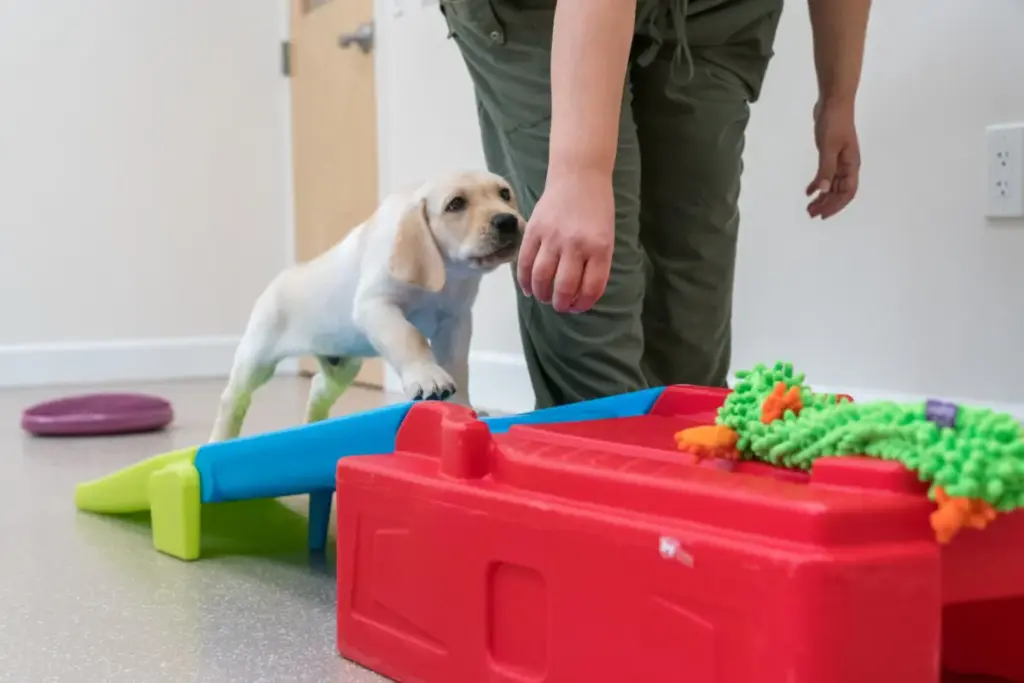
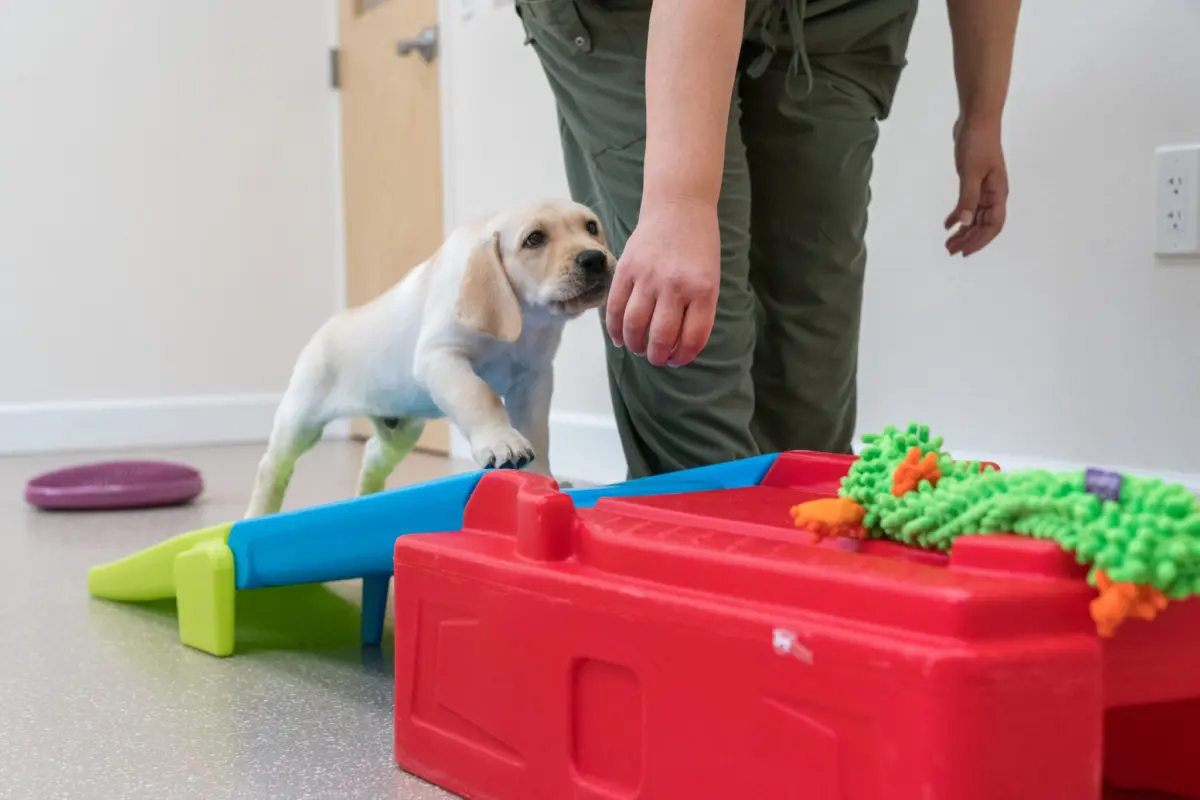
Following the transitional phase, puppies enter the vital socialization window. This is when the developing dog begins actively interacting with people, novel sounds, varied floor surfaces, and other dogs.
- Building Associations: By eight weeks of age, puppies are forming permanent mental associations with their surroundings. Positive exposures during this window help cultivate confidence and emotional stability.
- Expanding Horizons: By twelve weeks of age, structured exposure to diverse environments, unfamiliar human beings, and routine household stimuli is critical. This intentional exposure is the primary preventative measure against adult canine anxiety, reactivity, and fear-based aggression.
4. The Juvenile and Adolescent Stages (6 Months to 1 Year)
As puppies mature into young adults, new behavioral chapters unfold.
- Testing Boundaries: Around six months of age, many dogs enter their adolescent phase, often exhibiting boundary-testing behaviors analogous to human teenagers.
- Hormonal Milestones: Most dogs reach reproductive maturity between six and 12 months. Female dogs experience their first estrus cycle (heat), while male dogs begin displaying hormone-driven behaviors.
- Fear Periods: Throughout these developmental months, young dogs commonly experience an average of four distinct "fear periods," during which negative experiences can have an outsized impact. This makes continued positive reinforcement, patience, and professional guidance essential.
Supporting Context & Metrics: The Science of ENS and Development
To fully understand the value of Early Neurological Stimulation, one must examine the physiological rationale behind the practice and look at the broader ecosystem of puppy development.
What is Early Neurological Stimulation (ENS)?
Originally developed through military canine research programs, ENS involves a series of five distinct, gentle exercises performed once daily between the third and sixteenth days of a puppy’s life. Each exercise lasts only three to five seconds per puppy:

- Tactical Stimulation: Tickling a foot gently between the toes using a Q-tip.
- Head Up: Holding the puppy perpendicular to the ground, head pointing upward.
- Head Down: Holding the puppy so its head is pointed gently downward toward the floor.
- Supine Position: Holding the puppy on its back with its muzzle facing the ceiling.
- Thermal Stimulation: Placing the puppy on a damp, cool towel for a brief moment.
The Hypothesized Benefits of ENS
While ENS is not a substitute for training, decades of observation by breeders, working dog organizations, and canine scientists suggest that these brief exercises yield measurable physiological improvements:
- Improved Cardiovascular Performance: Enhanced heart rate regulation and cardiovascular output.
- Stress Tolerance: Greater adaptability and resilience when faced with minor environmental stressors.
- Adrenal Function: Stronger functioning of the adrenal glands, leading to better hormonal regulation under pressure.
- Greater Disease Resistance: Anecdotal and observational data suggest improved overall hardiness during early development.
ENS vs. Socialization: A Crucial Distinction
It is a common misconception that ENS and socialization are interchangeable terms. They are fundamentally different protocols applied at different stages of life:
| Metric / Feature | Early Neurological Stimulation (ENS) | Socialization Period |
|---|---|---|
| Timeframe | Neonatal stage (Days 3 through 16) | Pediatric stage (Weeks 3 through 12) |
| State of Puppy | Eyes and ears closed; entirely dependent | Eyes/ears open; mobile; actively exploring |
| Core Activity | Brief, structured physical handling exercises | Multi-sensory exposure to people, places, and sounds |
| Primary Goal | Stimulate neurological and adrenal pathways | Build confidence, social competence, and adaptability |
Official Statements and Institutional Insight
Organizations dedicated to breeding and training elite working dogs view early developmental care as an ethical and functional imperative.
Industry experts emphasize that a puppy’s ultimate success as a guide or service animal cannot be attributed to a single milestone or training trick. Rather, it is the cumulative result of rigorous genetics, exceptional healthcare, thoughtful neonatal care like ENS, and lifelong socialization.

"Early developmental practices are not about turning newborn puppies into working machines prematurely," notes a leading canine development specialist. "Instead, they are about providing the biological and psychological scaffolding necessary for a young dog to process the complexities of the human world safely and confidently. Every touch, every sound, and every structured interaction is a building block for future resilience."
Organizations like Dogs Inc approach puppy development with an eye toward the long-term partnership. Because guide and service dogs must operate in unpredictable environments—navigating crowded transit systems, ignoring distractions, and making independent safety decisions on behalf of their handlers—their baseline emotional stability must be ironclad. That emotional stability is cultivated from the moment a puppy draws its first breath.
Future Outlook: Raising the Next Generation of Life-Changing Partners
The science of canine development continues to evolve. As researchers learn more about canine epigenetics, neuroplasticity, and behavioral genetics, puppy-rearing protocols at elite organizations are continually refined to optimize outcomes for future working dogs.
The future of service dog breeding and training relies on bridging the gap between rigorous early science—such as ENS and tailored neonatal handling—and progressive, positive-reinforcement-based training methods during the adolescent and adult phases.
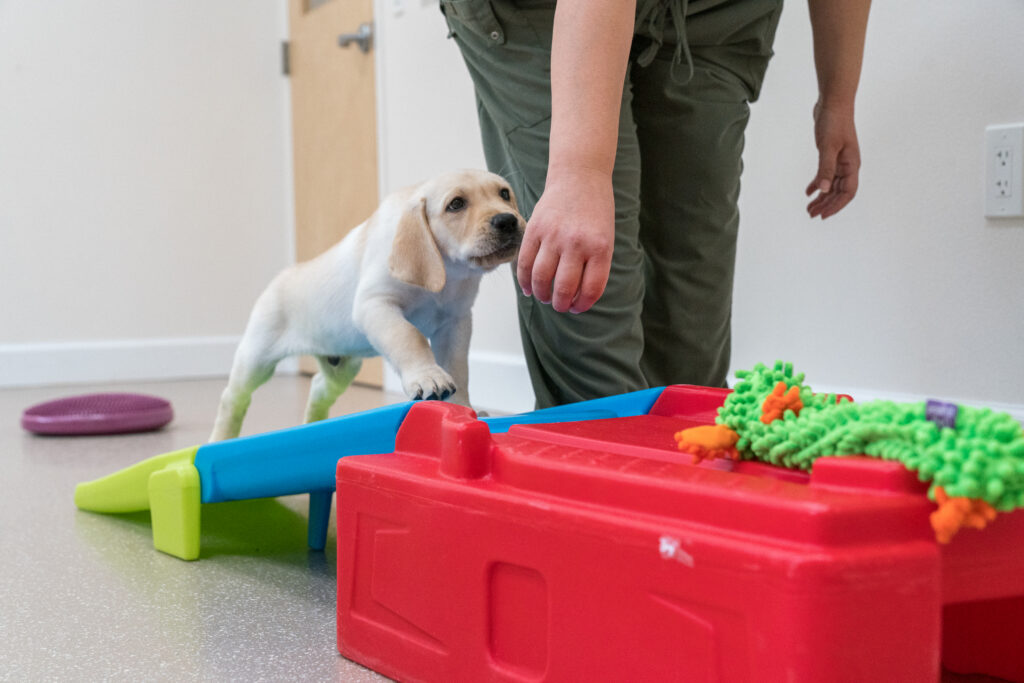
As puppies graduate from neonatal care into formal puppy-raising programs, structured crate training, and specialized obedience classes around 16 weeks of age, the intentional groundwork laid in their earliest days pays dividends. These dogs grow up to become steady, unflappable, and life-changing partners for individuals who rely on them for independence and mobility.
For those interested in following this remarkable journey, organizations like Dogs Inc invite the public to look behind the scenes, learn about the meticulous care invested from day one, and witness firsthand how tiny paws grow up to change lives.