October 22, 2026 Originally featured in the Alley Cat Allies® 2026 Fall Newsletter
Executive Overview
The landscape of animal advocacy in the United States continues to evolve, balancing the urgent need to protect vulnerable indigenous ecosystems with the ethical imperative to treat all living creatures humanely. In this ongoing dialogue, Trap-Neuter-Return (TNR) remains the gold standard for stabilizing community cat populations.
As detailed in the Alley Cat Allies® 2026 Fall Newsletter, advocacy efforts on both coasts are setting critical precedents for how communities manage outdoor cat populations. From the volcanic shores of Hawaiʻi to the bustling coastal communities of Atlantic County, New Jersey, recent months have underscored both the resilience required to defend humane policies against bureaucratic overreach and the extraordinary milestones achievable through collaborative community action.
This report examines two major developments highlighted by Alley Cat Allies:
The organization’s fierce opposition to restrictive and lethal administrative rule changes proposed by the state of Hawaiʻi.
A monumental public-private partnership with the Humane Society of Atlantic County (HSAC) that is rapidly approaching the threshold of 7,000 cats and kittens helped.
Through rigorous investigation, strategic advocacy, and unwavering dedication to evidence-based animal welfare, these initiatives demonstrate that protecting native wildlife and caring for community cats are not mutually exclusive goals—they are two halves of a comprehensive, compassionate environmental stewardship.
Detailed Chronology: Defending TNR in Hawaiʻi and Achieving Milestones in New Jersey
Hawaiʻi: The Battle Against Lethal Administrative Overreach (August 2026)
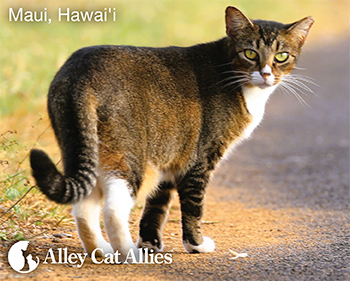
For years, Alley Cat Allies has maintained an active presence across the Hawaiian Islands, working alongside local caregivers, veterinarians, and animal advocates to implement and expand TNR programs. These initiatives are designed to stabilize cat populations humanely, reduce shelter intake, and foster harmonious coexistence between human communities, wildlife, and outdoor cats.
The situation escalated significantly in August 2026, forcing animal welfare organizations to take immediate legal and legislative action. State authorities introduced proposed amendments to the Hawaiʻi Administrative Rules that threatened to dismantle years of progress. These amendments sought to:
Exceed existing state legislative boundaries and stretch the statutory authority of governing agencies.
Prioritize lethal population control methods over proven, humane management strategies.
Directly undermine and criminalize TNR efforts across the islands.
At the core of the controversial proposal was a sweeping ban on the feeding of "domestic animals"—a classification specifically encompassing cats—on lands managed by the Hawaiʻi Department of Land and Natural Resources (DLNR). Proponents of the rule changes argued that such restrictive measures were necessary to protect threatened and endangered native wildlife.
However, Alley Cat Allies and independent wildlife conservation experts immediately challenged the scientific validity of these claims. Decades of peer-reviewed ecological data indicate that the primary drivers of native species decline in Hawaiʻi are large-scale, human-led activities, unchecked urban development, habitat destruction, and the introduction of invasive predators—not community cats managed through sterilization and feeding protocols. By scapegoating outdoor cats, regulatory bodies risk deflecting attention and resources away from the true systemic causes of ecological degradation.
Alley Cat Allies intervened swiftly, submitting formal, rigorous testimonies in strong opposition to the amendments. The organization continues to rally public support, asserting that true conservation requires a balanced approach that safeguards indigenous wildlife while upholding the ethical duty to treat Hawaiʻi’s community cats with dignity and compassion.
Atlantic County, New Jersey: A Partnership Nearing 7,000 Lives Saved (2024–2026)
While the fight for humane policy raged in the Pacific, a celebration of cooperation and impact was unfolding on the East Coast. Alley Cat Allies’ ongoing collaborative initiative with the Humane Society of Atlantic County (HSAC) is on the verge of reaching a historic milestone: helping nearly 7,000 cats and kittens.
The partnership, designed to optimize TNR infrastructure and shelter diversion tactics in New Jersey, has transformed the operational reality of regional animal welfare. By providing targeted funding, expert guidance, and boots-on-the-ground support, Alley Cat Allies has empowered HSAC to scale its services far beyond previous capacities.
The ripple effects of this collaboration have fundamentally reshaped the county’s shelter system. By systematically stabilizing outdoor cat colonies through high-volume spay-and-neuter efforts, the influx of unmanaged litters into local shelters has plummeted. This reduction has allowed shelter staff to redirect precious resources toward the rehabilitation and adoption of adult cats, creating a sustainable, life-saving loop that benefits the entire community.
Supporting Context & Metrics: The Science of Sustainable Population Control
To fully appreciate the significance of these developments, one must examine the metrics and methodologies that underpin modern animal advocacy. TNR is not merely a philosophy; it is a scientifically validated population management strategy.
The Mechanics of TNR and Shelter Diversion
Traditional approaches to unowned outdoor cats—frequently involving catch-and-kill policies or impoundment—have proven ineffective over decades of trial. Known historically as the "vacuum effect," the removal of cats from a specific territory simply opens ecological niches, inviting new unsterilized cats to move in and rapidly reproduce.
TNR short-circuits this cycle by:
Sterilization: Spaying and neutering eliminate reproductive capacity, causing colony populations to naturally and humanely decline over time.
Vaccination: Rabies and other preventable illnesses are checked, protecting both the feline population and public health.
Eartipping: The universal symbol of a sterilized and vaccinated community cat, allowing caretakers and animal control officers to identify fixed cats at a glance instantly.
Return: Returning cats to their outdoor home where they are acclimated and supported by dedicated colony caregivers.
The "Leave Them Be" Protocol in Action
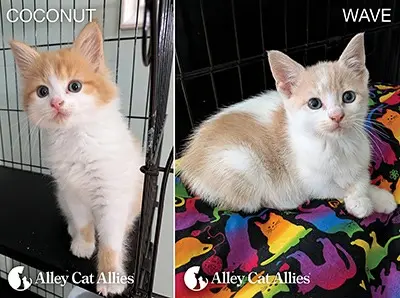
The success of modern TNR frameworks is beautifully illustrated by the stories of individual animals, such as Coconut and Wave, two feline brothers rescued and protected through the HSAC and Alley Cat Allies initiative.
Rather than unnecessarily pulling nursing mother cats and dependent kittens from their outdoor environments—an intervention that often overwhelms shelter nursery staff and places immense stress on the animals—the "Leave Them Be" protocol prioritizes keeping families together outdoors until the kittens are naturally weaned and socialized.
In the case of Coconut and Wave, this philosophy allowed the brothers to mature safely in their natural outdoor setting alongside their mother. Once they reached the appropriate age, Coconut and Wave were smoothly transitioned into adoption pathways, finding loving permanent homes. Simultaneously, their mother was safely trapped, spayed, vaccinated, eartipped, and returned to her outdoor territory—ensuring she would never face the stress of another litter while continuing to live a healthy, protected life.
Official Statements and Community Perspectives
The profound impact of these initiatives is best captured through the voices of leadership and the community members on the front lines of animal welfare.
Steve Dash, Executive Director of the Humane Society of Atlantic County, highlighted the tangible transformation the partnership has brought to the region:
"The colony caregivers are very appreciative, and the general public is thrilled that Alley Cat Allies has been so supportive of HSAC and the community cats in our area. The biggest impact is the elimination of euthanasia in the shelter. We see fewer litters coming in, so we can concentrate on placing more adults. These programs are saving cats’ lives every day."
Dash’s observations point to a broader paradigm shift within animal sheltering nationwide. As municipal shelters transition away from archaic, lethal models toward progressive, community-supported diversion programs, the burden on shelter staff decreases, and public trust multiplies.
In Hawaiʻi, local advocates and Alley Cat Allies representatives have echoed a similar sentiment of resolute determination. In official testimony documents submitted to administrative boards, representatives emphasized that the push for lethal control is driven by administrative convenience rather than ecological science.
An Alley Cat Allies spokesperson noted during the August opposition proceedings:
"We support comprehensive, science-based strategies to protect Hawaiʻi’s indigenous, threatened, and endangered wildlife. However, implementing cruel feeding bans and prioritizing lethal control over proven TNR measures is a failure of governance. It ignores the root causes of habitat loss while inflicting needless suffering on community cats. We will stand firm to protect the cats of Hawaiʻi."
Future Outlook: The Road Ahead for Community Cat Advocacy
As we look toward the remainder of 2026 and beyond, the trajectory of community cat advocacy is defined by both formidable challenges and inspiring momentum.
Navigating Regulatory Frontiers
The situation in Hawaiʻi serves as a cautionary tale for animal advocates across the globe. As state and local governments face mounting pressure to address environmental concerns, animal welfare organizations must remain vigilant against regulatory overreach. Environmental protection and animal protection must be harmonized through collaborative policy-making, rigorous scientific inquiry, and respect for humane standards. Alley Cat Allies remains committed to monitoring administrative rule changes, engaging in legal advocacy, and educating policymakers on the efficacy of TNR.
Expanding Horizons in Atlantic County and Beyond
With the milestone of 7,000 cats and kittens helped within striking distance, the partnership between Alley Cat Allies and the Humane Society of Atlantic County offers a blueprint for regional success. As Dash enthusiastically remarked, the focus is already shifting toward the next major benchmark: "Here’s to the next 1,000 cats!"
Replicating this model across other jurisdictions requires sustained financial backing, robust volunteer networks, and unwavering public education. By demonstrating that TNR drastically reduces shelter populations, eliminates unnecessary euthanasia, and fosters community harmony, organizations like Alley Cat Allies are proving that a more humane world is entirely within reach.
The dual fronts of this mission—fighting restrictive legislation in the Pacific and celebrating life-saving milestones on the Atlantic coast—demonstrate that the movement for animal protection is active, resilient, and expanding. Through continued advocacy, scientific integrity, and grassroots compassion, the future remains bright for community cats and the communities that embrace them.