
Executive Overview
In the silent, invisible world of mammalian communication, domestic cats and their wild relatives leave behind an intricate tapestry of chemical information. For centuries, scientists have understood that scent marks—chiefly delivered through urine—act as vital billboards of information, broadcasting territory boundaries, reproductive status, and individual identity long after the animal has vacated the premises. Yet, this dynamic creates a profound physiological and physical paradox.
Most organic odor molecules are notoriously volatile. They evaporate rapidly, degrade under ultraviolet light, or alter their chemical composition when exposed to the elements. If a scent mark is constantly shifting and evaporating, how can another feline reliably determine who originally left it months prior?
A groundbreaking international study led by researchers at Iwate University, in collaboration with scientific teams in Germany and Spain, has successfully cracked this evolutionary puzzle. Set to be published in the prestigious journal Current Biology, the research reveals a previously unknown class of 13 unusual branched-chain fatty acids (BFAs) found exclusively in cat urine. These semi-volatile compounds do not merely serve as random biological waste; rather, they form highly individualized, durable chemical profiles that act as permanent calling cards.
Furthermore, this multi-continental research team has simultaneously solved a century-old medical mystery regarding why feline kidneys are uniquely packed with microscopic lipid droplets, while establishing that this specialized scent-marking chemistry spans the entire Felidae family—from the domestic tabby to the roaring tiger. The findings illuminate new pathways for veterinary science, domestic pet management, and non-invasive wildlife conservation.
Detailed Chronology of the Discovery
The journey toward understanding how cats encode personal identity into their scent marks required a meticulous, step-by-step scientific approach that bridged behavioral observation, analytical chemistry, and renal physiology.
Establishing the Baseline: Behavioral Evidence of Long-Term Scent Memory
Before hunting for the specific chemical compounds responsible for individual recognition, the research team, spearheaded by Professor Masao Miyazaki of Iwate University, needed to definitively establish that domestic cats possess both the capability to distinguish between different individuals solely by urine scent and the capacity to retain these memories over extended periods.
Through carefully controlled behavioral trials, the researchers exposed cats to specific urine samples repeatedly. As the subjects grew accustomed to a particular sample, their investigative behavior—measured by the time spent sniffing—gradually decreased. However, the moment a urine sample from a novel cat was introduced, the subjects’ interest instantly spiked, and sniffing times escalated.
Most remarkably, the cats continued to exhibit reduced responses to previously encountered urine odors even after experimental gaps lasting several months. This durable pattern indicated that felines store long-term neurological memories of specific individual scent profiles.
To quantify this reaction further, researchers monitored the flehmen response—the characteristic, open-mouthed grimace cats display when curling their upper lip to draw airborne pheromones and scents into the vomeronasal (Jacobson’s) organ. Cats displayed this behavioral reflex significantly more often when investigating unfamiliar urine than when smelling their own. As familiar urine was repeatedly presented, the frequency of the flehmen response waned, only to surge again upon the introduction of a new cat’s scent.
"After confirming that cats can distinguish individual urine odors, we used the flehmen response as a clue to identify urinary molecules that may contribute to individual scent recognition," Professor Miyazaki explained.
Isolating the 13 Unusual Fatty Acids
Using the flehmen response and sniffing behaviors as an analytical compass, the scientists isolated a specific lipid fraction within the urine that correlated directly with the behavioral shifts.
Advanced chromatographic and mass-spectrometric analyses revealed 13 unusual branched-chain fatty acids (BFAs). A thorough review of existing biochemical literature confirmed that these specific compounds had never before been documented in the excretions or secretions of any other mammalian group.
The true breakthrough lay not in the presence of the compounds alone, but in their patterning. Every individual cat possessed a unique BFA "profile," defined by the precise combination and relative abundance of these 13 fatty acids. While these profiles varied widely across the feline population, they remained remarkably stable when the same cats were sampled repeatedly over time.
Genetics also emerged as a significant underlying factor. Genetically related cats tended to display more similar BFA patterns, yet every individual animal maintained its own distinct, identifiable signature—even among siblings sharing the same household environment.
Proving Durability and Perception
Because traditional volatile organic compounds in urine break down quickly, the researchers tested the environmental durability of BFAs. When urine-soaked samples were stored under ambient laboratory conditions (25°C), the distinctive BFA profiles remained stable for a minimum of 24 hours—vastly outlasting traditional scent markers.
To prove that cats could actively perceive these chemical differences, the researchers conducted substitution experiments. By chemically controlling all other lipid components in a urine sample and altering only the donor-derived BFA fraction, they observed the subjects’ reactions. Cats that had habituated to an original sample immediately resumed active sniffing when the BFA fraction was swapped. This direct behavioral reaction confirmed that felines perceive and decode individual BFA compositions as meaningful identity signals rather than meaningless chemical background noise.
Solving a Century-Old Renal Mystery
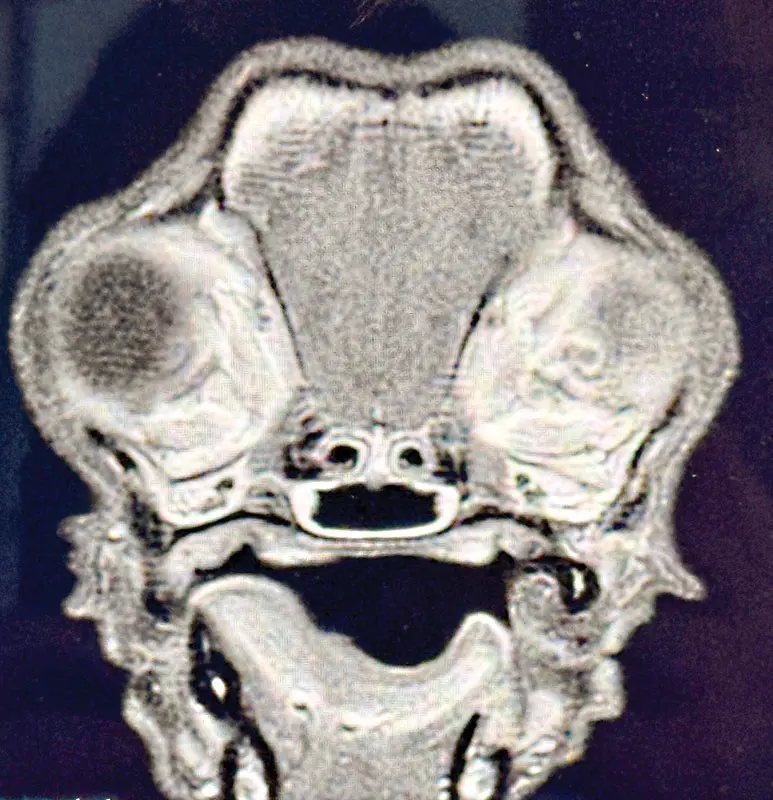
Perhaps the most surprising turn in the investigation occurred when researchers examined internal tissues. While BFAs were absent from most organs, they were detected in high concentrations within the kidneys. Specifically, lipids containing BFAs were found inside neutral lipid storage droplets localized within the renal cortex.
For over a century, comparative anatomists and veterinary pathologists have noted that domestic cats possess an unusually high volume of these renal lipid droplets. Despite a century of observation, their exact physiological purpose has remained an enduring medical enigma.
The Iwate University study suggests that these renal lipid droplets serve as an internal biological reservoir. By storing BFA-containing lipids within the kidneys, the feline body can buffer short-term physiological fluctuations—such as sudden dietary changes, seasonal stressors, or metabolic shifts—thereby ensuring a steady, consistent release of the individual’s chemical signature into the urine over time.
Supporting Context & Metrics
To fully appreciate the scope of this research, it is helpful to examine the comparative metrics and evolutionary reach of the findings across the cat family (Felidae).
Comparative Felid Analysis
Following their discoveries in domestic cats (Felis catus), the research team expanded their inquiry to determine whether this unique chemical architecture extended to wild felid species. Using non-invasive sample collections, they detected BFA-related compounds and renal lipid droplets across a diverse array of wild apex predators and smaller cats:
- Lions (Panthera leo)
- Tigers (Panthera tigris)
- Leopards (Panthera pardus)
- Jaguars (Panthera onca)
- Lynxes (Lynx lynx)
- The Iriomote cat (Prionailurus bengalensis iriomotensis)
- The Tsushima leopard cat (Prionailurus bengalensis euptilura)
While the underlying biochemical framework—the reliance on BFAs and renal droplet storage—appeared universal across these species, the exact BFA profiles, quantitative distributions, and renal lipid concentrations varied noticeably. Even geographically isolated subspecies, such as the Iriomote cat and the Tsushima leopard cat in Japan, exhibited distinct evolutionary divergences in their chemical signatures.
Key Analytical Metrics
- Number of Novel Compounds Identified: 13 branched-chain fatty acids (BFAs).
- Environmental Stability Threshold: BFA profiles remained chemically stable for at least 24 hours at 25°C.
- Historical Timeline: Renal lipid droplets in felines have puzzled scientists for over 100 years.
- Taxonomic Breadth: Confirmed across 7 distinct wild and domestic felid species/subspecies.
Official Statements
The international research collaboration highlights a paradigm shift in how evolutionary biologists view chemical signaling in mammals.
Reflecting on the overarching goals of the project, Professor Masao Miyazaki emphasized the dual nature of the discovery:
"After confirming that cats can distinguish individual urine odors, we used the flehmen response as a clue to identify urinary molecules that may contribute to individual scent recognition. What began as a search for the chemistry behind cat scent recognition may therefore help explain both a century-old mystery inside feline kidneys and a broader question about how animals leave recognizable identities behind in the environment."
Addressing the physiological significance of the renal findings, Miyazaki further noted:
"Lipid droplets in the cat kidney have been known for more than a century, but why cats have so many of them has remained a mystery. Our findings suggest that one of their functions may be to support a stable chemical signature in urine. How BFAs stored in renal lipids are ultimately released into urine is an important question for future research."
Future Outlook and Practical Implications
While the study is classified fundamentally as basic exploratory research—meaning it does not immediately yield a consumer product or commercial technology—the doors it opens are vast, spanning multiple scientific disciplines.
1. Advanced Feline Urine Management
For pet owners, behaviorists, and shelter operators, understanding the precise chemical architecture of cat marking behavior could revolutionize odor mitigation strategies. By targeting the specific degradation pathways of these 13 semi-volatile branched-chain fatty acids, cleaning product developers may formulate enzymatic or chemical neutralizers that permanently dismantle BFA profiles rather than merely masking them with temporary fragrances.
2. Veterinary Medicine and Renal Pathophysiology
The discovery that normal feline kidneys utilize massive lipid droplet reserves to buffer chemical signaling highlights a delicate biological balance. In many mammals, excessive lipid accumulation within the renal cortex is synonymous with chronic kidney disease, lipid nephrosis, or metabolic dysfunction. By understanding how healthy cats manage, store, and utilize these lipid reserves without incurring pathological damage, veterinary researchers may gain critical insights into kidney disease prevention and treatment in aging felines.
3. Non-Invasive Wildlife Conservation
Perhaps the most exciting ecological application lies in conservation biology. Endangered wild felids—such as the Amur leopard, the Sumatran tiger, or localized island subspecies—are notoriously difficult to track, count, and monitor in dense terrain. Traditional population censuses rely heavily on camera traps, radio collars, or invasive DNA collection via capture.
If future field studies confirm that wild felid BFA profiles are as individually distinct and stable as those of domestic cats, environmental DNA (eDNA) and chemical profiling of wild urine samples could allow conservationists to track individual animals, estimate population densities, and monitor territorial ranges completely non-invasively, minimizing human-wildlife stress.
As science continues to decode the hidden chemical dialects of the natural world, the domestic cat proves once again to be an extraordinary evolutionary marvel—carrying within its biology an ancient, perfectly tuned biochemical signature that defies the ravages of time.