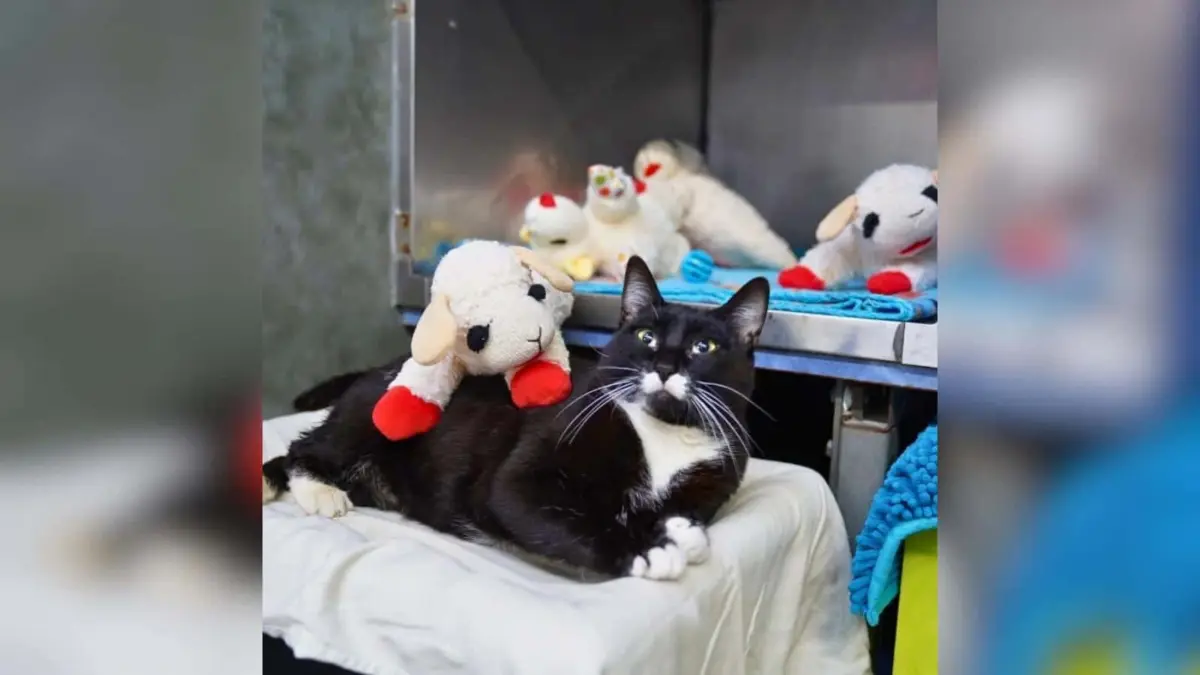
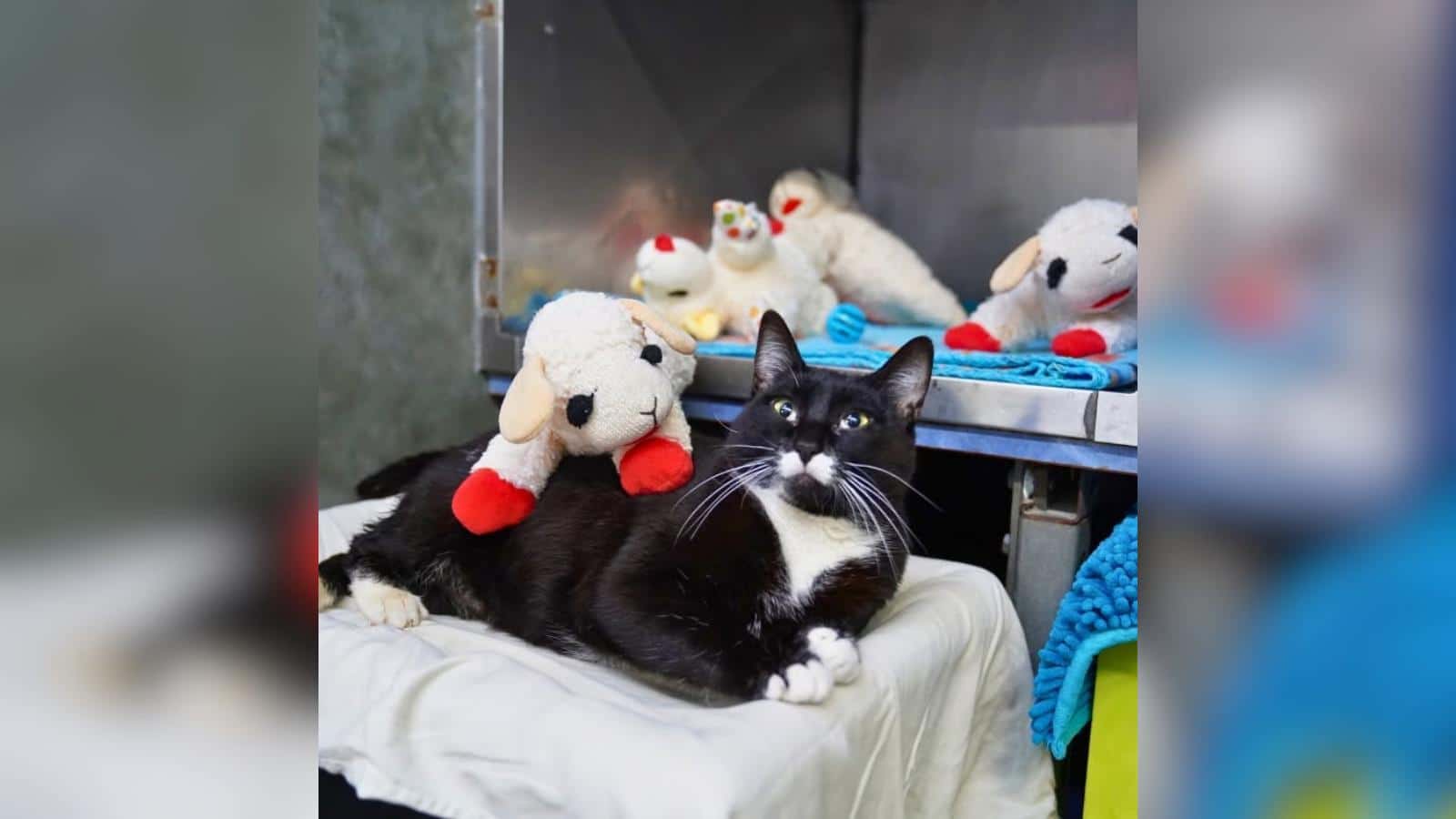
At Austin Pets Alive! in Texas, a resilient feline named Lambinator—affectionately known to staff, volunteers, and admirers worldwide simply as "Lamby"—has become a symbol of both the joys and the structural challenges of animal rescue. While waiting for a permanent family since August 2023, Lamby has curated an eclectic, growing menagerie of ten plush stuffed lambs. These toys offer comfort as she navigates the ups and downs of shelter life.
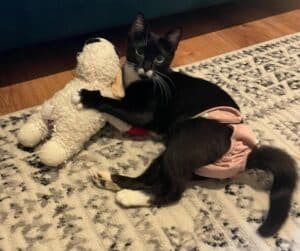
Behind her heartwarming collection of stuffed animals, however, lies a complex reality. Lamby is a special-needs cat. Due to a previous tail-pull injury, she suffers from permanent incontinence, requiring daily diaper changes and human assistance to empty her bladder. This specific medical requirement, coupled with the systemic overcrowding facing modern animal shelters, has stretched her stay far beyond the typical duration.
Despite the challenges of shelter life—including temporary stints in foster homes—Lamby’s spirit remains unyielding. Far from being a timid or reclusive animal, she is known as an enthusiastic greeter who eagerly welcomes strangers, scales shoulders to observe her environment, and coexists peacefully with children, dogs, and other cats. This in-depth report examines Lamby’s timeline at Austin Pets Alive!, the medical nuances of tail-pull injuries in felines, the broader challenges facing special-needs animal adoption, and the ongoing efforts to secure her a permanent home.
Detailed Chronology: The Journey of Lambinator
Arrival and the First Lamb (August 2023)
Lamby’s journey at Austin Pets Alive! began in August 2023. Arriving with a history that included a traumatic tail-pull injury, she required immediate medical evaluation and stabilization. Tail-pull injuries are notoriously severe in felines, often stretching or tearing the delicate nerve bundles running through the caudal vertebrae and pelvic canal. For Lamby, this trauma resulted in permanent neurogenic bladder and bowel dysfunction.
Despite the clinical environment and the physical adjustments required by her condition, Lamby quickly established a distinct personality. It was during her early weeks at the facility that staff noticed her unusual affinity for a small, plush lamb toy. What began as a standard comfort item quickly escalated into a preferred companion.
The Expanding Menagerie (Late 2023 – 2024)
As months passed and potential adopters walked past her enclosure, Lamby’s collection of plush lambs steadily grew. Whenever staff or volunteers noticed a new stuffed lamb entering the facility, or whenever donors dropped off specific toys, Lamby was sure to receive one. By late 2024, her collection had reached an impressive ten distinct lambs.
The toys serve a dual purpose in her enclosure. Behaviorally, they provide tactile stimulation and emotional security, mitigating the chronic stress frequently observed in long-term shelter residents. Aesthetically and culturally within the rescue, the collection became a touchstone for staff morale. However, rescue workers remained acutely aware that a growing collection of toys was a bittersweet milestone—each new lamb marked another month spent waiting for a family.
Navigating Foster Care and Shelter Stress (2025 – Present)
Recognizing that prolonged confinement in a cattery environment can degrade a cat’s psychological well-being, the team at Austin Pets Alive! periodically transitioned Lamby into various foster homes. These temporary placements provided brief respites from the hustle and bustle of the main shelter, allowing her to experience domestic routines, expansive living spaces, and targeted human interaction.
Nevertheless, the constant transitions between the shelter and temporary foster environments introduced their own brand of stress. Animal behaviorists note that special-needs cats, in particular, thrive on predictability and routine. The absence of a permanent home has left Lamby in a state of limbo, fueling renewed campaigns by the rescue to find an adopter equipped for long-term specialized care.
To understand Lamby’s unique placement hurdles, one must examine the pathophysiology of tail-pull injuries. These injuries typically occur when a cat’s tail is forcefully pulled—often resulting from vehicular trauma, getting caught in a door, or, tragically, human abuse.
The tail is an extension of the spinal column; pulling it stretches the cauda equina, the bundle of nerves at the base of the spine that controls not only tail movement but also the lower bowels, urinary sphincter, and bladder. When these nerves are permanently damaged, the cat loses voluntary control over elimination.
Management of an incontinent cat requires significant dedication:
Manual Expression: Caregivers must manually compress the cat’s lower abdomen several times a day to empty the bladder completely, preventing dangerous urinary tract infections (UTIs) and toxic backpressure on the kidneys.
Diaper Management: Incontinent cats often wear specialized feline diapers or modified human newborn diapers to manage leakage, requiring frequent changes and skin hygiene maintenance to prevent urine scald.
Veterinary Oversight: Regular urinalyses, monitoring for renal health, and occasional antibiotic regimens are standard protocols for managing neurogenic bladders.
The Adoption Gap for Special-Needs Pets
Lamby’s extended stay is emblematic of a broader crisis in animal sheltering known as the "special-needs adoption gap." According to data from animal welfare organizations, cats and dogs with chronic medical conditions, behavioral quirks, or mobility issues experience stays in shelters that are, on average, two to three times longer than those of healthy, young animals.
While organizations like Austin Pets Alive! provide robust medical support, education, and supplies to adopters willing to take on special-needs pets, the initial psychological barrier for prospective owners remains high. Many potential adopters fear they lack the time, medical knowledge, or financial resilience required to manage conditions like incontinence.
Official Statements and Rescue Insights
The staff at Austin Pets Alive! has been transparent about Lamby’s daily life, her endearing personality, and the urgency of finding her a home. Luis Sanchez, the director of public relations and communications at the rescue, offered candid insight into her situation in interviews with animal welfare media outlets.
"If she’s not adopted soon, our cattery might eventually be completely overflowing with lambs," Sanchez remarked playfully to The Dodo, highlighting both the humor staff find in her collection and the underlying seriousness of her prolonged stay.
Sanchez and his colleagues emphasize that while Lamby’s medical requirements are real, they represent only a fraction of her identity.
"When people visit the cattery, they often expect a special-needs cat to be withdrawn, fragile, or hiding in a corner," rescue volunteers note. "Lamby shatters that stereotype completely. She is the first to march up to the glass or the door, purring loudly, demanding attention, and ready to investigate who has entered her space."
Rescue leadership stresses that Lamby’s compatibility with other animals—including dogs of various sizes and multiple feline housemates—makes her an unusually adaptable companion, provided her human family is willing to commit to her medical schedule.
Personality Profile: Beyond the Medical Chart
While much of Lamby’s narrative focuses on her incontinence and her plush lambs, her day-to-day behavior reveals a rich, charismatic personality that continually captivates shelter staff.
The Greeter and Climber
Unlike cats that view human traffic with suspicion, Lamby treats every visitor as a personal guest. Staff members describe her as an enthusiastic greeter. The moment a familiar face or a prospective adopter approaches her enclosure, she is front and center.
Her physical boundaries do not restrict her acrobatics. Lamby frequently claims human shoulders as her preferred vantage point, perching comfortably while observers walk through the facility. This proclivity for height and closeness demonstrates a high degree of confidence and social motivation.
Water Play and Alternative Toys
While her ten stuffed lambs hold pride of place, Lamby’s play repertoire is surprisingly diverse. She treats almost any object as a potential toy, batting at shadows, chasing crinkle balls, and exploring novel textures.
Unusually for a feline, Lamby also displays a fondness for water. She has been known to investigate and play in shallow tubs of water provided by enrichment staff, splashing and exploring with the curiosity of an adolescent kitten. This playful resilience underscores how little her physical challenges impact her zest for exploration.
Future Outlook: The Path Ahead for Lamby
As Lamby’s tenure at Austin Pets Alive! crosses significant milestones, the focus remains firmly on education, community outreach, and targeted matching with an adopter who understands the realities of living with an incontinent pet.
Educational Campaigns and Outreach
To bridge the adoption gap, organizations like Austin Pets Alive! increasingly rely on digital media, educational videos, and detailed care tutorials. By demystifying procedures like manual bladder expression and demonstrating how simple feline diaper changes become within a daily routine, shelters hope to expand the pool of qualified adopters.
For Lamby, this means showcasing her complete package: the affection, the humor of her growing lamb collection, her social ease with other species, and the manageable nature of her medical routine when handled by a dedicated human.
The Ideal Home Profile
Rescue experts have outlined the characteristics of an ideal household for Lamby:
Dedicated Caregiver: Someone comfortable with or willing to learn the techniques of managing a neurogenic bladder, including regular expression and diaper changes.
Stable Environment: A home with predictable routines where Lamby can transition smoothly out of the shelter system and establish her final territory.
Social Companionship: Because Lamby enjoys the company of other cats, cat-friendly dogs, and children, she can integrate seamlessly into a multi-pet, bustling household—provided her human caregivers remain mindful of her medical schedule.
Conclusion
Lamby’s story is far from a standard shelter narrative. It is a complex portrait of an animal marked by physical trauma yet defined entirely by her irrepressible spirit. While her ten stuffed lambs provide undeniable comfort against the backdrop of shelter life, they are ultimately placeholders for what she truly deserves: a permanent family, a couch of her own, and a human companion to share her daily adventures. As Austin Pets Alive! continues its search, the global community of animal lovers watches and waits, hoping that Lamby’s next chapter will finally close the book on her time in rescue and open a new one filled with lasting love.