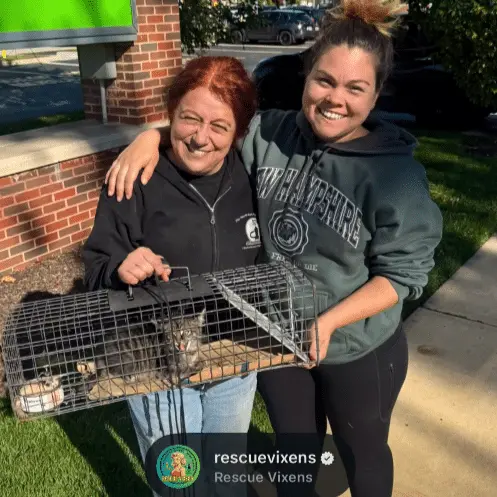

DEER PARK, N.Y. — In an era often dominated by headlines of division and hardship, a single, unassuming storm drain on Deer Park Avenue became the epicenter of a heartwarming testament to community solidarity. What began as a routine distress call transformed into a grueling, five-and-a-half-hour tactical rescue operation involving local animal welfare volunteers, the Suffolk County Police Department, and concerned citizens.
The protagonist of this extraordinary ordeal is a tiny, resilient feline who survived against the odds deep within a subterranean municipal drainage network. Thanks to an unwavering display of professional patience, civic cooperation, and—ironically—a handful of fast-food poultry, the kitten was successfully extracted. Today, she bears a moniker as memorable as her rescue: "Chicken Nugget."
This report provides an in-depth examination of the operation, detailing the chronological progression of the rescue, the logistical hurdles faced by first responders, the broader implications for local animal welfare infrastructure, and the administrative steps required to transition a feral-adjacent street kitten into a domestic adoption candidate.
Executive Overview
On a crisp morning in Deer Park, New York, the quiet routine of a suburban commercial corridor was interrupted by the persistent, faint cries of an animal in distress. Positioned near a local McDonald’s franchise on Deer Park Avenue, a subterranean storm drain was housing an unexpected occupant: a terrified, microscopic kitten trapped beneath heavy iron municipal grates.
The stakes were high. Urban drainage systems present a multitude of lethal hazards to naive wildlife and domestic strays alike, ranging from sudden flash flooding and toxic chemical runoff to sheer starvation and fatal hypothermia. Recognizing the urgency of the situation, a decentralized network of Good Samaritans initiated what would become a multi-hour tactical recovery mission.
Key Metrics of the Operation
- Total Duration: Approximately 5.5 hours of active field operations.
- Primary Responding Agencies: Suffolk County Police Department and North Fork Country Kids Animal Rescue.
- Key Personnel: Virginia Scudder (Founder, North Fork Country Kids Animal Rescue), alongside community volunteers Gina, Sabrina, and various responding patrol officers.
- Extraction Catalyst: Commercial chicken nuggets utilized as high-value olfactory bait.
- Current Status: Recovering in professional veterinary care, slated for foster placement and subsequent adoption.
Detailed Chronology: Anatomy of a Subterranean Rescue
Phase 1: Initial Discovery and Overnight Monitoring
The crisis began the evening prior to the formal extraction. Local residents, including a Good Samaritan identified by rescuers only as Gina, first detected the faint meows echoing from the concrete depths of the Deer Park Avenue drainage system. Recognizing that standard civilian measures were inadequate to breach the infrastructure or safely extract a panicked animal in the dark, local stakeholders initiated contact with animal welfare advocates and municipal authorities.
Phase 2: Deployment and Tactical Assessment
At approximately 8:30 a.m., Virginia Scudder, founder of North Fork Country Kids Animal Rescue, arrived on the scene to take command of the tactical recovery. Scudder’s arrival marked a transition from informal concern to professional wildlife and domestic rescue protocols. Upon assessing the site, it became immediately clear that standard retrieval methods—such as simply reaching into the cavity or using voice calls—would fail. The kitten was wedged deep within the corrugated piping and masonry of the subterranean network, paralyzed by fear and sensory overload.
[Initial Detection (Night Prior)]
       │
       ▼
[On-Site Assessment & Police Arrival (08:30 AM)]
       │
       ▼
[Infrastructure Modification (Removal of Iron Grate)]
       │
       ▼
[Deployment of Specialized Trapping Gear & Patience Protocol]
       │
       ▼
[Olfactory Lure Deployment (Chicken Nuggets)]
       │
       ▼
[Successful Extraction & Veterinary Transit]
Phase 3: Infrastructural Intervention with Law Enforcement
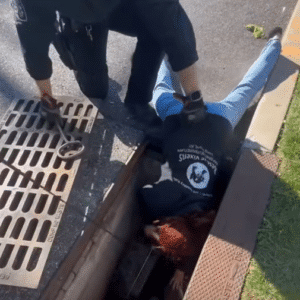
A successful rescue required modifying the environment to grant rescuers physical access to the space. The Suffolk County Police Department played an instrumental role in this phase. Responding officers utilized specialized heavy-duty tools to safely unbolt and lift the immense iron drainage grating that sealed the subterranean vault.
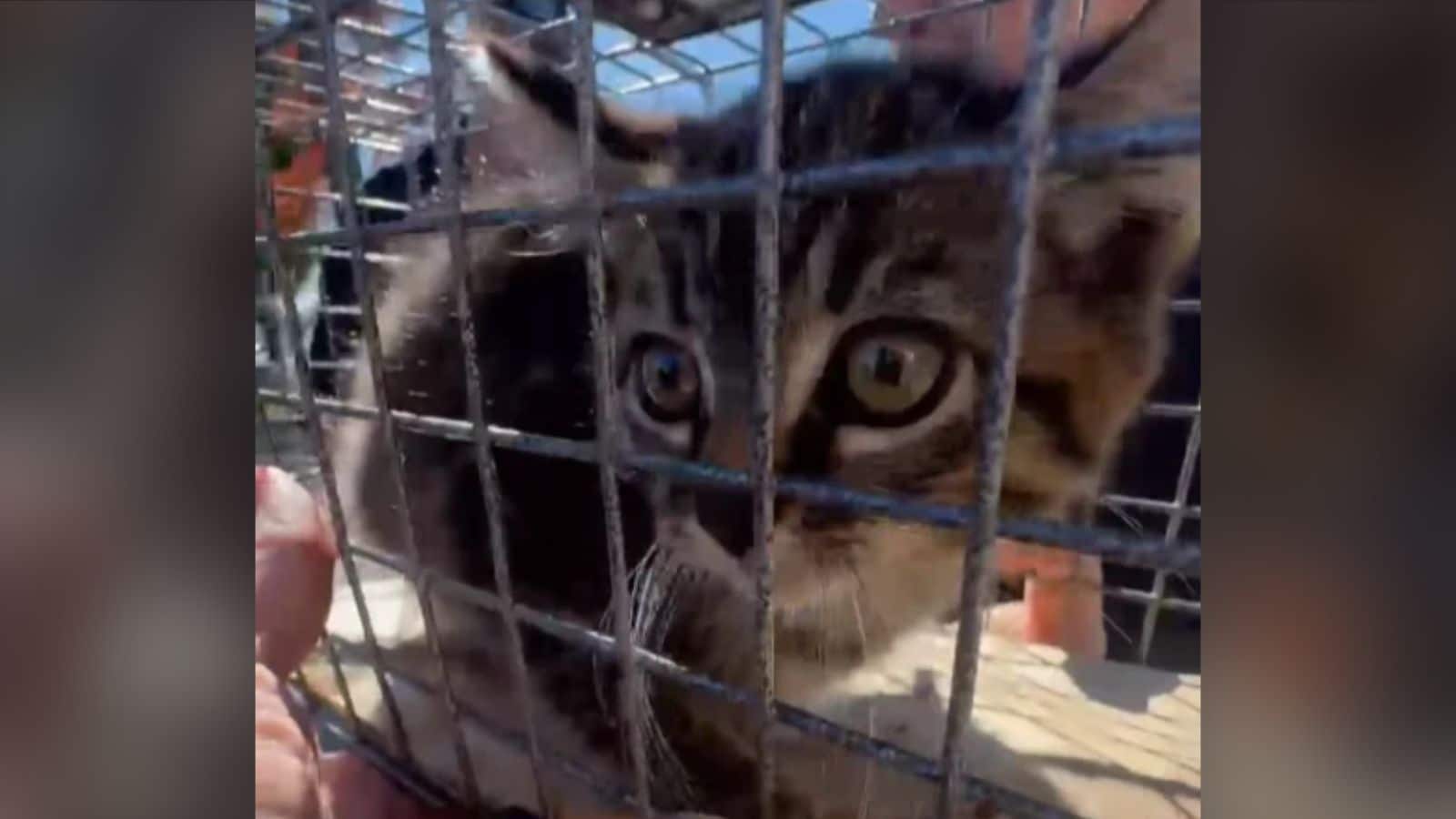
With the primary barrier removed, rescuers gained direct vertical line-of-sight into the catch basin. However, dropping directly into the drain was structurally impossible and risked further terrifying the feline, potentially driving her deeper into inaccessible municipal outflow pipes. Instead, the team lowered a specialized, baited kitten trap designed to secure the animal without inflicting physical harm.
Phase 4: The War of Attrition
What followed was a meticulous, high-stakes waiting game. For over five hours, Scudder, alongside volunteers like Sabrina and supportive local police personnel, maintained a vigil by the open grate.
Feline psychology in rescue scenarios dictates that panicked animals will instinctively retreat from human presence, making time the rescuers’ greatest ally—and adversary. As the hours ticked by, the ambient temperature inside the concrete basin, combined with the stress of the environment, weighed heavily on the tiny cat. The rescue team had to balance the need for speed with the absolute necessity of avoiding erratic movements that could prompt the kitten to bolt further into the drainage matrix.
Phase 5: The Fast-Food Breakthrough
By late morning, conventional bait options inside the trap had failed to yield definitive results. Recognizing that the kitten’s proximity to a fast-food establishment might mean she was accustomed to specific aromas—or simply responding to the intense, protein-rich scent profiles characteristic of commercial fried foods—rescuers engineered an unorthodox solution.
Drawing upon resources readily available at the adjacent McDonald’s, the team deployed fresh chicken nuggets near and inside the trap. The high-fat, high-sodium aroma proved utterly irresistible to the starving, exhausted animal.
Within a short window following the introduction of the poultry-based lure, the kitten abandoned her defensive posture, crept toward the scent, and entered the secure zone of the trap. Footage captured at the scene shows Scudder leaning deep into the cleared access point, gently lifting the carrier containing the triumphant—and bewildered—feline into the sunlight.
Supporting Context & Metrics: The Reality of Urban Animal Rescues
Incidents like the Deer Park storm drain rescue highlight a recurring, resource-intensive challenge for suburban municipalities and non-profit animal welfare groups across New York State.
Infrastructure Hazards for Domestic Animals
Storm drains, culverts, and municipal catch basins are engineered for water diversion, not animal habitation. Yet, feral cat colonies and abandoned litters frequently utilize these systems for shelter against predators and harsh weather. According to regional animal control data, subterranean rescues account for a notable percentage of high-complexity emergency calls handled by volunteer rescue groups. These operations require specialized equipment, including:
- Heavy-duty pry bars and lifting magnets for municipal grates.
- Industrial endoscopes and fiber-optic cameras for locating animals in dark pipes.
- Remote-triggered drop traps and humane live-release cages.
- Personal protective equipment (PPE) for dealing with confined spaces and potential biohazards.
The Financial Burden on Volunteer Organizations
While viral social media moments—such as a kitten named after chicken nuggets—capture the public’s imagination, they underscore a stark financial reality. North Fork Country Kids Animal Rescue operates primarily on donations, grants, and the tireless dedication of unpaid volunteers.
Emergency interventions invariably trigger a cascade of unbudgeted operational expenses:
- Immediate Medical Triage: Emergency physical exams, blood panels, and parasite treatments.
- Nutritional Support: Specialized kitten milk replacers, high-calorie transition diets, and veterinary-grade supplements.
- Preventative Care: Vaccinations, microchipping, and eventual spay/neuter procedures.
Organization leadership has repeatedly emphasized that community support remains the absolute lifeblood of their mission, allowing them to absorb the sudden costs of high-complexity rescues without compromising their ongoing shelter operations.
Official Statements and Community Gratitude
The successful conclusion of Operation Chicken Nugget drew praise from across the Deer Park community, highlighting the seamless cooperation between civic institutions and grassroots animal welfare networks.
In a comprehensive public statement released via social media, North Fork Country Kids Animal Rescue extended formal thanks to the multifaceted coalition that made the save possible:
"This was a true community effort that required immense patience, determination, and teamwork. We want to express our deepest gratitude to the Suffolk County Police Department for their rapid response and critical assistance in lifting the heavy drain grates. To Gina, who spent the previous night keeping watch and trying to help; to Sabrina; and to all the wonderful citizens who stopped their day to offer support—thank you. It takes a village to save a life."
Local law enforcement representatives echoed these sentiments, noting that while public safety and crime prevention remain the primary duties of the Suffolk County Police Department, community policing inherently includes safeguarding the most vulnerable residents of Suffolk County—two-legged and four-legged alike.
Future Outlook: From Storm Drain to Forever Home
With her subterranean ordeal firmly behind her, "Chicken Nugget" has embarked on the next, much brighter phase of her life lifecycle.
Veterinary Triage and Quarantine
Immediately following her extraction, the kitten was transferred from the field to a partner veterinary clinic for a comprehensive medical evaluation. Standard protocol for animals rescued from industrial or municipal environments dictates rigorous screening for:
- Upper respiratory infections (URIs), common in damp, confined spaces.
- External parasites (fleas, ticks, ear mites) and internal worms.
- Dehydration, malnutrition, and thermal trauma (hypothermia or heat exhaustion).
The Foster and Adoption Pipeline
Once the veterinary team signs off on her overall health, Chicken Nugget will transition directly into the foster care network managed by North Fork Country Kids Animal Rescue.
Foster homes play a critical role in the rehabilitation of rescued strays. By placing the kitten in a domestic, low-stress environment with experienced foster parents, the organization ensures that she is properly socialized to human touch, household noises, and domestic routines. This crucial window of socialization transforms a feral-minded street survivor into an affectionate, confident pet.
Once she reaches the appropriate developmental milestones—including attaining sufficient body weight and completing her initial round of core immunizations—Chicken Nugget will be officially listed as available for adoption. Given the widespread public interest generated by her dramatic rescue, adoption coordinators anticipate robust local interest from families eager to offer the famous feline a permanent, loving home.
A Lasting Lesson in Perseverance
As communities reflect on the five-and-a-half-hour vigil on Deer Park Avenue, the story of Chicken Nugget serves as an enduring reminder of the power of persistence. It demonstrates that no life is too small to mobilize an entire community, and that sometimes, a simple fast-food snack can bridge the gap between despair and a bright, secure future.