The global agricultural technology and crop science sectors are undergoing a profound period of transformation. Driven by converging pressures—including shifting climate realities, stringent European regulatory environments, volatile input costs, and evolving consumer nutritional requirements—agribusinesses are radically rethinking how they operate.
Recent developments highlight a systemic pivot across the industry. Major legacy players are executing high-stakes corporate realignments to optimize agility, while venture capitalists and agtech founders are re-evaluating long-held assumptions about scaling and capital efficiency. Simultaneously, artificial intelligence and genomic tools are moving past the hype cycle, tackling critical bottlenecks in biological validation and disease resistance.
This comprehensive report examines the structural shifts shaping modern agriculture, focusing on six critical areas: the ongoing debate over crop nutritional density, major corporate restructuring among agribusiness giants, breakthroughs recognized in global innovation lists, shifting philosophies within venture capital, regulatory evolution surrounding gene editing, and the expanding intersection of AI and genomic discovery.
Detailed Chronology of Industry Shifts
October 1: The Formal Realignment of Corteva and Vylor
In a landmark move exactly one year after its initial announcement, agricultural supplier Corteva completed its corporate split, formally spinning out its seeds and genetics division into a distinct, independent entity named Vylor. Former Corteva CEO Chuck Magro initially signaled the structural division due to diverging market opportunities between seed genetics and crop protection.
Following the split, newly appointed Corteva CEO Luke Kissam emphasized a renewed focus on operational agility. Meanwhile, Vylor’s stock finished its inaugural trading day on a positive note, signaling market approval for specialized, focused corporate strategies designed to navigate the modern agricultural landscape.
October 5–6: Genomic AI Solutions and Sub-Compact Innovations
Hamburg-based bioinformatics firm Soilytix introduced a suite of genomic AI models designed to tackle the biologicals industry’s most pressing operational bottleneck: the validation trap. While AI has drastically increased the volume of potential crop-protection compounds discovered from soil DNA, running every candidate through physical laboratory and field trials remains prohibitively expensive. Soilytix’s models aim to pre-screen candidates digitally to ensure only viable compounds advance.
Concurrently, equipment manufacturer Kubota Tractor Corporation reinforced its commitment to the North American property management market by unveiling five new models across three trims within its BX90 sub-compact tractor series. This expansion builds upon more than 25 years of hybrid garden-and-utility tractor design.
October 8–13: Disease Resistance AI and Agrochemical Litigation
Heritable Agriculture announced a strategic partnership with Japanese food manufacturing and agribusiness giant Kagome. The collaboration leverages Heritable’s AI-powered genomic analysis platform to identify specific genetic markers for disease resistance and susceptibility in tomatoes, allowing Kagome to integrate these traits into commercial breeding programs.
In regulatory and legal developments, Syngenta faced renewed scrutiny following a lawsuit filed in California by Wisner Baum LLP on behalf of resident Apostolos Panayiotou. The plaintiff alleges that decades of handling and spraying atrazine-based herbicides contributed to his diagnosis of non-Hodgkin lymphoma, highlighting ongoing flashpoints over chemical crop protection safety.
October 15–21: European Biotech Horizons and the Death of the "Unicorn" Fantasy
During a webinar releasing a new agricultural competitiveness report by Oxford Economics, Bayer’s head of public affairs, Matthias Berninger, suggested that the increasing acceptance of New Genomic Techniques (NGTs)—commonly known as gene editing—in the UK and European Union could soften long-standing public resistance to broader agricultural biotechnology, including genetically modified (GM) crops.
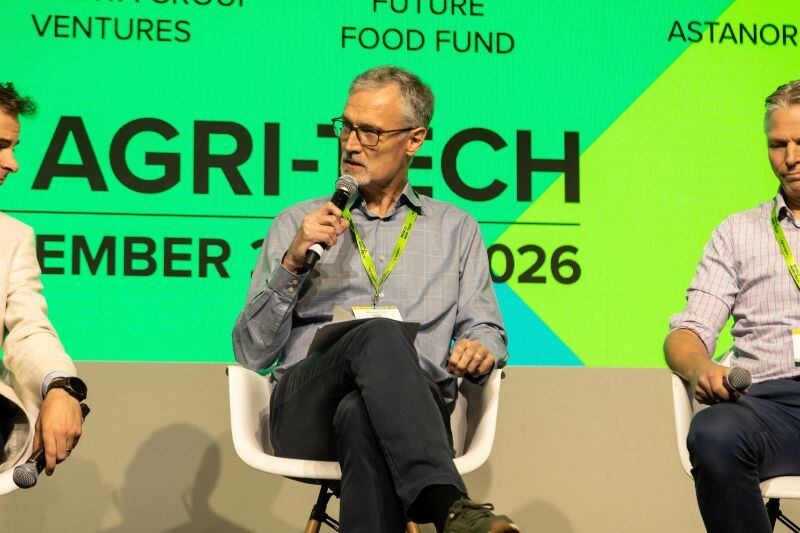
Rounding out the month at World Agri-Tech London, Syngenta Ventures Managing Director Michael Lee delivered a blunt message to the startup ecosystem: agtech must abandon the "unicorn fantasy." Lee argued that venture capital models built around software-style, billion-dollar valuations distort founder behavior and fail to align with the hardware- and biology-heavy realities of agricultural exits.
Supporting Context & Metrics: Nutrition, Regulation, and Market Realities
The "Hidden Hunger" Debate: Are Crops Losing Nutrients?
A comprehensive report released by Deep Science Ventures (DSV) reignited debates over the nutritional composition of modern produce. The report warns that decades of selective breeding centered purely on maximizing crop yield—compounded by climate change and soil degradation—may have significantly reduced the concentration of essential micronutrients in staple foods since the 1960s.
However, the agricultural community remains divided on how to contextualize these findings. Critics of the narrative point out that many populations already suffer from insufficient dietary intake of basic fruits, vegetables, and fiber. Consequently, agricultural scientists and nutritionists are debating whether raising nutrient density through advanced breeding is sufficient, or if the primary intervention required is simply encouraging broader consumption of fresh produce.
Bayer’s Insights on European Farmer Demands
Bayer’s recent research initiative—which surveyed approximately 90 farmers across eight European markets alongside economic modeling by Oxford Economics—dispels the stereotype of European farmers as reluctant technology adopters. Key findings from the report underscore a sector squeezed by shrinking profit margins, volatile weather patterns, and a shrinking chemical crop protection toolbox.
The data highlights surging future demand for:
Climate-resilient crop genetics capable of withstanding extreme weather events.
Precision agriculture tools, automation, and AI-driven agronomic decision support systems.
Biological crop protection alternatives to offset regulatory phase-outs of traditional chemistries.
Official Statements and Industry Perspectives
The convergence of biological innovation and corporate restructuring has prompted prominent industry leaders to articulate clear visions for the future of agriculture:
Luke Kissam, CEO of Corteva: "This is a new day for Corteva, and we couldn’t be more excited as we move forward with greater focus, agility and a renewed commitment to innovation and operational excellence. As the challenges facing agriculture continue to evolve, we’re ready to meet the needs of the future with the industry’s best people, portfolio and pipeline — advancing safe, effective and sustainable solutions that deliver for farmers, our channel partners and our shareholders."
Michael Lee, Managing Director at Syngenta Ventures: "Not everything is venture-backable, and that’s particularly true in agtech… Start-ups need to stop building for billion-dollar exits and start building for realistic acquisition outcomes."
Tim Rajakumar, Co-founder and CSO of Soilytix: "One of the biggest problems we hear is the validation bottleneck. AI is producing very large numbers of potentially testable candidates. But if they all still have to pass through expensive laboratory, greenhouse and field experiments, simply generating more candidates can make the bottleneck worse."
Matthias Berninger, Head of Public Affairs at Bayer: "I think we need to prove the difference we can make with the new breeding technologies. As we demonstrate the benefits of new breeding technologies, I think the conversation on biotechnology will soften."
Future Outlook: Navigating the Next Decade of AgTech
As the agricultural sector looks toward the remainder of the decade and beyond, several defining trends will dictate commercial success and global food security:
Rationalized Venture Capital: The era of inflated agtech valuations is giving way to disciplined, fundamentals-driven investing. Start-ups that align their operational milestones with realistic corporate acquisition pathways will capture sustainable funding.
Regulatory Harmonization in Biotech: The willingness of the UK and EU to adopt product-based regulatory frameworks for gene editing (NGTs) marks a turning point. If companies like Bayer and Corteva can successfully commercialize climate-resilient and nutrient-dense varieties, public perception surrounding agricultural biotechnology may undergo a lasting evolution.
AI-Driven Biological Pipelines: Overcoming the validation bottleneck through platforms like Soilytix’s genomic models and Heritable’s disease-resistance discovery tools will determine how rapidly biological crop protection products can scale from digital discovery to commercial availability.
Operational Specialization: Corporate actions like the Corteva-Vylor split demonstrate that market divergence between seed genetics and chemical protection requires laser-focused corporate governance. Expect other multinational agribusinesses to evaluate similar portfolio streamlining to maximize responsiveness to regional farming demands.
Ultimately, the intersection of genomics, artificial intelligence, and specialized corporate structures provides a clear roadmap for addressing modern agricultural pressures. By focusing on practical innovations and realistic capital deployment, the global agtech sector is positioning itself to build a more resilient, productive, and sustainable food system.