
Executive Overview
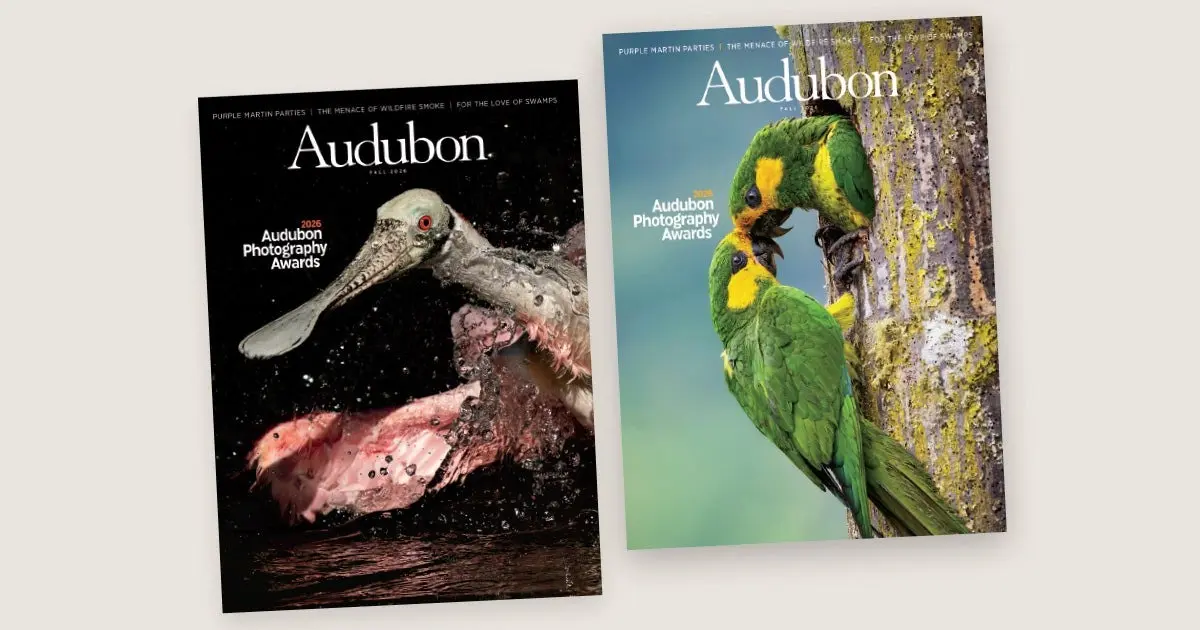
In the late 1990s, the Yellow-eared Parrot hovered on the precipice of oblivion. Fewer than 100 individuals were known to exist globally, their survival strangled by the systematic destruction of the towering wax palms they called home. For most people, encountering such an animal was an absolute impossibility—a ghost species destined for the history books. Yet, flash forward to the present day, and a single, arresting photograph can bring the vibrant plumage of the Yellow-eared Parrot, or the iridescent pink of a bathing Roseate Spoonbill, directly into the living rooms of millions.
Visual storytelling has transitioned from a passive medium of appreciation into an aggressive, indispensable tool for ecological defense. As detailed in the Fall 2026 issue of Audubon, the winners of the annual photography awards and accompanying investigative features do not merely capture beauty; they serve as a profound call to action. From the remote, imperiled nurseries of the Arctic to the vanishing old-growth cypress swamps of the American South, imagery is shaping a new constituency for conservation.
This article explores how photographers, artists, and data visualizers are leveraging the power of imagery to combat existential threats to global birdlife. By bridging the gap between unseen wildernesses and urban populations, these visual campaigns are exposing the devastating impacts of habitat destruction, artificial light, window collisions, and the toxic pall of wildfire smoke. Ultimately, this movement demonstrates that to save a species, humanity must first be forced to truly look at it.
Detailed Chronology: The Evolution of Conservation Visuals
The integration of visual media into environmental activism has a rich, albeit shifting, history. Understanding how modern photography drives conservation requires tracing its evolution from artistic documentation to targeted, impact-driven advocacy.
Phase One: Romantic Documentation (Late 19th to Mid-20th Century)
In the early days of wildlife photography, heavy equipment and primitive technology limited practitioners to rare, lucky snapshots. Pioneers like John James Audubon painted birds with anatomical precision, but photography soon took over the burden of proof. Early nature photography focused primarily on discovery and romanticism—proving that a species existed and cataloging its physical splendor. While effective at sparking general public interest, these images rarely tied aesthetics to systemic policy change or immediate threat mitigation.
Phase Two: The Rise of Ecosystem-Level Photography (Late 20th Century)
As environmental degradation accelerated in the latter half of the 20th century, photographers realized that picturing a single bird on a pristine branch was no longer enough. The backdrop had to change. Photographers began widening their lenses to reveal the encroaching pressures of human development, agriculture, and industry. The bird was no longer just an isolated subject; it became an indicator species representing the health of an entire biome.
Phase Three: The Modern Era of Targeted Advocacy and Data-Art (Present)
Today, visual conservation operates on multiple fronts simultaneously. It is no longer restricted to traditional wildlife photography. As highlighted in the 2026 Audubon awards and associated projects, the modern era combines:
- Targeted Conservation Prizes: Images specifically chosen to highlight species on the brink, directly supporting recovery initiatives like those protecting the Yellow-eared Parrot.
- Multi-Year Expeditions: Photographers like Gerrit Vyn dedicating consecutive years to single, remote regions (such as Alaska’s Teshekpuk Lake) to establish deep emotional connections with readers.
- Crowdsourced Art and DIY Memorials: Utilizing scrap fabric and origami to quantify mass mortality events, transforming abstract statistics into visceral, human-scale experiences.
- Data-Driven Collages: Merging traditional photojournalism with advanced data visualization to capture invisible, diffuse threats like wildfire smoke and air pollution.
Supporting Context & Metrics: The Scale of the Crisis
Behind every breathtaking photograph lies a sobering statistical reality. The visual projects featured in Audubon are direct responses to accelerating ecological emergencies across continents.
Habitat Loss and the Southern Swamps
Consider the plight of the American South’s old-growth cypress forests. Historically, these ancient ecosystems spanned an estimated 40 million acres, providing vital nesting grounds for countless species, including the striking Prothonotary Warbler, alongside an array of alligators and snakes. Today, centuries of intensive logging have reduced these majestic forests to a meager 12,000 acres—a catastrophic 99.97% reduction. Conservation photographer Mac Stone’s work aims to make the public feel the gravity of this near-total loss before the remaining fragments vanish entirely.
The Urban Threat: Building Collisions
While wilderness destruction claims vast habitats, urban environments present an equally lethal hazard. Glass facades and artificial nighttime lighting kill hundreds of millions of migratory birds annually through fatal building collisions. To conceptualize a crisis defined by countless individual tragedies, artists have stepped in to translate data into physical form.
- The Scrap Fabric Project: Artist Holly Greenberg mobilized hundreds of community members to meticulously shape fallen birds out of scrap fabric, creating a tangible representation of the scale of urban bird strikes.
- The Aviary Initiative: Demonstrating the generational reach of this crisis, 14-year-old Miles Wu crafted intricate origami collages representing birds killed after colliding with New York City infrastructure.
The Asphyxiation of the Skies: Wildfires and Air Pollution
Perhaps the most complex visual challenge facing modern conservationists is depicting an invisible or diffuse threat. As deputy editor Jessica Leber explored in investigations regarding wildfire smoke, global climate change has supercharged fire seasons, releasing unprecedented particulate matter into the atmosphere. This air pollution poses a dual health threat to both human communities and vulnerable bird populations. Because smoke is fluid, hazy, and constantly shifting, it resists traditional framing. To overcome this, data visualizations designer Julie Rossman, supported by photo editor Lucia Vazquez, engineered multi-layered collage artworks. By fusing data analytics with emotive photography, they successfully transported readers into a smog-choked future that is rapidly becoming our present reality.
Official Statements and Expert Perspectives
The intersection of art, science, and journalism relies heavily on the testimony of those on the front lines of conservation and visual storytelling. Their insights illuminate why these images matter and how they shift public policy and perception.
Regarding the psychological impact of place-based imagery, photographer Gerrit Vyn emphasizes the necessity of bearing witness to remote ecosystems. Reflecting on his multi-year documentation of Teshekpuk Lake in the Arctic, Vyn notes that his goal is to transport Audubon readers directly to:
“…the remote and extraordinary Arctic nursery that sustains so much of the birdlife they love.”
Vyn’s ongoing presence in the region acts as a visual anchor for a landscape that remains vital to global migratory patterns, yet deeply imperiled by resource extraction and a warming climate.
On the subject of the Conservation Prize—established specifically to recognize imagery that drives tangible environmental defense—judges and editors have repeatedly stressed the unique power of the medium. As articulated in the editorial breakdown of the 2026 awards:
“These photos vividly convey in a single snapshot something essential about a bird’s life.”
When photographer Santiago Pérez Rincón widened his lens on the Yellow-eared Parrot to expose the isolated wax palm surrounded by commercial crops, he did not just take a pretty picture; he documented the exact geopolitical and agricultural friction points threatening the species. The image was explicitly captured to spur immediate, localized protection efforts, proving that a frame can act as a political lever.
Furthermore, when confronting diffuse crises like airborne toxins, experts emphasize that traditional reporting is often insufficient. By synthesizing data visualization with photojournalism, creators like Julie Rossman bridge the gap between scientific abstraction and human empathy, proving that visualization is a mandatory language for twenty-first-century environmentalism.
Future Outlook: The Next Horizon for Visual Conservation
As we look toward the remainder of the 2020s and beyond, the role of visual storytelling in bird conservation will undoubtedly expand and adapt. The traditional model—where a reader passively flips through a magazine page—is giving way to immersive, multi-platform advocacy.
The Convergence of Art, Science, and Policy
Future conservation campaigns will increasingly rely on crowdsourced art, youth-led initiatives, and hyper-local visual interventions (such as bird-safe architecture retrofits inspired by fabric and origami memorials). When communities physically craft representations of fallen birds, they forge an emotional contract that abstract statistical reports can never replicate. This grassroots engagement builds the necessary political constituencies to pass municipal bird-friendly building ordinances and enforce stricter habitat protections.
Adapting to Climate Realities
As climate change accelerates habitat shifts and intensifies extreme weather events, visual journalists will face the ongoing challenge of picturing systemic, creeping catastrophes. The pioneering work of merging data visualization with photography—exemplified by investigations into wildfire smoke—will become the gold standard for environmental reporting. Audiences must be shown not only what is currently being lost, but what models predict will vanish if global emissions and land-use policies remain unchecked.
A Shared Responsibility
Ultimately, the message resonating from the pages of Audubon and the broader conservation community is clear: visuals are the bridge between apathy and action. Whether it is a Yellow-eared Parrot reclaiming its native palm, a Roseate Spoonbill catching the prism of a restored wetland, or an origami collage honoring a life lost to a downtown skyscraper, these images demand a response.
Let these visuals transport you—and then, equipped with the knowledge of what these birds desperately need to survive, consider how you can help protect the fragile landscapes that sustain them.