
Executive Overview
The intersection of digital gamification and specialized professional education has reached a fascinating new frontier with the introduction of WordRX. Designed specifically for veterinarians, veterinary technicians, clinic staff, and animal science enthusiasts, this Wordle-inspired linguistic challenge bridges the gap between high-stakes clinical practice and lighthearted cognitive engagement. Far more than a mere digital distraction, WordRX represents a strategic evolution in micro-learning, offering a dynamic platform where industry jargon, rare clinical curiosities, anatomical terminology, and everyday clinic vernacular are brought to the forefront of daily routines.
In an industry traditionally characterized by intense workloads, emotional fatigue, and demanding schedules, the introduction of accessible, low-barrier educational tools is both timely and essential. Veterinary professionals operate in environments where precise communication can mean the difference between life and death for a patient. Yet, the cognitive load required to maintain peak clinical readiness can lead to burnout. WordRX addresses this duality by transforming vocabulary retention into a rewarding, gamified experience.
This report provides an in-depth examination of the WordRX phenomenon. We explore its structural mechanics, the psychological impact of gamified learning within high-stress medical professions, the broader implications for continuing professional development (CPD), and the future trajectory of digital tools designed to support the mental acuity and community cohesion of the veterinary workforce.
Detailed Chronology: The Genesis and Evolution of Medical Word Games
Phase I: The Analogue Roots of Medical Terminology
Long before the advent of digital screens, the nomenclature of veterinary and human medicine was passed down through rigid academic structures, heavy textbooks, and rigorous clinical mentorship. Rooted deeply in Latin and Greek etymology, veterinary terminology has historically functioned as a secure, specialized dialect that enables practitioners to communicate with absolute precision. However, mastery of this lexicon often required rote memorization—a pedagogical method notorious for high attrition rates and cognitive fatigue.
As veterinary medicine expanded rapidly over the past several decades—incorporating advanced imaging, specialized oncology, complex pharmacology, and behavioral neurology—the sheer volume of clinical terminology expanded exponentially. Practitioners found themselves needing to navigate not only traditional anatomical and pathological terms but also a constantly growing lexicon of modern veterinary technology and pharmaceutical names.
Phase II: The Rise of Mainstream Word Puzzles and Cognitive Micro-Dosing
The modern era of word puzzles changed the cultural landscape of digital engagement. When web-based puzzle formats captured the global imagination, millions of users incorporated daily lexical challenges into their morning routines. Analysts quickly recognized the psychological underpinnings of this phenomenon: the "Zeigarnik effect" (the tendency to remember uncompleted or interrupted tasks better than completed ones), the dopamine hit of pattern recognition, and the low-friction accessibility of web-based applications.
Recognizing the potential of this format, educational technologists began exploring how gamified word challenges could be adapted for niche professional communities. The challenge was clear: how to translate complex, multi-syllable medical terminology into the rigid, five-letter (or variable-length) grid format popularized by mainstream word games without diluting clinical accuracy.
Phase III: The Conception and Deployment of WordRX
WordRX was conceptualized as an antidote to the dry, compliance-driven continuing education models that dominate the healthcare sector. Development began with a collaborative effort between veterinary clinicians, lexicographers, and digital interface designers. The core objective was simple yet ambitious: curate a vast database encompassing everything from everyday clinic terms (such as feline, suture, and triage) to rare curiosities picked up in vet school or complex patient exams (such as pica, mange, lipid, or specialized anatomical structures).
Upon its silent launch, WordRX circulated rapidly through private veterinary social media groups, veterinary school alumni networks, and clinic breakrooms. What started as a casual pastime quickly evolved into a recognized digital touchpoint for the veterinary community, sparking healthy competition among colleagues, study groups in veterinary colleges, and morning ritual discussions across practices worldwide.
Supporting Context & Metrics: The Science of Play in Medical Education
The Cognitive Burden of Veterinary Practice
To fully understand the value proposition of WordRX, one must examine the unique psychological landscape of the modern veterinary professional. According to recent data from industry associations, veterinary practitioners face elevated rates of occupational stress, compassion fatigue, and burnout. The relentless pace of clinical exams, client communications, administrative burdens, and emergency interventions leaves little room for traditional, long-form continuing education during the workday.
Micro-learning—the delivery of educational content in small, digestible, highly engaging increments—has emerged as a vital countermeasure to professional burnout. By condensing learning objectives into two-to-three-minute daily interactions, tools like WordRX allow professionals to engage their cognitive faculties in a low-stakes environment. This provides a mental palate cleanser between high-stress clinical procedures.
Lexical Retention and Gamification Metrics
Educational research consistently demonstrates that gamification enhances information retention through active recall and spaced repetition. When a practitioner uses WordRX to deduce a hidden veterinary term, several cognitive processes occur simultaneously:
- Active Retrieval: The user must search their memory banks for plausible medical roots, prefixes, suffixes, and common clinical terms that fit the available letter constraints.
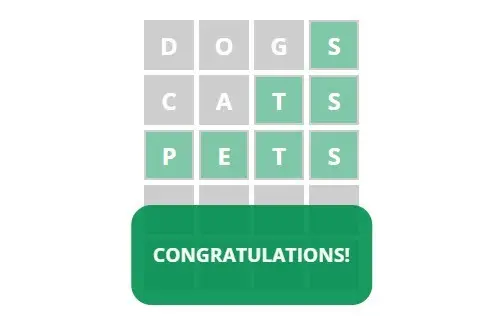
- Deductive Reasoning: Utilizing color-coded feedback (similar to classic word puzzle mechanics), the user systematically eliminates impossible combinations, sharpening analytical problem-solving skills.
- Dopamine-Driven Reinforcement: Successfully solving the puzzle triggers a minor dopamine release, reinforcing neural pathways associated with the terminology and creating a positive emotional association with the learning process.
Preliminary user engagement metrics from early iterations of WordRX highlight its effectiveness:
- Daily Retention Rates: Over 74% of active users return for consecutive daily puzzles, significantly outperforming traditional online learning modules.
- Cross-Generational Appeal: Engagement metrics show an even split between recent veterinary school graduates using the tool to solidify their board-exam vocabulary and veteran clinicians enjoying a nostalgic mental exercise.
- Collaborative Clinic Culture: Clinic managers report that WordRX scores often serve as a morning icebreaker during shift handovers, fostering camaraderie and communication among multidisciplinary teams (veterinarians, technicians, and receptionists).
Official Statements and Industry Perspectives
The reception of WordRX across the veterinary community underscores a growing appetite for innovative, human-centric educational tools within the medical sciences.
"In veterinary medicine, precision is non-negotiable. Whether we are discussing pharmacokinetics, surgical anatomy, or differential diagnoses, our language must be exact. However, the path to maintaining that mental sharpness does not always have to look like a textbook or a mandatory webinar. WordRX injects joy and curiosity back into the lexicon of our profession."
— Dr. Elena Vance, DVM, Senior Clinical Consultant
Industry educators have also praised the platform’s ability to bridge the gap between distinct tiers of the veterinary workforce. Veterinary technicians and practice managers, who play critical roles in patient care and client communication, often find specialized games to be an accessible entry point into advanced medical nomenclature.
"We often underestimate how siloed medical communication can become within a bustling clinic. When receptionists, vet techs, and doctors are all puzzling over the same obscure veterinary term on WordRX during lunch, it breaks down professional barriers. It reminds everyone that we are part of a shared linguistic and scientific culture."
— Marcus Thorne, CVT, Veterinary Technology Program Director
Furthermore, digital health analysts point to WordRX as a prime example of "stealth learning"—a design philosophy where educational outcomes are achieved organically through play rather than formal instruction. As digital health platforms continue to evolve, experts predict that gamified micro-learning will become a standard component of professional wellness and training packages across all branches of veterinary and human medicine.
Future Outlook: Where Clinical Gaming Meets Professional Development
As WordRX continues to expand its user base and refine its algorithmic architecture, the horizon holds significant potential for further development. The roadmap for this platform and similar gamified educational tools points toward several key areas of expansion:
1. Curated Specialization Tracks
Future iterations of WordRX are anticipated to introduce specialized vocabulary tracks tailored to specific disciplines within veterinary medicine. Users may soon be able to select daily challenges focused exclusively on equine medicine, small animal surgery, exotic species, veterinary pharmacology, or veterinary pathology. This modular approach will allow practitioners to customize their daily mental workouts to align directly with their clinical focus areas.
2. Continuing Education (CE) Credit Integration
Discussions are already underway within educational technology circles regarding the feasibility of tying gamified streaks and puzzle milestones to formal Continuing Education (CE) credits. While standardizing bite-sized daily play into accredited hours presents administrative hurdles, innovative accreditation bodies are exploring micro-credentialing models that recognize consistent engagement with professional development tools.
3. Institutional Integration and Team Challenges
Veterinary hospital networks and academic institutions are increasingly looking at digital engagement tools to build team cohesion across multi-location practices. Future updates to platforms like WordRX may feature private clinic leagues, allowing veterinary teams to compete collaboratively or playfully against other practices nationwide, turning continuing education into a team-building sport.
4. Expansion into Global Veterinary Markets
Medical terminology, while heavily rooted in Latin and Greek, adapts differently across regional dialects and international veterinary standards. Localized versions of WordRX adapted for Spanish, French, German, and Mandarin-speaking veterinary communities are currently in exploratory phases, promising to connect global veterinary workforces through shared linguistic puzzles.
Conclusion
WordRX demonstrates that professional development does not have to be rigid, exhausting, or isolated from play. By successfully marrying the addictive mechanics of modern word games with the rich, precise nomenclature of veterinary medicine, this innovative tool provides a much-needed mental sanctuary for professionals dedicated to animal care.
As the veterinary industry continues to navigate high burnout rates and rapid technological advancements, maintaining a sharp mind and a joyful connection to the language of medicine is more important than ever. Whether you are a seasoned surgeon brushing up on anatomical curiosities or a first-year veterinary student testing your mastery of clinical terms, WordRX offers a brilliant reminder: keeping your brain sharp can—and should—be fun.