
Executive Overview
When the general public envisions a working service dog, the imagery is almost universally cinematic. Observers picture high-stakes, dramatic interventions: a canine detecting a microscopic fluctuation in blood glucose before any medical monitor can sound an alarm; a steadfast guide dog safely leading a visually impaired handler through the chaotic nexus of a bustling metropolitan intersection; or a military veteran’s tactical service dog cleanly interrupting an escalating panic attack before it spirals into dissociation.
These highly specialized, technical tasks are nothing short of extraordinary. They represent hundreds of hours of meticulous conditioning, profound human-canine synchronicity, and advanced behavioral engineering. Yet, beneath every medical alert, directional maneuver, and therapeutic intervention lies a foundational element that is vastly more critical, albeit far less cinematic: calmness.
Without emotional regulation and composure, even the most genetically gifted and technically proficient service dog will struggle to operate safely, consistently, and ethically in the unpredictable real world. While advanced task training captures the spotlight, a state of calm is the catalyst that allows every other skill to manifest reliably. A regulated dog can think critically in sensory-heavy environments, effortlessly filter out environmental noise, and remain unshakeably anchored to the handler who depends on them for independence.
As organizations like Dogs Inc demonstrate daily, true service dog training is not merely about teaching a dog what to do; it is about cultivating who the dog is. This comprehensive report explores why emotional regulation serves as the bedrock of assistance work, how neutrality is systematically built, and why calm behavior remains the ultimate metric of a successful service animal.
Detailed Chronology: The Lifecycle of a Calm Service Dog
The cultivation of a calm, reliable service dog is not an overnight transformation; it is a progressive, multi-stage developmental journey. Understanding how emotional stability is forged requires tracking a candidate from neonatal development to fully certified public access work.
Phase 1: Neonatal and Puppyhood Foundation (Weeks 0–8)
Long before a puppy learns to retrieve dropped items or provide deep pressure therapy, emotional resilience is being shaped.
- Early Neurological Stimulation (ENS): Professional breeding and training programs introduce very mild tactile and thermal stressors to neonates. This controlled exposure primes the cardiovascular and neurological systems to recover rapidly from minor stressors.
- The "Four on the Floor" Mandate: Puppy raisers begin instilling boundaries immediately. Instead of reinforcing frantic jumping or high-arousal greetings, handlers reward quiet, seated engagement.
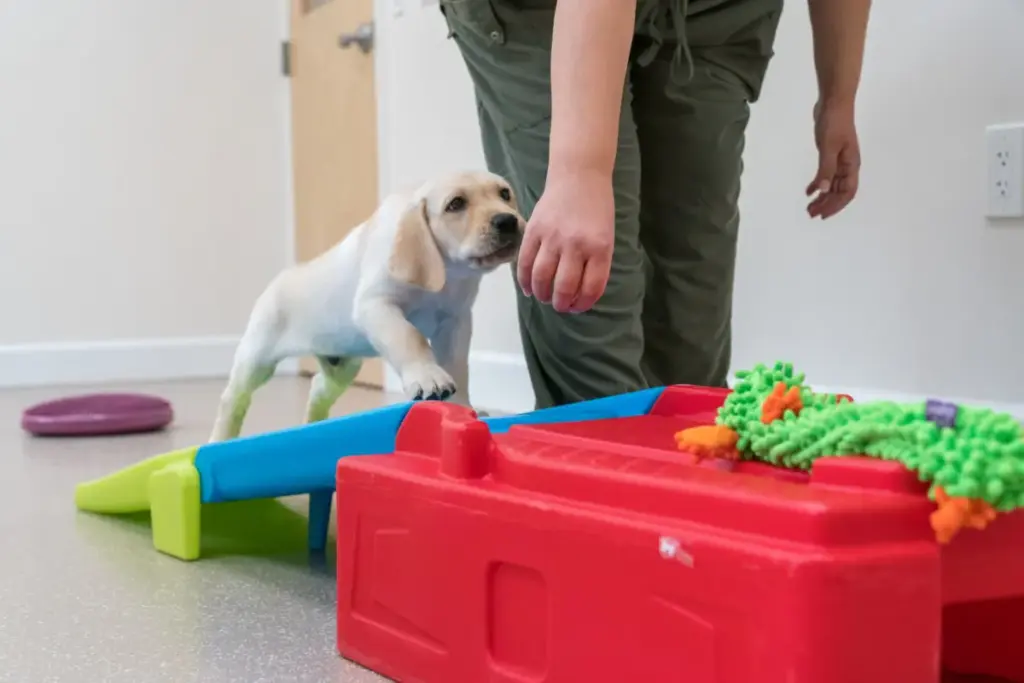
- Micro-Exposures: Pups are gently introduced to novel surfaces (grates, grass, tile), unusual sounds, and gentle handling. The goal is never to overwhelm, but to teach the puppy that novelty is safe and that humans are a secure base.
Phase 2: Adolescent Socialization and Distraction Training (Months 2–12)
As the dog enters adolescence—a notoriously challenging developmental window—formal training structures intensify.
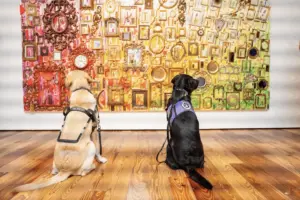
- Controlled Public Exposure: Instructors introduce candidates to low-stakes public environments, such as quiet parks or strip malls. The focus remains strictly on neutrality: the dog learns to watch the world without reacting to it.
- Impulse Control Drills: Through positive reinforcement and clicker training, dogs learn to delay gratification. They practice ignoring scattered food, passing dogs, and sudden movements.
- Errorless Learning: Professional trainers curate scenarios so the dog rarely fails. If a dog begins to exhibit signs of over-stimulation—such as panting, hyper-vigilance, or whining—the handler decreases the criteria, ensuring the dog maintains an emotional baseline of calm.
Phase 3: Advanced Task Integration and Public Access Testing (Months 12–24)
With emotional regulation thoroughly cemented, technical task training takes center stage.
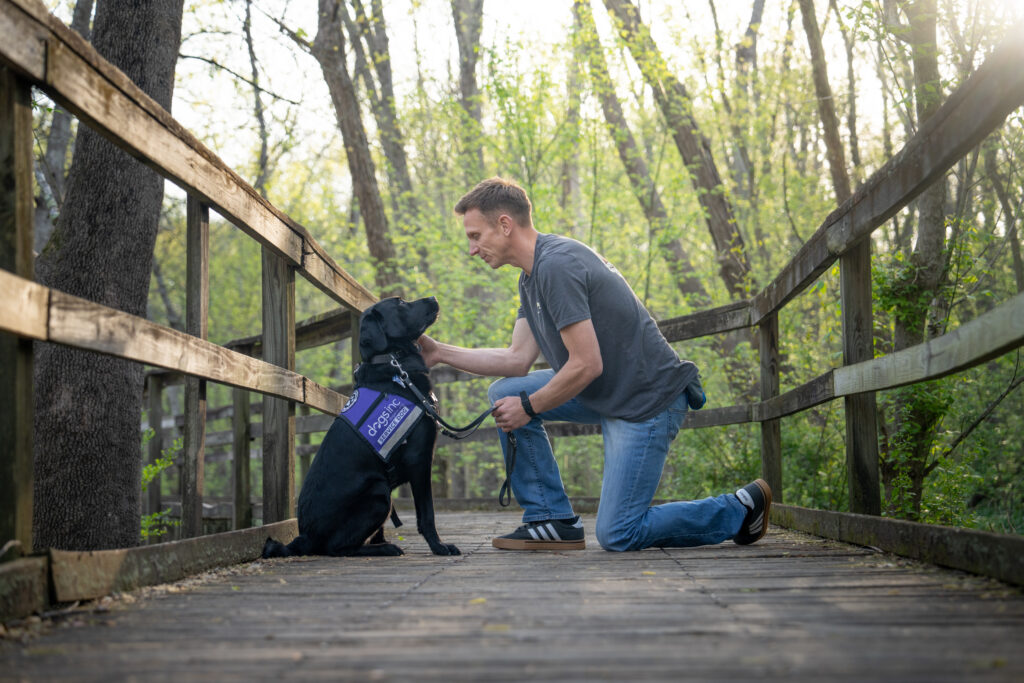
- Task Layering: Complex behaviors—such as opening doors, retrieving medications, or providing tactile grounding—are layered onto a dog that is already emotionally stable. Because the dog’s cognitive load is not consumed by environmental anxiety, they can process complex operational commands effortlessly.
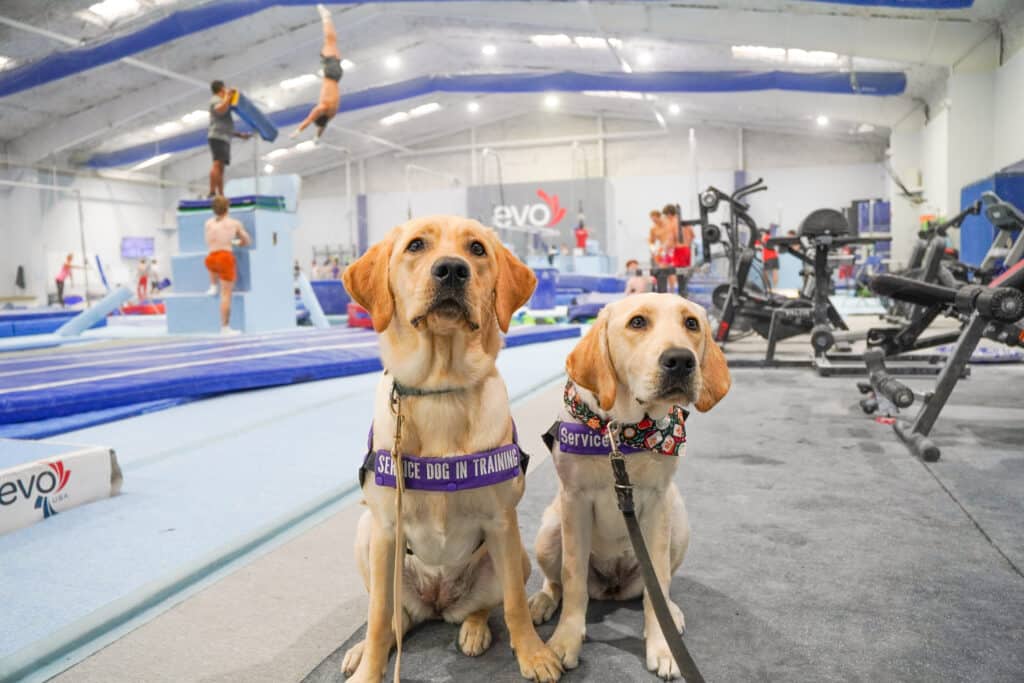
- The Public Access Test (PAT): Candidates undergo rigorous evaluation. They must navigate restaurants, elevators, tight crowds, and loud acoustic environments while maintaining a neutral, composed demeanor. A single unprovoked reaction or display of reactivity results in remediation or disqualification.
Supporting Context & Metrics: The Science of Canine Emotional Regulation
To understand why calmness is paramount, one must examine canine neurobiology and the mechanics of learning under stress.
The Neurobiology of Over-Arousal
When a dog becomes overstimulated or fearful, the amygdala hijacks the prefrontal cortex. Cortisol and adrenaline flood the bloodstream, shifting the animal into a sympathetic nervous system response (fight, flight, or freeze).
In this physiological state:
- Cognitive Function Declines: The ability to process cue words, solve problems, or execute trained tasks plummets.
- Reactivity Escalates: Thresholds drop dramatically. What a calm dog would ignore, an over-aroused dog perceives as a direct threat or an irresistible urge.
- Fatigue Sets In: Chronic high arousal drains mental and physical energy, leading to burnout—a primary reason working dogs are retired early if emotional regulation is neglected.
The Metrics of Success: Neutrality vs. Engagement
Professional service dog organizations evaluate candidates using objective behavioral metrics:
| Metric | Definition | Importance in Service Work |
|---|---|---|
| Recovery Latency | The time it takes for a dog to return to baseline heart rate and posture after a startling stimulus. | Ensures the dog can instantly resume working after an unexpected loud noise or emergency vehicle siren. |
| Distraction Threshold | The physical distance required between the dog and a high-value distraction (e.g., dropped food, another animal) for the dog to remain under threshold. | Determines whether a dog can safely navigate tight indoor spaces like grocery store aisles or airplane cabins. |
| Handler Orientation | The frequency with which a dog checks in visually and mentally with the handler versus scanning the environment. | Guarantees that the dog’s primary focus remains on the human partner’s welfare and operational cues. |
Official Perspectives and Industry Standards
Leading assistance dog organizations, including Assistance Dogs International (ADI) accredited facilities like Dogs Inc, maintain strict criteria regarding temperament and emotional stability.
Expert Insights on Temperament over Compliance
Industry veterans consistently emphasize that obedience alone does not a service dog make. A dog can possess flawless technical obedience—sitting, staying, and heeling on command—yet fail entirely as a service animal if it lacks emotional stability.
"Obedience is the mechanics of what a dog does; calmness is the lens through which they experience the world," notes senior canine development specialists. "You can train almost any dog to sit. You cannot train an inherently frantic, anxious dog to possess the profound internal stillness required to ground a human experiencing a severe medical crisis."
The Crucial Distinction: Service Animals vs. Emotional Support Animals (ESAs)
Public confusion often surrounds the legal and behavioral definitions of working animals. It is vital to distinguish between a fully trained service dog and an emotional support animal:
- Service Dogs: Under federal guidelines, these animals undergo hundreds of hours of rigorous public access and task-specific training. Their calm neutrality in public spaces is a legal and operational necessity. They are granted broad public access rights because their emotional regulation guarantees they pose no disruption or safety risk.
- Emotional Support Animals: While ESAs provide immense therapeutic comfort to their handlers through their mere presence, they are not required to undergo public access training or perform specific mitigating tasks. Expecting an untrained or high-arousal animal to navigate high-stress public environments without a foundation of profound calmness is both unsafe for the public and stressful for the animal.
Future Outlook: The Evolution of Calm-Centric Training Methodologies
As the science of animal behavior advances, the methodology of preparing service dogs continues to evolve. The future of assistance dog breeding and training points firmly toward early behavioral profiling and positive reinforcement optimization.
1. Predictive Behavioral Profiling
Modern breeding programs are increasingly utilizing data-driven behavioral assessments during early puppyhood. By measuring cortisol resilience, problem-solving persistence, and emotional recovery rates in weeks-old puppies, breeding institutions can identify future elite service candidates with unprecedented accuracy, ensuring that genetic predispositions toward calm stability are prioritized.
2. Neurodiversity and Individualized Pacing
Recognizing that no two dogs process stress identically, contemporary training models are shifting away from rigid, cookie-cutter timelines. Trainers now utilize individualized "stress budgets," tailoring public exposure and environmental challenges to each dog’s specific neural development. This personalized approach reduces burnout and extends the active working life of the service animal.
3. Deepening the Human-Canine Partnership
Ultimately, the future of service dog training reaffirms a timeless truth: calmness is a reciprocal energy. A service dog’s emotional regulation not only shields them from environmental chaos, but actively mirrors and stabilizes the physiological state of their handler. For individuals managing profound physical disabilities, PTSD, or chronic medical conditions, this calm, steady partnership acts as a bridge to autonomy, dignity, and unshakeable confidence in a complex world.

Conclusion
The most consequential achievements in service dog work rarely happen amid fanfare or applause. They occur in the quiet, unheralded spaces: the measured pause before a dog reacts to a chaotic environment; the unwavering anchor a canine provides during a moment of intense personal vulnerability; the silent, steadfast vigilance maintained in a crowded airport terminal.
Calmness may lack the visual drama of high-level task execution, but it remains the indispensable bedrock upon which all reliable assistance work is built. Forged through intentional socialization, positive reinforcement, genetic suitability, and thousands of everyday repetitions, emotional regulation transforms a capable dog into an extraordinary, life-changing partner. And for the human handlers whose independence relies on that steady presence, that calm partnership changes everything.