
Executive Overview
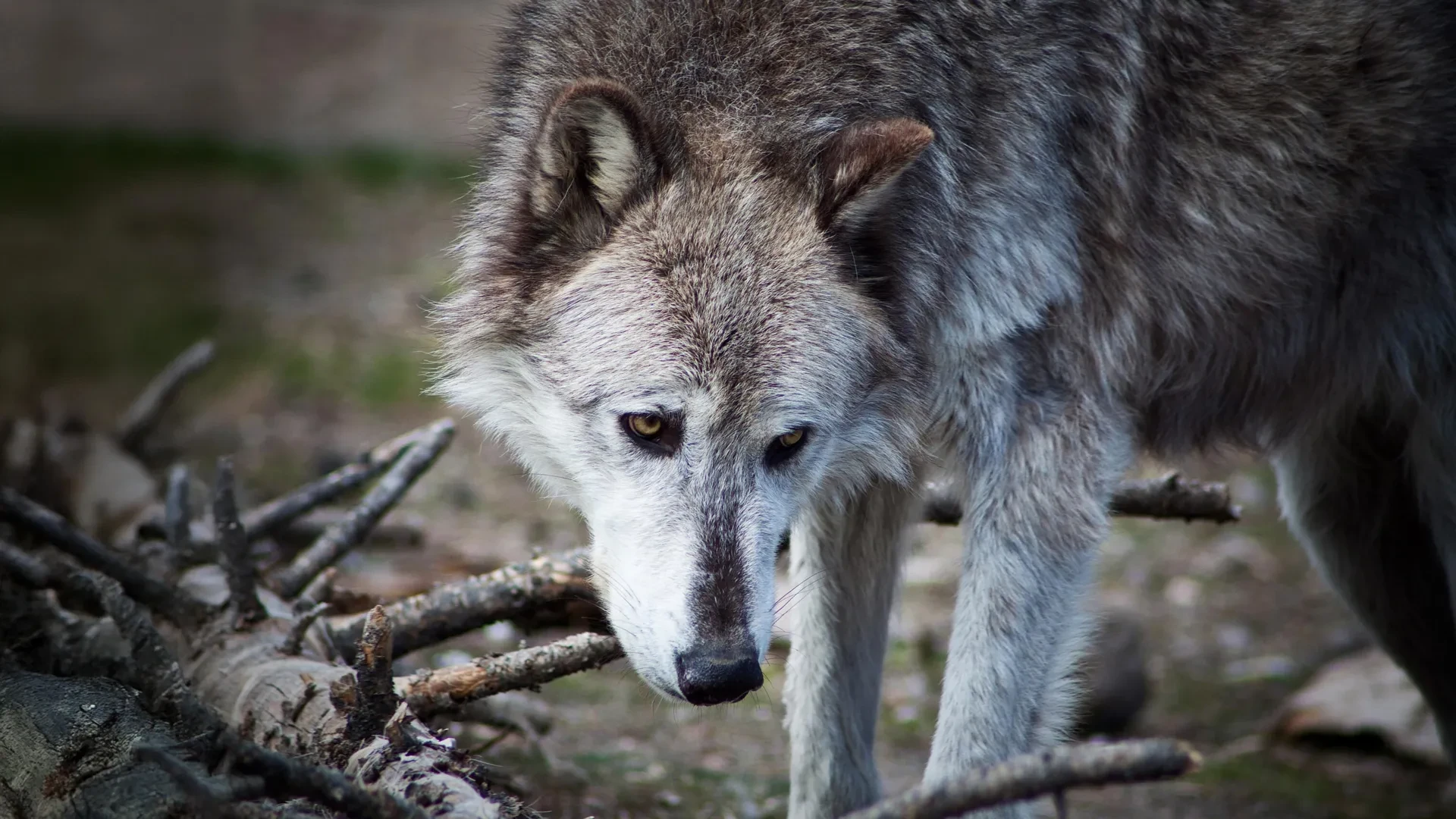
For nearly three decades, the reintroduction of gray wolves (Canis lupus) into Yellowstone National Park has stood as the crown jewel of modern conservation biology. It is a narrative that has captured the global imagination: the apex predator returns, keeps elk populations in check, allows riverside willows to rebound, stabilizes riverbanks, and fundamentally revives a damaged ecosystem in what textbooks and documentaries herald as a classic "trophic cascade."
However, this foundational ecological fairy tale is now facing its most rigorous and comprehensive scientific challenge to date.
A breakthrough peer-reviewed analysis, published in the journal Global Ecology and Conservation, argues that a prominent 2025 study dramatically overstated the ecological footprint of wolf recovery in Yellowstone. Spearheaded by an interdisciplinary team of researchers from Utah State University and Colorado State University, the new paper asserts that the earlier high-profile work relied on deeply flawed statistical methodologies, circular reasoning, and violations of foundational ecological modeling assumptions.
At the heart of this academic dispute is a staggering claim made by the 2025 study: that willow crown volume across Yellowstone surged by an eye-watering 1,500 percent following wolf restoration. According to the authors of the new critique, that headline-grabbing figure is a mathematical illusion born from a fundamental modeling error. When these statistical distortions, spatial inconsistencies, and environmental variables are properly corrected, the data no longer support the vision of a sweeping, park-wide botanical renaissance driven by apex predators.
Instead, the re-analysis paints a much more nuanced, spatially variable, and humble picture of ecological recovery—one heavily governed by local hydrology, groundwater tables, localized browsing patterns, and complex site-specific conditions rather than a singular top-down predator effect. This investigative report explores the anatomy of the dispute, the methodological errors that triggered it, the broader implications for conservation science, and what this means for the enduring legacy of Yellowstone’s wolves.
Detailed Chronology: The Evolution of Yellowstone’s Wolf Debate
To understand the weight of this new critique, it is essential to trace the historical timeline of wolf reintroduction and the scientific literature that has attempted to measure its fallout over the past thirty years.
Phase 1: The Historical Reintroduction (1995–1996)
In January 1995, after a decades-long absence driven by aggressive government eradication programs, the U.S. Fish and Wildlife Service captured 14 gray wolves in Canada and released them into Yellowstone National Park. A year later, another 17 wolves were introduced. The primary management goal was straightforward: restore an native apex predator to the Greater Yellowstone Ecosystem to fulfill legal obligations under the Endangered Species Act and help restore ecological integrity.
Phase 2: The Birth of the Trophic Cascade Paradigm (Early 2000s)
Almost immediately, scientists began observing behavioral changes in the park’s northern range elk herds. Fearing predation in open, high-visibility riparian zones, elk spent less time lingering and heavily browsing vulnerable woody vegetation like willows, aspens, and cottonwoods.
Early published studies—most notably by prominent researcher William Ripple and his colleagues—proposed a revolutionary hypothesis: the "landscape of fear" created by wolves triggered a classic trophic cascade. The chain reaction suggested that wolves suppressed elk (the herbivore), which released willows and aspens (the plants), which in turn stabilized stream banks and returned structural habitat to beavers, songbirds, and fish. This narrative quickly escaped the confines of academic journals, dominating documentaries, university ecology syllabi, and international mainstream media outlets as the ultimate proof of rewilding success.
Phase 3: Diverging Data and Growing Tensions (2020–2024)
As decades of empirical field experiments accumulated, cracks began to form in the uniform narrative of sweeping, park-wide restoration.
In 2024, a team of field researchers led by Hobbs and colleagues published findings based on two decades of rigorous, on-the-ground ecological data collection within Yellowstone. Paradoxically, their empirical measurements revealed only weak and highly localized trophic cascade effects. Their findings suggested that while wolves certainly impacted elk behavior, the recovery of vegetation was far patchier, slower, and more heavily dependent on physical factors like water availability than the sweeping trophic cascade model suggested.
Despite these cautionary empirical findings, a subsequent 2025 high-profile study by Ripple et al. doubled down on the expansive narrative, publishing bold claims regarding massive botanical recovery—including the controversial 1,500 percent increase in willow crown volume.
Phase 4: The Mathematical Reckoning (2025–Present)
Sensing profound methodological discrepancies between the raw field data and the sweeping conclusions of the 2025 study, a collaborative team of researchers led by Dr. Daniel MacNulty of Utah State University and Dr. David Cooper of Colorado State University initiated a comprehensive forensic audit of the models. Their resulting peer-reviewed analysis, released in Global Ecology and Conservation, dismantled the statistical framework of the 2025 claims, bringing the debate to a dramatic head.
Supporting Context & Metrics: Deconstructing the Statistical Errors
The core contribution of the MacNulty and Cooper analysis is not a matter of a philosophical disagreement over the value of predators, but a rigorous, nuts-and-bolts dissection of statistical mechanics. The researchers identified several cascading errors that inflated the perceived ecological impact of wolves.
1. The Circular Reasoning Trap of Willow Volume
The single most explosive claim of the disputed 2025 study was that willow crown volume expanded by 1,500 percent following wolf recovery. To arrive at this figure, researchers utilized a statistical model that relied on plant height to both calculate willow volume and predict its future state.
In the language of data science, this introduces a fatal flaw: circular reasoning.
[Plant Height] ---> Used to CALCULATE Current Volume
       |
       v
[Plant Height] ---> Used to PREDICT Future Volume
       |
       v
Result: Mathematical Guarantee of a "Strong" Relationship
(Regardless of actual biological growth)
Dr. Daniel MacNulty elaborated on this mechanics during interviews surrounding the publication:
"Because height was used both to compute and to predict volume, the relationship is circular—mathematically guaranteed to look strong even if no biological change occurred."
By feeding the same metric into both sides of the mathematical equation, the model manufactured a massive statistical signal out of ecological noise, guaranteeing an inflated outcome regardless of whether physical plants had actually experienced meaningful growth on the landscape.
2. Geometric Mismatch and Distorted Growth Forms
Compounding the circular reasoning error was an issue of geometric application. The statistical model used to calculate willow volume was originally designed for healthy, upright, and structurally sound plants experiencing standard growth trajectories.
However, decades of intense elk browsing in Yellowstone had left northern range willows heavily suppressed, resulting in stunted, multi-stemmed, and structurally distorted "growth forms." Applying a standard linear model to these heavily browsed, misshapen shrubs violated the baseline assumptions of the mathematical tool. According to the re-analysis, this geometric mismatch systematically skewed estimates upward, further exaggerating the appearance of structural recovery.
3. Spatial Inconsistency in Longitudinal Sampling
A foundational requirement of longitudinal ecological studies is spatial consistency—comparing apples to apples over time.
The re-analysis revealed that many of the willow monitoring plots evaluated between 2001 and 2020 were not, in fact, the exact same geographical locations. Because researchers compared different plots across different time periods, a significant portion of the recorded "growth" over the two decades likely reflected pre-existing site-to-site variations in soil, moisture, and microclimate rather than genuine temporal changes in plant health driven by wolf predation.
4. Ignoring Non-Equilibrium Ecosystem Dynamics and Confounders
Furthermore, the authors of the new critique criticized the 2025 study for applying global trophic cascade comparisons derived from stable, "equilibrium" ecosystems to Yellowstone. Yellowstone is a dynamic, constantly fluctuating environment recovering from historical human impacts, where populations of ungulates, predators, and vegetation are in a perpetual state of flux.
Additionally, the original study selectively utilized photographic evidence and omitted other driving factors—such as localized human hunting pressures outside park boundaries, changing climatic precipitation patterns, and long-term hydrological shifts—making it methodologically impossible to isolate wolves as the singular, deterministic driver of vegetation changes.
Official Statements and Academic Perspectives
The publication of the Utah State and Colorado State analysis has triggered intense discussions across the ecological community, balancing a defense of rigorous methodology with a continued appreciation for apex predators.
-
Dr. Daniel MacNulty (Lead Author, Utah State University):
"Ripple et al. argued that carnivore recovery produced one of the world’s strongest trophic cascades. But our re-analysis shows their conclusion is invalid because it relies on circular reasoning and violations of basic modeling assumptions. Our goal is to clarify the evidence, not downplay the role of predators. Predator effects in Yellowstone are real but context-dependent—and strong claims require strong evidence."
-
Dr. David Cooper (Co-Author, Colorado State University):
"Once these problems are accounted for, there is no evidence that predator recovery caused a large or system-wide increase in willow growth. The data instead support a more modest and spatially variable response influenced by hydrology, browsing, and local site conditions."
Other independent restoration ecologists not directly involved in the paper have noted that this correction is a healthy, albeit painful, milestone for the discipline. Science is self-correcting, and as long-term datasets mature, initial broad-brush hypotheses frequently give way to nuanced, multi-variable realities. The debate highlights the temptation in modern conservation biology to lean into simple, highly marketable narratives—such as "wolves saved the rivers"—at the expense of messy ecological truths.
Future Outlook: Re-evaluating Conservation Science in the Anthropocene
What does this methodological reckoning mean for the future of Yellowstone National Park and the broader field of rewilding science?
1. Moving Away from Reductionist Narratives
The most immediate takeaway is the urgent need to move away from overly reductionist, single-species management narratives. Ecosystems are hyper-complex webs featuring thousands of variables interacting simultaneously. While wolves are undeniably a vital component of Yellowstone’s biotic community, attributing sweeping botanical changes entirely to their presence ignores the profound roles played by water tables, beaver populations, climate cycles, and bison grazing dynamics.
2. Raising the Bar for Statistical Rigor
In an era where conservation biology frequently intersects with public policy, political advocacy, and intense media scrutiny, the pressure to produce headline-grabbing results is immense. The exposure of the circular reasoning flaw in the 2025 willow study serves as a cautionary tale for researchers, peer-reviewers, and academic journals alike. Future studies involving complex multi-decadal ecological monitoring must subject their statistical models to rigorous independent validation to ensure that mathematical artifacts are not mistaken for biological miracles.
3. Embracing Context-Dependent Conservation
Ultimately, the MacNulty and Cooper analysis does not suggest that wolf reintroduction was a failure; rather, it reframes its success. Wolves matter immensely, but their effects are context-dependent. A willow patch thriving near a robust, high-water table beaver dam complex will recover differently than a willow struggling in an arid, drought-stricken upland draw, regardless of how many wolves patrol the ridge above.
As Yellowstone National Park enters its fourth decade of living with wolves, science is maturing past the romanticism of the initial reintroduction era. By correcting the record and embracing a more modest, spatially nuanced understanding of trophic interactions, researchers are laying a more honest and durable foundation for wildlife conservation in the 21st century.