
Executive Overview
Few animals in the canine kingdom evoke as much polarized public discourse, intense admiration, and unwarranted fear as the American Bulldog and the American Pit Bull Terrier. Visually striking, athletically formidable, and deeply intertwined through historical lineage, these two distinct breeds are frequently conflated by the general public, shelter workers, and even local legislators. Yet, beneath their muscular silhouettes and powerful jaws lie two entirely separate breeds with diverging physical dimensions, distinct behavioral psychologies, and unique ancestral trajectories.
As urban housing density shifts and the public debate surrounding breed-specific legislation (BSL) intensifies, understanding the physiological and behavioral realities of these dogs has never been more critical. This comprehensive investigative report unpacks the genetics, historical origins, behavioral profiles, and care requirements of both the American Bulldog and the American Pit Bull Terrier. By separating empirical canine science from sensationalized media tropes, this analysis provides prospective owners, canine behaviorists, and policymakers with an authoritative guide to two of America’s most misunderstood working breeds.
Detailed Chronology: From Working Bloodsports to Modern Companions
To fully comprehend the contemporary American Bulldog and Pit Bull, one must trace their evolutionary journey from utilitarian working dogs of the British Isles to the modern domestic companions seen today. While both breeds share a foundational chapter rooted in the extinct Old English Bulldog, their subsequent developmental timelines diverged significantly based on human utility and geographic migration.
The Foundation: The Old English Bulldog Era
Centuries ago, the ancestor to both breeds—the Old English Bulldog—was engineered specifically for blood sports, most notably bull-baiting and bear-baiting. These tasks required a canine possessing an exceptionally low center of gravity, immense jaw strength, thick skin, and a tenacious grip that could withstand the violent thrashing of a distressed bull. When these blood sports were outlawed in England during the mid-19th century under the Cruelty to Animals Act, the original utilitarian purpose of the Bulldog vanished overnight, forcing breeders to pivot.
The Genesis of the American Pit Bull Terrier
Following the decline of bull-baiting, breeders in England and Ireland sought to create a faster, more agile canine by crossing the remaining Old English Bulldogs with various indigenous terrier breeds—most notably the Old English White Terrier and the Black and Tan Terrier. This hybrid resulted in a dog that retained the formidable strength and determination of the Bulldog, paired with the speed, gameness, and high prey drive of the terrier.
When immigrants sailed to North America, they brought these athletic terriers with them. These dogs quickly adapted to the rugged frontier, serving as general farm utility dogs, catch dogs for wild boar and cattle, and loyal family guardians. The United Kennel Club (UKC) officially recognized the breed as the American Pit Bull Terrier in 1898, cementing its distinct identity separate from its British roots.
The Preservation of the American Bulldog
Conversely, the lineage that would become the American Bulldog remained largely rooted in the American South. Farmers and working-class citizens utilized heavy-duty working bulldogs to catch feral hogs, guard homesteads, and drive cattle. These dogs were less refined by formal kennel clubs and more heavily selected for raw working performance, size, and courage.
By the mid-20th century, the American Bulldog population had dwindled precipitously, teetering on the edge of complete extinction. The breed owes its modern survival to the tireless conservation efforts of Dr. John D. Johnson and Alan Scott. Beginning in the late 1940s, these breeders scoured the rural American South, locating surviving working bulldogs and initiating a meticulous breeding program. Their efforts split the modern American Bulldog into distinct phenotypes—the "Johnson" (Bully) type, which is larger and heavier-boned, and the "Scott" (Standard) type, which is leaner and more athletic—ultimately culminating in the robust, versatile breed recognized worldwide today.

Supporting Context & Metrics: Comparative Anatomy and Physiology
While casual observers frequently group these dogs together under the umbrella term "pit bull," a side-by-side metric analysis reveals substantial anatomical differences in size, weight, skeletal structure, and longevity.
| Metric / Attribute | American Bulldog | American Pit Bull Terrier |
|---|---|---|
| Height Range | 20–27 inches (51–69 cm) | 17–21 inches (43–53 cm) |
| Weight Range | 75–125 lbs (34–57 kg) | 35–65 lbs (14–29 kg) |
| Coat Variations | White, brindle, red, brown, or patched | Brindle, fawn, blue, black, red, and multi-colored |
| Skeletal Build | Heavy-boned, stocky, and blocky | Lean, streamlined, and highly muscular |
| Energy Output | Moderate to High | Extremely High |
| Primary Temperament | Confident, protective, and loyal | Energetic, eager-to-please, and affectionate |
| Average Lifespan | 10–12 years | 12–15 years |
Skeletal and Physical Contrasts
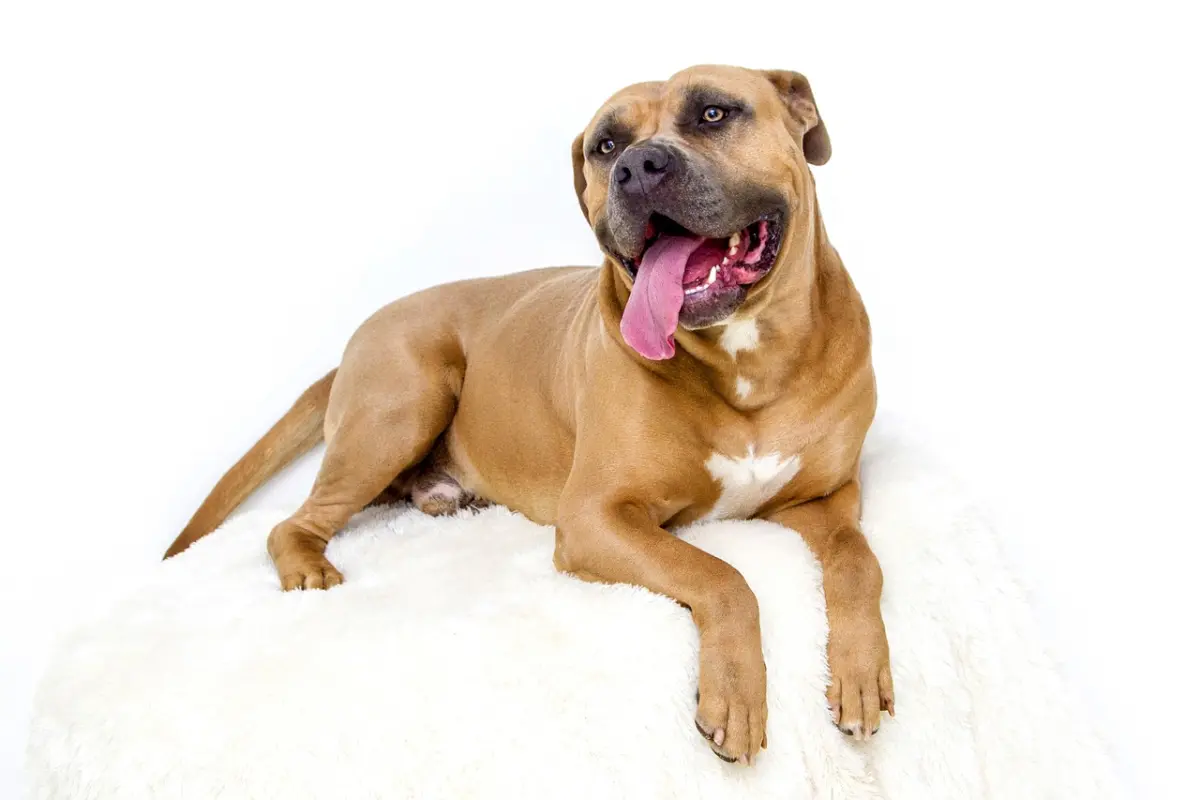
The physical disparities between the two breeds dictate their biomechanical capabilities. The American Bulldog is a substantially larger, heavier animal. Standing up to 27 inches at the shoulder and frequently tipping the scales at 125 pounds, the Bulldog possesses a massive, blocky skull, powerful jaws, and a deep, broad chest that projects raw, unadulterated power. Their skin is thick, and their coat is short and smooth, often predominantly white with patches of brindle, red, or black.
In contrast, the American Pit Bull Terrier is markedly smaller, typically weighing between 35 and 65 pounds. Their physical architecture is built for explosive speed, agility, and endurance rather than sheer mass. Pit Bulls possess a wedge-shaped or brick-like head, prominent cheek muscles, and a tightly knit, highly athletic frame. Their coats are glossy and tight to the body, appearing in a vast spectrum of vibrant colors, including the prized "blue" (gray) and striking red-nose variations.
Behavioral Psychology and Temperament
Understanding the psychology of these breeds requires separating historical working drives from contemporary domestic adaptability. Both breeds possess high emotional intelligence, but their interactions with human families and multi-pet households require nuanced management.
The American Bulldog: The Stoic Guardian
American Bulldogs are defined by an unshakeable confidence and deep-seated loyalty to their human units. Bred historically to guard property and manage large livestock, they naturally adopt a protective posture over their families. They are exceptionally affectionate with children within their household, often displaying a surprising degree of patience and gentleness given their formidable size.
However, their protective instincts mean they can be aloof or suspicious of strangers. Without early, structured socialization, an American Bulldog’s natural wariness can manifest as territorial aggression. Furthermore, they possess an independent, occasionally stubborn streak, requiring an experienced owner who can establish consistent, fair leadership through positive reinforcement.
The American Pit Bull Terrier: The High-Octane Loyalist
The American Pit Bull Terrier is frequently misunderstood by the media and the general public. Far from being inherently vicious toward humans, a well-socialized Pit Bull typically displays an effusive, people-oriented affection—often colloquially referred to as a "velvet hippo." They crave human companionship, thrive on physical contact, and possess an intense, joyful desire to please their owners.
Where prospective owners must exercise extreme caution, however, is in the Pit Bull’s conspecific behavior—its attitude toward other animals. Due to their historical roots in fighting pits, many Pit Bulls exhibit a higher genetic predisposition toward dog-to-dog aggression or high prey drive toward smaller animals (cats, rabbits). While early socialization and rigorous obedience training can successfully curb these tendencies, owners must recognize that this is an ingrained biological trait, not merely a product of poor training.

Exercise, Nutrition, and Health Demands
Both the American Bulldog and the American Pit Bull Terrier are high-energy working breeds. They are entirely unsuited for sedentary, apartment-bound lifestyles without a dedicated commitment to daily physical and mental stimulation.
Energy Expenditure and Daily Requirements
- American Bulldogs require a minimum of 60 to 90 minutes of vigorous daily exercise. Brisk long-distance walking, hiking, and weighted pulling are excellent outlets. However, owners must monitor Bulldogs closely in warm weather; their brachycephalic tendencies (shorter muzzles) make them exceptionally prone to heat exhaustion and respiratory distress.
- American Pit Bull Terriers operate with an almost boundless reserve of energy. They excel in high-intensity canine sports such as agility, dock diving, weight pull, and flyball. Depriving a Pit Bull of adequate daily exercise frequently results in destructive behaviors, high anxiety, and cabin fever.
Health Profiles and Longevity
Genetically, both breeds are generally robust, but they are susceptible to specific hereditary health conditions that require preventative veterinary oversight:
- Hip and Elbow Dysplasia: Common in both heavy-boned American Bulldogs and agile Pit Bulls due to their explosive athleticism and heavy muscle mass.
- Skin Allergies and Demodicosis: Pit Bulls, in particular, are prone to environmental and food allergies, which manifest as chronic skin irritations and dermatitis.
- Cardiac Issues: American Bulldogs can occasionally suffer from congenital heart defects, such as aortic stenosis, necessitating regular cardiac evaluations by breeders and veterinarians.
Official Statements and Veterinary Perspectives
To provide clarity on ongoing debates surrounding breed safety, veterinary associations, animal welfare organizations, and legal experts maintain clear stances regarding both breeds.
The American Veterinary Medical Association (AVMA) takes a definitive stance against breed-specific legislation (BSL), noting in official policy statements that public safety is best served by focusing on owner responsibility, leash laws, and dangerous-dog laws that apply to all breeds equally, rather than targeting specific phenotypes. The AVMA emphasizes that environmental factors—such as abuse, neglect, lack of socialization, and chaining—are far greater predictors of aggressive behavior than canine genetics alone.
Regarding the persistent urban legend of the "locking jaw," canine anatomical experts and veterinarians universally debunk the myth. Extensive scientific dissection has proven unequivocally that neither the American Bulldog nor the American Pit Bull Terrier possesses any specialized anatomical jaw-locking mechanism, hinge, or structural deviation that differentiates their bite apparatus from any other canine breed. The illusion of a "locking jaw" is solely a psychological phenomenon rooted in the breeds’ tenacity, high pain tolerance, and unwavering determination once they grip an object during play or work.
Future Outlook: Ownership Responsibilities in the 21st Century
As urban spaces become increasingly crowded and municipal regulations surrounding large working dogs tighten, the future of both the American Bulldog and the American Pit Bull Terrier rests squarely on the shoulders of responsible ownership.
Prospective owners must look past superficial aesthetics and recognize the profound time, financial, and educational commitments required to properly manage these powerful animals. Early, intensive socialization, obedience training utilizing positive reinforcement, secure fencing, and a thorough understanding of breed-specific triggers are non-negotiable prerequisites for success.
When placed in the hands of dedicated, knowledgeable owners who respect their power and honor their working heritage, both the American Bulldog and the American Pit Bull Terrier transition from misunderstood statistics into extraordinary family companions, loyal protectors, and ambassadors of resilience.