In the remote hinterlands of rural Russia, an extraordinary case of interspecies bond and wild imprinting unfolded, challenging conventional ethological understanding regarding the domestication boundary between domestic canines (Canis lupus familiaris) and wild gray wolves (Canis lupus).
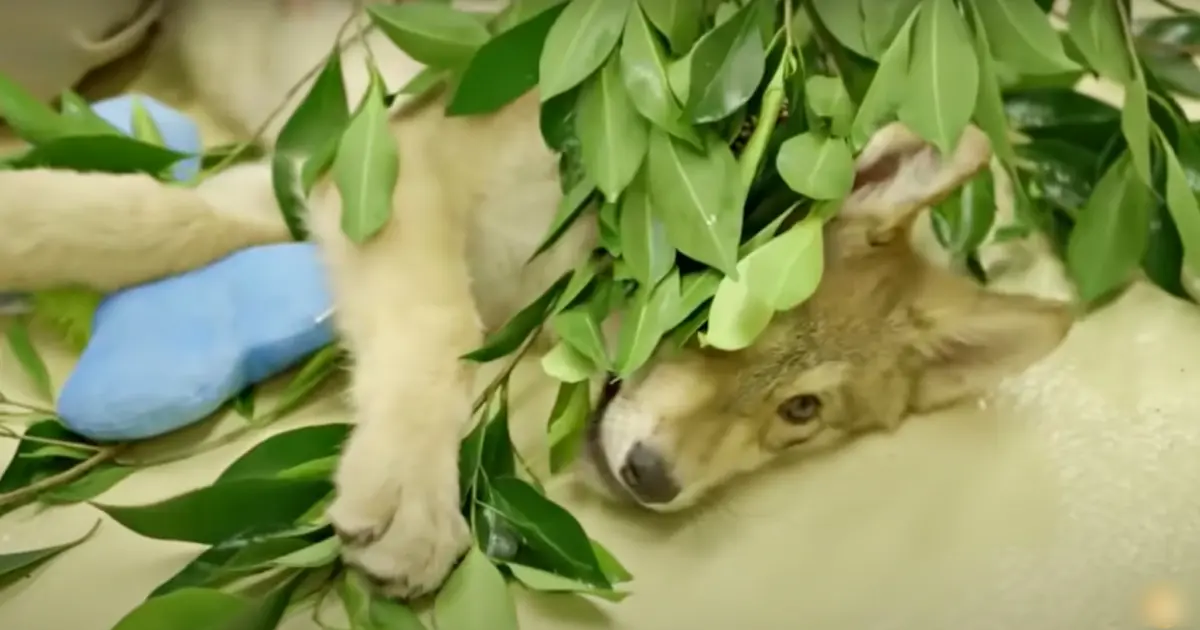
An elderly woman, living alone on the outskirts of a tranquil township, unknowingly opened her home to an apex predator when she adopted a sickly, abandoned pup left behind by passing hunters. Named "Volchok"—a affectionate Russian diminutive meaning "little wolf"—the animal was raised under the assumption that it was a standard domestic dog.
Over the course of twelve months, subtle biological and behavioral divergence began to emerge, culminating in a dramatic confrontation when a group of dangerous intruders targeted the isolated residence. Rather than fleeing or succumbing to wild instincts, the fully grown wolf manifested intense pack-defense behavior, stepping in to protect its human caretaker.
This comprehensive account analyzes the chronological sequence of events, examines the underlying ethological dynamics of wolf imprinting and territorial defense, and evaluates the broader implications of human-predator cohabitation in isolated Eurasian communities.
Detailed Chronology
+-----------------------------------------------------------------------------------+
|                              CHRONOLOGY OF EVENTS                                 |
+-----------------------------------------------------------------------------------+
|  Phase 1: Arrival & Abandonment                                                   |
|  • Hunters seek shelter at an isolated rural Russian home during winter.           |
|  • Three young pups are left on the porch overnight.                              |
|  • Hunters depart the following morning, leaving behind the weakest runt.         |
+-----------------------------------------------------------------------------------+
                                         │
                                         ▼
+-----------------------------------------------------------------------------------+
|  Phase 2: Rehabilitation & Imprinting                                             |
|  • The elderly homeowner adopts the runt, naming him "Volchok" ("Little Wolf").   |
|  • Volchok exhibits early anomalies: rapid growth, absence of barking, growls.     |
|  • Strong biological imprinting binds Volchok to his human caregiver.            |
+-----------------------------------------------------------------------------------+
                                         │
                                         ▼
+-----------------------------------------------------------------------------------+
|  Phase 3: Crisis & Territorial Defense                                            |
|  • One year later: Local crime spikes; hostile intruders target the homestead.    |
|  • Volchok confronts the aggressors with apex predator warning signals.           |
|  • Intruders flee; the wolf's true nature and defensive loyalty are revealed.     |
+-----------------------------------------------------------------------------------+
Phase 1: The Inclement Encounter and Abandonment
The event originated on the periphery of a quiet settlement in western Russia. The inhabitant, an elderly woman living in a secluded homestead, maintained a long-standing open-door hospitality typical of traditional rural culture. During a bout of severe winter weather, a small group of local hunters arrived at her doorstep seeking brief respite and lodging.
Accompanying the hunting party were three young, emaciated canine pups, which were placed temporarily on the covered front porch while the hunters rested inside. The homeowner provided hot food and shelter to the visitors overnight.
At daybreak, the hunting party gathered their belongings and departed. However, upon inspecting her yard later that morning, the woman discovered that the hunters had taken only two of the healthiest offspring, leaving the third—a frail, sluggish runt—wandering near her porch. Realizing the creature would perish without intervention in the harsh climate, the woman took the animal indoors to begin rehabilitation.
Phase 2: Rehabilitation, Development, and Behavioral Anomalies
The homeowner named the young animal Volchok and provided a steady diet of warm porridge, broth, and scrap meat. Under her care, the pup recovered rapidly, displaying a surprisingly intense physical growth trajectory over the subsequent months.
As Volchok developed from a juvenile into a adolescent, several distinct behavioral markers distinguished him from standard domestic breeds:
Vocalization Patterns: Volchok never produced a standard domestic bark. His vocal repertoire consisted exclusively of low-frequency guttural growls, whines, and occasional prolonged vocalizations at dusk.
Morphological Features: His paws grew disproportionately large relative to his body frame, accompanied by a narrow chest, yellow-amber irises, and exceptionally muscular shoulder arching.
Mischief and Discipline: Like domestic puppies, Volchok engaged in exploratory destructive behavior. When reprimanded, he displayed marked submissiveness toward the elderly woman, recognizing her indisputably as the dominant authority figure within his immediate environment.
Unversed in wild canid biology, the caretaker attributed these traits to an atypical mixed breed, unaware that she was nourishing a wild Canis lupus.
Phase 3: The Threat and Apex Predator Defense
Approximately twelve months after Volchok’s rescue, a wave of criminal activity disrupted the regional peace. Isolated properties on the outskirts of town became prime targets for home invasions by predatory vagrants and opportunistic criminals.
One evening, several unknown men entered the woman’s property with malicious intent. The homestead’s remote position meant that immediate assistance from municipal authorities was unavailable.
As the intruders approached the front porch and attempted to breach the entryway, Volchok—now a full-grown, 90-pound wild apex predator—positioned himself directly between his human caretaker and the aggressive trespassers.
Unlike a domestic guard dog that might bark frantically, Volchok exhibited classic wild predator threat display: silent posture, erect ears, bared incisors, and an intensely deep, chest-vibrating growl that signaled an immediate, lethal defensive capability.
Terrified by the sudden realization that they were confronting an unchained, defensive wolf rather than a domestic pet, the intruders immediately retreated from the property and fled the area.
Supporting Context & Ethological Metrics
To understand why Volchok defended his human caregiver rather than reverting to wild aggression against her, it is essential to examine the biological mechanism of early social imprinting in wild canids.
The Imprinting Window in Canis lupus
In domestic dogs, the critical socialization window extends up to 12 to 16 weeks of age. In contrast, wild wolves possess a drastically shorter socialization window—typically closing between 14 and 21 days after birth, coinciding with the onset of mobility.
When hunters extracted Volchok from his den at an extremely young age and the elderly woman subsequently bottle-fed and sheltered him during this critical developmental threshold, the wolf’s brain permanently integrated the human caretaker into its social hierarchy as his alpha pack member.
+-----------------------------------------------------------------------------------+
|               COMPARATIVE ANALYSIS: DOMESTIC DOG VS. WILD WOLF                    |
+-----------------------------------------------------------------------------------+
| TRAIT                   | DOMESTIC DOG (Canis familiaris) | WILD WOLF (Canis lupus) |
+-------------------------+---------------------------------+-----------------------+
| Socialization Window    | 4 to 16 Weeks                   | 2 to 3 Weeks          |
| Primary Alarm Vocal     | Repetitive Barking              | Postural / Silent     |
| Jaw Pressure (PSI)      | ~200 - 320 PSI                  | ~400 - 1,200 PSI      |
| Human Hierarchy Bond    | Flexible / Multi-human          | Rigid / Imprinted     |
| Territorial Defense     | Property / Resource Based       | Pack / Alpha Centric  |
+-----------------------------------------------------------------------------------+
Vocalization Dynamics and Behavioral Anomalies
The absent barking behavior noted by the owner is one of the most reliable ethological indicators differentiating wild wolves from feral or domestic dogs.
While domestic dogs bark habitually due to thousands of years of artificial selection for vocal alert mechanisms, wolves rarely bark except as a brief, low-pitched warning call near a den site. Instead, wolves rely heavily on postural threat signaling and physical intimidation.
Official Statements
To gain further perspective on cases of unintentional wolf domestication in rural environments, specialists in wild canid research and regional forestry management have weighed in on the dynamics present in this event.
Dr. Elena Voronova, Lead Ethologist at the Eurasian Wildlife Behavior Institute:
"What occurred in this case is a textbook example of primary environmental imprinting. Because the cub was taken into human care prior to the closure of its critical behavioral window, its neural pathways identified the human caretaker not merely as a food provider, but as the supreme pack leader. When the homestead was threatened, the wolf was not defending human property in the way a trained guard dog does; it was executing an instinctual pack-defense routine to protect its designated pack matriarch from an external territorial threat."
Mikhail Volkov, Regional Senior Forestry Ranger:
"Living alongside the forest belt, residents frequently encounter wild fauna. While we strictly discourage private individuals from harboring wild predators due to severe safety risks, this specific situation succeeded solely because of the complete isolation, early age of rescue, and absolute bond established between the animal and its owner. However, a wild wolf remains a wild wolf; their force of bite and raw instincts exceed those of any domesticated breed by orders of magnitude."
Future Outlook
The story of Volchok highlights both the remarkable adaptability of wild canids and the inherent risks associated with raising apex predators in human environments. Moving forward, wildlife authorities and conservationists highlight key takeaways regarding wild canid management in rural regions:
+-----------------------------------------------------------------------------------+
|                            KEY STRATEGIC TAKEAWAYS                                |
+-----------------------------------------------------------------------------------+
| 1. Public Awareness & Education                                                   |
|    • Rural communities must be trained to recognize morphological differences     |
|      between wild canid pups and domestic strays.                                 |
|                                                                                   |
| 2. Sanctuary Integration Protocols                                                |
|    • Imprinted wolves often cannot be safely released into the wild, requiring    |
|      specialized wildlife sanctuary oversight or controlled cohabitation.         |
|                                                                                   |
| 3. Legal and Ethical Frameworks                                                   |
|    • Strengthening local conservation laws to prevent unauthorized removal of     |
|      wolf litters by private hunting parties.                                     |
+-----------------------------------------------------------------------------------+
While Volchok’s protective intervention saved an isolated woman from severe harm, experts warn that such outcomes are exceptional anomalies. As rural borders continue to overlap with wilderness zones across Northern Eurasia, the story of Volchok serves as a powerful case study in the fine line between human compassion, biological imprinting, and the untamed force of nature.