October 9, 2026 Special Report by the Alley Cat Allies Investigative Desk
Executive Overview
In an era defined by increasingly volatile weather patterns, geopolitical shifts in animal welfare policy, and the daily vulnerabilities faced by free-roaming and community animals, the safety net for felines depends entirely on proactive intervention. As of October 2026, Alley Cat Allies—the preeminent global organization dedicated to protecting the lives of all cats—has once again mobilized its resources across multiple fronts. From preparing for the impending landfall of Hurricane Isaias along the Gulf Coast to executing post-flood rescue operations in New Jersey, managing complex surgical cases, celebrating long-term adoption transformations, and defending community cats in San Juan, Puerto Rico, the organization’s holistic approach to feline welfare remains uncompromising.
This report provides an in-depth examination of Alley Cat Allies’ ongoing missions, detailing the operational frameworks of its Rapid Response Team, the medical triumphs funded by its donor network, and the systemic policy battles waged to ensure that humane, evidence-based treatment prevails over lethal government control.
Detailed Chronology of Operations
1. Hurricane Isaias Preparedness: Mobilizing on the Gulf Coast
With meteorological projections indicating that Hurricane Isaias is poised to make landfall on the Gulf Coast as early as late Friday, the timeline for preparation has shrunk to hours. Alley Cat Allies has initiated immediate coordination protocols with regional partners, local caregivers, and emergency management liaisons across the projected impact zones.
The primary objective of this pre-landfall mobilization is establishing localized safety nets for outdoor and community cat colonies, which are uniquely vulnerable to storm surges, high-velocity winds, and catastrophic flooding. Concurrently, the organization’s Rapid Response Team is fully staged to deploy vital assets immediately following the storm’s passage. These assets include:
Emergency Medical Care: Mobile veterinary units and trauma stabilization gear for injured or hypothermic animals.
Essential Supplies: High-grade food stocks, clean hydration supplies, and temporary waterproof shelter kits for displaced colonies.
Emergency Boarding Facilities: Secure transitional housing networks for cats rescued from zones experiencing total infrastructure collapse.
Furthermore, Alley Cat Allies has issued a stern, urgent advisory to residents in mandatory evacuation zones: evacuate with all indoor cats and household pets. To assist pet owners, the organization has published comprehensive, step-by-step disaster preparedness guides accessible via alleycat.org/DisasterTips. These protocols cover everything from DIY evacuation carriers to post-storm colony stabilization techniques.
2. New Jersey Nor’easter Flood Response: Saving a Family of Six
While Gulf Coast preparations dominate the immediate future, recovery efforts are still actively underway in the wake of a powerful nor’easter that battered the Jersey Shore in late September. The storm’s torrential rains and severe coastal flooding displaced countless animals, scrambling local ecosystems and forcing wildlife and domestic cats alike into unfamiliar, hazardous territories.
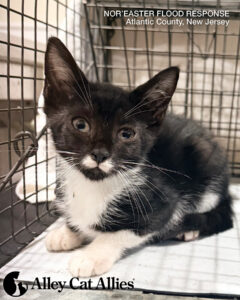
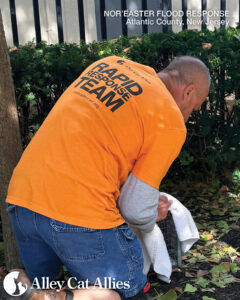
In Atlantic County, a local community cat caregiver discovered an unexpected influx of fragile feline life appearing near her managed colony lines. Recognizing the imminent danger of exposure and untreated flood-borne pathogens, she contacted the Alley Cat Allies Rapid Response Team.
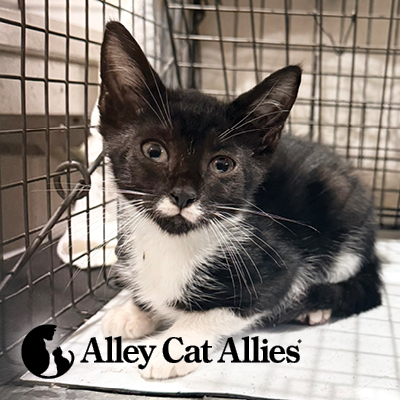
What began as a targeted extraction of three kittens quickly expanded. Operating in debris-strewn flood zones, field specialists successfully trapped the initial trio—only to discover three more siblings hiding nearby. The entire litter, estimated to be just six weeks old, was immediately transferred to the Humane Society of Atlantic County, backed by an Alley Cat Allies disaster relief grant.
The medical challenges facing this "family of six" are substantial:
Upper Respiratory Infections (URIs): All six kittens are currently undergoing aggressive antibiotic therapy to combat severe respiratory distress induced by exposure to cold, stagnant floodwaters.
Severe Ophthalmic Complications: Three of the kittens require intensive, specialized veterinary intervention to save their vision from advanced, infection-driven corneal damage.
Despite these hurdles, the rapid deployment of specialized trapping and triage has ensured that these vulnerable animals have transitioned from a death sentence in the floodwaters to structured, compassionate veterinary care.
3. Charlie’s Journey: High-Stakes Surgery for a Gentle Giant
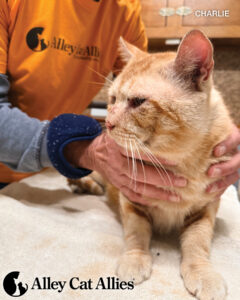
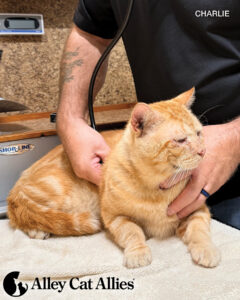
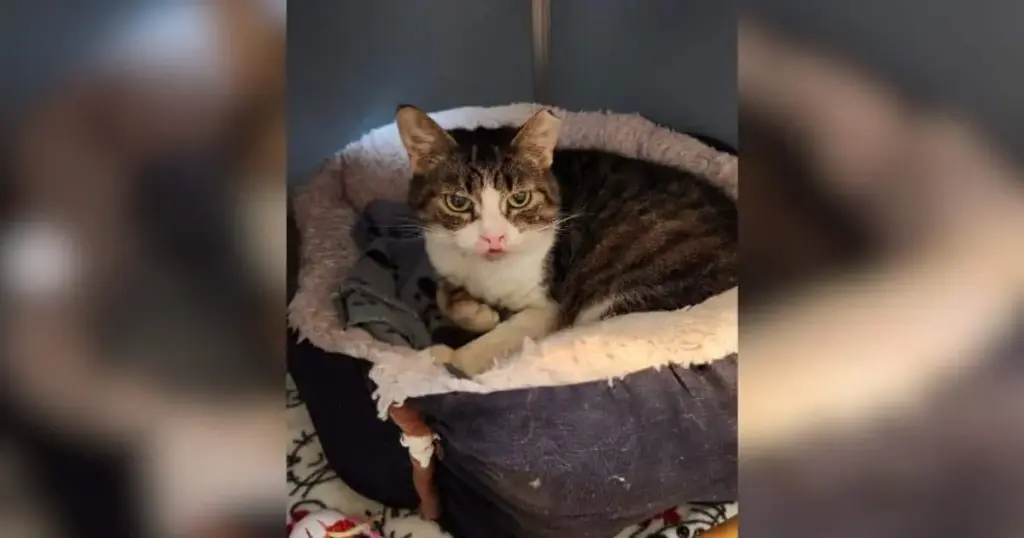
Field operations often unearth animals suffering from chronic, pre-existing conditions exacerbated by environmental disasters. Such was the case with Charlie, a remarkably large 21-pound feline discovered by the Rapid Response Team during the Atlantic County flood recovery operations.
Upon intake and thorough medical examination, veterinarians identified entropion, a painful congenital or developmental condition in which the eyelid rolls inward. This causes the eyelashes and surrounding fur to constantly rub against the cornea, resulting in chronic irritation, corneal ulceration, and potential blindness if left untreated.
Charlie was immediately placed on a specialized palliative medication regimen to manage his pain and reduce ocular inflammation while surgical scheduling was finalized. Next week, Charlie is slated to undergo specialized entropion corrective surgery. Because Alley Cat Allies maintains deep institutional experience with complex ophthalmic and dermatological recovery processes, veterinary teams are confident in a successful outcome. Charlie’s case underscores an organizational tenet: no matter the financial or medical complexity of an individual rescue, Alley Cat Allies refuses to compromise on the quality of life afforded to an animal in need.
4. From Critical Condition to Thriving Life: The Story of Juni
Disaster response and emergency medicine frequently yield stories of profound transformation. Four years ago, the Alley Cat Allies Cat Help Desk received a frantic distress call regarding a tiny kitten found in critical condition.
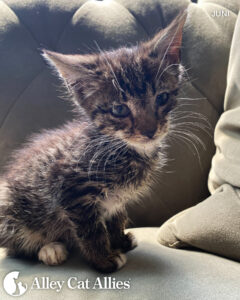
Admitted under the moniker "Journey," the kitten was an extreme medical emergency: hypothermic (cold to the touch) and suffering from advanced pneumonia that rendered her nearly immobile. Standard shelters often struggle to allocate the intensive, round-the-clock care required for neonatal kittens with compromised respiratory systems. However, through Alley Cat Allies’ robust network of veterinary partners and specialized neonate protocols, Journey received life-saving oxygen therapy, thermal regulation, and targeted pharmacology.
Journey did not merely survive; she thrived. Today, renamed Juni, she lives as a healthy, vibrant four-year-old cat with her adoptive family. Notably, she has formed an inseparable bond with her adoptive feline brother, Loki. The two are constant companions, illustrating the profound long-term impact of early medical intervention and dedicated rescue networks.
5. Defending Community Cats in San Juan, Puerto Rico: The Legacy of DF
Beyond mainland emergency deployments, Alley Cat Allies maintains a continuous, systemic presence in international territories, most notably in San Juan, Puerto Rico. Here, the San Juan Protection Team operates year-round to protect free-roaming community cats and empower local caregivers.
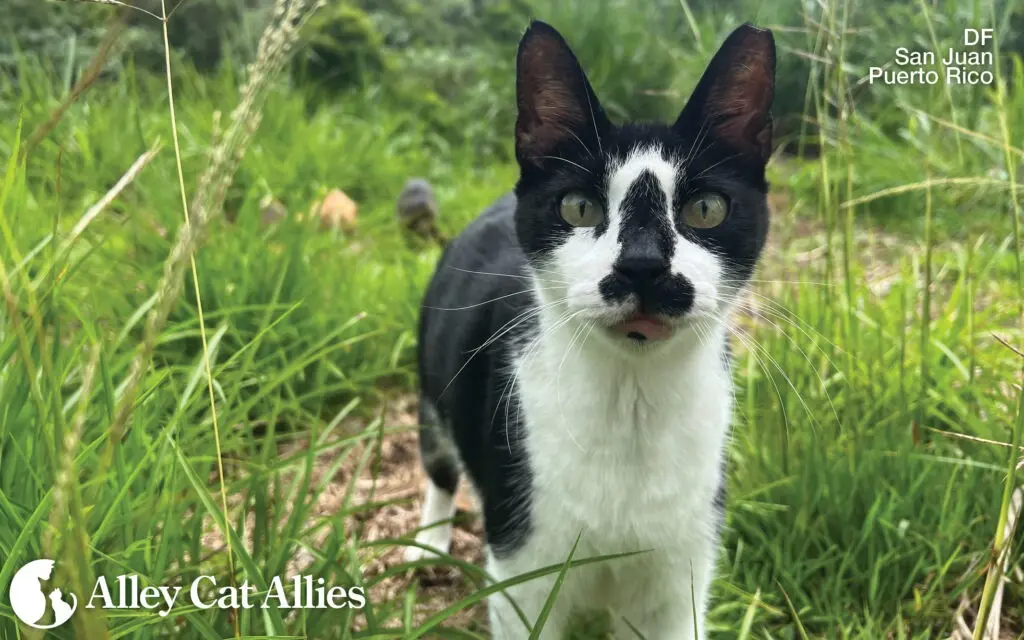
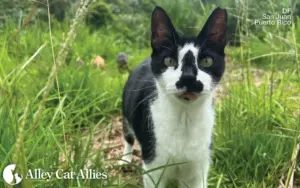
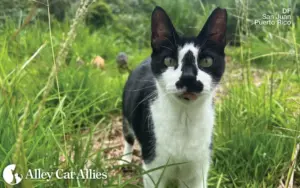
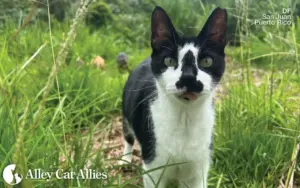
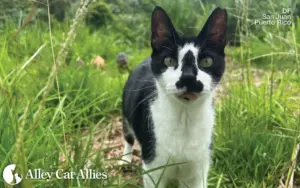
Among the many residents of this managed outdoor network is DF, an iconic eight-year-old community cat whose name stems from an origin story lost to time (though affectionate caregivers continuously solicit new suggestions). Easily identifiable by his signature look—his tongue resting perpetually and slightly outside his mouth—DF embodies the resilience of outdoor felines. While entirely independent, he is known to happily accept Churu treats from human allies.
DF’s survival and high quality of life are direct results of sustained advocacy. For years, Alley Cat Allies has fought against lethal, government-sponsored population control initiatives in Puerto Rico, replacing antiquated eradication policies with humane, evidence-based programs:
Trap-Neuter-Return (TNR): Stabilizing population growth organically and humanely.
Targeted Medical Access: Providing routine and emergency veterinary care for outdoor cats.
Resource Distribution: Supplying local caregivers with consistent food and hydration logistics.
Through these sustained efforts, cats like DF continue to thrive in their natural outdoor habitats. Supporters can witness this ongoing victory by viewing the organization’s newly released documentary footage, available on YouTube via the official Alley Cat Allies Global Cat Day Feature.
Supporting Context & Metrics
The scope of Alley Cat Allies’ operational readiness is underpinned by decades of institutional growth and community trust. Founded in 1990, the organization revolutionized the animal welfare landscape in the United States by introducing and championing Trap-Neuter-Return as the standard, humane alternative to the mass catch-and-kill policies that previously dominated municipal animal control.
Key Organizational Metrics:
Global Supporter Base: Over 1.8 million active supporters worldwide contribute to the mission, funding rapid responses, veterinary grants, and legislative advocacy.
Geographic Reach: Active operations span all 50 U.S. states, numerous U.S. territories including Puerto Rico, and international collaborative initiatives.
Intervention Efficacy: Thousands of cats annually receive direct emergency medical intervention, disaster evacuation support, and specialized surgical care funded directly through donor contributions.
Official Statements and Institutional Perspective
The philosophy driving Alley Cat Allies’ dual focus on immediate disaster relief and systemic policy reform is rooted in an uncompromising ethical standard. Leadership emphasizes that animal protection cannot be compartmentalized; emergency triage must seamlessly transition into long-term advocacy.
"When a disaster strikes—whether it is a hurricane on the Gulf Coast, a nor’easter in New Jersey, or systemic institutional threats in Puerto Rico—cats and kittens are among the most vulnerable casualties," notes the Alley Cat Allies communications directorate. "Our Rapid Response Team exists to bridge the gap between catastrophe and survival. We do not back down, we do not compromise on a cat’s well-being, and we rely on the extraordinary generosity of our 1.8 million supporters to make these life-saving interventions possible."
Furthermore, the organization stresses that disaster preparedness is a community responsibility. By pushing educational resources like alleycat.org/DisasterTips into the public sphere ahead of meteorological events like Hurricane Isaias, Alley Cat Allies seeks to minimize animal abandonment and ensure that companion animals are factored into official evacuation planning.
Future Outlook
As climate volatility increases the frequency and severity of extreme weather events, organizations like Alley Cat Allies must continually adapt their operational models. The coming months will require:
Post-Storm Assessment on the Gulf Coast: Immediate deployment of veterinary triage units following Hurricane Isaias to address displaced colonies and structural damages to managed feeding stations.
Long-Term Rehabilitation of Storm Victims: Overseeing the complete recovery of the Atlantic County kitten litter and monitoring Charlie’s post-operative healing following his entropion surgery.
Expansion of International Protection Programs: Strengthening the San Juan Protection Team’s infrastructure to permanently safeguard Puerto Rico’s community cats against regressive municipal policies.
The overarching mission remains clear: building a world where every cat is valued, and every community possesses the legal protections, medical resources, and humane frameworks necessary to defend them. Supporters wishing to bolster these ongoing efforts are encouraged to contribute to the disaster response and medical funds directly via alleycat.org/donate.