
Executive Overview
High above the Arctic Circle, in the sprawling and unforgiving expanse of Alaska’s Western Arctic, lies a landscape of profound ecological consequence: Teshekpuk Lake. Recognized globally as one of the most critical wetland ecosystems on Earth, this remote frontier is far more than a geographical curiosity; it serves as a cradle of biodiversity, a foundational nursery for millions of migratory birds, and an ecological barometer for a rapidly warming planet.
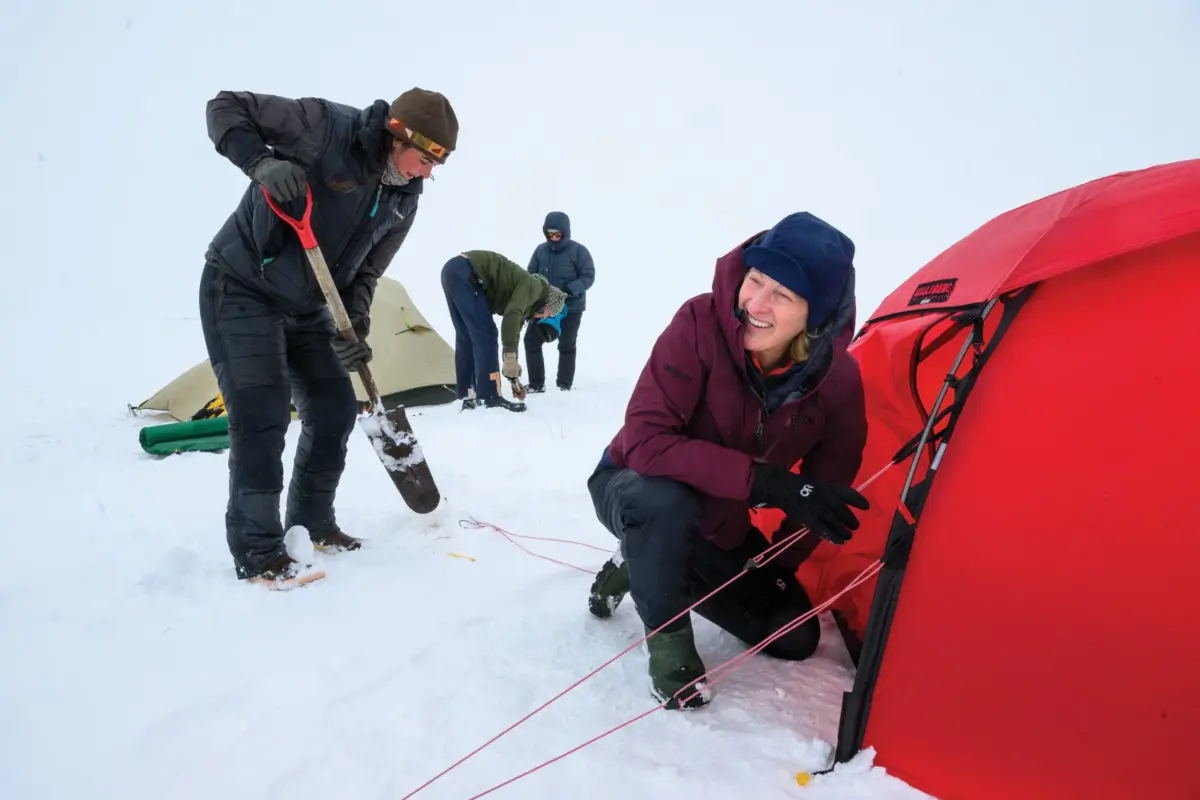
In a recent expedition chronicled by the leadership of the National Audubon Society, conservationists braved lingering winter conditions, sub-zero temperatures, and unpredictable Arctic winds to bear witness to the fragile beauty of Teshekpuk Lake. Pitched on the northwestern shore of the lake, the expedition underscored a central tenet of modern environmental stewardship: while remote, the Arctic is intricately connected to the health of ecosystems thousands of miles away.
This article explores the multilayered significance of Teshekpuk Lake, examining its role as a premier breeding ground for transcontinental avian species, the immediate and compounding threats posed by a shifting global climate, and the broader mandate of hemispheric conservation. Through an authoritative journalistic lens, we trace the chronology of the recent expedition, analyze the quantitative metrics underpinning Arctic biodiversity, detail official statements from environmental leaders, and project the long-term trajectory required to "bend the bird curve" in an era of unprecedented environmental transformation.
Detailed Chronology: An Expedition into the Heart of the Western Arctic
Arrival and the Grip of Winter
The expedition to Teshekpuk Lake was meticulously planned to coincide with the onset of the Arctic spring—a seasonal transition historically characterized by the sudden explosion of life, the melting of ice sheets, and the arrival of myriad avian species. However, upon arrival, the reality of the high North proved far more unyielding.
Rather than the anticipated thaw, the expedition encountered a landscape still tightly bound by winter’s grip. Vast sheets of snow and thick ice blanketed the tundra. For the team—equipped with skis, snowshoes, and the necessary gear for survival in a region devoid of human infrastructure—every operational step demanded rigorous attention. In this environment, human life is immediately stripped to its foundational essentials: warmth, navigation, physical safety, and caloric intake.
This stark simplification of existence serves to heighten the sensory experience of the wilderness. Without the auditory and visual clutter of modern civilization, the natural rhythms of the Arctic emerge with crystal clarity.
Three Days on the Tundra: Avian Abundance Amid Ice
Over the course of three intensive days traversing the snow-covered tundra, the expedition documented a staggering diversity of wildlife despite the delayed spring. Nearly 30 distinct bird species were observed navigating the frozen landscape, relying on ancestral adaptations to survive the late-season freeze.
- Snow Geese (Anser caerulescens): Filling the air with their iconic vocalizations, large flocks were observed utilizing the early staging areas.
- Loons (Gavia spp.): Their haunting, resonant calls carried across the frozen expanses of the lake, echoing against the horizon where ice, water, and sky blurred into a seamless white expanse.
- Cranes and Ptarmigans: Specialized ground-dwelling and wetland species were documented utilizing the sparse shelter provided by topographical depressions and snowdrifts.
The proximity of these species to the human encampment was striking. At night, the calls of migrating birds felt close enough to brush against the tent walls, bridging the psychological gap between the observer and the wild inhabitants of the sanctuary.
The Duality of Environmental Leadership
For executive leadership, such expeditions offer a jarring and necessary transition between two diametrically opposed worlds. One day requires navigating corporate partnerships, regulatory frameworks, and complex budgetary spreadsheets in urban boardrooms; the next demands scanning a frozen horizon with binoculars in one hand and bear spray in the other.
Yet, these two spheres are inextricably linked. The strategic decisions forged in conference rooms ultimately dictate the survival of ecosystems thousands of miles away. Standing on the shores of Teshekpuk Lake brought the abstract mission of conservation into sharp, personal focus, transforming data points on a map into living, breathing habitats that demand defense.
Supporting Context & Metrics: The Ecological Anatomy of Teshekpuk Lake
To fully grasp why conservation organizations have fought for decades to secure the ecological integrity of Teshekpuk Lake, one must examine the specific geographical, hydrological, and biological metrics that define the region.
A Hemispheric Crossroads
Teshekpuk Lake is the largest thermokarst lake in the world, spanning roughly 315 square miles within the National Petroleum Reserve in Alaska (NPR-A). Surrounded by low-lying tundra, intersecting streams, and myriad smaller ponds, the lake forms the heartland of a globally significant wetland complex.
[The Arctic Breeding Grounds: Teshekpuk Lake]
       │
       ├──> Pacific Flyway (Waterfowl, Shorebirds)
       ├──> Mississippi Flyway (Songbirds, Raptors)
       └──> Intercontinental Routes (Connecting to South America, Asia, and Australasia)
Birds originating from all seven continents or traversing multiple hemispheres converge on the Arctic during the brief summer window. The avian species that breed at Teshekpuk do not remain localized; their annual migrations connect the frozen northlines to the wetlands of California, the coastal marshes of the Gulf of Mexico, the grasslands of the American Midwest, and ecosystems as far away as South America and Asia.
The Temporal Precision of Arctic Spring
Life in the Arctic operates on an exacting, unforgiving timeline. The biological window for breeding, nesting, and rearing young is remarkably narrow—often compressed into a frantic two-to-three-month span.
- Hydrological Shift: As temperatures rise, accumulated snow and ice give way to rushing meltwater, liberating aquatic invertebrates and initiating the trophic cascade of the food web.
- Insect Emerge: Millions of midges, mosquitoes, and aquatic insects hatch synchronously, providing the essential protein-rich diet required by nesting shorebirds and waterfowl.
- The Tipping Point: If climate anomalies disrupt this timing—such as a delayed thaw or an unseasonal early frost—the cascading effects reverberate through the entire food web. A mismatch between insect emergence and chick hatching can lead to catastrophic breeding failure for vulnerable populations.
Climate Vulnerability and Ecological Indicators
Birds function as the ultimate biological sentinels. Because their life cycles are synchronized with environmental variables across thousands of miles, they register ecological stress long before it becomes visible to human observers.
In the Arctic, climate change is occurring at nearly four times the rate of the global average. Permafrost thaw, shifting precipitation patterns, altered hydrology, and changing wildfire regimes are fundamentally reshaping tundra habitats. The degradation of wetlands at Teshekpuk Lake would not only devastate local populations of nesting waterfowl and shorebirds but would also trigger a domino effect along global flyways.
Official Statements and Perspectives
The imperative to protect landscapes like Teshekpuk Lake has mobilized a coalition of scientists, conservationists, and indigenous leaders. Below are synthesized perspectives representing the core philosophy of contemporary Arctic stewardship.
"You do not need to camp at Teshekpuk Lake to feel connected to it. Birds have made the connection for us. They carry Arctic whispers into our communities and yards."
— National Audubon Society Leadership
Reflecting on the psychological and physical distance between urban population centers and the remote Arctic, conservation advocates emphasize that ecological health is indivisible. The migratory species that spend their summers on the shores of Teshekpuk are familiar visitors to municipal parks, suburban backyards, and agricultural wetlands across the temperate zones.
"Bending the bird curve begins with birds, but it reaches far beyond them. It means protecting the places life depends on in a changing climate. Teshekpuk reminded me of how miraculous and personal this work is."
The concept of "bending the bird curve"—actively reversing the steep, multi-decade decline in global avian populations—requires holistic landscape-level protection. Habitat loss, fragmentation, and climate disruption present compound threats that cannot be mitigated solely through localized species management. True conservation demands the safeguarding of entire ecological networks, from the Arctic breeding grounds to wintering grounds thousands of miles south.
Future Outlook: The Road Ahead for Arctic Conservation
As the global community confronts the escalating realities of climate change and biodiversity loss, the future of Teshekpuk Lake hangs in a delicate balance. Ensuring the long-term resilience of this vital ecosystem requires a multifaceted strategic approach spanning policy, science, and public engagement.
1. Defending Regulatory Protections
The legal status of Alaska’s Western Arctic remains a frequent battleground between industrial energy development and environmental preservation. Ensuring permanent, unyielding protections for the critical nesting and molting habitats around Teshekpuk Lake is paramount. This requires robust advocacy against resource extraction projects that threaten the hydrological and ecological integrity of the wetland complex.
2. Advancing Climate-Smart Science
Conservation strategies must evolve in tandem with a rapidly changing climate. Predictive modeling, satellite telemetry, and on-the-ground ecological monitoring are essential for tracking shifts in avian migration timing, reproductive success, and habitat utilization. By understanding how species adapt—or fail to adapt—to shifting thermal regimes, scientists can better target conservation interventions.
3. Fostering Hemispheric Partnerships
Because migratory birds cross international borders, municipal jurisdictions, and cultural divides, effective protection cannot be achieved in isolation. Strengthening international treaties, supporting indigenous-led stewardship initiatives, and collaborating across hemispheric flyway networks are critical components of a sustainable conservation framework.
4. Cultivating Public Connection
Ultimately, the political and financial will required to protect remote landscapes like Teshekpuk Lake stems from public awareness and emotional resonance. When citizens recognize that the songbirds in their local parks depend on the preservation of a frozen lake in Alaska, conservation transforms from an abstract policy debate into a deeply personal imperative.
Conclusion
The expedition to Teshekpuk Lake serves as both a sobering reminder of the fragility of the natural world and an inspiring testament to its resilience. In an era defined by environmental uncertainty, the Arctic remains a place of raw, uncompromised power—a landscape where life pushes through the ice against overwhelming odds.
By listening to the birds that bridge the distance between the frozen north and our own backyards, we are called to action. Protecting Teshekpuk Lake is not merely an act of preserving a remote Alaskan wetland; it is a vital commitment to the health of our shared planet and the future of life across the hemisphere.