
Executive Overview
In an era defined by accelerating climate volatility and the rapid fragmentation of natural ecosystems, a quiet revolution is taking root across the working landscapes of California. On September 14, 2026, the National Audubon Society officially announced that five distinct California ranches have achieved its coveted Bird-Friendly Land Certification. This milestone injects fresh momentum into a statewide conservation movement, expanding the footprint of enhanced, ecologically resilient habitat by thousands of acres and bringing the total California acreage under the Audubon Conservation Ranching (ACR) umbrella to more than 314,000 acres.
The newly certified producers—C&R Ranch near Red Bluff, Deer Creek Hills Preserve near Sacramento, Durst Home Ranch near Capay, Gabilan Ranch near San Juan Bautista, and Jalama Canyon Ranch near Lompoc—represent a diverse cross-section of California’s topography. From the rolling oak savannas of the north state to the coastal canyons of the Central Coast, these properties demonstrate that profitable livestock production and rigorous environmental stewardship are not mutually exclusive. Instead, they prove that well-managed cattle can act as vital ecological agents, restoring the health of native grasslands that have suffered precipitous declines for more than half a century.
By meeting the stringent, science-based standards of the ACR program, these five ranches have unlocked the ability to display the "Audubon Certified Bird-Friendly" seal on their beef products. This empowers conscientious consumers to vote with their wallets, turning everyday grocery purchases into direct contributions toward the preservation of North America’s most imperiled avian biome.
Detailed Chronology: The Growth of Audubon’s California Conservation Footprint
The Genesis of a Grassland Crisis
To understand the significance of this 2026 milestone, one must look at the broader trajectory of North American ecology. Since 1970, grassland birds have experienced the steepest and most persistent population declines of any terrestrial biome on the continent. Decades of agricultural intensification, urban sprawl, and the suppression of natural ecological cycles have fractured the vast prairies and rangelands that once supported millions of migratory and resident birds.
In California specifically, the stakes are exceptionally high. The state boasts roughly 61 million acres of rangeland, serving as the biological bedrock for vital ecosystem services—ranging from foundational food production and carbon sequestration to critical water infiltration and wildlife refuge. Yet, this natural capital is vanishing at an alarming rate. Peer-reviewed research indicates that approximately 20,000 acres of California grasslands are converted to other uses annually. This relentless loss strips away the intact, high-quality rangelands that ground-nesting and migratory birds desperately need to complete their life cycles.
Expanding the Program Westward
Recognizing that the vast majority of remaining grassland habitats exist on private lands, Audubon realized that long-term conservation success depended entirely on active partnerships with the farmers and ranchers who manage them. Rather than pushing for restrictive land lockouts, Audubon chose a collaborative model: working hand-in-hand with agricultural producers to align livestock management with avian ecology.
Following the launch of the Audubon Conservation Ranching initiative nationally, the program made a critical strategic expansion into California in 2019. Pelayo Alvarez, Program Director for Audubon Conservation Ranching in California, recalls the early days of this western expansion.
"These five ranches expressed interest in Audubon Conservation Ranching almost immediately as the program was coming into California," Alvarez noted. "Now, we’re proud to partner with these producers, each of which is successfully managing its acreage to support birds and other wildlife. From the start, it was clear that all five managers wanted to be good land stewards and learn as much as possible about the flora and fauna in these landscapes."
Over the subsequent seven years, the program steadily built momentum. Today, Audubon partners with 20 certified ranching operations across the Golden State. Through voluntary, science-driven management plans tailored to each property’s specific ecological pressures, these ranches have collectively transformed over 314,000 acres into functional, biodiverse landscapes where cattle and rare birds thrive side-by-side.
Supporting Context & Metrics: The Science of Bird-Friendly Ranching
Achieving Audubon’s Bird-Friendly Land Certification is no nominal designation. It requires producers to submit to rigorous, independent audits verifying that their operations meet uncompromising standards across three core pillars: habitat management, environmental sustainability, and animal welfare.
Tailored Habitat Management Plans
The journey to certification begins in the dirt. Producers collaborate directly with Audubon range ecologists to draft bespoke Habitat Management Plans. These blueprints are tailored to the unique microclimates, soil compositions, and topographical features of each ranch, utilizing three primary operational tools:
- Adaptive Rotational Grazing: Mimicking the historic movement patterns of native herbivores like elk and pronghorn, ranches use high-intensity, short-duration grazing followed by extended rest periods. This cyclical pressure prevents overgrazing, stimulates root growth, and breaks up soil crusting, allowing native perennial grasses to outcompete invasive weeds.
- Invasive Species Control: Aggressive removal of non-native vegetation reduces wildfire hazards and restores natural plant communities that native insects—and the birds that feed on them—rely upon.
- Riparian and Native Plant Restoration: Protecting sensitive waterways, oak savannas, and shrub layers ensures that diverse micro-habitats are available for specialized nesting, foraging, and brooding.
Payton Thomas, Rangeland Ecologist for the ACR program in California, underscores the profound ecological impact of these practices.
"All five ranches are demonstrating exemplary bird-friendly management, using rotational grazing to achieve specific goals and adapting their practices based on changing environmental conditions and monitoring results," Thomas explained. "Their bird-friendly grazing practices create a mosaic of grassland habitat that supports the breeding, nesting, and foraging needs of a variety of priority species across the state."
Spotlight on the Newly Certified Producers
The five ranches newly inducted into the program showcase the incredible geographic and ecological diversity of California agriculture. Each brings a unique story of dedication, innovation, and generational land stewardship.
1. C&R Ranch (Red Bluff, Tehama County)
Situated in the northern Sacramento Valley, C&R Ranch spans two primary properties—Los Molinos Ranch and Paskenta Ranch—providing essential refuge for priority avian species such as the Western Kingbird and the Lark Sparrow. Owners Charlotte and Roy Ekland utilize a seasonal rotational grazing strategy, moving beef cattle across the two landscapes with high-intensity pulses and long rest periods.
"Our family loves birds, and we’re proud to partner with Audubon to enhance wildlife habitat on our ranch, especially as blue oak savannas continue to disappear in California," shared Charlotte and Roy Ekland. "We see tremendous value in using rotational grazing and other bird-friendly practices to improve our soil health, support biodiversity, and strengthen the resilience of our land."
2. Deer Creek Hills Preserve (Sacramento County)
Managed by the Sacramento Valley Conservancy (SVC), Deer Creek Hills is a sprawling nature preserve and working cattle ranch in the southeastern foothills of Sacramento County. Encompassing one of the last remaining large-scale expanses of blue oak woodland, native grassland, and riparian habitat in the region, it is an ecological haven for the Savannah Sparrow and the Oak Titmouse. Cattle graze the property strictly on a seasonal basis, with stocking rates meticulously calculated around annual forage growth.
"As land managers, SVC stewards land in a way that supports responsible livestock grazing and humane animal care," said Eric Kellegrew, Stewardship Director for SVC. "This extends beyond cattle; it includes high-quality habitat for birds and other wildlife, long-term sustainability, which supports biodiversity and resilient ecosystems. The ACR recognition is a testament to decades of work by SVC staff, docents, long-time rancher Mike Harry, and a multitude of conservation partners who help keep Deer Creek Hills wild and healthy."
3. Durst Home Ranch (Capay, Yolo County)
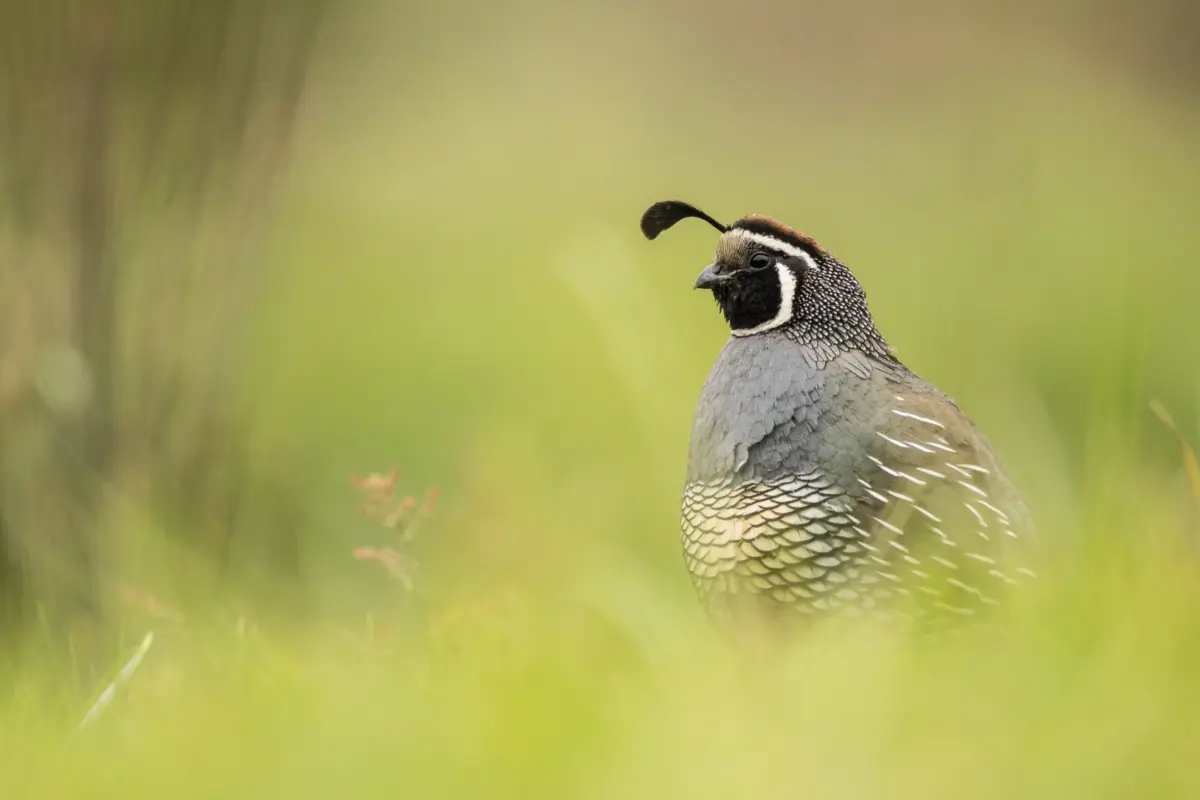
Nestled in Yolo County, Durst Home Ranch serves as a vital corridor for iconic local birds, including the California Quail and the Western Bluebird. Grazing operations are managed by Cline Livestock Co., whose principal, Adam Cline, brings invaluable expertise as a grazer at Audubon’s own Bobcat Ranch demonstration site in Winters. Together, they deploy strategic grazing rotations designed to encourage desirable forage species, stimulate oak tree regeneration, and maintain healthy shrub cover along critical riparian corridors.
"The Durst Home Ranch has welcomed the opportunity to partner with Cline Livestock and Audubon to develop a conservation plan to enhance habitat for wildlife, build soil health and grow healthy livestock feeds," noted Fritz Durst, Manager and Shareholder of the ranch.
4. Gabilan Ranch (San Juan Bautista, Monterey & San Benito Counties)
Staddling Monterey and San Benito counties, Gabilan Ranch is owned and operated by the Reeves, Baldocchi, and Boyle families, whose roots on the land stretch back nearly a century. Comprising annual grasslands, sweeping valley oak woodlands, and dynamic riparian zones, the ranch represents a critical sanctuary for the California Condor, a state and federally endangered species. The family actively manages a specialized feeding station complete with cull carcasses and motion-activated cameras to monitor visiting condors, while maintaining a regenerative cow-calf operation.
"Our family has been on Gabilan Ranch for almost 100 years. We have always managed the land for the benefit of wildlife as well as to support a regenerative grazing strategy for our cow-calf operation," reflected Darrell Boyle, Chairman of Gabilan Ranch. "We control grazing in pastures to protect ground-nesting birds; we introduced Tule elk to the Gabilan Range; we have a nesting pair of California Condors on the ranch; and we get to watch bald eagles fledge every year. Working with Audubon helps us provide a home to an abundance of bird species."
5. Jalama Canyon Ranch (Lompoc, Santa Barbara County)
Located within the rugged landscapes of Santa Barbara County, Jalama Canyon Ranch is managed by the White Buffalo Land Trust, which took ownership of the property in 2021. Operating under a core mission to practice, promote, and scale regenerative agriculture, the trust utilizes carefully managed herds of beef cattle and goats. Their grazing intensity is high enough to suppress invasive shrub encroachment, yet punctuated by long, deliberate rest periods that allow fragile perennial grasses to recover and flourish. This careful balance provides stellar nesting habitat for the Black-headed Grosbeak and the Grasshopper Sparrow.
"Regenerative grazing is ultimately about strengthening the relationship between people and land, and the return of grassland birds is one of the clearest signs that relationship is healthy," said Jesse Smith, Director of Land Stewardship for White Buffalo Land Trust. "We’re proud to partner with Audubon because their certification holds us to a high standard—showing that grazing with the right intensity and rest periods can bring perennial grasses, and the birds that rely on them, back to the Central Coast Ecoregion."
Future Outlook: Scaling Conservation Through the Marketplace
As these five ranches integrate the official Audubon Bird-Friendly certification seal onto their beef packaging, they bridge a historical gap between ecological preservation and consumer consciousness. For decades, conservationists and agricultural producers often found themselves at ideological odds. Programs like Audubon Conservation Ranching demonstrate that the future of wildlife protection lies in economic alignment.
By rewarding ranchers who practice regenerative, adaptive land management with market differentiation, the program creates a self-reinforcing feedback loop. Consumers purchasing certified beef are not merely buying a food product; they are actively financing the stewardship of over 314,000 acres of California rangeland, securing safe migratory stopovers, protecting endangered species like the California Condor, and preserving rural ranching heritage.
Looking forward, the National Audubon Society aims to continue expanding its network across the American West. With climate pressures mounting and grassland conversion rates threatening biodiversity, the success of C&R Ranch, Deer Creek Hills, Durst Home Ranch, Gabilan Ranch, and Jalama Canyon Ranch serves as a beacon of hope. They prove conclusively that when science, stewardship, and consumer choice align, working lands can work wonders for California’s winged wildlife.