
Executive Overview
The landscape of modern agriculture is undergoing a quiet, profound revolution. For generations, farmers and agronomists have wrestled with a stubborn compromise in soil testing: the eternal trade-off between speed, cost, and accuracy. Traditional laboratory testing—while historically serving as the gold standard for chemical and physical analysis—demands time, involves destructive sampling, and often incurs high costs that limit the frequency of testing. Consequently, agricultural management decisions have frequently relied on generalized insights or outdated data, leaving crop production vulnerable to inefficiencies, economic leakages, and environmental degradation.
Today, however, rapid advancements in soil measurement technologies are dismantling these historic compromises. Modern sensing tools, integrated data platforms, and ground-truthed analytics are redefining what is possible in the field. At the forefront of this shift is X-Centric Sciences, a pioneering firm working to bridge the gap between rigorous physical science and rapid, field-scale digital deployment.
According to Roozbeh Ravansari, Chief Executive Officer of X-Centric Sciences, the ultimate goal is not merely to digitize farming, but to make timely, highly accurate soil intelligence accessible for everyday agricultural decision-making. By combining physical ground measurements with artificial intelligence (AI), remote sensing, and digital management tools, the agtech sector is moving closer to a holistic view of soil health.
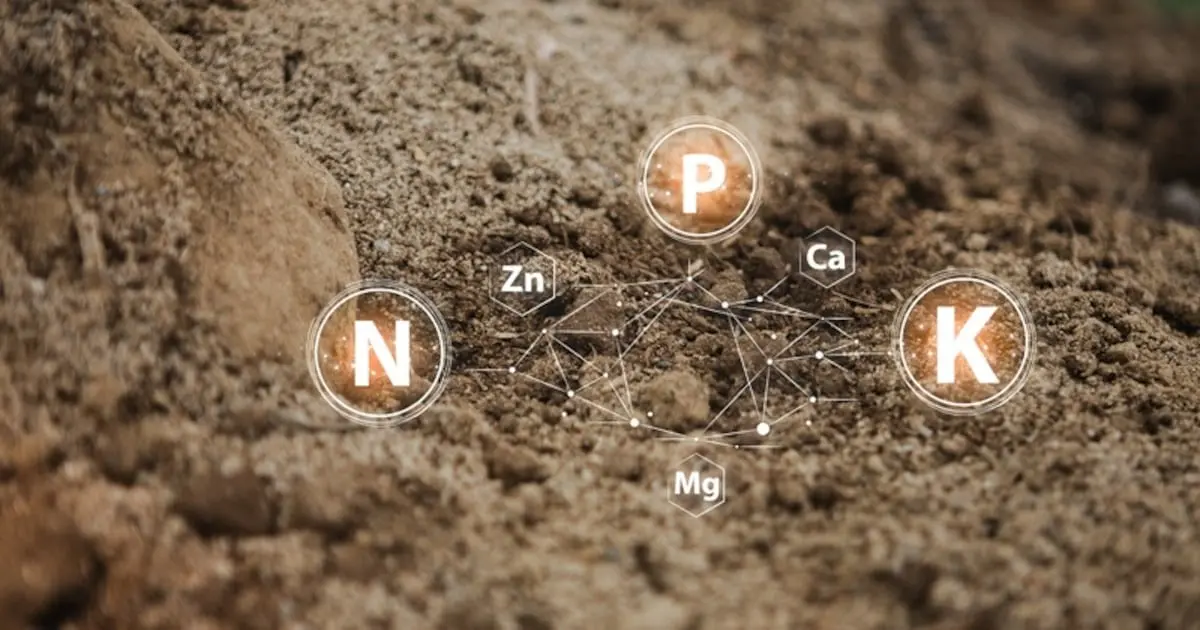
Yet, industry leaders emphasize that data volume is not a proxy for agricultural value. As modern sensing equipment generates unprecedented streams of real-time metrics—from macro- and micronutrient levels to pH balance and soil carbon content—the true bottleneck has shifted from collection to interpretation. Without interoperability, standardization, and actionable translation, data risks becoming white noise for busy growers.
This transformation is occurring against a backdrop of severe economic and environmental pressures. With volatile input costs, tightening margins, and escalating sustainability mandates, growers face unprecedented incentives to optimize every pound of fertilizer and drop of water. High-profile field validations—such as X-Centric Sciences’ ongoing collaboration with global food and beverage giant PepsiCo—are currently testing these integrated technologies in real operating environments. These partnerships are illuminating both the immense promise and the practical implementation hurdles of bringing next-generation soil intelligence from the lab bench to the tractor cab.
Detailed Chronology & Evolution of Soil Diagnostics
To understand the magnitude of the current shift in agricultural technology, one must trace the evolution of soil testing from its rudimentary origins to the sophisticated, multi-layered ecosystems emerging today.
The Era of Traditional Laboratory Dominance
For over a century, soil analysis was an exclusively offline, institutional endeavor. Agronomists and farmers would traverse fields, collect composite soil cores by hand, bag the samples, and ship them off to regional laboratories. There, technicians would dry, grind, and chemically extract nutrients using established wet-chemistry methods.
While these laboratory procedures yielded highly reliable data regarding baseline chemical compositions, the methodology possessed inherent limitations. The turnaround time—often ranging from several days to weeks—meant that results were historical records rather than real-time operational guides. Furthermore, because of the labor and financial costs involved, composite testing was typically conducted only once every few years, or once per rotation. This approach assumed spatial uniformity across vast acreage, ignoring the severe micro-variability that characterizes most modern farmlands.
The Rise of Precision Ag and Early Digital Mapping
The late 20th and early 20th-first centuries introduced precision agriculture, marked by the advent of Global Positioning Systems (GPS) and yield monitors. This era gave birth to grid sampling and targeted variable-rate technology (VRT). Farmers could finally apply lime and fertilizers at varying rates across a single field.
However, VRT was still fundamentally dependent on the underlying interpolation of sparse laboratory data points. Soil electrical conductivity (EC) mapping emerged to help map soil texture and moisture variations, but these proxies still required extensive calibration against physical ground samples. The industry remained fragmented, caught between expensive, high-accuracy lab tests and cheap, low-accuracy field proxies.
The Integration Horizon: Sensors, AI, and Ground-Truthing
Over the past five years, the convergence of material science, miniaturized sensors, machine learning, and cloud computing has broken through these traditional barriers. Modern mobile spectrometers, electrochemical sensors, and advanced optical probes can now perform complex analyses directly in the field or via mounted machinery, delivering results in minutes rather than weeks.
Crucially, modern innovators like X-Centric Sciences emphasize the concept of "ground-truthed soil intelligence." Rather than relying solely on remote sensing satellite data—which struggles to see beneath the soil surface—or isolated lab tests, contemporary architectures fuse multiple data streams. By anchoring remote sensing and AI predictions with calibrated, physical ground measurements, these platforms can dynamically model soil conditions across entire watersheds and field networks.
Supporting Context, Economic Drivers, and Market Metrics
The acceleration of soil-tech adoption is not merely a product of technological push; it is being aggressively pulled forward by profound macroeconomic and regulatory pressures facing global agriculture.
The Economic Squeeze on Inputs
Agricultural input costs—particularly synthetic fertilizers such as nitrogen, phosphorus, and potassium—have experienced extreme volatility over the past decade, driven by geopolitical conflicts, supply chain bottlenecks, and energy price fluctuations. For crop producers operating on notoriously razor-thin profit margins, inefficient fertilizer application represents a direct financial loss.
When fertilizer prices spike, the cost of over-application becomes prohibitive, while under-application risks capping yield potential. Consequently, growers have an unprecedented economic incentive to understand exact nutrient availability on a zone-by-zone, or even row-by-row, basis. Better soil intelligence transforms fertilizer management from an educated guess into a precise, risk-mitigated science, enabling producers to direct resources exactly where crops can utilize them most effectively.
Sustainability Mandates and Corporate Scope 3 Accounting
Beyond farm-gate economics, global food supply chains are undergoing a regulatory and corporate reckoning. Food processors, consumer packaged goods (CPG) companies, and retailers are making ambitious public commitments to reduce greenhouse gas emissions, enhance biodiversity, and improve soil organic carbon across their sourcing footprints.
Because a significant portion of a food corporation’s carbon footprint resides in agricultural supply chains (often categorized as Scope 3 emissions), these companies are heavily investing in regenerative agriculture initiatives. However, corporate sustainability programs face a massive verification challenge: how to accurately, cost-effectively, and scalably measure improvements in soil health, carbon sequestration, and nutrient efficiency across thousands of independent supplier farms. This institutional demand is serving as a primary financial engine for the commercial deployment of advanced soil-testing platforms.
Official Statements and Industry Insights
Industry leaders emphasize that successfully navigating this technological transition requires a clear-eyed assessment of both capabilities and structural hurdles.
Roozbeh Ravansari on the Shift to Actionable Intelligence
Roozbeh Ravansari, CEO of X-Centric Sciences, has been vocal about the need for the agtech sector to mature beyond simple gadgetry and data hoarding. In recent industry discussions, Ravansari highlighted that generating more data is not, in itself, a solution to agricultural challenges.
"Traditional laboratory testing remains important, but emerging technologies are creating opportunities to gather a broader range of soil insights more quickly in the field," Ravansari explained in an interview with AgNavigator. "At X-Centric, we are exploring how ground-truthed soil intelligence can complement existing approaches and make timely soil information more accessible for agricultural decision-making."
Looking toward the horizon, Ravansari envisions an ecosystem defined by multi-modal integration:
"I expect soil technologies to become increasingly integrated, combining physical measurement with digital tools, AI and remote sensing to provide a more complete view of soil conditions… The sector is sitting on an opportunity not just to help growers get data, but use it to inform decisions around inputs, productivity and long-term soil health."
Addressing the perennial risk of "data fatigue" among farmers—who are frequently bombarded by overlapping software subscriptions and sensor dashboards—Ravansari stressed the absolute necessity of interoperability:
"As these technologies mature, they are creating opportunities to collect information more quickly and more frequently. However, generating more data alone is unlikely to drive adoption. Progress could mean greater interoperability and more consistent approaches to how agricultural data is collected, interpreted and shared. Physical soil measurements will remain important, but there is also significant potential in combining ground-truthed data with tools such as AI and remote sensing."
Ultimately, Ravansari notes that technological viability is judged entirely by utility:
"If these systems can provide growers with timely, actionable insights rather than simply more data, they could support more informed farm management at scale. Continued investment, validation and collaboration across the agricultural ecosystem will be important to getting there."
PepsiCo and Colin Matthews on Real-World Field Validation
Moving theoretical models into working farm operations requires rigorous, hands-on empirical testing. X-Centric Sciences’ ongoing partnership with multinational food and beverage corporation PepsiCo provides a textbook example of how technology providers and corporate buyers collaborate to test innovation under real-world agronomic conditions.
Colin Matthews, APAC Agronomy Lead at PepsiCo, shed light on the mechanics and objectives of this partnership. The initiative is designed to investigate how real-time soil data can be integrated into large-scale precision nutrient programs across distinct operating environments.
"The collaboration has focused on understanding how information on indicators such as macro- and micronutrients, along with pH and soil carbon levels, could be used alongside existing agronomic practices to inform and influence our precision nutrient programmes," Matthews stated.
Crucially, Matthews pointed out that the greatest value of such early-stage enterprise collaborations lies not in marketing claims, but in operational learnings:
"An important outcome of the work so far has been the practical learning that comes from testing a technology in the field: understanding how the equipment performs across different conditions, how useful and actionable the resultant data is for our farming teams, and what would be required to integrate it into existing ways of working."
While optimistic about the long-term potential for resource efficiency, environmental sustainability, and cost reduction, Matthews maintains a rigorously scientific and measured perspective regarding corporate timelines:
"Over time, and when deployed at scale, we anticipate positively impacting outcomes in areas such as efficient resource use, improved cost efficiencies and enhanced sustainability outcomes. Those are areas we continue to evaluate rather than outcomes we would claim at this stage."
Future Outlook: The Road Ahead for Soil Health Technology
As the agtech sector looks toward the remainder of the decade, the trajectory of soil intelligence is poised to accelerate, driven by several converging technological and market vectors.
1. Standardization and Ecosystem Interoperability
The current fragmentation of farm management software (FMS) and proprietary sensor platforms remains a friction point for widespread adoption. Growers cannot be expected to manage five different apps for five different soil metrics. The future will necessitate open APIs, standardized data formats, and cross-platform interoperability. Just as USB standards unified computer peripherals, agriculture requires unified data protocols to allow physical ground-truth sensors, AI analytics engines, and machinery guidance systems to "speak" the same language seamlessly.
2. Autonomous and Automated Sampling
Manual soil sampling, even when accelerated by modern tools, still requires human labor. The next frontier will likely see the integration of soil-sensing payloads onto autonomous agricultural robots, drones, and self-driving tractors. Imagine an autonomous utility vehicle traversing a field post-harvest or pre-planting, continuously extracting micro-samples or running non-destructive spectral scans across thousands of georeferenced points, updating the farm’s digital twin in real time.
3. Verification of Carbon Markets and Regenerative Outcomes
As global carbon markets mature, the demand for verifiable, immutable, and scientifically rigorous soil carbon measurement will skyrocket. Corporations and carbon credit registries cannot rely on modeled estimates alone; they require empirical, ground-truthed verification to prevent greenwashing and ensure additionality. Technologies that can rapidly and cost-effectively verify soil organic matter changes year-over-year will unlock billions of dollars in ecosystem service payments for progressive growers.
Conclusion
The transition from reactive, intuition-based soil management to proactive, data-driven soil intelligence is no longer a futuristic abstraction—it is actively unfolding in fields across the globe. Through the combined efforts of technology innovators like X-Centric Sciences, forward-thinking corporate stewards like PepsiCo, and millions of pragmatic growers, the age-old trade-offs of soil testing are finally giving way to speed, scale, and uncompromising accuracy. As integration deepens and actionable insights replace raw data fatigue, soil technology will cement its role as the indispensable bedrock of sustainable, profitable 21st-century agriculture.