
Executive Overview
For generations, mammalian embryology and molecular genetics operated under a foundational assumption: the DNA inside a newly fertilized egg was a structural "blank slate." Conventional wisdom dictated that the genetic material within a zygote existed as a loose, chaotic, and disorganized bundle of chromatin. According to this long-held paradigm, the genome remained largely unstructured, drifting aimlessly until the embryo underwent Zygotic Genome Activation (ZGA)—the critical developmental milestone where the embryo’s own genes finally "wake up" and begin directing its biological destiny. Only after this awakening, scientists believed, did order, spatial organization, and structural hierarchy emerge from the molecular primordial soup.
That paradigm has now been shattered.
In a pair of landmark studies published concurrently in Nature Genetics and Nature Cell Biology, an international team of researchers has revealed that the genome is far from chaotic at the dawn of life. Instead, it exhibits an astonishingly sophisticated, highly disciplined level of 3D organization long before the genetic program officially initiates. Spearheaded by Professor Juanma Vaquerizas and his colleagues, the research team developed a revolutionary high-resolution mapping technology known as Pico-C. This cutting-edge tool has allowed scientists to peer deeper into the nuclear architecture of early embryos than ever before, uncovering an elaborate spatial scaffolding taking shape well before transcription begins.
This early folding pattern is far more than a microscopic curiosity; it is the physical prerequisite for life itself. The precise spatial arrangement of DNA dictates which genes can be accessed, read, and switched on during development—a choreography essential for proper cellular differentiation and the prevention of developmental abnormalities.
To read the genome is not merely to scan a linear sequence of base pairs; it is to navigate a complex, three-dimensional spatial architecture. When this architecture is disrupted, the consequences are catastrophic. In a companion study led by Professor Ulrike Kutay and her collaborators at ETH Zürich in Switzerland, researchers demonstrated that the collapse of these structural frameworks in human cells triggers a cellular identity crisis. Mistaking the structural breakdown for a foreign viral invasion, human cells launch an aggressive innate immune response—a false alarm that incites chronic inflammation and paves the way for severe disease.
Together, these findings bridge a fundamental knowledge gap in molecular biology, redefining our understanding of how life constructs itself from a single cell and what happens when those molecular foundations crumble.
Detailed Chronology: From Biological Dogma to the Pico-C Breakthrough
Dismantling the "Blank Slate" Hypothesis
The history of molecular biology is marked by technological horizons. For decades, researchers studying embryogenesis were severely constrained by the limitations of their instruments. Traditional methods for mapping chromatin conformation—such as Hi-C and its various iterations—required millions of cells to generate a reliable signal. Because early-stage embryos and newly fertilized eggs provide only vanishingly small quantities of biological material, scientists had to pool massive numbers of samples, effectively averaging out the unique structural states of individual cells and obscuring the earliest events of development.
Because these early snapshots were blurry, developmental biologists filled the observational void with a logical assumption: chaos preceded order. It was widely accepted that chromatin underwent a massive decondensation following fertilization, stripping away paternal and maternal epigenetic marks to create a tabula rasa.
However, Professor Juanma Vaquerizas and lead author Noura Maziak suspected that nature was far more deliberate. They hypothesized that the traditional view of pre-activation chaos was merely an artifact of technological limitation. To test this, the team set out to engineer a technology sensitive enough to map the three-dimensional architecture of genomes in ultra-low-input samples, paving the way for the invention of Pico-C.
The Mechanics of Pico-C: Seeing the Invisible
Pico-C represents a quantum leap in functional genomics. By drastically optimizing the steps of chromatin conformation capture, the research team engineered an assay capable of mapping 3D interactions using approximately ten times less biological material than standard techniques. This unprecedented sensitivity transformed the landscape of early developmental biology.
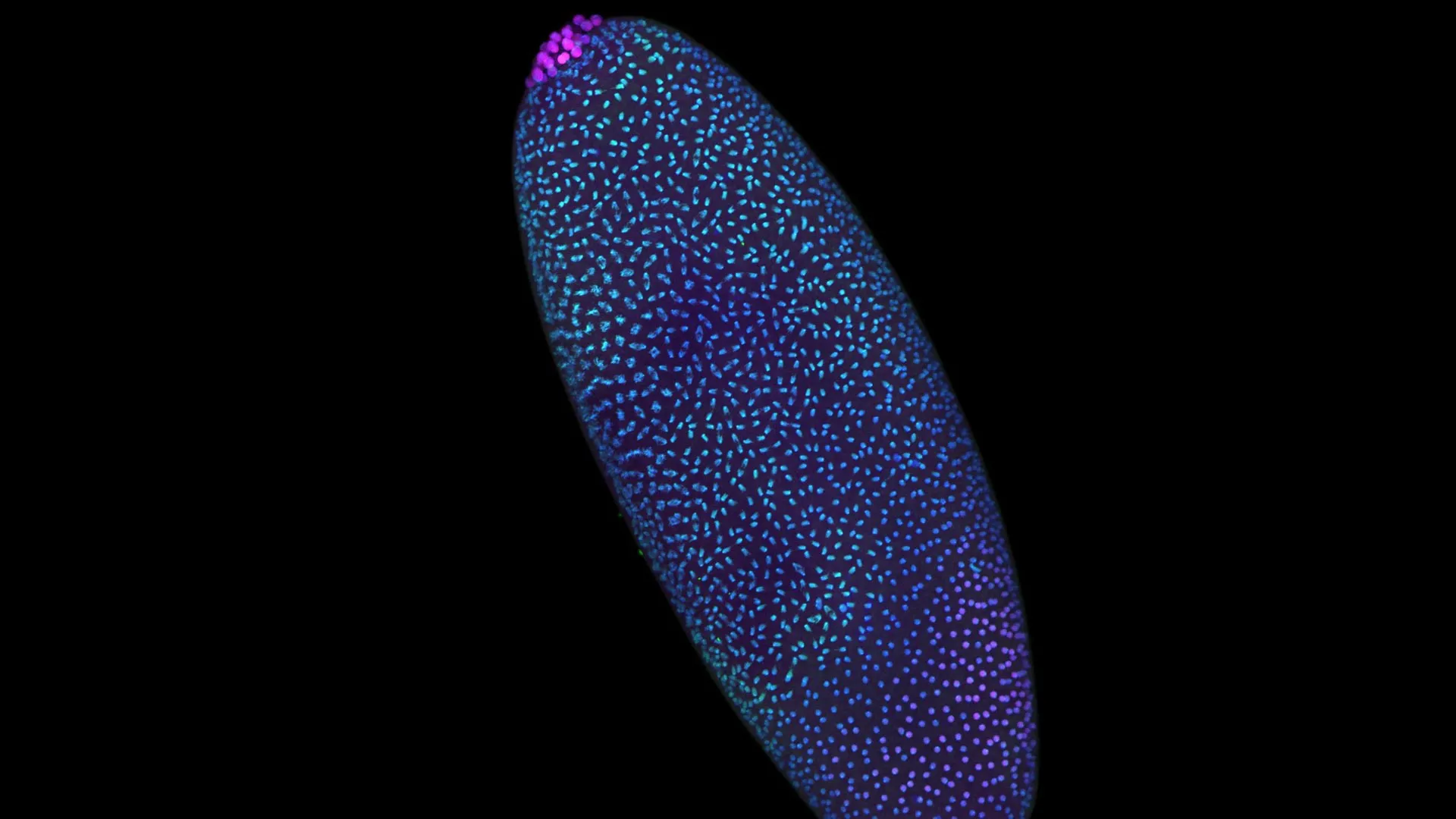
The researchers deployed Pico-C to investigate the early embryogenesis of the fruit fly (Drosophila melanogaster), a premier model organism in genetic research. During the first few hours following fertilization, a fruit fly embryo undergoes a remarkably rapid series of nuclear divisions, producing thousands of syncytial nuclei in a matter of hours without intervening cell divisions. This hyper-accelerated developmental timeline makes Drosophila an ideal system for capturing the rapid mobilization and folding of genetic architecture in real time.
By applying Pico-C to these early fruit fly embryos, Maziak and her colleagues mapped the spatial arrangement of the genome with exquisite spatial and temporal resolution. The results overturned decades of dogma. Long before Zygotic Genome Activation occurred, the fruit fly genome was actively erecting an intricate 3D scaffold. DNA was not floating loosely; rather, it was folding into precise, modular loops. These architectural loops pre-positioned regulatory elements in close physical proximity to their target genes, ensuring that when the genetic "on" switch was finally flipped, the transcriptional machinery knew precisely where to anchor and what to execute.
Supporting Context & Metrics: Unlocking the Mechanics of the Genome
The Architectural Blueprint of Development
To fully grasp the significance of these findings, one must understand that DNA inside a human or animal cell does not exist as a straight, linear tape. Stretched out, the DNA in a single human cell measures approximately two meters in length. Yet, it must pack neatly inside a microscopic nucleus measuring roughly six micrometers in diameter.
To achieve this spatial feat without becoming hopelessly tangled, DNA wraps around histone proteins to form chromatin, which then folds into higher-order three-dimensional structures. These structures include topologically associating domains (TADs) and chromatin loops, which bring distant regulatory regions (enhancers) into direct physical contact with the genes they control.
| Feature / Metric | Traditional View (Pre-Pico-C) | Current Paradigm (Post-Pico-C) |
|---|---|---|
| Early Genome State | Loose, disorganized, structural "blank slate" | Highly disciplined, modular 3D scaffolding |
| Timing of Organization | Post-Zygotic Genome Activation (ZGA) | Pre-Zygotic Genome Activation (ZGA) |
| Sample Requirement | High (millions of cells required for Hi-C) | Ultra-low (Pico-C uses ~10x less material) |
| Cellular Interpretation | Passive waiting period | Active, precise spatial preparation |
| Failure Consequences | Unmapped / Unknown | Viral mimicry, innate immune activation, inflammation |
In the early embryo, Pico-C revealed that this modular folding acts as a predictive blueprint. The genome builds its infrastructure well in advance of operational demand, much like laying the steel girders and electrical conduits of a skyscraper before the interior walls are finished and the electricity is turned on. Without this early scaffolding, the subsequent transcriptional cascade would experience catastrophic spatial miscommunication, resulting in developmental arrest or severe morphological defects.
Bridging Model Organisms to Human Pathology
While the foundational mapping was executed in Drosophila, the implications of structural genome organization resonate deeply within human biology and medicine.
In the companion study published in Nature Cell Biology, Professor Ulrike Kutay and her collaborators at ETH Zürich shifted the focus from developmental genesis to structural maintenance in human cells. They investigated what happens when the molecular "anchors"—specifically nuclear envelope proteins and structural maintenance of chromosomes (SMC) complexes—that stabilize the genome’s 3D architecture are compromised or experimentally removed.
The consequences of architectural collapse were profound. When the 3D framework of the human genome falls apart, the chromatin spills into aberrant configurations. Intriguingly, the cell misinterprets this structural disarray not as an internal mechanical failure, but as a foreign viral infection. The unwound, exposed DNA mimics viral genomes in the cytosol, triggering the cell’s innate immune system via pathways such as the cGAS-STimulator of Interferon Genes (cGAS-STING) axis.
This false alarm launches an aggressive inflammatory response, driving cellular senescence, tissue degradation, and contributing to the pathogenesis of various human diseases, including laminopathies, premature aging syndromes, and chronic inflammatory disorders.
Official Statements and Expert Perspectives
The dual publication has generated widespread acclaim across the international scientific community, shedding light on the profound interconnectedness of structural biology, embryology, and immunology.
Dr. Juanma Vaquerizas, senior author of the Nature Genetics study, emphasized the philosophical and biological shift represented by these findings during a press briefing:
"We used to think of the time before the genome awakens as a period of chaos. But by zooming in closer than ever before, we can see that it’s actually a highly disciplined construction site. The scaffolding of the genome is being erected in a precise, modular way, long before the ‘on’ switch is fully flipped."
Reflecting on the synergy between the two studies, Vaquerizas added:
"These two studies tell a complete story. The first shows us how the genome’s 3D structure is carefully built at the start of life. The second shows us the disastrous consequences for human health if that structure is allowed to collapse."
Noura Maziak, lead author of the Nature Genetics study, underscored the technological leap enabled by Pico-C:
"By drastically reducing the amount of biological material needed to map chromatin conformation, Pico-C opens doors that were previously locked. We are no longer guessing at what happens in rare cell populations or precious embryonic samples; we can watch the architecture of life assemble itself in real time with unprecedented clarity."
Professor Ulrike Kutay, lead of the ETH Zürich companion study in Nature Cell Biology, highlighted the translational medical implications of chromatin stability:
"Our work demonstrates that the spatial architecture of the genome is not just a passive storage mechanism—it is a critical immunological checkpoint. When the physical framework of the nucleus disintegrates, the cell loses its ability to recognize self from non-self, sparking inflammatory cascades that can drive severe pathology. Understanding these structural anchors gives us entirely new therapeutic targets."
Future Outlook: The Next Frontier in Genomics and Medicine
The advent of Pico-C and the dismantling of the "blank slate" hypothesis mark the beginning of a new era in molecular genetics. As researchers harness these ultra-sensitive 3D mapping tools, the horizon of biomedical research expands across multiple distinct frontiers.
1. Advancing Reproductive Medicine and Fertility
With the ability to examine chromatin folding in ultra-low-input samples—such as single early-stage embryos resulting from in vitro fertilization (IVF)—clinicians and researchers can soon develop novel diagnostic metrics for human fertility. Subtle errors in early embryonic genome folding could explain unexplained infertility, recurrent miscarriages, or congenital anomalies that currently evade detection through standard genetic sequencing, which only reads linear DNA sequences without assessing 3D structural integrity.
2. Rewriting the Therapeutics of Inflammatory and Aging Diseases
The discovery by Kutay’s team that structural genomic collapse triggers innate immune activation opens novel avenues for therapeutic intervention. Diseases characterized by nuclear lamina defects (such as Hutchinson-Gilford progeria syndrome) or chronic sterile inflammation might be treated by stabilizing nuclear architecture or modulating the downstream signaling pathways that mistakenly interpret structural chromatin damage as viral intrusion.
3. High-Resolution Mapping in Rare Cell Populations
Beyond embryology, the high sensitivity of Pico-C enables researchers to interrogate rare cell populations within the human body, such as cancer stem cells, rare circulating tumor cells, or tissue-specific progenitor cells. Understanding how spatial genome architecture shifts in these elusive populations during tumorigenesis or drug resistance will facilitate the design of targeted epigenetic therapies.
Funding and Acknowledgments
This breakthrough research was made possible through the generous support and financial backing of the Medical Research Council (MRC) and the Academy of Medical Sciences (AMS), facilitated via a prestigious AMS Professorship award. As these institutions continue to invest in transformative genomic technologies, the scientific community moves ever closer to fully decoding the physical and functional complexities of the human blueprint.
Ultimately, these findings remind us that life is an exercise in extreme organization. From the first micro-fold of chromatin in a fertilized egg to the structural integrity safeguarding our cells from autoimmune chaos, the three-dimensional architecture of DNA remains the master architect of human health and development.