
Executive Overview
In recent years, the global pet food industry has undergone a massive marketing transformation. Modern supermarket shelves and online retail platforms are lined with products designed to resemble high-end culinary dishes, featuring terms like "Chicken in Alfredo Sauce," "Warm Bowls," and "Bistro Entrees." Designed to appeal to human appetites and consumer desires to pamper pets, these products present a sophisticated, human-grade image.
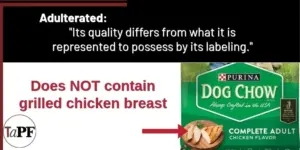
However, beneath the polished packaging and gourmet terminology lies a regulatory and financial reality: many of these ultra-convenient, human-style meals are legally classified as Feed Grade.
An investigation into product lines manufactured by industry giants such as Mars Petcare—specifically Sheba "Perfect Portions" and Cesar "Warm Bowls"—reveals a stark contrast between consumer perception and actual product composition. While packaging implies a home-cooked, premium dining experience, pet owners are buying feed-grade formulations governed by standards that permit inedible or lower-grade rendered ingredients.
Furthermore, an analysis of recommended feeding guidelines shows that these single-serve plastic trays and bowls carry extreme daily feeding costs—often exceeding the cost of actual, certified Human Grade pet foods—while generating unprecedented amounts of single-use plastic waste.
Detailed Investigation: Marketing Illusions vs. Economic Reality
To understand how feed-grade pet foods operate under the guise of human-grade luxury, one must examine product feeding directions, packaging structures, and daily usage math.
+-----------------------------------------------------------------------------------+
|                        THE PET FOOD REGULATORY DIVIDE                             |
+-----------------------------------------------------------------------------------+
|  HUMAN GRADE PET FOOD                             FEED GRADE PET FOOD             |
|  * 100% human-edible ingredients                  * May contain rendered meats    |
|  * Produced in licensed human food facilities     * Includes condemned ingredients|
|  * Strict, sanitary transport & processing        * Quality concealed from owner  |
+-----------------------------------------------------------------------------------+
Case Study 1: Sheba "Perfect Portions" Cat Food
Sheba, a prominent cat food brand manufactured by Mars Petcare, markets a product line called Perfect Portions. The wet cat food is packaged in plastic "twin-pack" trays, where each individual snapped-apart tray holds 1.32 ounces of product. Entrees carry culinary names such as "Bistro Chicken in Alfredo Sauce," signaling to the buyer that the product mimics a refined, human-level meal.
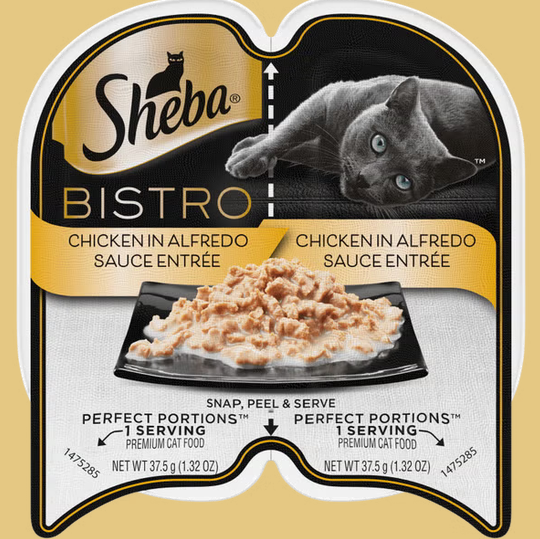
Despite the luxurious naming conventions, Sheba is legally a feed-grade product. The true economic and practical cost becomes clear when analyzing the manufacturer’s feeding directions:
Sheba "Perfect Portions" Feeding Cost Breakdown (10 lb Cat)
---------------------------------------------------------------------
Single Tray Volume:                 1.32 oz
Required Daily Portions:            8 trays / day
Case Price (48 trays, Chewy):       $28.97 (Autoship)
Unit Cost per Tray:                 $0.60
---------------------------------------------------------------------
DAILY FEEDING COST:                 $4.80 / day
MONTHLY FEEDING COST:               ~$144.00 / month
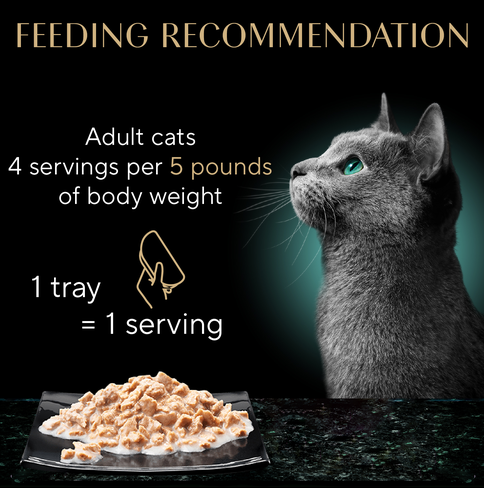
ANNUAL PLASTIC TRAYS USED: 2,920 trays / year- Feeding Requirement: According to Sheba’s feeding guidelines, an average 10-pound adult cat requires 8 individual trays (servings) per day to meet basic nutritional needs.
- Financial Breakdown: On retail platforms such as Chewy.com, a 24-count "twin pack" case (yielding 48 individual 1.32 oz trays) retails for approximately $28.97 under subscription/autoship pricing ($30.49 for a one-time purchase).
- Unit cost per tray: $0.60
- Daily cost for one 10 lb cat: $0.60 × 8 = $4.80 per day
- Annual cost: $1,752.00 per year
- Consumer Effort & Packaging: A pet owner feeding a single 10-pound cat must open, wash, and attempt to recycle 8 plastic trays every single day. Over the course of one year, this amounts to 2,920 individual plastic containers for one small animal.
Case Study 2: Cesar "Warm Bowls" Dog Food
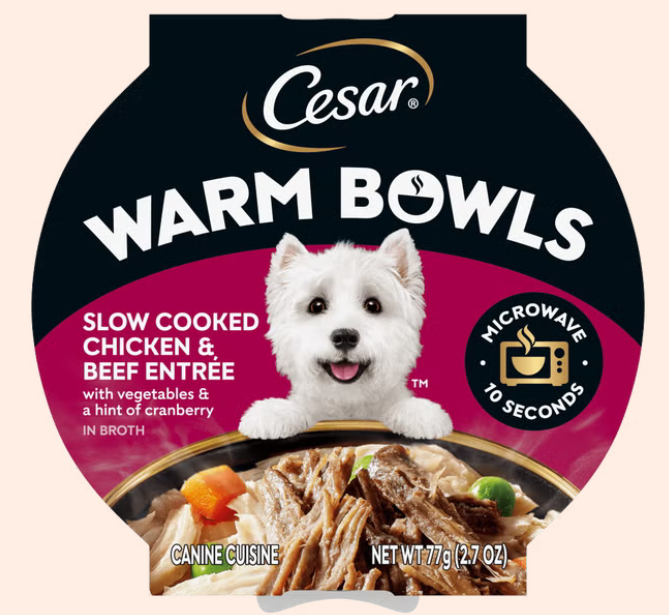
A similar marketing model is utilized by Mars Petcare’s dog food brand, Cesar, in its Warm Bowls line (e.g., Chicken, Beef & Vegetables Entree). Sold in single-serve 2.7-ounce plastic containers designed to be microwaved, the packaging prompts owners with emotional messaging: "Nothing says I love you like a warm meal."
Cesar "Warm Bowls" Feeding Cost Breakdown (10 lb Dog)
---------------------------------------------------------------------
Single Bowl Volume:                 2.70 oz
Required Daily Portions:            4.75 bowls / day (requires opening 5)
Case Price (10 bowls, Chewy):       $28.40 (Autoship)
Unit Cost per Bowl:                 $2.84
---------------------------------------------------------------------
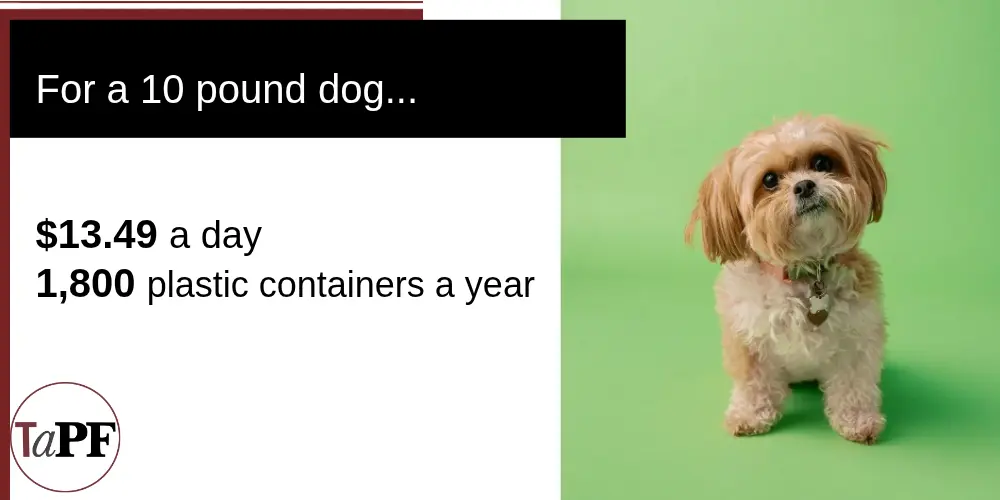
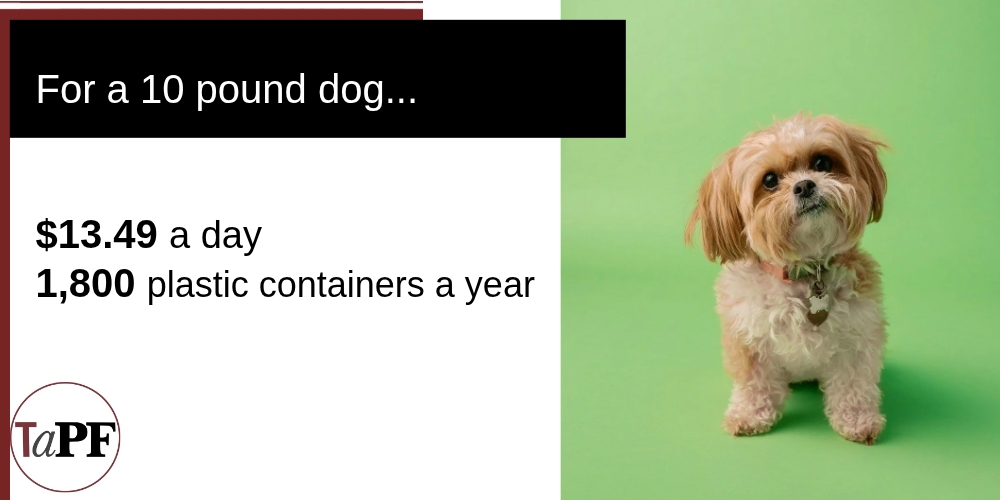
DAILY FEEDING COST:                 $13.49 / day
MONTHLY FEEDING COST:               ~$404.70 / month
ANNUAL PLASTIC BOWLS USED: ~1,734 bowls / year- Feeding Requirement: The official instructions state that a standard 10-pound dog should consume 4 ¾ bowls per day. In practice, an owner must open 5 individual plastic bowls daily.
- Financial Breakdown: A 10-pack of Cesar Warm Bowls costs $28.40 via autoship on Chewy.com ($29.90 one-time order).
- Unit cost per bowl: $2.84
- Daily cost for one 10 lb dog: $2.84 × 4.75 = $13.49 per day
- Annual cost: $4,923.85 per year
- Packaging Overhead: Feeding a 10-pound dog this feed-grade product requires opening, warming, rinsing, and disposing of more than 1,730 plastic bowls annually.
Supporting Context & Industry Metrics
The Legal Distinction: "Human Grade" vs. "Feed Grade"
To evaluate the true value of these products, consumers must understand pet food legal terminology as defined by the Association of American Feed Control Officials (AAFCO) and regulated by the U.S. Food and Drug Administration (FDA).
+---------------------------------------------------------------------------------------+
|                         LEGAL DEFINITIONS & COMPARISON                                |
+------------------------------------+--------------------------------------------------+
| HUMAN GRADE                        | FEED GRADE                                       |
+------------------------------------+--------------------------------------------------+
| * Every ingredient must be human-  | * Ingredients may be human-edible OR sub-standard|
|   edible prior to processing.      |   (feed-quality, rendered meals, by-products).   |
| * Must be manufactured, packed,    | * Manufactured under agricultural feed laws      |
|   and stored in USDA/FDA licensed  |   with relaxed sanitary requirements.            |
|   human food facilities.           | * FDA exercise of Enforcement Discretion permits  |
| * Complete supply chain traceability|  diseased animal tissues or non-food materials.  |
+------------------------------------+--------------------------------------------------+- Human Grade: To legally claim "Human Grade" on a label, every single ingredient (including all vitamin and mineral supplements) must be certified as human-edible. Furthermore, the final product must be manufactured, handled, and stored in a facility licensed for human food processing under USDA and FDA sanitary regulations.
- Feed Grade: "Feed Grade" pet foods are produced under lower-tier animal feed standards. While feed-grade products may contain human-edible ingredients, they are legally permitted to include condemned meats, rendered animal tissues, high-ash meal powders, and ingredients derived from "4D" livestock (dead, dying, diseased, or disabled prior to slaughter) under various FDA compliance policy guides. Pet owners purchasing feed-grade foods are never provided documentation or disclosures regarding the actual quality or grade of the raw ingredients utilized.
Comparative Financial Analysis: High Markup on Low-Grade Feed
The primary issue uncovered by this cost analysis is the severe price distortion in the market. Historically, feed-grade commercial pet foods were priced significantly lower than human-grade fresh, dehydrated, or freeze-dried alternatives due to the lower cost of feed-grade commodities.
However, single-serve products like Sheba "Perfect Portions" and Cesar "Warm Bowls" reverse this economic logic. By packaging feed-grade ingredients in convenient, micro-portioned plastic containers with culinary marketing, manufacturers command prices that rival or exceed authentic, USDA-inspected Human Grade foods.
Daily Feeding Cost Comparison for a 10 lb Animal
-------------------------------------------------------------------------------
Food Category & Product                     Legal Status       Daily Cost
-------------------------------------------------------------------------------
Sheba "Perfect Portions" Cat Food           Feed Grade         $4.80 / day
Cesar "Warm Bowls" Dog Food                 Feed Grade         $13.49 / day
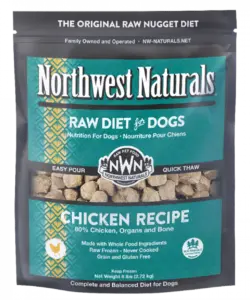
Typical Fresh / Gently Cooked Human Grade   Human Grade        $2.50 - $6.00 / day
Typical Dehydrated / Freeze-Dried Raw       Human Grade        $3.00 - $5.50 / day
-------------------------------------------------------------------------------
A daily expenditure of $13.49 to feed a small 10-pound dog, or $4.80 to feed a small 10-pound cat, places these feed-grade products among the most expensive commercial diets per pound on the retail market. Pet owners are effectively paying a premium price for single-use plastic packaging and marketing imagery rather than superior ingredient quality.
Environmental Footprint: The Crisis of Single-Serve Plastic
Beyond the financial impact, the reliance on ultra-fragmented packaging presents significant environmental challenges:
Annual Packaging Volume per Single 10 lb Pet
-------------------------------------------------------------------------------
Pet Type      Product              Daily Units    Annual Containers Waste
-------------------------------------------------------------------------------
Cat (10 lbs)  Sheba Perfect Portions  8 Trays        2,920 Plastic Trays
Dog (10 lbs)  Cesar Warm Bowls        4.75 Bowls     1,733 Plastic Bowls
-------------------------------------------------------------------------------- Recycling Feasibility: While rigid plastic containers may carry resin identification codes, small-format plastics (such as 1.32 oz trays) and food-contaminated microwaveable bowls are frequently rejected by municipal Material Recovery Facilities (MRFs) due to sorting difficulties and organic residue.
- Material Waste: Conventional canned pet foods typically utilize 3-ounce, 5.5-ounce, or 12-ounce aluminum or steel cans, which are infinitely recyclable and offer far greater food-to-packaging ratios. Dividing daily nutrition into 1.32 oz or 2.7 oz increments drastically increases the surface-area-to-volume ratio of packaging material required per calorie delivered.
- Thermal Heating Risks: Microwaveable plastic bowls (such as Cesar Warm Bowls) introduce consumer heating steps. While designated as microwave-safe by manufacturers, heating wet pet food in single-use plastic containers raises ongoing consumer questions regarding chemical leaching and microplastic generation under household heating conditions.
Industry Regulation and Advocate Perspectives
The Regulatory Landscape
The pet food industry operates under a unique dual-regulatory framework involving the federal government (FDA CVM) and state-level agricultural authorities coordinated through AAFCO.
While AAFCO defines terms such as "Human Grade" strictly, marketing terms that sound like human cuisine—such as "Bistro," "Gourmet," "Alfredo," or "Warm Bowls"—are not formally restricted under federal law, provided they do not explicitly use the legal phrase "Human Grade" on the principal display panel without meeting the underlying criteria.

This creates a regulatory gray zone. Manufacturers can leverage human culinary descriptors, imagery of fresh vegetables and sliced muscle meats, and human-style serving vessels to convey the impression of high-end human food without fulfilling the strict manufacturing and sourcing mandates required for true human-edible certification.
Advocate Insights: TruthaboutPetFood.com
Susan Thixton, a pet food consumer advocate, founder of TruthaboutPetFood.com, and co-founder of the Association for Truth in Pet Food (ATPF), has drawn attention to these pricing and labeling practices.
"Don’t be misled by pet foods that use marketing to allude to
 human grade ingredients or allude to convenience of 'perfect
 portions' in plastic—that could cost you MORE than a true
 human grade ingredient pet food."
 — Susan Thixton, Pet Food Consumer Advocate
Thixton emphasizes that pet parents seeking top-tier nutrition for their animals are often systematically misled by front-of-pack graphics and product titles. According to advocacy groups:

- Lack of Transparency: Feed-grade definitions permit manufacturers to alter ingredient sourcing based on commodity pricing without notifying consumers, meaning the quality of protein in a feed-grade tray can vary significantly batch-to-batch.
- Value Misallocation: When analyzing products like Sheba Perfect Portions or Cesar Warm Bowls, a significant portion of the retail price covers specialized thermoformed packaging, single-serve filling machinery, and high-budget marketing campaigns, rather than high-grade protein sources.
Future Outlook & Actionable Consumer Guidance
As economic pressures grow and consumers become more conscious of product ingredients, the demand for transparency in the pet food aisle is reaching a critical point. Industry analysts expect heightened scrutiny from state feed regulators regarding misleading culinary claims and single-use packaging footprints.
+---------------------------------------------------------------------------------------+
|                       CONSUMER VERIFICATION CHECKLIST                                 |
+---------------------------------------------------------------------------------------+
|  [ ] REQUIRE WRITTEN PROOF                                                            |
|      Ask the manufacturer for written confirmation that ALL ingredients (including    |
|      vitamin/mineral premixes) are certified human-edible.                           |
|                                                                                       |
|  [ ] INSPECT THE MANUFACTURE SITE                                                     |
|      Verify whether the food is produced in a USDA/FDA-registered human food          |
|      facility rather than a feed mill.                                                |
|                                                                                       |
|  [ ] CALCULATE THE DAILY COST PER CALORIE                                             |
|      Determine the daily feeding cost based on your pet's target weight rather than  |
|      relying on the single-unit retail price.                                         |
|                                                                                       |
|  [ ] ASSESS PACKAGING EFFICIENCY                                                      |
|      Compare total packaging waste (trays/bowls vs. recyclable metal cans or bulk     |
|      pouch formats) to lower environmental impact and overall cost.                   |
+---------------------------------------------------------------------------------------+
Steps for Pet Owners
- Request Written Guarantees: Consumers should contact manufacturers directly and request a signed, written statement verifying that 100% of the ingredients used—including meat proteins, fats, and vitamin/mineral premixes—are human-edible, and that the product is processed in a licensed human food plant.
- Calculate Daily Feeding Costs: Instead of judging affordability by the price of an individual $0.60 tray or $2.84 bowl, pet owners should calculate the total daily cost using the feeding guidelines printed on the label. As demonstrated by the $4.80/day (cat) and $13.49/day (dog) costs of these feed-grade products, true human-grade diets or high-quality canned foods are frequently more economical.
- Evaluate Packaging Waste: Choosing larger format packaging, infinitely recyclable aluminum/steel cans, or bulk human-grade fresh formulations significantly reduces single-use plastic consumption while improving the ratio of food value to packaging cost.
By looking past market imagery, humanized recipe names, and convenient packaging, pet owners can protect both their household budgets and the long-term health of their companion animals.