
Executive Overview
Few misunderstandings in the modern canine landscape are as pervasive—or as consequential—as the conflation of the American Bulldog and the American Pit Bull Terrier. To the untrained eye, their powerful physiques, short coats, and blocky heads render them virtually indistinguishable. Yet, beneath their striking physiological similarities lie two distinct genetic blueprints, shaped by divergent historical trajectories, specialized breeding objectives, and specific behavioral imperatives.
As municipal regulations, insurance policies, and public safety debates continue to cast wide nets over "bully breeds," a rigorous, objective examination of these two distinct canines is long overdue. While both breeds share a distant common ancestor in the historic Old English Bulldog, their modern iterations represent triumphs of selective breeding for entirely different utility purposes: the American Bulldog as a robust estate guardian and all-around agricultural helper, and the American Pit Bull Terrier as an agile, tenacious hybrid engineered for versatile performance.
This comprehensive analysis moves beyond popular mythology to explore the physical metrics, historical origins, behavioral complexities, and physiological realities of both breeds. By unpacking the data and historical record, we aim to provide a definitive resource for prospective owners, legislators, and canine enthusiasts seeking to understand these two remarkable animals.
Detailed Chronology: The Evolution of Two Distinct Legacies
To truly understand the American Bulldog and the American Pit Bull Terrier, one must trace their lineage back through centuries of human agriculture, sport, and selective breeding. Though their stories intersect, their paths quickly diverged into separate, specialized chapters.
The Foundational Roots: The Old English Bulldog
The story of both breeds begins with the now-extinct Old English Bulldog. During the 17th and 18th centuries in the British Isles, these dogs were bred primarily for blood sports, most notably bull-baiting and bear-baiting. These tasks demanded a canine of extraordinary tenacity, a low center of gravity, immense jaw strength, and a high tolerance for pain. When these blood sports were officially outlawed in England by the Cruelty to Animals Act of 1835, the utilitarian purpose of the original bulldog vanished overnight, nearly driving the foundational stock to extinction.
The American Bulldog: Working Roots and Resurrection
As settlers emigrated from the British Isles to the American colonies, they brought their working bulldogs with them. In the rugged, expansive American South, these dogs found a new lease on life. Rather than fighting bulls in arenas, they were repurposed as all-around farm guardians, stock dogs, and catch dogs used to hunt feral wild boars.
Unlike their British forebears, these American-adapted bulldogs were bred for functional athleticism, endurance, and protective instincts. However, by the mid-20th century, modernization and industrial farming had decimated their numbers once again. The preservation of the American Bulldog from total extinction is largely credited to the tireless efforts of Dr. John D. Johnson, alongside Alan Scott and other dedicated breeders, who scoured the rural American South to locate, document, and selectively breed the remaining working stock, establishing the foundation of the modern breed we see today.

The American Pit Bull Terrier: The Agility Cross
The origin of the American Pit Bull Terrier (APBT) took a different path during the 19th century in England, Ireland, and Scotland. Breeders sought to combine the raw power and determination of the Old English Bulldog with the speed, agility, and gameness of various terrier breeds. This crossbreeding yielded a lighter, faster, and more versatile dog.
When these dogs were brought to the United States, they were utilized similarly to their bulldog cousins on farms, but they also became tragically embroiled in the underground world of pit fighting. Following the outlawing of these blood sports, the APBT transitioned into a multi-faceted working and companion dog. Despite its turbulent history, the breed gained official recognition from the United Kennel Club (UKC) in 1898—with its founder, C.Z. Bennett, adding "American" to the name and prefixing "Pit" to honor its history—though the mainstream American Kennel Club (AKC) later recognized a closely related derivative under the name American Staffordshire Terrier.
Supporting Context & Metrics: Comparative Anatomy and Physiology
A side-by-side evaluation of the American Bulldog and the American Pit Bull Terrier reveals significant differences in scale, structural geometry, and physiological design.
| Metric / Trait | American Bulldog | American Pit Bull Terrier |
|---|---|---|
| Height Range | Males: 22–27 inches (56–69 cm) Females: 20–24 inches (51–61 cm) |
Males: 18–21 inches (46–53 cm) Females: 17–20 inches (43–51 cm) |
| Weight Range | Males: 75–125 lbs (34–57 kg) Females: 60–100 lbs (27–45 kg) |
Males: 35–65 lbs (16–29 kg) Females: 30–50 lbs (14–23 kg) |
| Coat & Colors | Short, harsh; white, brindle, red, brown, or patched patterns | Short, glossy; wide variety including blue, fawn, black, brindle, and red |
| Skeletal Build | Heavy-boned, stocky, broad-chested, and heavily muscled | Streamlined, athletic, balanced, with a lean, muscular frame |
| Energy Profile | Moderate to High; sustained working stamina | Exceptionally High; explosive bursts and relentless drive |
| Temperament | Confident, intensely loyal, highly protective of family domain | Confident, eager-to-please, affectionate, and deeply people-oriented |
| Average Lifespan | 10–12 years | 12–15 years |
Structural Mechanics: Power versus Agility
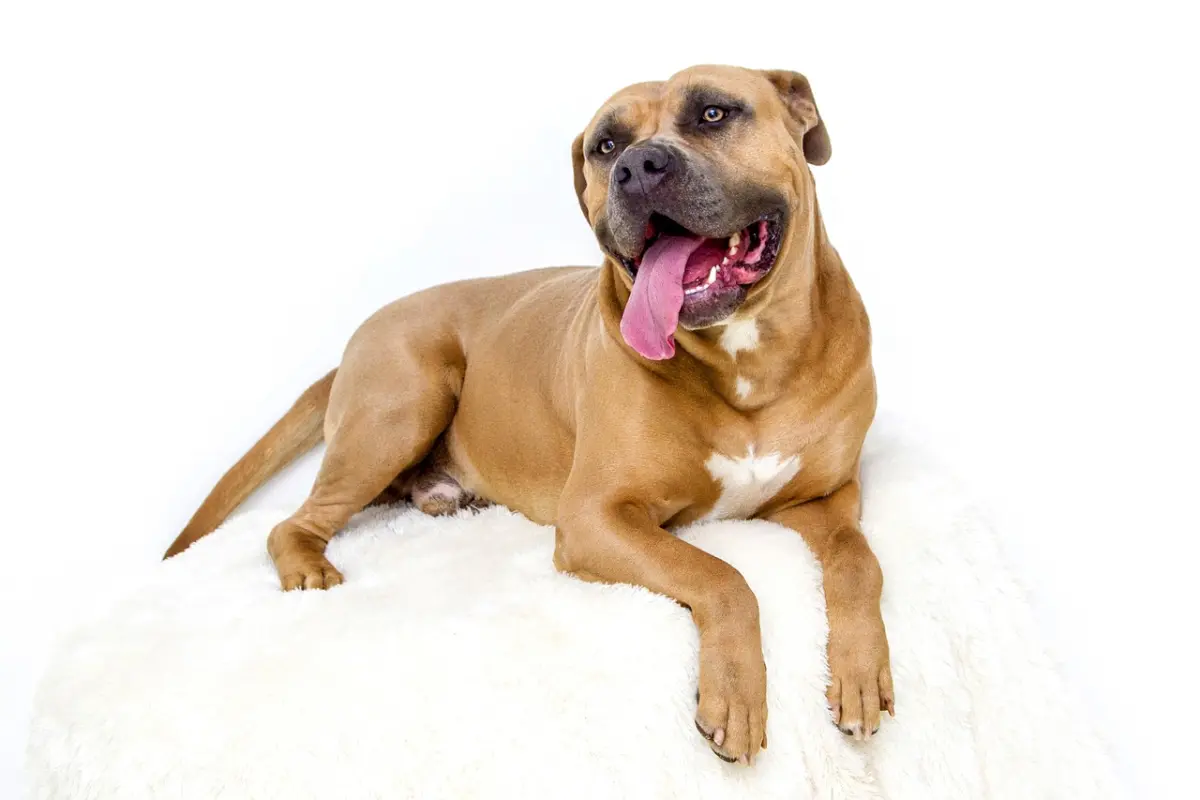
The physical differences between the two breeds directly reflect their historical design. The American Bulldog is a heavy-duty Molosser-type dog. Its broad, deep chest, heavy bone density, and massive skull are engineered for physical domination and endurance. This structure makes the American Bulldog an imposing guardian capable of deterring large predators or holding heavy livestock.
Conversely, the American Pit Bull Terrier is built along the lines of a middleweight athlete. Possessing a leaner frame, longer legs relative to its body mass, and a tighter, more tucked-in waist, the APBT prioritizes speed, flexibility, and vertical agility. While both dogs possess formidable bite force and powerful jaws, the Pit Bull’s mechanics allow for rapid directional changes and sustained high-speed maneuvering.
Official Statements: Behavioral Realities, Training, and Misconceptions
Public perception of both breeds is frequently skewed by sensationalized media reports, legislative overreach, and persistent canine myths. Animal behaviorists, veterinarians, and breed registries emphasize that understanding these dogs requires looking past their intimidating reputations to examine their actual behavioral drivers.
The Truth About the "Locking Jaw" Myth
One of the most persistent urban legends surrounding bully breeds—most notably applied to the Pit Bull—is the anatomical myth of the "locking jaw." Extensive veterinary research and morphological studies have conclusively proven this to be entirely false. The jaw structure, hinge mechanisms, and muscular attachments of an American Pit Bull Terrier or American Bulldog are identical in anatomical design to those of any other canine of comparable size.

The misconception stems entirely from the behavioral trait of tenacity. Both breeds were historically selected for high prey drive and gameness, meaning they are prone to gripping objects (such as flirt poles, tug toys, or, historically, livestock) with unwavering focus and refusing to release easily. This psychological persistence, rather than any physical anomaly, is what birthed the myth.
Temperament and Socialization Imperatives
Neither the American Bulldog nor the American Pit Bull Terrier is naturally wired to be inherently dangerous to humans; however, both possess distinct behavioral nuances that require responsible, proactive ownership.
- The American Bulldog: Tends to display a more aloof, naturally protective disposition toward strangers and unfamiliar animals. Because of their powerful guarding instincts, they require rigorous, structured socialization during their puppyhood to ensure they can accurately differentiate between normal social interactions and genuine threats. Left untrained, their size and protective nature can make them unmanageable.
- The American Pit Bull Terrier: Typically exhibits an exceptionally high level of affection and attachment toward human family members—often earning them the moniker "nanny dogs" in historical (though inaccurate) folklore. However, due to their historical background in dog-fighting, many APBTs exhibit a higher predisposition toward animal reactivity or dog-directed aggression. While they often adore humans, proactive socialization regarding other pets is a mandatory responsibility for any Pit Bull owner.
Future Outlook: Responsible Ownership in a Changing Regulatory Landscape
As urban areas expand and municipal codes tighten, the future of both the American Bulldog and the American Pit Bull Terrier hangs in the balance of public policy and owner accountability. Breed-Specific Legislation (BSL), which bans or heavily restricts the ownership of specific "bully" breeds, remains a contentious topic among animal rights advocates, legal scholars, and public safety officials.
Data consistently shows that the overwhelming majority of behavioral incidents involving these breeds stem not from genetic predisposition toward human aggression, but rather from three preventable factors:
- Inadequate Socialization: Failing to expose developing puppies to diverse environments, animals, and human stimuli.
- Lack of Physical and Mental Enrichment: Confining high-energy working breeds to small spaces without adequate daily exercise, leading to destructive coping mechanisms.
- Irresponsible Breeding and Handling: The intentional breeding of unstable dogs or the conditioning of dogs for intimidation and aggressive guarding.
The Path Forward
For prospective owners, choosing between an American Bulldog and an American Pit Bull Terrier requires an honest assessment of lifestyle, living space, and personal commitment to training. The American Bulldog demands a handler capable of managing a large, powerful guardian with a stubborn streak, while the Pit Bull requires an active, dedicated owner willing to channel relentless athletic energy into positive outlets like agility training, obedience, and structured exercise.
Ultimately, neither breed is an accessory or a status symbol; they are high-performance working canines that, when paired with educated owners, consistent boundaries, and structured socialization, transform into exceptionally loyal, stable, and loving family companions. Bridging the gap between myth and reality remains the single most important step toward ensuring these remarkable animals are understood, protected, and responsibly integrated into our communities for generations to come.