
Executive Overview
As pet owners increasingly seek out adventurous ways to bond with their animals, outdoor recreation has evolved to encompass a wide array of pet-friendly activities. Among the fastest-growing trends in canine adventure sports are kayaking and stand-up paddleboarding (SUP). Hitting the water with a dog offers an exceptional method for beating the summer heat, providing physical exercise, and strengthening the human-animal bond. However, introducing a canine companion to paddle sports requires careful planning, specialized equipment, and an unwavering commitment to water safety.
This comprehensive guide explores the nuances of bringing a dog aboard a watercraft. Drawing from expert insights, real-world experiences from seasoned canine adventurers like Katherine and her Basenji mix, Robin (@robinventures), and foundational safety protocols, this report provides a definitive roadmap for pet parents. From selecting the right watercraft and outfitting your dog with properly fitted personal flotation devices (PFDs) to managing open-water anxieties and ensuring health precautions, we break down everything you need to know to transform a potentially chaotic splash into a harmonious aquatic expedition.
Detailed Chronology: The Evolution of Canine Paddle Sports
The Genesis of an Idea: From Drafts to the Open Water
For years, outdoor lifestyle bloggers and pet journalists recognized a distinct gap in adventure literature: comprehensive guides on how to safely kayak or paddleboard with a dog. Early advice was often fragmented, consisting of anecdotal tips—such as outfitting long-haired dogs in canine t-shirts beneath their life vests to prevent painful hair-pulling from straps. While valuable, isolated suggestions fell short of forming a complete pedagogical framework for pet owners eager to take to the water.
The paradigm shifted with the proliferation of digital storytelling and social media communities dedicated to pet adventure. Platforms like Instagram transformed micro-narratives into visual masterclasses, highlighting dogs effortlessly balancing on the bows of kayaks and gliding across alpine lakes on paddleboards. This visual renaissance prompted veteran pet travel bloggers to collaborate directly with active handlers, bringing firsthand accounts from the water to a broader audience.
The Rise of the Adventure Dog: The Case of Robin the Basenji Mix
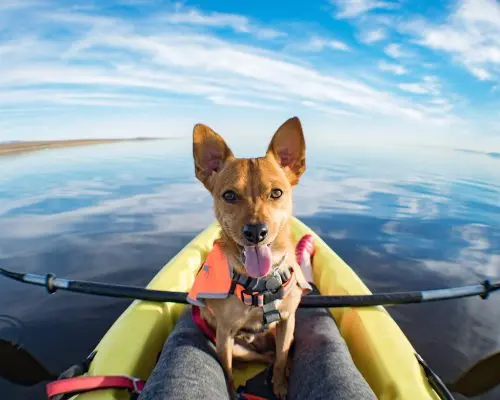
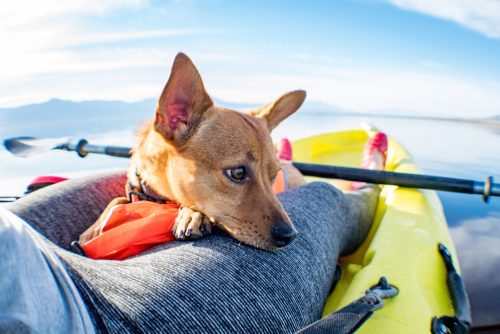
To understand the practical realities of introducing a dog to paddle sports, one need look no further than Robin, an 18-pound, two-and-a-half-year-old Basenji mix adopted from a local animal shelter in Los Angeles. Despite his diminutive stature and a breed lineage not traditionally associated with water retrieval, Robin quickly established himself as a quintessential "adventure dog."
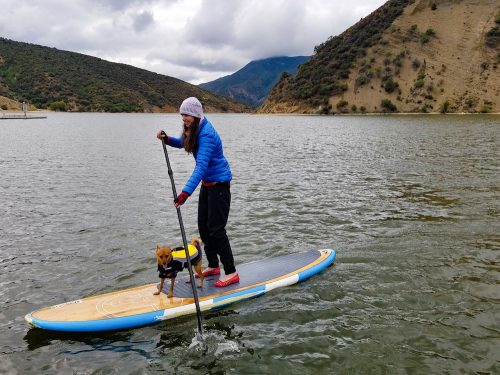
While Southern California’s arid climate limits natural water resources, Robin’s adventure log expanded rapidly across state waters. His aquatic resume includes kayaking excursions on the Salton Sea and the calm waters of Sausalito, California, alongside stand-up paddleboarding sessions at Pyramid Lake, California, and Lake Las Vegas.
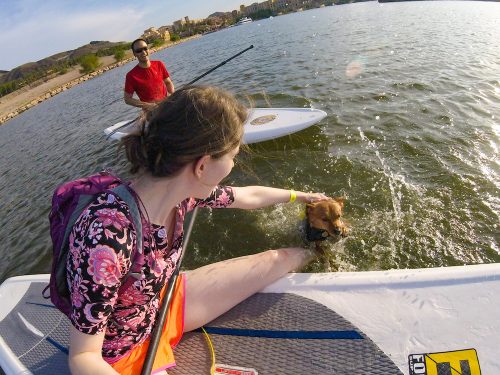
Initially hesitant, Robin’s trajectory mirrors that of many novice water dogs. Through consistent, positive exposure, his confidence surged. What began as a cautious ride on the bow evolved into unprompted, enthusiastic leaps into open water, where he eagerly swims between companion watercraft. His journey, documented meticulously on Instagram at @robinventures, serves as an empirical testament to the transformative power of patient, positive reinforcement in canine athletics.
Supporting Context & Metrics: Choosing Your Craft and Gear
Successfully navigating the water with a dog hinges on deliberate preparation, precise equipment selection, and an understanding of canine behavior in aquatic environments.
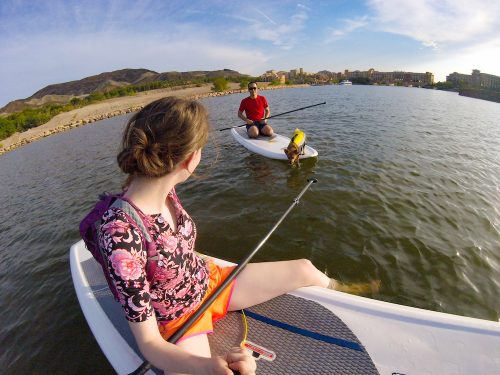
Kayaking vs. Stand-Up Paddleboarding (SUP): Which Is Right for Your Pup?
1. Kayaking: The Stability Choice for Beginners
For owners who have never paddled with a pet—or those who wish to avoid an unexpected dunking—kayaking represents the ideal entry point.
- Sit-On-Top Kayaks: Highly recommended for beginners. These watercraft feature wide, stable hulls and spacious foot wells or bows that provide ample room for a dog to ride comfortably. They are exceptionally maneuverable in calm lakes, marinas, and protected coastal bays.
- Sit-Inside Kayaks: Generally designed for speed and touring rather than cargo or pet transport. Unless the deck has been explicitly retrofitted with a high-friction, grippy surface, sit-inside models lack the space and stability required for a canine passenger.
2. Stand-Up Paddleboarding (SUP): The Open-Deck Experience
Paddleboards offer unmatched visibility and 360-degree views, making them immensely popular. However, they introduce unique challenges.
- Surface Traction: Many paddleboards feature slick fiberglass or epoxy decks that can disorient a dog lacking paw traction. If your dog struggles to maintain footing, positioning them behind you—rather than on the slick nose of the board—can restore stability and improve your paddling leverage.
- Board Dimensions: When selecting a SUP, consider your dog’s weight and your desired maneuverability. Larger, wider boards ride higher in the water and offer superior stability, though they demand more physical effort to turn.
Essential Gear Checklist
Outfitting your dog correctly is non-negotiable for safety. The market offers a wide array of gear designed specifically for canine water sports:
- The Canine Personal Flotation Device (PFD): Even proficient swimmers can panic when suddenly plunged into open water. A properly fitted dog life jacket is mandatory. Look for models featuring a sturdy grab-handle on the back to assist with retrieval, and a flexible neoprene belly panel to ensure comfort during lifting. Brands like Alcott and Ruffwear offer reliable options. Crucial Warning: Ensure the PFD fits snugly. Loose jackets can ride up during panic-paddling, trapping the dog’s front paws and turning a safety device into a liability.
- Leashes and Tethers: Exercise extreme caution when considering tethering your dog to yourself or the watercraft. If you choose to use a leash, clip it exclusively to the life jacket’s designated D-ring—never to a standard collar, which can cause tracheal damage or asphyxiation during a fall. Furthermore, trailing leashes present a severe entanglement hazard if a watercraft capsizes, potentially trapping the animal underneath. Many experienced handlers, like Katherine, ultimately transition away from tethers as their dogs learn natural recall to the board or handler.
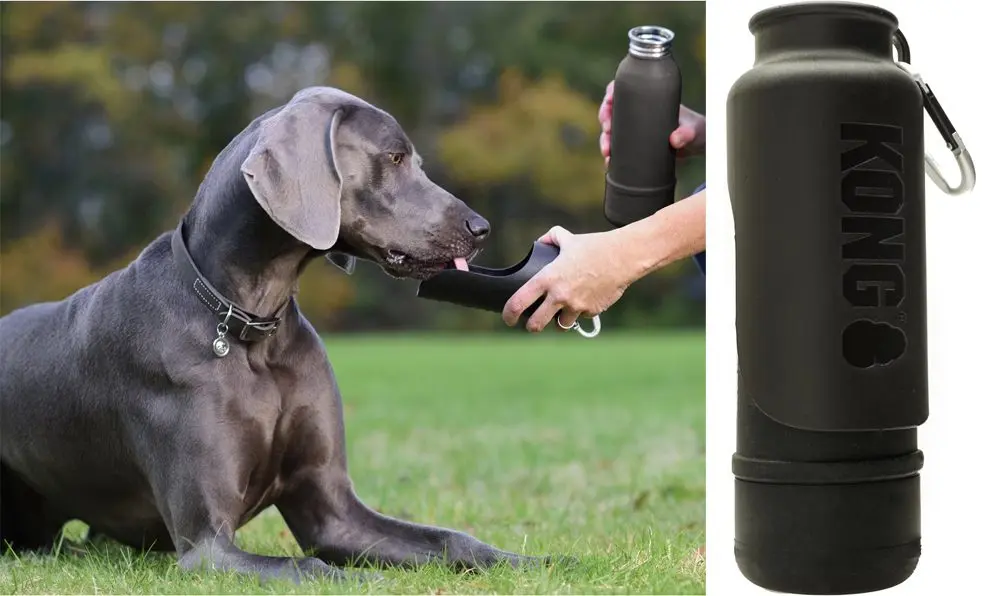
- Hydration and Nutrition Supplies: Always pack fresh drinking water and a collapsible travel bowl. Natural water sources—including pristine-looking mountain lakes—frequently harbor harmful parasites like Giardia, bacteria, and toxic cyanobacteria (blue-green algae blooms), which can be fatal to dogs.
- Traction Mats and Comfort Items: Bringing a small travel mat, a secure dry bag, or even a backpack for the dog to sit on can dramatically increase their traction and confidence on slick fiberglass or plastic surfaces.
Official Statements & Expert Best Practices
To ensure a safe, enjoyable outing for both human and hound, canine behaviorists and experienced handlers recommend adhering to several foundational protocols:
1. Establish Master-Level Obedience
Before stepping foot near a dock, your dog should possess a reliable, rock-solid "stay" and "come" command. Unpredictable movements or sudden leaps from an anxious dog can easily destabilize a kayak or paddleboard, resulting in an immediate capsize.
2. Prioritize Gradual Familiarization
Never force a hesitant dog onto a watercraft. Introduce the equipment gradually on dry land, allowing the dog to explore the kayak or paddleboard in a low-pressure environment. Use high-value treats and enthusiastic verbal praise to build positive mental associations.
- The Life Jacket Handle: The heavy-duty handle on your dog’s PFD is strictly engineered for emergency extractions and lifting the dog out of the water—it should never be used to drag or force an unwilling animal onto a craft.
3. Safety First for the Handler
When paddling with a novice dog for the first time, the human handler must wear their own PFD. If a capsize occurs, your immediate priority will be managing a disoriented or scrambling dog. Treading water while encumbered by a panicking animal is exceptionally difficult without personal flotation support.
4. Train for Strategic Swimming
If your dog displays an interest in swimming, train them to swim directly toward you rather than heading for the nearest edge of the board or shore. Because dogs cannot hoist themselves back onto a kayak or SUP independently, they will require your direct assistance to reboard safely.
Future Outlook: The Growing Community of Canine Adventurers
As the intersection of pet culture and outdoor recreation expands, the landscape of canine paddle sports is poised for continued innovation. Industry manufacturers are increasingly designing gear specifically tailored for adventure dogs—ranging from specialized non-slip SUP traction pads and custom-fit PFDs with integrated cooling panels to lightweight, collapsible water filtration systems built with pets in mind.
Moreover, digital platforms and social media communities like @robinventures are dismantling the notion that outdoor adventure is exclusively reserved for humans or large sporting breeds. By sharing authentic narratives of trial, error, and ultimate triumph, experienced handlers are empowering a new generation of pet owners to step out of their comfort zones and onto the water.
Ultimately, kayaking and paddleboarding with a dog represent far more than a seasonal trend; they are a celebration of companionship, trust, and shared exploration. By prioritizing safety, respecting individual animal boundaries, and approaching the water with patience and preparation, pet parents can unlock a world of breathtaking aquatic adventures that will enrich their lives—and their dogs’ lives—for years to come.