
Executive Overview
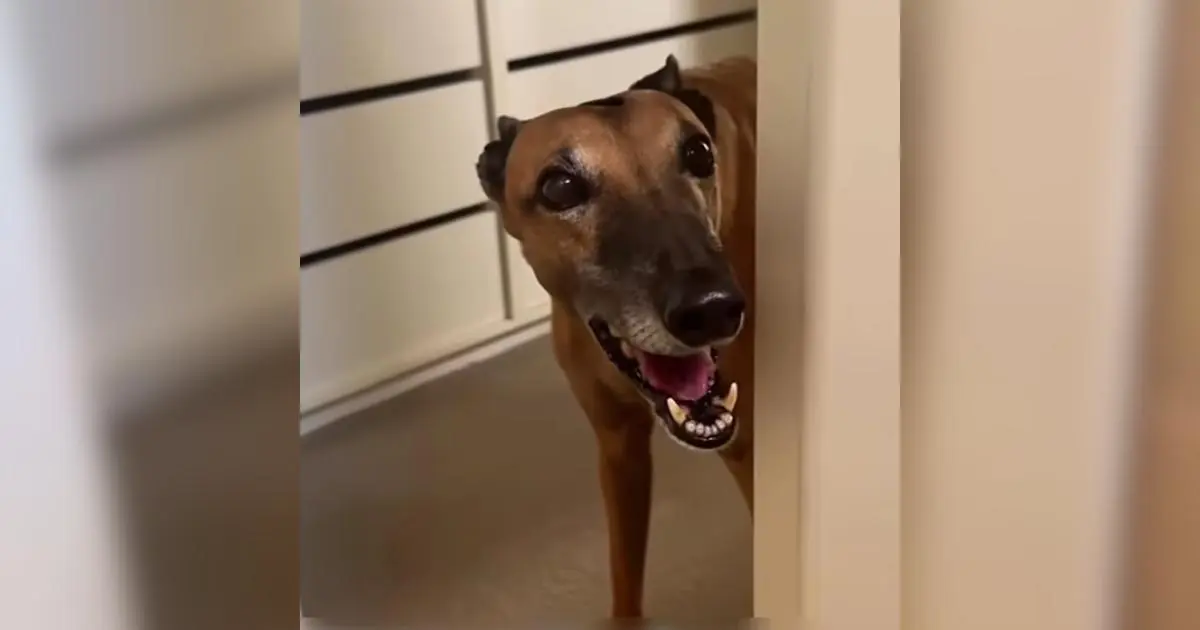
For the vast majority of domestic dogs, crossing the threshold of a human home is a mundane, everyday occurrence. For Poppy, an Australian-bred retired racing greyhound, this simple transition represented a profound paradigm shift. Having spent her entire life within the highly structured, utilitarian confines of the commercial racing and breeding industries, Poppy had never experienced the basic elements of domestic pet life. Quiet evenings, soft bedding, household toys, and unconditional human companionship were entirely foreign concepts. Her adoption was not merely a change of address; it was an entry into an unfamiliar sensory landscape that required a complete cognitive and emotional recalibration.
Poppy’s case highlights a broader, systemic issue faced by thousands of retired racing greyhounds globally. These dogs are bred, raised, and trained within highly controlled environments designed to maximize athletic performance. When their careers end—either through age, injury, or declining speed—they face the monumental task of transitioning from institutionalized working animals to domestic companions. This investigative article examines Poppy’s specific journey of recovery, analyzes the physiological and psychological challenges inherent in greyhound rehabilitation, and contextualizes her story within the wider framework of animal welfare and industry metrics.
Detailed Chronology: From Commercial Asset to Domestic Companion
+------------------------------------------------------------------------+
|                      POPPY'S LIFE TRANSITION                           |
+------------------------------------------------------------------------+
|                                                                        |
|  [ RACING CAREER ]  =======>  [ BREEDING PIPELINE ] ======> [ ADOPTION ]
|   53 Professional              Years spent producing         Abrupt move
|   Races (Outdoors)             litter after litter           to indoor life
|                                                                        |
+------------------------------------------------------------------------+
The Racing and Breeding Years
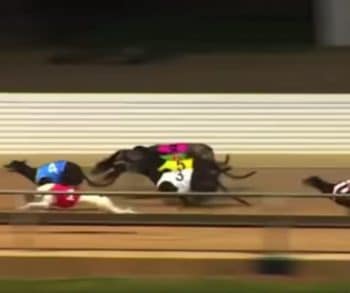
Poppy’s life began in the competitive arena of Australian greyhound racing, an industry characterized by high-intensity training regimes and outdoor kennel housing. Throughout her active athletic career, Poppy competed in 53 professional races. This volume of competition demands rigorous physical conditioning but offers virtually no exposure to the stimuli of a typical household.
Upon her retirement from the track, Poppy was not immediately transitioned to a domestic home. Instead, because of her lineage, physical stamina, or athletic record, she was funneled into the industry’s breeding pipeline. For years, she was kept in outdoor facilities to produce subsequent generations of racing stock. This prolonged stay in a commercial environment meant that by the time she was cleared for adoption, her institutionalization was deeply entrenched. She had spent her entire life outdoors, sleeping on hard surfaces, and interacting with humans primarily in utility-driven, task-oriented contexts.
The Initial Transition and Acute Sensory Overload
When Poppy was finally adopted and brought indoors, the sudden shift in environment triggered an acute stress response. The first week in her new home was marked by severe anxiety and sensory overload:
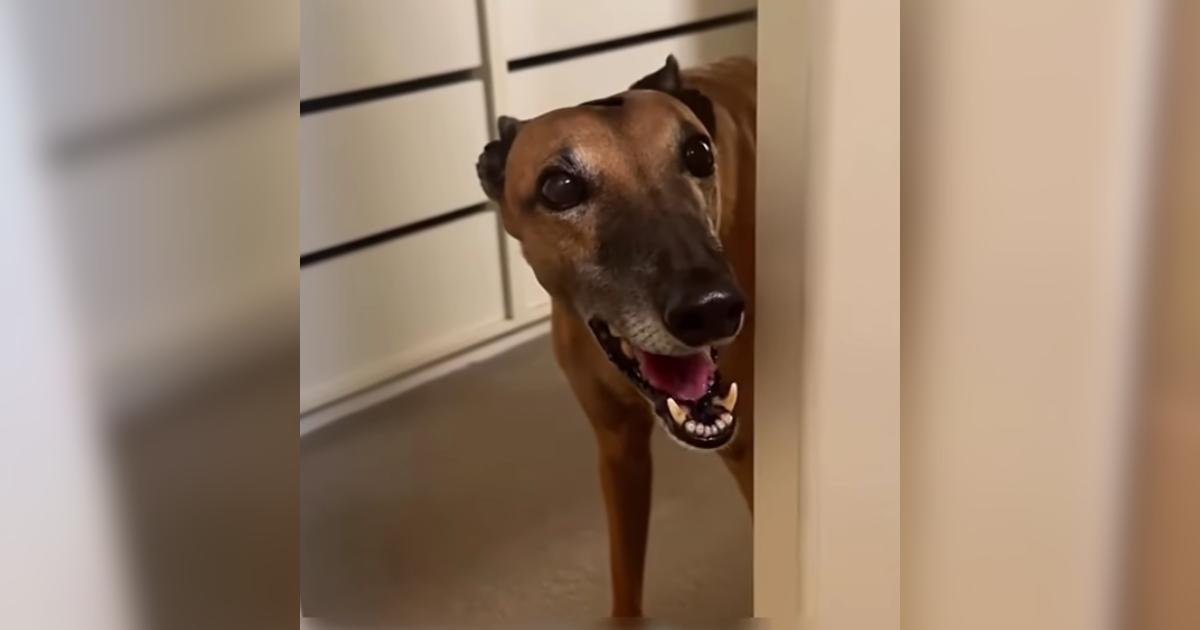
- Nutritional Deprivation: Overwhelmed by her surroundings, Poppy exhibited a common stress response in canines: partial anorexia, refusing food despite her family’s attempts to entice her.
- Sleep Disruption: Accustomed to the quiet darkness of outdoor kennels or structured training blocks, the ambient noises of a residential home kept her in a state of hypervigilance, leading to severe sleep deprivation.
- Vocalizations of Distress: Throughout her first nights, Poppy cried frequently, expressing disorientation as she struggled to adapt to the lack of familiar kennel routines and the presence of unfamiliar boundaries, such as walls and ceilings.
The Role of a Transitional Object: The Pink Bunny
Recognizing that direct pressure would only exacerbate her trauma, her adoptive family adopted a passive rehabilitation strategy. They provided a quiet, predictable space and introduced a small, plush pink bunny toy.
   [Sensory Overload] ---> [Introduction of Toy] ---> [Regulated Behavior]
   (Anxiety, Insomnia)       (Transitional Object)      (Calmness, Security)
In veterinary behaviorism, such items are often recognized as "transitional objects." For Poppy, the plush toy became a crucial anchor. It was soft, predictable, and entirely hers—a stark contrast to a world where every sight, sound, and surface was changing. She quickly formed an intense attachment to the toy, cradling it during rest periods. This physical comfort object acted as a sensory buffer, helping her downregulate her nervous system and find a sense of security.
Five Weeks Post-Adoption: Incremental Milestones
By the fifth week of her rehabilitation, Poppy had made observable progress, though her behavior still carried clear indicators of past trauma.
+------------------------------------------------------------------------+
|                     RECOVERY MILESTONES (5 WEEKS)                      |
+------------------------------------------------------------------------+
|  [CHALLENGE]                                                           |
|  - Loud noises, passing trucks, unfamiliar dogs                        |
|  - Trauma response: Tonic immobility ("freezing")                      |
|                                                                        |
|  [MANAGEMENT]                                                          |
|  - Family avoids pulling or forcing movement                           |
|  - Passive presence and reassurance applied                            |
|                                                                        |
|  [PROGRESS INDICATORS]                                                 |
|  - Emergence of play behavior (initiating play with squeaky toys)       |
|  - Social bonding (nudging handlers to solicit physical affection)     |
+------------------------------------------------------------------------+
When confronted with sudden loud noises, large vehicles, or unfamiliar dogs during walks, Poppy frequently exhibits a "freeze" response—a form of tonic immobility common in traumatized animals. Rather than forcing her forward, her family allows her to stand still, offering quiet reassurance until her heart rate slows and she feels safe enough to move.
Despite these residual fears, two key behavioral milestones indicate successful cognitive adaptation:
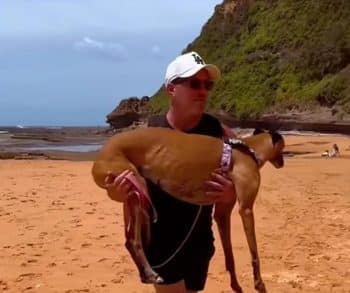
- The Emergence of Play: She has begun actively playing with a squeaky toy, a behavior that requires a baseline level of relaxation and safety.
- Social Solicitation: She now nudges her family members to ask for physical affection, showing that she has begun to associate human contact with safety and comfort rather than work or handling.
Supporting Context & Metrics: The Reality of Greyhound Retirement
To understand why Poppy’s transition was so challenging, it is necessary to examine the physical and psychological realities of commercial greyhound racing.
The Physiological and Cognitive Gap
Commercial greyhounds are raised in highly specialized environments. Consequently, their early socialization is heavily skewed toward track life, leaving them unprepared for standard domestic environments.
| Environmental Element | Racing/Kennel Environment | Domestic Home Environment | Impact on Retired Greyhound |
|---|---|---|---|
| Flooring | Grass, dirt, sand, textured concrete | Polished hardwood, laminate, tile | Causes slipping, loss of traction, and panic due to lack of grip. |
| Acoustics | Metal gates, barking dogs, machinery | Televisions, vacuum cleaners, doorbells | High-frequency household noises can trigger startle reflexes. |
| Physical Barriers | Chain-link fencing, open runs | Glass doors, drywall, narrow hallways | Dogs often walk into glass doors or feel trapped in small rooms. |
| Mobility Obstacles | Flat surfaces, single-level pens | Stairs, steps, multi-level platforms | Many greyhounds have never climbed stairs and must be taught how. |
The Breeding Industry Prolongation
While many racing greyhounds are retired between the ages of two and five, those retained for breeding purposes remain in institutional settings much longer. Female greyhounds kept for breeding may spend several additional years in commercial kennels, producing multiple litters. This prolonged stay solidifies their outdoor habits and routines, making their eventual transition to domestic life as older dogs much more complex.
Official Statements and Expert Perspectives on Canine Rehabilitation
Veterinary behaviorists and greyhound rehoming specialists emphasize that patience and structured routines are vital during the decompression phase.
The "3-3-3 Rule" is widely used by canine behaviorists to describe the standard stages of a rescue dog’s integration into a new home:
            [ 3 DAYS ]   =======>   [ 3 WEEKS ]   =======>   [ 3 MONTHS ]
          Decompressing              Discovering              Building Trust
         & Detoxing from            Daily Routines             & Feeling Secure
          Chronic Stress            & Boundaries               in the Family
According to animal welfare advocates specializing in sighthound rescue, the transition process requires an understanding of the breed’s specific background:
"Ex-racing greyhounds are unique because they have lived highly structured lives, yet have never experienced the common sights and sounds of a home. A staircase can look like an impossible obstacle, and a glass sliding door can appear invisible. Adopters must realize that these dogs are not being stubborn; they are genuinely overwhelmed. Giving them a safe space, a predictable schedule, and a transitional object—like Poppy’s pink bunny—can make a world of difference in helping them settle."
Experts also point out that the "freezing" behavior seen in dogs like Poppy is a natural defense mechanism. When a greyhound encounters a situation it cannot process, freezing is its way of coping with sensory overload. Forcing or pulling the dog during these episodes can damage trust and increase panic. The recommended approach is to stand quietly with the dog, acting as a calm, reassuring anchor until they are ready to move forward on their own terms.
Future Outlook: The Evolution of Greyhound Welfare
The landscape of greyhound welfare is undergoing a significant global shift. Increased public awareness and advocacy have led to stricter regulations, mandatory rehoming programs, and, in some jurisdictions, outright bans on commercial greyhound racing.
               +--------------------------------------------+
               |     TRENDS IN GREYHOUND WELFARE REFORM     |
               +--------------------------------------------+
               |                                            |
               |  [REGULATION]                              |
               |  Increased tracking of dogs from birth     |
               |  to retirement to prevent "wastage."       |
               |                                            |
               |  [ADOPTION]                                |
               |  Growth of specialized rescue networks     |
               |  and foster-to-adopt programs.             |
               |                                            |
               |  [REHABILITATION]                          |
               |  Widespread adoption of behavioral science |
               |  and trauma-informed training methods.     |
               |                                            |
               +--------------------------------------------+
As the industry faces declining participation and mounting scrutiny, the focus has shifted toward ensuring that active and breeding dogs have clear, viable paths to retirement. Programs like the Greyhound Adoption Program (GAP) in Australia and various independent sighthound rescues worldwide work to bridge the gap between kennel and home. These organizations place retired racers into temporary foster homes, where they can learn to navigate stairs, slippery floors, and household appliances before being permanently adopted.

For Poppy, the future is bright and secure. Though her early years were defined by the demands of performance and production, her retirement has become a space for healing, discovery, and quiet companionship. Her journey highlights the resilience of sighthounds and underscores the profound impact of patient, trauma-informed care. Guided by a dedicated family, Poppy is no longer a racing asset or a breeding dog; she is simply a pet, learning what it truly means to be home.