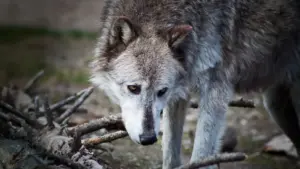

SEATTLE — A potentially deadly parasite previously considered exceptionally rare in the continental United States has officially established a foothold along the Pacific Northwest coast. According to groundbreaking research recently published in PLOS Neglected Tropical Diseases, scientists have detected the dangerous tapeworm Echinococcus multilocularis in local coyote populations in Washington state.
The discovery marks the first time this virulent parasite has been identified in a wild host along the contiguous U.S. West Coast. While coyotes can carry thousands of the adult worms in their intestines without showing outward signs of illness, the transmission of the parasite to domestic dogs or humans can trigger severe, potentially fatal medical complications. The revelation has prompted public health officials, parasitologists, and wildlife managers to sound the alarm regarding urban-wildlife interfaces, pet safety, and long-term epidemiological risks.
Executive Overview
The detection of Echinococcus multilocularis in more than one-third of a tested sample of Puget Sound coyotes underscores a rapid and worrisome geographic expansion of a pathogen long endemic to parts of Europe and Asia. For decades, North America was largely spared from widespread dissemination of the tapeworm, save for isolated pockets in remote Alaskan islands. However, over the past fifteen years, the parasite has steadily marched southward and eastward into Canadian provinces and the American Midwest.
The arrival of the parasite in the Pacific Northwest bridges a significant geographical gap, bringing a highly infectious, European-origin strain directly into densely populated metropolitan areas and suburban fringes. Although human cases remain exceptionally rare in the United States—and none have yet been reported on the West Coast—the inherent nature of the disease demands heightened vigilance.
Echinococcus multilocularis causes alveolar echinococcosis, a rare and deeply serious affliction characterized by the growth of slow, cancer-like cysts primarily in the liver. Because the incubation period can span anywhere from 5 to 15 years before symptoms manifest, medical professionals emphasize that awareness, proactive pet care, and environmental hygiene are critical defenses against a silent invader.
Detailed Chronology and Research Findings
The Puget Sound Survey
The alarm was raised following an intensive epidemiological survey conducted by a team of researchers from the University of Washington (UW). The research team collected and analyzed biological samples from 100 coyotes across the Puget Sound region.
To the profound surprise of the researchers, 37 of the animals—roughly 37% of the tested population—tested positive for Echinococcus multilocularis.
"This parasite is concerning because it has been spreading across North America. There have been numerous cases of dogs getting sick, and a handful of people have also picked up the tapeworm," said lead author Yasmine Hentati, who recently completed her doctorate in environmental and forest science at the University of Washington. "The fact that we found it here in one-third of our coyotes was surprising, because it wasn’t found anywhere in the Pacific Northwest until earlier this year."
The study’s findings dismantle previous assumptions that the Pacific Northwest remained insulated from the broader continental spread of the parasite.
Historical Context and Strain Evolution
The presence of Echinococcus multilocularis in North America is not entirely unprecedented, but the nature of the current threat represents a distinct evolutionary and epidemiological shift.
Historically, sporadic cases of the tapeworm were documented on remote islands in northwestern Alaska. However, genetic analyses have revealed that those historical occurrences were driven by a distinct "tundra variant" of the parasite. In contrast, the current outbreak sweeping across Canada, the American Midwest, and now the Pacific Northwest is driven by a much more infectious variant of European origin.
Scientists are still actively piecing together the exact vector of introduction that brought the European strain to the North American mainland. Two leading hypotheses dominate scientific discourse:
- Unregulated Pet Travel: The movement of infected domestic dogs across international borders without mandatory, rigorous deworming protocols.
- Historical Imports: The importation of red foxes for hunting purposes roughly a century ago, which may have established a low-level, undetected reservoir that only recently exploded due to ecological changes.
Regardless of its exact point of entry, the European variant has proven exceptionally adept at exploiting North American wildlife corridors, utilizing native canids as definitive hosts to perpetuate its life cycle.
Supporting Context and Metrics: The Parasite’s Complex Life Cycle
Understanding the threat posed by Echinococcus multilocularis requires examining its intricate, multi-host life cycle. The parasite relies on a predator-prey dynamic to survive and propagate, cycling between definitive hosts (canids) and intermediate hosts (rodents), with humans and domestic dogs acting as accidental dead-end hosts.
[Coyotes / Foxes (Definitive Host)]
       │ (Sheds eggs via feces)
       ▼
[Environment / Soil / Vegetation]
       │ (Ingested by rodents)
       ▼
[Rodents (Intermediate Host)] ──(Develops liver cysts)──> [Eaten by Coyotes] (Cycle Repeats)
       │
       └────────────────────────► [Humans / Dogs (Accidental Hosts)] ──> Severe Cysts / Alveolar Echinococcosis
The Definitive Hosts: Coyotes and Foxes
Canids—primarily coyotes, foxes, and wolves—serve as the primary, definitive hosts for the adult tapeworm. Inside a coyote’s intestine, the parasite can thrive by the thousands. Crucially, these primary hosts almost never exhibit signs of clinical illness. They act as prolific factories, shedding microscopic tapeworm eggs into the environment via their feces, thereby contaminating soil, water, and vegetation.
The Intermediate Hosts: Rodents
The life cycle continues when small mammals, particularly wild mice, voles, and other rodents, ingest food or water contaminated with coyote feces containing parasite eggs. Once inside the rodent, the eggs hatch, migrate through the bloodstream, and settle primarily in the liver. There, they develop into fluid-filled, invasive cysts that progressively compromise the rodent’s health, eventually weakening or killing it. This physiological decline makes the rodent an easy target for hungry coyotes, completing the circle of transmission.
Humans and Dogs: Accidental Hosts
Humans and domestic dogs enter the picture as accidental hosts.
- For Dogs: Canines can contract the infection by scavenging or consuming infected raw rodents in the wild. While some dogs merely carry the parasite and shed eggs without symptoms, others can develop the same devastating, tumor-like hepatic cysts seen in wild intermediate hosts.
- For Humans: People can become infected by inadvertently swallowing microscopic tapeworm eggs. This typically occurs through the ingestion of unwashed wild berries, contaminated garden vegetables, or through poor hand hygiene after handling contaminated soil or the fur of an infected animal.
According to global health metrics, alveolar echinococcosis is recognized as the third most important food-borne illness worldwide. The World Health Organization (WHO) classifies it among the top 20 neglected tropical diseases, prompting rigorous surveillance programs across Europe and parts of Asia that North American health agencies are now forced to emulate.
Official Statements and Expert Perspectives
The publication of the UW study has drawn swift commentary from parasitologists and veterinary medicine experts across the United States. While the tone is measured to avoid undue panic, the scientific community emphasizes that proactive education is vital.
"The reason that it’s so high in coyotes is because they are regularly eating raw rodents, and that is the primary way for them to get infected. Most domestic dogs are not eating the raw livers of wild rodents," explained lead author Yasmine Hentati.
Dr. Guilherme Verocai, an co-author of the study, associate professor, and director of the Parasitology Diagnostic Laboratory at the Texas A&M University College of Veterinary Medicine and Biomedical Sciences, outlined practical steps pet owners must take to mitigate risk.
"To minimize the risk of dogs getting infected with Echinococcus multilocularis, owners should not let them prey on rodents or scavenge their carcasses," Verocai advised. He further recommended establishing routine veterinary care schedules, which should include regular parasite testing and comprehensive preventative medications targeting both internal worms and ectoparasites.
Local veterinarians and public health departments have echoed these recommendations, stressing that while the presence of the parasite in one-third of tested Puget Sound coyotes is statistically striking, the actual incidence of cross-species transmission to household pets remains low thus far. Data indicates that only seven canine cases have been officially documented across Washington, Oregon, and Idaho since 2023, with five of those occurring within Washington state.
"The main takeaway is that Echinococcus multilocularis is here, it’s pretty prevalent in the local coyote population, and people should be aware of potential risks," Hentati summarized.
Future Outlook: Mitigation, Monitoring, and Medical Horizons
As urban sprawl continues to blur the boundaries between human habitats and wildlife corridors, interactions between domestic animals, humans, and wild canids are increasingly frequent. The establishment of Echinococcus multilocularis in Pacific Northwest coyotes signals that vector-borne and zoonotic diseases are shifting in response to ecological and climatic pressures.
Implications for Public Health Policy
Public health agencies in Washington and neighboring states are now evaluating whether enhanced surveillance programs are necessary. In regions of Europe where alveolar echinococcosis is endemic, municipalities routinely monitor wild fox populations, mandate deworming treatments for working and hunting dogs, and launch public awareness campaigns regarding the dangers of consuming unwashed wild produce or foraging without hygiene precautions.
Medical professionals are also being urged to remain vigilant. Because alveolar echinococcosis mimics hepatic cancer—presenting with slow-growing, infiltrating lesions that can metastasize to the lungs or brain if left untreated—early diagnosis is paramount. However, the disease’s notoriously long latency period (5 to 15 years from exposure to symptom onset) means that infections contracted today may not present clinically until well into the next decade.
Research Horizons
The research team—which included lab manager Ellie Reese, doctoral graduates Samantha Kreling and Yasmine Hentati, professors Laura Prugh and Chelsea Wood from the University of Washington, alongside collaborators Claire Curran (College of William and Mary), Erika Miller (Sound Data Management), Dakeishla M. Díaz-Morales (DePaul University), and Christopher J. Schell (UC Berkeley)—plans to continue monitoring wildlife dynamics in the region. Funded by the National Science Foundation and the University of Washington Hall Conservation Genetics Fund, future phases of the research will aim to determine whether the parasite is jumping from coyotes to other urban-adapted carnivores, such as raccoons, domestic cats, or red foxes.
Recommendations for Residents and Pet Owners
For residents living in the Pacific Northwest and broader North American regions where the parasite has been detected, experts recommend a series of common-sense preventative measures:
- Pet Supervision: Keep dogs on leashes during walks in wooded or semi-rural areas, and actively discourage them from hunting rodents or scavenging wildlife carcasses.
- Veterinary Compliance: Consult veterinarians regarding broad-spectrum deworming medications and routine fecal screenings, especially for dogs that exhibit high-predation behaviors.
- Hygiene Practices: Thoroughly wash all garden produce, berries, and foraged goods before consumption. Practice diligent hand hygiene after gardening, handling soil, or interacting with domestic animals that roam outdoors.
- Waste Management: Secure residential garbage and eliminate food attractants to minimize coyote presence in residential neighborhoods.
Ultimately, while the arrival of Echinococcus multilocularis on the U.S. West Coast represents a concerning microbiological milestone, experts emphasize that informed communities and responsible pet ownership can effectively neutralize the risk of infection.