
Executive Overview
The pristine and isolated expanse of Antarctica—long considered a natural sanctuary insulated from the worst of global wildlife pathogens—has officially fallen victim to the devastating march of the highly pathogenic avian influenza (HPAI) virus H5N1. According to a landmark study recently published in Scientific Reports, more than 50 skuas perished across the frozen continent during the austral summers of 2023 and 2024 due to the H5N1 virus. This grim milestone represents the first confirmed, scientifically verified wildlife die-off directly attributable to the avian flu virus on the Antarctic continent.
Led by a collaborative international team of researchers from Erasmus MC in The Netherlands and the University of California, Davis (UC Davis), the study provides irrefutable evidence that the global avian influenza crisis has breached the final continental frontier. While scattered viral detections had been reported earlier in 2024, this new research confirms that the virus is actively killing native Antarctic fauna, disproportionately targeting the region’s skua populations.
The findings illuminate a looming ecological crisis for polar ecosystems already under severe stress from climate change, industrial fishing, and expanding human footprint. With the virus having already ravaged poultry industries, mammalian populations, and wild bird colonies across every other continent except Oceania, scientists are sounding the alarm. They warn that without aggressive surveillance, strict biosecurity protocols, and coordinated international action, H5N1 could permanently alter the fragile biodiversity of the polar south.
Detailed Chronology of the Antarctic Outbreak
To understand how H5N1 penetrated the world’s most isolated ecosystem, scientists must trace a timeline of detection, investigation, and confirmation that unfolded over several tense months in late 2023 and early 2024.
The First Warning Signs
The narrative of H5N1’s arrival in Antarctica began to take shape in January and February 2024, when field researchers and expeditioners encountered dead birds—specifically a kelp gull and two skuas—in the northern Antarctic Peninsula region. While field tests at the time confirmed the presence of the H5N1 virus in these specimens, scientists lacked the definitive post-mortem pathology required to prove that the virus was the primary cause of death, rather than an incidental infection in an animal that succumbed to other environmental pressures.
This distinction is far from academic. In the early days of an epizootic event—an outbreak of disease in animal populations—establishing exact causality is critical for modeling how a pathogen will move through naïve ecosystems.
The March 2024 Expedition
Recognizing the urgent need for ground-level intelligence, a dedicated research initiative known as the HPAI Australis Expedition mobilized in March 2024. Traveling to Antarctica immediately following the breeding season for regional seabirds and penguins, the scientific team set out to investigate 10 strategic sites spanning the South Shetland Islands, the northern Weddell Sea, and the Antarctic Peninsula.
The expedition faced harsh, unpredictable polar conditions, navigating treacherous ice and logistical hurdles to reach remote breeding colonies. At each site, the researchers conducted meticulous necropsies whenever they encountered sick or deceased wildlife, harvesting tissue samples and environmental swabs for laboratory analysis.
The scope of the investigation was broad. Scientists examined the remains of iconic Antarctic species, including gentoo penguins, Adélie penguins, and Antarctic fur seals. To the initial relief of the researchers, H5N1 was not identified as the cause of death in these marine mammals and penguin species during this specific survey window. However, that relief was short-lived.
The Skua Epicenter
As the expedition progressed deeper into the field, a grim pattern emerged. "As the expedition progressed, it became obvious quickly that skuas were a major victim," noted Dr. Ralph Vanstreels, a wildlife veterinarian with the UC Davis One Health Institute.
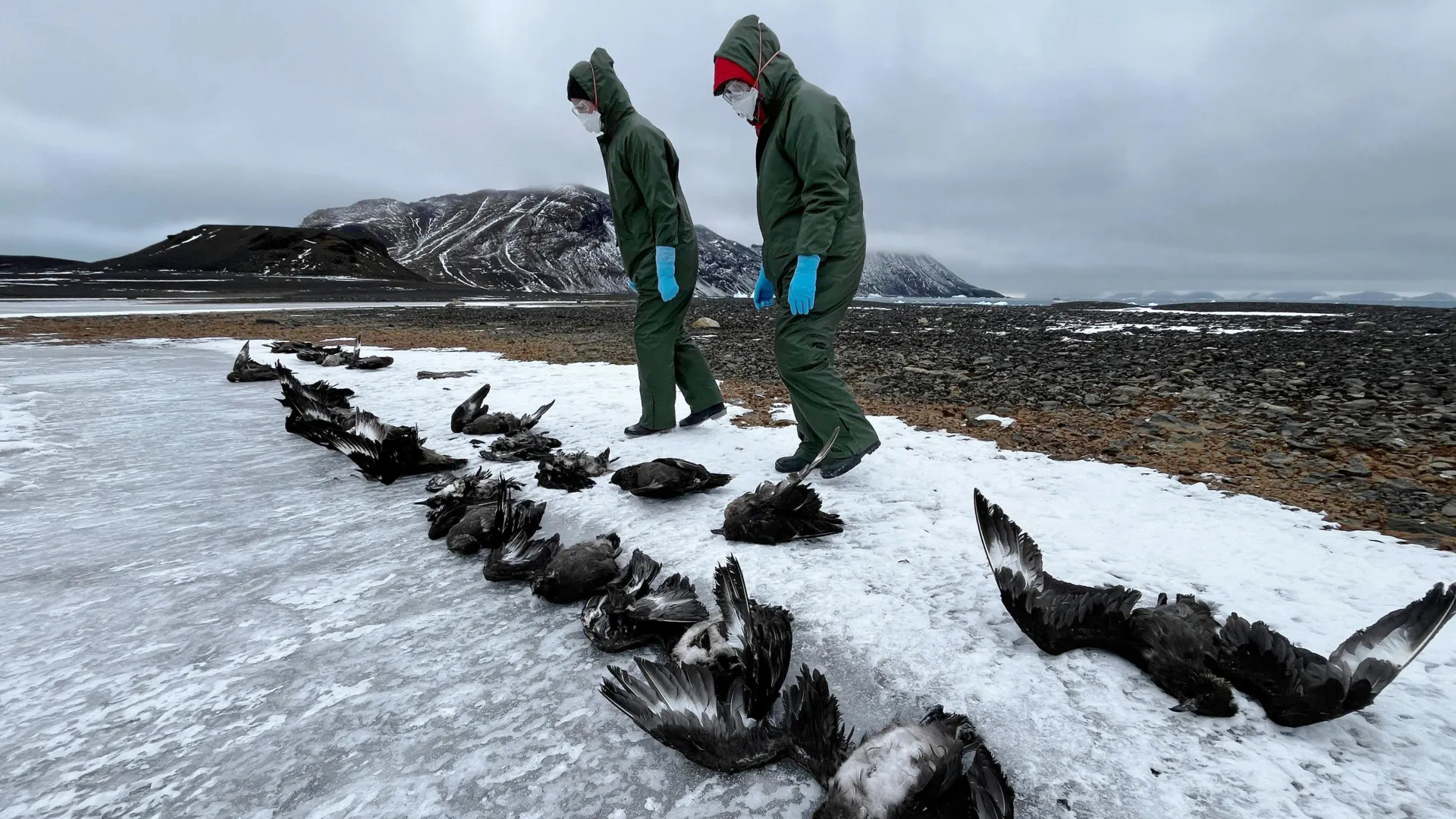
The researchers successfully detected and diagnosed the virus in skuas across three distinct, highly vulnerable locations: Hope Bay, Devil Island, and Beak Island. Among these, Beak Island emerged as the epicenter of a massive, localized mortality event. South polar skuas congregating in the area suffered a catastrophic die-off.
"We diagnosed high pathogenicity avian influenza as the cause of death for nearly all of the dead skuas we found at Beak Island," stated Matteo Iervolino, a Ph.D. candidate at Erasmus MC in Rotterdam and lead author of the study. Describing his firsthand experience in the field, Iervolino added, "There, I could really see with my eyes the impact this virus can have on these populations."
Supporting Context & Metrics: The Anatomy of a Global Pandemic
To fully grasp the gravity of the Antarctic outbreak, one must look at the broader trajectory of the H5N1 virus—a pathogen that has transformed from a localized agricultural concern into an unprecedented global ecological disaster.
A Quarter-Century of Global Spread
The evolutionary journey of the current H5N1 strain began nearly three decades ago, in 1996, when it was first identified on a domestic goose farm in Southeast China. For years, the virus circulated largely unchecked within intensive poultry farming systems, mutating and adapting until it successfully breached the barrier into wild bird populations.
Once established in migratory wild birds, the virus weaponized global flyways. It swept systematically across Europe, the Middle East, and Africa, before crossing oceans to establish footholds in North America and South America. By the dawn of 2024, it had successfully crossed the Drake Passage to reach the shores of Antarctica.
Staggering Toll Across Species
The statistics associated with the modern lineage of H5N1 are staggering:
- Poultry Losses: More than 400 million domestic birds have died or been culled worldwide to curb the spread of the virus.
- Mammalian Spillover: The virus has long since ceased to be solely an "avian" flu. It has jumped barriers to infect a vast array of mammals, including dairy cows in North America, mink on fur farms, wild foxes, bears, otters, and massive marine mammal populations.
- The South American Precedent: Prior to striking Antarctic skuas, the exact same strain wreaked havoc on marine ecosystems in South America, causing catastrophic mortality events among elephant seals and sea lions along the coast of Argentina and Chile, where tens of thousands of mammals perished.
- Human Health Implications: While H5N1 remains primarily an animal pathogen, it poses a persistent, low-level threat to humans who come into close contact with infected animals. Of the approximately 1,000 reported human cases globally since its emergence, roughly 50% have proven fatal, keeping public health agencies on high alert.
The Behavioral Risk Profile of Skuas
Why were skuas the primary casualties in this initial Antarctic wave? The answer lies in their ecology. Skuas are large, aggressive brown seabirds closely related to gulls, inhabiting polar and subpolar marine environments. Operating as apex predators and scavengers, they occupy an ecological niche similar to birds of prey.
Skuas routinely feed on carrion, scavenge penguin colonies for eggs and chicks, and interact with the remains of dead marine mammals. This scavenging behavior acts as an epidemiological accelerant. When a marine mammal or seabird dies from H5N1, scavenging skuas are among the first to arrive at the carcass, unwittingly ingesting massive viral loads and subsequently disseminating the pathogen across wide geographic ranges as they fly between breeding and feeding grounds.
Official Statements and Expert Perspectives
The publication of the Erasmus MC and UC Davis study has prompted an outpouring of concern and analytical commentary from the scientific community, emphasizing the urgent need for a paradigm shift in how polar conservation is managed.
Reflecting on the psychological and physical reality of the fieldwork, Dr. Ralph Vanstreels characterized the scene as a profound "crisis in animal suffering." H5N1 is a neurotropic virus—meaning it specifically targets and attacks the central nervous system. This results in horrific neurological degradation in infected birds.
"We knew there were animals with the infection, but this is the first study to show they died of the viral infection," Vanstreels emphasized. "It’s an important distinction in the early days of an outbreak."
The clinical manifestations of the disease in infected skuas are harrowing. Birds suffering from advanced H5N1 infection often exhibit severe neurological symptoms, including twisted necks (torticollis), erratic body stretching, and profound loss of motor control. Affected animals may be seen walking or swimming in tight, repetitive circles, flying blindly into physical objects, or dropping out of the sky mid-flight due to sudden paralysis or disorientation.
The study’s senior leadership places the ultimate responsibility for this ecological crisis squarely on human shoulders. Professor Thijs Kuiken of Erasmus MC pulls no punches when discussing the origins of the catastrophe.
"We let the virus slip out through our fingers when it first emerged in the poultry industry," Kuiken stated bluntly. "Once it got into wild bird populations, we lost ability to control this virus. Now it’s established in wild bird populations in all the continental regions of the world except Oceania."
Kuiken’s assessment underscores a sobering reality: humanity can no longer eradicate H5N1 from global wildlife. The focus must now pivot entirely toward mitigation, rapid response, and protecting vulnerable, isolated ecosystems from total collapse.
Future Outlook: The Fight to Protect Antarctica’s Vulnerable Ecosystems
As the austral winter recedes and wildlife returns to the rocky outcrops and ice-free coastal zones of Antarctica for the next breeding season, scientists, conservationists, and tour operators are bracing for what comes next.
Compounding Environmental Pressures
The arrival of avian influenza does not occur in a vacuum. Antarctic and sub-Antarctic wildlife are already grappling with an unprecedented convergence of anthropogenic and climate-induced stressors. Rapidly warming polar temperatures are destabilizing sea-ice habitats and altering marine food webs, forcing krill-dependent species into nutritional stress. Simultaneously, the region faces growing pressures from commercial overfishing, expanding polar tourism, chemical pollution, and the introduction of invasive plant and animal species.
The introduction of H5N1 acts as an acute, high-mortality stressor layered on top of these chronic systemic pressures.
The Blind Spot: Outdated Baseline Data
Compounding the challenge of managing the outbreak is a glaring lack of modern demographic data. Shockingly, the last comprehensive census of Antarctic skuas was conducted in the 1980s, at which time researchers estimated a population of roughly 800 breeding pairs.
Because scientists lack up-to-date population censuses, measuring the true ecological significance of losing 50 or more skuas in a single season is extraordinarily difficult. Are these localized losses sustainable, or do they represent the tip of a demographic iceberg that could wipe out localized colonies entirely? Without robust monitoring, nobody can say for sure.
"Everything points toward this virus spreading further," warned Professor Kuiken. "If nobody is watching, we won’t know what is happening."
The Call for Enhanced Surveillance and Biosecurity
In response to these findings, the study’s authors and international conservation bodies are issuing an urgent call to action. Key recommendations include:
- Intensified Field Surveillance: Establishing permanent, coordinated monitoring networks across the Antarctic Peninsula and sub-Antarctic islands to track mortality events in real-time.
- Modern Population Censuses: Conducting comprehensive surveys of skuas, gulls, penguins, and marine mammals to establish reliable demographic baselines against which future losses can be measured.
- Strict Biosecurity Protocols: Enhancing gear disinfection, movement restrictions, and hygiene protocols for scientists, support staff, and commercial tour operators visiting wildlife sites to ensure humans do not act as mechanical vectors spreading the virus between isolated colonies.
- Collaborative Funding and Logistics: Maintaining robust partnerships between academic institutions, governmental bodies, and private sector organizations—such as the International Association of Antarctica Tour Operators (IAATO) and Ocean Expeditions, which funded the HPAI Australis Expedition—to ensure researchers can reach remote outbreak zones quickly.
The crossing of H5N1 into Antarctica marks a tragic new chapter in the history of wildlife conservation. As the virus tightens its grip on the southernmost continent, the actions taken by the global community in the coming months will determine whether iconic polar species can withstand this unprecedented biological assault, or whether the silent wilderness of the south will forever bear the scars of a preventable global failure.