
Executive Overview
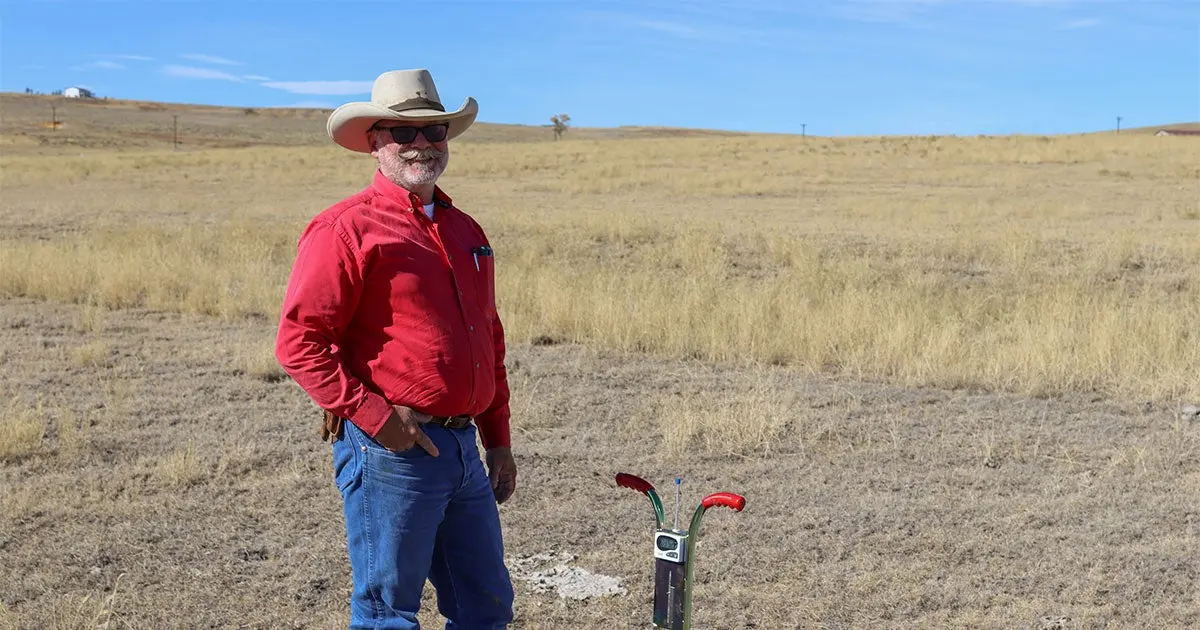
In an era defined by intensifying agricultural pressures, climate volatility, and alarming biodiversity loss, a quiet revolution is taking root across the eastern high plains of Colorado. At the Rafter W Ranch in Simla, owners Lance and Lisa Wheeler have reimagined what it means to be modern livestock producers. What began as a childhood dream fueled by classic television westerns has matured into a sophisticated, science-driven regenerative enterprise that proves sustainable agriculture and economic viability are not mutually exclusive—they are deeply interdependent.
Certified as bird-friendly through the Audubon Conservation Ranching program since 2018, the Rafter W Ranch spans sprawling acreage dedicated to the holistic production of grass-fed meat, poultry, and eggs. Rather than viewing the surrounding ecosystem as a resource to be subdued, the Wheelers manage their land as an interconnected web of life. Through adaptive rotational grazing, rigorous soil health monitoring, and a commitment to fostering native biodiversity, they have transformed their working ranch into a thriving sanctuary for wildlife.
Data collected between 2019 and 2025 underscores the profound success of their methods: total bird species recorded on the property—known as species richness—has surged from 29 to 37, while grassland bird detections have more than doubled. Their performance on Audubon’s Bird-Friendliness Index has climbed steadily, outpacing the ecological metrics of comparable regional ranches, state parks, and protected lands.
This in-depth report explores the journey of the Wheeler family, examining the operational mechanics of their regenerative model, the empirical science validating their habitat management strategies, and the broader implications of private-lands conservation for America’s most imperiled avian ecosystems.
Detailed Chronology: From Suburbia to Regenerative Stewardship
The path that led Lance and Lisa Wheeler to the rolling grasslands of Elbert County is as unconventional as it is inspiring. Long before he managed hundreds of acres of pasture, Lance grew up in a Los Angeles suburb. Despite being geographically removed from rural life, a deep-seated affinity for the pastoral lifestyle pulsed through his heritage. His family had raised cattle in Texas from the decades preceding the Civil War until the 1930s. Lacking direct exposure to ranching traditions, young Lance found his primary connection to that lineage through the television screen, where the hit show Bonanza romanticized the American cowboy.
Years later, as co-owner and manager of the Rafter W Ranch alongside his wife, children, and grandchildren, Lance recognizes that those celluloid depictions bore little resemblance to the complex realities of 21st-century agriculture.
The Wheelers’ entry into professional agriculture began humbly in the early 1990s on a small plot of land in Elizabeth, Colorado. There, they experimented with raising grass-fed meat, poultry, and eggs, catering to a nascent market of consumers interested in sustainably sourced food. As they immersed themselves in the principles of regenerative agriculture, their perspective shifted fundamentally. They realized that their ambition extended far beyond simply producing wholesome food; they wanted to heal the landscape.
In 2014, the family took a major leap forward by purchasing land in Elbert County, laying the physical foundation for the modern Rafter W Ranch. Two years later, seizing an opportunity to expand their operational capacity, they acquired the adjacent acreage and homestead.
By 2018, the ranch achieved a critical milestone: official certification as bird-friendly through Audubon Conservation Ranching. This designation required the Wheelers to meet stringent standards covering habitat management, environmental sustainability, and high standards of animal welfare. Rather than resting on their laurels, the ensuing years saw the Wheelers integrate deep-level ecological research into their business model. They participated in advanced soil monitoring programs, implemented low-tech erosion control structures, and hosted educational events and field trips for conservation groups, positioning themselves as leaders in the regional regenerative agriculture movement.
Supporting Context & Metrics: Science on the Working Landscape
Grasslands are among the most imperiled and least protected biomes in North America. Because the vast majority of grassland habitat sits on privately owned working lands, voluntary conservation initiatives spearheaded by farmers and ranchers are absolutely essential to arresting and reversing the population declines of grassland bird species.
The Rafter W Ranch exemplifies how working lands can simultaneously support profitable food production and robust ecological health. The engine driving this success is an adaptive, holistic approach to land management that views cattle not as environmental disruptors, but as ecological catalysts.
The Mechanics of Adaptive Grazing
At the core of the Rafter W operation is meticulous rotational grazing. The ranch’s cattle are moved strategically—often daily—across different pastures. This high-intensity, short-duration grazing mimics the historic movement patterns of native bison herds, which swept across the plains in dense packs, grazing heavily before moving on and leaving the land to rest and recover.
This deliberate movement creates a dynamic mosaic of vegetation heights across the landscape. Some areas feature longer, denser grass required by ground-nesting birds for cover and breeding, while other zones feature shorter vegetation utilized by species that prefer open vistas for foraging. Furthermore, the Wheelers use targeted grazing to suppress invasive weed species, encouraging the resurgence of native grasses and forbs.
Complementing the cattle operation is a flock of free-range chickens housed in mobile coops. Trailing closely behind the grazing cattle, these chickens scratch through manure pats, breaking them down naturally, distributing rich organic matter across the soil profile, and fertilizing the pastures without the need for synthetic chemical inputs.
Empirical Evidence: The Numbers Tell the Story
The ecological dividends of these management practices are documented through rigorous, multi-year avian and soil monitoring protocols. According to surveys conducted between 2019 and 2025 on the high plains of eastern Colorado, the Rafter W Ranch has established a haven for numerous native species, including:
- Western Meadowlarks
- American Kestrels
- Upland Sandpipers
- Lark Buntings
- Vesper Sparrows
- Loggerhead Shrikes
The quantitative metrics recorded during this survey period are striking. Species richness—the total count of distinct bird species observed on the ranch—increased from 29 to 37. Concurrently, total grassland bird detections jumped from 178 to 356.
To measure the overall health, abundance, and diversity of these avian communities, Audubon utilizes the Bird-Friendliness Index (BFI). Since monitoring began, the Rafter W Ranch has achieved a consistent 4% annual growth in its BFI score, translating to a cumulative 26% increase over the eight-year period.
Official Statements & Expert Perspectives
The partnership between the Wheeler family and Audubon Rockies has served as a benchmark for collaborative conservation.
Dusty Downey, Audubon Conservation Ranching Director for the Rockies region, highlights the unique combination of traits that make the Rafter W Ranch an exemplary partner. "Rafter W Ranch has all the components that make a good bird-friendly ranch: interest in the research and science, heart behind the regenerative agriculture, and a desire to build up the water, soil, and land health," Downey observes. "That trifecta makes for a wonderful, wonderful partner."
Downey notes that the ranch’s soaring BFI scores indicate that the property provides superior ecological conditions for wildlife compared to many surrounding state parks, public lands, and conventional ranches. He attributes this success to the Wheelers’ status as lifelong learners who eagerly apply complex ecological principles to their unique operating environment. "Lance and Lisa came into ranching without any preconceived notions, just wanting to educate themselves as much as possible," Downey says. "They do an amazing job taking the principles they’ve learned and adapting them for the system they work in."
For Lance Wheeler, the evolution of his understanding has fundamentally changed his lexicon as a producer. "We’re not just raising meat, we’re actually farming grass," Lance explains. "You need healthy grasslands and soil to have quality meat. That realization grew into knowledge of soil health and a business model built around selling nutrient-rich meat and eggs."
Reflecting on the collaborative journey, Lance is quick to credit the institutional support he has received. "We would not be where we are today without the help of the Audubon Rockies team," he notes. "We’re seeing the land respond, with more biodiversity expressing itself and an increasing level of resilience. We certainly have a long way to go, but if we can keep maximizing the ability for the birds to spend time here, then that’s a huge win."
Future Outlook: Building Community and Sustaining Horizons
Beyond ecological restoration, the Rafter W Ranch has emerged as an educational hub and a catalyst for community building within the sustainable agriculture sector. The Wheelers have consistently opened their gates to researchers, conservationists, and the public. They have partnered with Denver Audubon to host educational bird-walk field trips and collaborated with FrontLine Farming—a Denver-based food advocacy group—to provide immersive ranch experiences for BIPOC youth exploring careers in conservation science and regenerative agriculture.
These community-oriented endeavors reflect a profound paradigm shift for Lance Wheeler. Looking back at the rugged, isolated individualist tropes of the cowboy mythos he absorbed during his Southern California childhood, Lance sees today’s agricultural reality as something infinitely richer and more interconnected.
"Ranching is the most rewarding and the most humbling work that I’ve ever done," Lance reflects. "It’s incredibly rewarding to see the outcome, not just here, but for the other people I’ve met along the way. There’s a strong sense of community in this work, not seen in the rugged individualist, cowboy-style narratives I had watched as a kid."
As the Rafter W Ranch looks toward the future, its trajectory offers a beacon of hope for American grasslands. By uniting rigorous ecological science, adaptive animal husbandry, and a deep reverence for avian biodiversity, Lance and Lisa Wheeler are proving that modern ranching can heal the earth, feed communities, and create a resilient legacy for generations to come.
About Audubon Conservation Ranching
Audubon Conservation Ranching partners with ranchers to sustain healthy grasslands, abundant birdlife, and resilient rural communities. Through bird-friendly land certification and a science-based approach, the program empowers land stewards to enhance habitat, improve soil health and water quality, and strengthen the connection between conservation and ranching. By purchasing products originating from Audubon Certified Bird-Friendly Land, consumers actively participate in conservation, helping protect America’s grasslands and the wildlife and people dependent upon them. For more information, visit www.audubon.org/ranching.